



Antarctic · From 14 Days
Antarctica by Helicopter
Crossing the Circle and the Peninsula
Starts from £16,855 GBP
£14,601 GBP
- Starting from
- Buenos Aires, Argentina
- Ships
- Ultramarine
- Departures
- 4 Departures between February 2027 to February 2029
From £16,855 GBP
£ 14,601 GBP


Expedition Overview
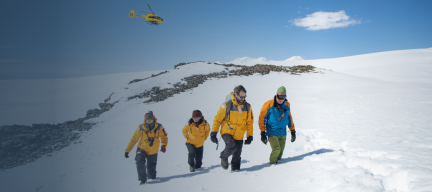
Crossing the Antarctic Circle at 66°30′ is a polar milestone achieved by few travelers. Our 14-day Antarctica by Helicopter: Crossing the Circle & the Peninsula enables you to fulfill that dream on a unique voyage that maximizes multiple helicopter opportunities—included in the cost of the trip. You’ll soar above the ice-covered 7th Continent and learn what it’s like to step out of a helicopter onto Antarctica and gaze upon polar landscapes previously only seen by a few fearless explorers and mountaineers.
Highlights
Be one of the select few to cross the Antarctic Circle at 66’30
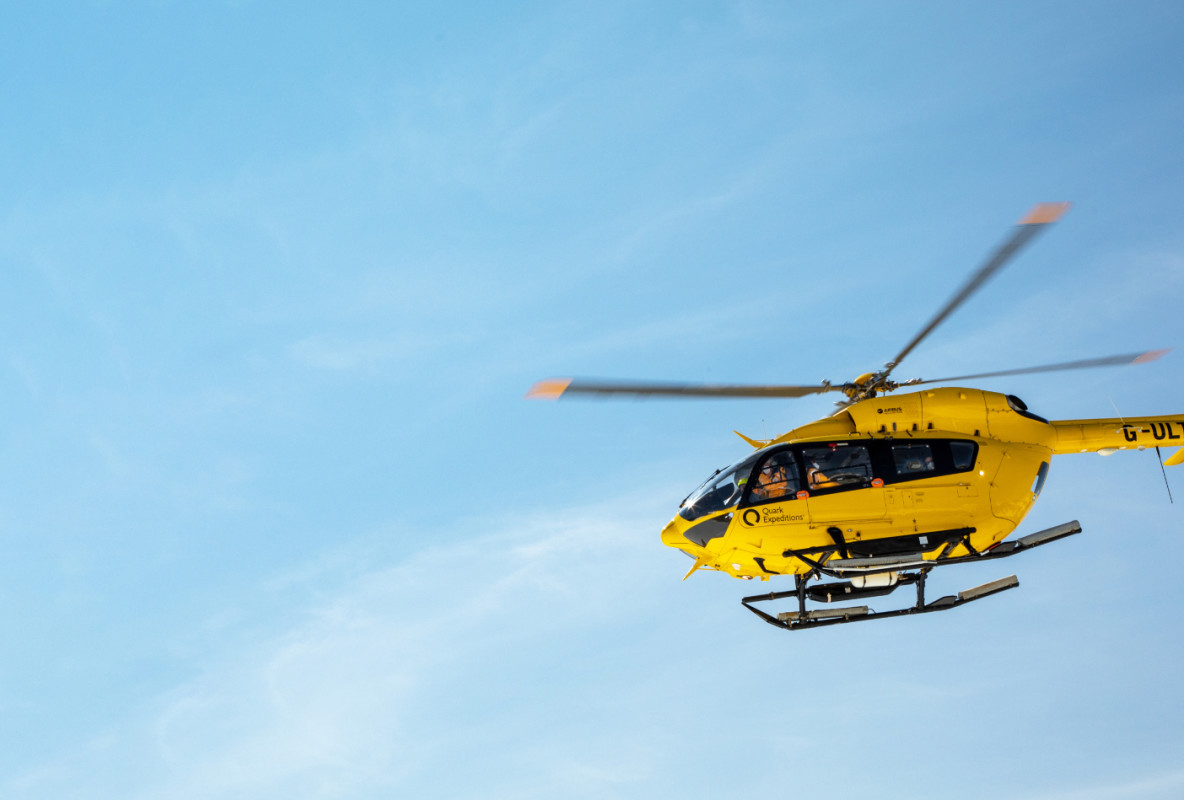
Experience at least two heli-flightseeing excursions—included in the cost of the trip
Participate in one heli-landing amidst Antarctica’s vast coastal mountains
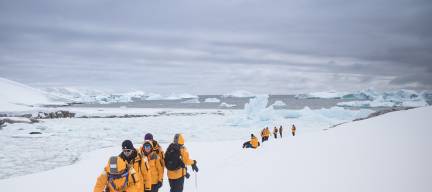
Enjoy off-ship excursions by Zodiac for intimate marine and land-based experiences
Explore Crystal Sound and Marguerite Bay—the southern heart of the Antarctic Peninsula
View the least-explored mountains and glaciers of the Antarctic Peninsula from sea and air
Learn from polar experts during our enhanced onboard education programme.
Select Your Season & Itinerary
Select Season
Buenos Aires, Argentina
14 Days · Ultramarine
Starts from £0.00 GBP
Buenos Aires, Argentina
14 Days · Ultramarine
Starts from £22,146 GBP
Buenos Aires, Argentina
14 Days · Ultramarine
Starts from £14,601 GBP
Select Itinerary
Buenos Aires, Argentina
14 Days · Ultramarine
Starts from £0.00 GBP
Buenos Aires, Argentina
14 Days · Ultramarine
Starts from £22,146 GBP
Buenos Aires, Argentina
14 Days · Ultramarine
Starts from £14,601 GBP
Please call for remaining availability
14 Days – From Buenos Aires, Argentina on Ultramarine (Season 2026.27)
Day By Day & Map
-
Day 1
Arrive in Buenos Aires, Argentina
Upon arriving in this splendid city, known for its vibrant Argentinian culture, European architecture and cosmopolitan vibe, you will independently transfer to your pre-expedition hotel night, included in your Charter Flight and Hotel Package.
-
Day 2
Fly to Ushuaia and Embark
After an early breakfast at the hotel, the group will transfer to the airport and board our private charter flight to Ushuaia, Argentina. Upon arrival, you will be transferred to a central downtown location to enjoy some time on your own to explore this quaint port town before making your way to the designated meeting spot near the pier, where you will be transferred to the ship for embarkation. After a late afternoon embarkation, we will sail along the historic Beagle Channel, which transects the Tierra del Fuego archipelago in the extreme south of South America. Expect an air of anticipation as you depart—the next time you see land, you’ll be in the remote Antarctic wilderness.
-
Day 3
Crossing the Drake: A Polar Rite of Passage
Crossing the legendary 800-km stretch of water is a must-do for many travelers. Prepare yourself for dramatic seascapes as you stand on the deck of Ultramarine and gaze at the water stretching beyond the distant horizon. Be on the lookout for dolphins, whales and seabirds, especially albatrosses, petrels and skuas as they glide over the sometimes rough waters. As the ship approaches the Antarctic Peninsula, keep your eyes peeled for your first glimpse of towering, multi-shaped icebergs.
-
Day 4
At Sea With Polar Experts
Today, as we continue crossing the Drake Passage, we experience the Antarctic Convergence, where the warmer waters of the sub-Antarctic meet the cold Antarctic. Your days at sea are filled with presentations led by your Expedition Team on photography, wildlife, glaciology, and history. In between presentations, spend time on deck looking for wildlife or chatting with your shipmates over a drink at the bar.
-
Day 5 & 6
South Shetland Islands and Antarctic Peninsula
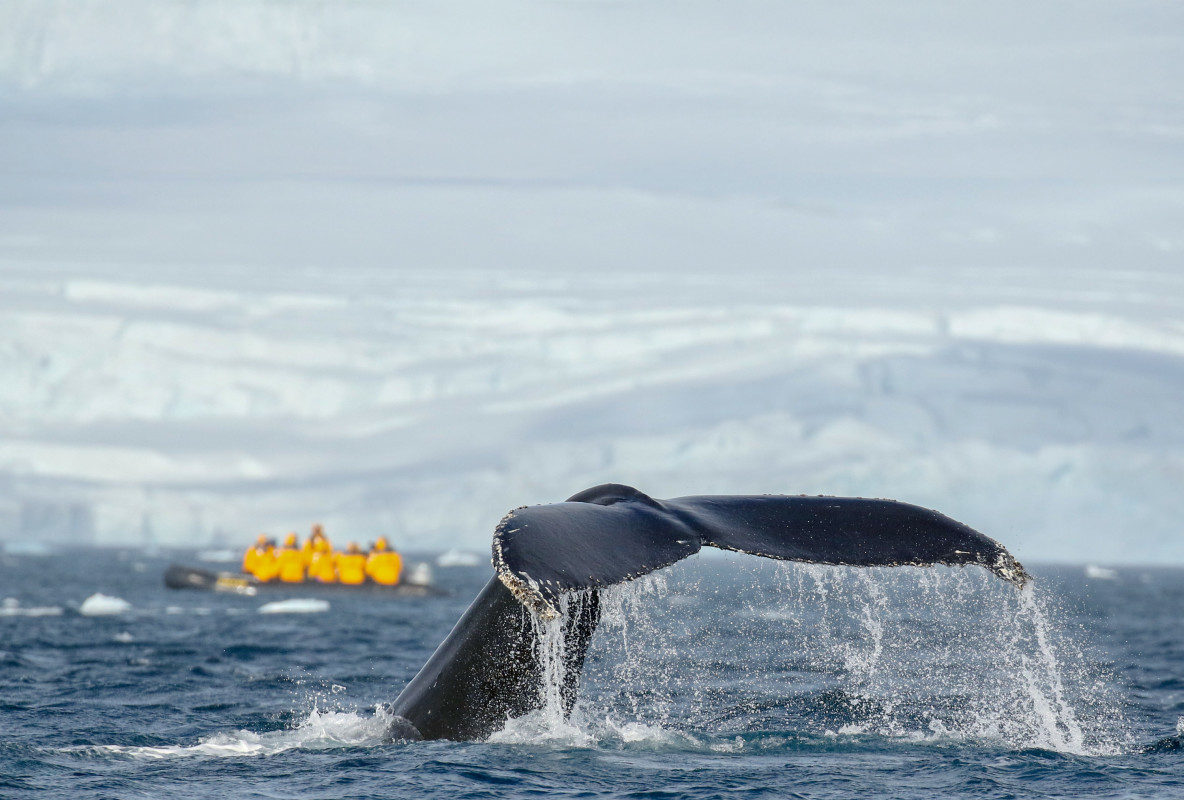
The most common reaction upon reaching the Antarctic Peninsula is a sense of reverence and awe. The experience is beyond words, since few places are as untouched and enduring as Antarctica. You will begin to appreciate why this region has long captivated the attention of explorers and travelers alike. Every visit to Antarctica, we witness something new or unexpected, which means that your expedition will be unlike any other— creating a unique, personal experience. Each day, you will take Zodiac excursions from the ship to explore local bays, channels and landing sites. With wildlife always at the forefront of our minds, you will visit penguin rookeries, scout for humpback and minke whales, and search for a number of southern seal species, including the elusive leopard seal. Your Expedition Team will take care of you at each landing, whether you are exploring the Antarctic terrain, visiting a research station or consorting with penguin colonies. Chinstrap, Adélie and gentoo penguins are found here, along with five different species of seals. Zodiac cruising can offer opportunities to view some of the larger local marine mammals more intimately, such as Antarctic minke and humpback whales. Days 5 and 6 are also ideal times to experience Ultramarine’s portfolio of helicoptersupported adventures exclusive to Quark Expeditions. Your days will be busy spotting wildlife and being mesmerized by the astounding beauty of Antarctica. Listening to the crackling and crumbling of icebergs and glaciers and watching penguins waddling on the beach will become your daily entertainment. That’s in addition to the spectacular experience of soaring in a helicopter over the Antarctic landscape.
-
Day 7 to 9
Explore the Antarctic Circle and the Southern Peninsula by water, land, and air
Helicopter operations in Antarctic are acutely weather-dependent. We have designed this itinerary so we can spend time each day in stunning locations that allow us to enjoy helicopter opportunities if the weather allows and, alternately, to maximize your experience of Antarctic wildlife, ice and landscapes when flying conditions are not favorable. Each day near the Antarctic Circle will showcase the flexibility and technical prowess of our industry-leading expedition team, pilots and crew, who will look for opportunities to experience Antarctica well beyond its coasts. As Ultramarine gains access to the Antarctic Circle, you’ll have accomplished an impressive achievement as most expeditions to the Peninsula do not come close to navigating this far south. Toasting the first explorers who ventured here over a century ago, you can raise a glass and take pride in the knowledge you’ve reached part of the world visited by a relative few. Next on our itinerary are Crystal Sound and Marguerite Bay, which comprise the geographical theatre of focus on this incredible venture into the “deep south” of Antarctica. After visiting some of the region’s iconic penguin colonies and glacial features, we continue south into Crystal Sound to cross the Antarctic Circle. Crystal Sound is known for its massive expanse of steep mountains that rise directly out of the sea. We hope to visit Detaille Island and, weather-permitting, fly into the mountains of the Antarctic Peninsula at the Antarctic Circle. Our goal is to visit the British Antarctic Survey’s historical hut, and the Adélie penguin colony of Detaillle Island. We also hope to Zodiac cruise in this area to see the colossal icebergs that formed from the glaciers fed by the snowfall in the coastal mountains of Antarctica. Seals frequently roam this coastal area. There will be time to marvel at the impressive topography, which features Castle Peak, a 2,380 metre (7,800foot) massif. If weather allows, we may add to our marine operations and embark on our flightseeing experiences. What you will have just seen from sea, you will now experience from the sky as you witness the vastness of Antarctica and Crystal Sound. Continuing further south, we’ll set out toward Marguerite Bay, which is rich in human history, stunning geological features, and expansive ice fields. The bay is separated from Crystal Sound by Adelaide Island. Ice conditions permitting, we may be able to transit slowly through the narrow passage between the mainland and the island. This channel is known as The Gullet, known for pulsing currents that can lodge and dislodge ice throughout the summer months. Keep your eyes focused off-ship for potential marine mammal sightings. To the west of Adelaide Island, the 70-kilometer-long Fuchs Ice Piedmont stretches out like a long ice tongue to east Arrowsmith Peninsula with multiple peaks rising 1,800 to 2,100 meters (6,000 to 7000 feet). We also hope to explore Debenham Islands, named after Frank Debenham, a member of the advisory committee for the British Graham Land Expedition of 1934-37. The six main islands are named after Debenham’s children.
-
Day 10 & 11
Northbound Along the Peninsula
By now, your knowledge of Adélie, chinstrap and gentoo penguins will be matched by your ability to differentiate between a leopard, crabeater and Weddell seal. Terms like ‘bergy bits’ and ‘pancake ice’ will become part of your vocabulary. As you head north, Zodiac excursions will occupy your days, and your Expedition Team will continue looking out for species of seabirds, seals and whales that may have eluded us on this journey south.
-
Day 12 & 13
Crossing the Drake Passage
As you recross the Drake Passage at the end of your expedition, rest assured you’ll do so with a storehouse of memories to last a lifetime. You’ll have experienced moments—soaring in a helicopter over remote parts of Antarctica being one of the most memorable—which few travelers can ever claim. Your Expedition Team will have a few remaining presentations for you—including the guest favourite, the end-of-voyage photoand-video compilation showcasing the most unforgettable moments of your voyage. Remember to take advantage of Ultramarine’s amenities, especially Tundra Spa & Sauna, on the final days onboard.
-
Day 14
Disembark in Ushuaia and Fly to Buenos Aires
You will arrive in Ushuaia in the morning and disembark after breakfast —but the adventures aren’t over. Your Charter Flight and Hotel Package includes your transfer to the airport for the return group charter flight to Buenos Aires.

What’s Included & Excluded
- An official Quark Expeditions parka to keep
- Two (2) 10- to-15 minute helicopter flightseeing excursions, and one (1) heli landing (weather and logistics permitting)
- Leadership throughout the voyage by our experienced Expedition Team, including shore landings and other activities
- All Zodiac transfers and cruising as per the daily programme
- All shore landings as per the daily programme
- Shipboard accommodation with daily housekeeping
- All meals, snacks, soft drinks and juices on board throughout your voyage.
- Complimentary select beer, wines and select cocktails during bar service hours and dinner
- Complimentary coffee, tea and cocoa available around the clock
- Formal and informal presentations by our Expedition Team and guest speakers as scheduled
- A photographic journal documenting your expedition
- A pair of waterproof expedition boots on loan for landings and Zodiac cruising excursions
- Hair dryer and bathrobes in every cabin
- Complimentary Wi-Fi service on one device permitting basic Internet browsing, email, posting on social media and voice applications. (Premium packages are available for more data-intensive applications.)
- All miscellaneous service taxes and port charges throughout the programme
- All luggage handling aboard the ship
- International airfare
- Passport and applicable visa expenses
- Government arrival and departure taxes not mentioned
- Meals unless otherwise specified
- Baggage, cancellation, interruption and medical travel insurance—strongly recommended
- Excess-baggage fees on international and domestic flights
- Mandatory waterproof pants for Zodiac landing and cruising excursions, or any other gear not mentioned
- Laundry, spa services and other personal charges, unless specified
- Phone charges may vary by location
- Our basic complimentary Wi-Fi service does not include Premium packages which enable more data-intensive applications
- Voluntary gratuity at the end of the voyage for expedition staff and shipboard crew
- Additional overnight accommodation
- Arrival and departure transfers, except where explicitly stated
- Adventure Options not listed in Included Activities.
Charter Flight and Hotel Package
Package valued at £1,000 GBP is included in the expedition
- One night’s pre-expedition hotel accommodation in Buenos Aires with breakfast (Note: The number of guests per room is the same as cabin occupancy on the ship. Due to limited availability, travelers who reserve a suite on board are accommodated in standard rooms at the hotel. Triple rooms may not be available.)
- Group flight departing from Buenos Aires’ domestic airport (Aeroparque/AEP) to Ushuaia, and returning to Buenos Aires’ international airport (Ezeiza/EZE)
- Group transfer from hotel to airport in Buenos Aires
- Group transfer from Ushuaia airport to the ship, and return (Note: Transfer on arrival in Buenos Aires from airport to hotel at the beginning of the journey is not included. Please make your way to the included hotel.)
14 Days – From Buenos Aires, Argentina on Ultramarine (Season 2026.27)
14 Days – From Buenos Aires, Argentina on Ultramarine (Season 2026.27)
-
Day 1
Arrive in Buenos Aires, Argentina
Upon arriving in this splendid city, known for its vibrant Argentinian culture, European architecture and cosmopolitan vibe, you will independently transfer to your pre-expedition hotel night, included in your Charter Flight and Hotel Package.
-
Day 2
Fly to Ushuaia and Embark
After an early breakfast at the hotel, the group will transfer to the airport and board our private charter flight to Ushuaia, Argentina. Upon arrival, you will be transferred to a central downtown location to enjoy some time on your own to explore this quaint port town before making your way to the designated meeting spot near the pier, where you will be transferred to the ship for embarkation. After a late afternoon embarkation, we will sail along the historic Beagle Channel, which transects the Tierra del Fuego archipelago in the extreme south of South America. Expect an air of anticipation as you depart—the next time you see land, you’ll be in the remote Antarctic wilderness.
-
Day 3
Crossing the Drake: A Polar Rite of Passage
Crossing the legendary 800-km stretch of water is a must-do for many travelers. Prepare yourself for dramatic seascapes as you stand on the deck of Ultramarine and gaze at the water stretching beyond the distant horizon. Be on the lookout for dolphins, whales and seabirds, especially albatrosses, petrels and skuas as they glide over the sometimes rough waters. As the ship approaches the Antarctic Peninsula, keep your eyes peeled for your first glimpse of towering, multi-shaped icebergs.
-
Day 4
At Sea With Polar Experts
Today, as we continue crossing the Drake Passage, we experience the Antarctic Convergence, where the warmer waters of the sub-Antarctic meet the cold Antarctic. Your days at sea are filled with presentations led by your Expedition Team on photography, wildlife, glaciology, and history. In between presentations, spend time on deck looking for wildlife or chatting with your shipmates over a drink at the bar.
-
Day 5 & 6
South Shetland Islands and Antarctic Peninsula
The most common reaction upon reaching the Antarctic Peninsula is a sense of reverence and awe. The experience is beyond words, since few places are as untouched and enduring as Antarctica. You will begin to appreciate why this region has long captivated the attention of explorers and travelers alike. Every visit to Antarctica, we witness something new or unexpected, which means that your expedition will be unlike any other— creating a unique, personal experience. Each day, you will take Zodiac excursions from the ship to explore local bays, channels and landing sites. With wildlife always at the forefront of our minds, you will visit penguin rookeries, scout for humpback and minke whales, and search for a number of southern seal species, including the elusive leopard seal. Your Expedition Team will take care of you at each landing, whether you are exploring the Antarctic terrain, visiting a research station or consorting with penguin colonies. Chinstrap, Adélie and gentoo penguins are found here, along with five different species of seals. Zodiac cruising can offer opportunities to view some of the larger local marine mammals more intimately, such as Antarctic minke and humpback whales. Days 5 and 6 are also ideal times to experience Ultramarine’s portfolio of helicoptersupported adventures exclusive to Quark Expeditions. Your days will be busy spotting wildlife and being mesmerized by the astounding beauty of Antarctica. Listening to the crackling and crumbling of icebergs and glaciers and watching penguins waddling on the beach will become your daily entertainment. That’s in addition to the spectacular experience of soaring in a helicopter over the Antarctic landscape.
-
Day 7 to 9
Explore the Antarctic Circle and the Southern Peninsula by water, land, and air
Helicopter operations in Antarctic are acutely weather-dependent. We have designed this itinerary so we can spend time each day in stunning locations that allow us to enjoy helicopter opportunities if the weather allows and, alternately, to maximize your experience of Antarctic wildlife, ice and landscapes when flying conditions are not favorable. Each day near the Antarctic Circle will showcase the flexibility and technical prowess of our industry-leading expedition team, pilots and crew, who will look for opportunities to experience Antarctica well beyond its coasts. As Ultramarine gains access to the Antarctic Circle, you’ll have accomplished an impressive achievement as most expeditions to the Peninsula do not come close to navigating this far south. Toasting the first explorers who ventured here over a century ago, you can raise a glass and take pride in the knowledge you’ve reached part of the world visited by a relative few. Next on our itinerary are Crystal Sound and Marguerite Bay, which comprise the geographical theatre of focus on this incredible venture into the “deep south” of Antarctica. After visiting some of the region’s iconic penguin colonies and glacial features, we continue south into Crystal Sound to cross the Antarctic Circle. Crystal Sound is known for its massive expanse of steep mountains that rise directly out of the sea. We hope to visit Detaille Island and, weather-permitting, fly into the mountains of the Antarctic Peninsula at the Antarctic Circle. Our goal is to visit the British Antarctic Survey’s historical hut, and the Adélie penguin colony of Detaillle Island. We also hope to Zodiac cruise in this area to see the colossal icebergs that formed from the glaciers fed by the snowfall in the coastal mountains of Antarctica. Seals frequently roam this coastal area. There will be time to marvel at the impressive topography, which features Castle Peak, a 2,380 metre (7,800foot) massif. If weather allows, we may add to our marine operations and embark on our flightseeing experiences. What you will have just seen from sea, you will now experience from the sky as you witness the vastness of Antarctica and Crystal Sound. Continuing further south, we’ll set out toward Marguerite Bay, which is rich in human history, stunning geological features, and expansive ice fields. The bay is separated from Crystal Sound by Adelaide Island. Ice conditions permitting, we may be able to transit slowly through the narrow passage between the mainland and the island. This channel is known as The Gullet, known for pulsing currents that can lodge and dislodge ice throughout the summer months. Keep your eyes focused off-ship for potential marine mammal sightings. To the west of Adelaide Island, the 70-kilometer-long Fuchs Ice Piedmont stretches out like a long ice tongue to east Arrowsmith Peninsula with multiple peaks rising 1,800 to 2,100 meters (6,000 to 7000 feet). We also hope to explore Debenham Islands, named after Frank Debenham, a member of the advisory committee for the British Graham Land Expedition of 1934-37. The six main islands are named after Debenham’s children.
-
Day 10 & 11
Northbound Along the Peninsula
By now, your knowledge of Adélie, chinstrap and gentoo penguins will be matched by your ability to differentiate between a leopard, crabeater and Weddell seal. Terms like ‘bergy bits’ and ‘pancake ice’ will become part of your vocabulary. As you head north, Zodiac excursions will occupy your days, and your Expedition Team will continue looking out for species of seabirds, seals and whales that may have eluded us on this journey south.
-
Day 12 & 13
Crossing the Drake Passage
As you recross the Drake Passage at the end of your expedition, rest assured you’ll do so with a storehouse of memories to last a lifetime. You’ll have experienced moments—soaring in a helicopter over remote parts of Antarctica being one of the most memorable—which few travelers can ever claim. Your Expedition Team will have a few remaining presentations for you—including the guest favourite, the end-of-voyage photoand-video compilation showcasing the most unforgettable moments of your voyage. Remember to take advantage of Ultramarine’s amenities, especially Tundra Spa & Sauna, on the final days onboard.
-
Day 14
Disembark in Ushuaia and Fly to Buenos Aires
You will arrive in Ushuaia in the morning and disembark after breakfast —but the adventures aren’t over. Your Charter Flight and Hotel Package includes your transfer to the airport for the return group charter flight to Buenos Aires.
14 Days – From Buenos Aires, Argentina on Ultramarine (Season 2026.27)
Day By Day & Map
-
Day 1
Arrive in Buenos Aires, Argentina
Upon arriving in this splendid city, known for its vibrant Argentinian culture, European architecture and cosmopolitan vibe, you will independently transfer to your pre-expedition hotel night, included in your Charter Flight and Hotel Package.
-
Day 2
Fly to Ushuaia and Embark
After an early breakfast at the hotel, the group will transfer to the airport and board our private charter flight to Ushuaia, Argentina. Upon arrival, you will be transferred to a central downtown location to enjoy some time on your own to explore this quaint port town before making your way to the designated meeting spot near the pier, where you will be transferred to the ship for embarkation. After a late afternoon embarkation, we will sail along the historic Beagle Channel, which transects the Tierra del Fuego archipelago in the extreme south of South America. Expect an air of anticipation as you depart—the next time you see land, you’ll be in the remote Antarctic wilderness.
-
Day 3
Crossing the Drake: A Polar Rite of Passage
Crossing the legendary 800-km stretch of water is a must-do for many travelers. Prepare yourself for dramatic seascapes as you stand on the deck of Ultramarine and gaze at the water stretching beyond the distant horizon. Be on the lookout for dolphins, whales and seabirds, especially albatrosses, petrels and skuas as they glide over the sometimes rough waters. As the ship approaches the Antarctic Peninsula, keep your eyes peeled for your first glimpse of towering, multi-shaped icebergs.
-
Day 4
At Sea With Polar Experts
Today, as we continue crossing the Drake Passage, we experience the Antarctic Convergence, where the warmer waters of the sub-Antarctic meet the cold Antarctic. Your days at sea are filled with presentations led by your Expedition Team on photography, wildlife, glaciology, and history. In between presentations, spend time on deck looking for wildlife or chatting with your shipmates over a drink at the bar.
-
Day 5 & 6
South Shetland Islands and Antarctic Peninsula
The most common reaction upon reaching the Antarctic Peninsula is a sense of reverence and awe. The experience is beyond words, since few places are as untouched and enduring as Antarctica. You will begin to appreciate why this region has long captivated the attention of explorers and travelers alike. Every visit to Antarctica, we witness something new or unexpected, which means that your expedition will be unlike any other— creating a unique, personal experience. Each day, you will take Zodiac excursions from the ship to explore local bays, channels and landing sites. You will visit penguin rookeries, scout for humpback and minke whales, and hopefully spot a number of southern seal species, including the elusive leopard seal. Your Expedition Team will take care of you at each landing, whether you are exploring the Antarctic terrain, visiting a research station or consorting with penguin colonies. Chinstrap, Adélie and gentoo penguins are found here, along with five different species of seals. Zodiac cruising can offer opportunities to view some of the larger local marine mammals more intimately, such as Antarctic minke and humpback whales. Days 5 and 6 are also ideal times to experience Ultramarine’s portfolio of helicoptersupported adventures exclusive to Quark Expeditions. Your days will be busy spotting wildlife and being mesmerized by the astounding beauty of Antarctica. Listening to the crackling and crumbling of icebergs and glaciers and watching penguins waddling on the beach will become your daily entertainment. That’s in addition to the spectacular experience of soaring in a helicopter over the Antarctic landscape.
-
Day 7 to 9
Explore the Antarctic Circle and the Southern Peninsula by water, land, and air
Helicopter operations in Antarctic are acutely weather-dependent. We have designed this itinerary so we can spend time each day in stunning locations that allow us to enjoy helicopter opportunities if the weather allows and, alternately, to maximize your experience of Antarctic wildlife, ice and landscapes when flying conditions are not favorable. Each day near the Antarctic Circle will showcase the flexibility and technical prowess of our industry-leading expedition team, pilots and crew, who will look for opportunities to experience Antarctica well beyond its coasts. As Ultramarine gains access to the Antarctic Circle, you’ll have accomplished an impressive achievement as most expeditions to the Peninsula do not come close to navigating this far south. Toasting the first explorers who ventured here over a century ago, you can raise a glass and take pride in the knowledge you’ve reached part of the world visited by a relative few. Next on our itinerary are Crystal Sound and Marguerite Bay, which comprise the geographical theatre of focus on this incredible venture into the “deep south” of Antarctica. After visiting some of the region’s iconic penguin colonies and glacial features, we continue south into Crystal Sound to cross the Antarctic Circle. Crystal Sound is known for its massive expanse of steep mountains that rise directly out of the sea. We hope to visit Detaille Island and, weather-permitting, fly into the mountains of the Antarctic Peninsula at the Antarctic Circle. Our goal is to visit the British Antarctic Survey’s historical hut, and the Adélie penguin colony of Detaillle Island. We also hope to Zodiac cruise in this area to see the colossal icebergs that formed from the glaciers fed by the snowfall in the coastal mountains of Antarctica. Seals frequently roam this coastal area. There will be time to marvel at the impressive topography, which features Castle Peak, a 2,380 metre (7,800foot) massif. If weather allows, we may add to our marine operations and embark on our flightseeing experiences. What you will have just seen from sea, you will now experience from the sky as you witness the vastness of Antarctica and Crystal Sound. Continuing further south, we’ll set out toward Marguerite Bay, which is rich in human history, stunning geological features, and expansive ice fields. The bay is separated from Crystal Sound by Adelaide Island. Ice conditions permitting, we may be able to transit slowly through the narrow passage between the mainland and the island. This channel is known as The Gullet, known for pulsing currents that can lodge and dislodge ice throughout the summer months. Keep your eyes focused off-ship for potential marine mammal sightings. To the west of Adelaide Island, the 70-kilometer-long (43 miles) Fuchs Ice Piedmont stretches out like a long ice tongue to east Arrowsmith Peninsula with multiple peaks rising 1,800 to 2,100 meters (6,000 to 7000 feet). We also hope to explore Debenham Islands, named after Frank Debenham, a member of the advisory committee for the British Graham Land Expedition of 1934-37. The six main islands are named after Debenham’s children.
-
Day 10 & 11
Northbound Along the Peninsula
By now, your knowledge of Adélie, chinstrap and gentoo penguins will be matched by your ability to differentiate between a leopard, crabeater and Weddell seal. Terms like ‘bergy bits’ and ‘pancake ice’ will become part of your vocabulary. As you head north, Zodiac excursions will occupy your days, and your Expedition Team will continue looking out for species of seabirds, seals and whales that may have eluded us on this journey south.
-
Day 12 & 13
Crossing the Drake Passage
As you recross the Drake Passage at the end of your expedition, rest assured you’ll do so with a storehouse of memories to last a lifetime. You’ll have experienced moments—soaring in a helicopter over remote parts of Antarctica being one of the most memorable—which few travelers can ever claim. Your Expedition Team will have a few remaining presentations for you—including the guest favourite, the end-of-voyage photoand-video compilation showcasing the most unforgettable moments of your voyage. Remember to take advantage of Ultramarine’s amenities, especially Tundra Spa & Sauna, on the final days onboard.
-
Day 14
Disembark in Ushuaia and Fly to Buenos Aires
You will arrive in Ushuaia in the morning and disembark after breakfast —but the adventures aren’t over. Your Charter Flight and Hotel Package includes your transfer to the airport for the return group charter flight to Buenos Aires.

What’s Included & Excluded
- One (1) heli landing
- Two (2) flightseeing excursions
- An official Quark Expeditions parka to keep
- Leadership throughout the voyage by our experienced Expedition Team, including shore landings and other activities
- All Zodiac transfers and cruising as per the daily programme
- All shore landings as per the daily programme
- Shipboard accommodation with daily housekeeping
- All meals, snacks, soft drinks and juices on board throughout your voyage.
- Complimentary select beer, wines and cocktails during bar service hours and dinner
- Complimentary coffee, tea and cocoa available around the clock
- Formal and informal presentations by our Expedition Team and guest speakers as scheduled
- A photographic journal documenting your expedition
- A pair of waterproof expedition boots on loan for landings and Zodiac cruising excursions
- Hair dryer and bathrobes in every cabin
- Complimentary Wi-Fi service on one device permitting basic Internet browsing, email, posting on social media and voice applications. (Premium packages are available for more data-intensive applications.) Note: Internet access in the polar regions is subject to geography, climate, and other factors beyond our control.
- All miscellaneous service taxes and port charges throughout the programme
- All luggage handling aboard the ship
- Charter Flight & Hotel Package
- International airfare
- Passport and applicable visa expenses
- Government arrival and departure taxes not mentioned
- Baggage, cancellation, interruption and medical travel insurance—strongly recommended
- Excess-baggage fees on international and domestic flights
- Mandatory waterproof pants for Zodiac landing and cruising excursions, or any other gear not mentioned
- Laundry, bar, spa services and other personal charges, unless specified
- Phone charges may vary by location
- Our basic complimentary Wi-Fi service does not include Premium packages which enable more data-intensive applications
- Voluntary gratuity at the end of the voyage for expedition staff and shipboard crew
- Additional overnight accommodation
- Arrival and departure transfers, except where explicitly stated
- Adventure Options not listed in Included Activities.
Charter Flight and Hotel Package
Package valued at £1,000 GBP is included in the expedition
- One night’s pre-expedition hotel accommodation in Buenos Aires with breakfast (Note: The number of guests per room is the same as cabin occupancy on the ship. Due to limited availability, travelers who reserve a suite on board are accommodated in standard rooms at the hotel. Triple rooms may not be available.)
- Group flight departing from Buenos Aires’ domestic airport (Aeroparque/AEP) to Ushuaia, and returning to Buenos Aires’ international airport (Ezeiza/EZE)
- Group transfer from hotel to airport in Buenos Aires
- Group transfer from Ushuaia airport to the ship, and return (Note: Transfer on arrival in Buenos Aires from airport to hotel at the beginning of the journey is not included. Please make your way to the included hotel.)
14 Days – From Buenos Aires, Argentina on Ultramarine (Season 2026.27)
14 Days – From Buenos Aires, Argentina on Ultramarine (Season 2026.27)
-
Day 1
Arrive in Buenos Aires, Argentina
Upon arriving in this splendid city, known for its vibrant Argentinian culture, European architecture and cosmopolitan vibe, you will independently transfer to your pre-expedition hotel night, included in your Charter Flight and Hotel Package.
-
Day 2
Fly to Ushuaia and Embark
After an early breakfast at the hotel, the group will transfer to the airport and board our private charter flight to Ushuaia, Argentina. Upon arrival, you will be transferred to a central downtown location to enjoy some time on your own to explore this quaint port town before making your way to the designated meeting spot near the pier, where you will be transferred to the ship for embarkation. After a late afternoon embarkation, we will sail along the historic Beagle Channel, which transects the Tierra del Fuego archipelago in the extreme south of South America. Expect an air of anticipation as you depart—the next time you see land, you’ll be in the remote Antarctic wilderness.
-
Day 3
Crossing the Drake: A Polar Rite of Passage
Crossing the legendary 800-km stretch of water is a must-do for many travelers. Prepare yourself for dramatic seascapes as you stand on the deck of Ultramarine and gaze at the water stretching beyond the distant horizon. Be on the lookout for dolphins, whales and seabirds, especially albatrosses, petrels and skuas as they glide over the sometimes rough waters. As the ship approaches the Antarctic Peninsula, keep your eyes peeled for your first glimpse of towering, multi-shaped icebergs.
-
Day 4
At Sea With Polar Experts
Today, as we continue crossing the Drake Passage, we experience the Antarctic Convergence, where the warmer waters of the sub-Antarctic meet the cold Antarctic. Your days at sea are filled with presentations led by your Expedition Team on photography, wildlife, glaciology, and history. In between presentations, spend time on deck looking for wildlife or chatting with your shipmates over a drink at the bar.
-
Day 5 & 6
South Shetland Islands and Antarctic Peninsula
The most common reaction upon reaching the Antarctic Peninsula is a sense of reverence and awe. The experience is beyond words, since few places are as untouched and enduring as Antarctica. You will begin to appreciate why this region has long captivated the attention of explorers and travelers alike. Every visit to Antarctica, we witness something new or unexpected, which means that your expedition will be unlike any other— creating a unique, personal experience. Each day, you will take Zodiac excursions from the ship to explore local bays, channels and landing sites. You will visit penguin rookeries, scout for humpback and minke whales, and hopefully spot a number of southern seal species, including the elusive leopard seal. Your Expedition Team will take care of you at each landing, whether you are exploring the Antarctic terrain, visiting a research station or consorting with penguin colonies. Chinstrap, Adélie and gentoo penguins are found here, along with five different species of seals. Zodiac cruising can offer opportunities to view some of the larger local marine mammals more intimately, such as Antarctic minke and humpback whales. Days 5 and 6 are also ideal times to experience Ultramarine’s portfolio of helicoptersupported adventures exclusive to Quark Expeditions. Your days will be busy spotting wildlife and being mesmerized by the astounding beauty of Antarctica. Listening to the crackling and crumbling of icebergs and glaciers and watching penguins waddling on the beach will become your daily entertainment. That’s in addition to the spectacular experience of soaring in a helicopter over the Antarctic landscape.
-
Day 7 to 9
Explore the Antarctic Circle and the Southern Peninsula by water, land, and air
Helicopter operations in Antarctic are acutely weather-dependent. We have designed this itinerary so we can spend time each day in stunning locations that allow us to enjoy helicopter opportunities if the weather allows and, alternately, to maximize your experience of Antarctic wildlife, ice and landscapes when flying conditions are not favorable. Each day near the Antarctic Circle will showcase the flexibility and technical prowess of our industry-leading expedition team, pilots and crew, who will look for opportunities to experience Antarctica well beyond its coasts. As Ultramarine gains access to the Antarctic Circle, you’ll have accomplished an impressive achievement as most expeditions to the Peninsula do not come close to navigating this far south. Toasting the first explorers who ventured here over a century ago, you can raise a glass and take pride in the knowledge you’ve reached part of the world visited by a relative few. Next on our itinerary are Crystal Sound and Marguerite Bay, which comprise the geographical theatre of focus on this incredible venture into the “deep south” of Antarctica. After visiting some of the region’s iconic penguin colonies and glacial features, we continue south into Crystal Sound to cross the Antarctic Circle. Crystal Sound is known for its massive expanse of steep mountains that rise directly out of the sea. We hope to visit Detaille Island and, weather-permitting, fly into the mountains of the Antarctic Peninsula at the Antarctic Circle. Our goal is to visit the British Antarctic Survey’s historical hut, and the Adélie penguin colony of Detaillle Island. We also hope to Zodiac cruise in this area to see the colossal icebergs that formed from the glaciers fed by the snowfall in the coastal mountains of Antarctica. Seals frequently roam this coastal area. There will be time to marvel at the impressive topography, which features Castle Peak, a 2,380 metre (7,800foot) massif. If weather allows, we may add to our marine operations and embark on our flightseeing experiences. What you will have just seen from sea, you will now experience from the sky as you witness the vastness of Antarctica and Crystal Sound. Continuing further south, we’ll set out toward Marguerite Bay, which is rich in human history, stunning geological features, and expansive ice fields. The bay is separated from Crystal Sound by Adelaide Island. Ice conditions permitting, we may be able to transit slowly through the narrow passage between the mainland and the island. This channel is known as The Gullet, known for pulsing currents that can lodge and dislodge ice throughout the summer months. Keep your eyes focused off-ship for potential marine mammal sightings. To the west of Adelaide Island, the 70-kilometer-long (43 miles) Fuchs Ice Piedmont stretches out like a long ice tongue to east Arrowsmith Peninsula with multiple peaks rising 1,800 to 2,100 meters (6,000 to 7000 feet). We also hope to explore Debenham Islands, named after Frank Debenham, a member of the advisory committee for the British Graham Land Expedition of 1934-37. The six main islands are named after Debenham’s children.
-
Day 10 & 11
Northbound Along the Peninsula
By now, your knowledge of Adélie, chinstrap and gentoo penguins will be matched by your ability to differentiate between a leopard, crabeater and Weddell seal. Terms like ‘bergy bits’ and ‘pancake ice’ will become part of your vocabulary. As you head north, Zodiac excursions will occupy your days, and your Expedition Team will continue looking out for species of seabirds, seals and whales that may have eluded us on this journey south.
-
Day 12 & 13
Crossing the Drake Passage
As you recross the Drake Passage at the end of your expedition, rest assured you’ll do so with a storehouse of memories to last a lifetime. You’ll have experienced moments—soaring in a helicopter over remote parts of Antarctica being one of the most memorable—which few travelers can ever claim. Your Expedition Team will have a few remaining presentations for you—including the guest favourite, the end-of-voyage photoand-video compilation showcasing the most unforgettable moments of your voyage. Remember to take advantage of Ultramarine’s amenities, especially Tundra Spa & Sauna, on the final days onboard.
-
Day 14
Disembark in Ushuaia and Fly to Buenos Aires
You will arrive in Ushuaia in the morning and disembark after breakfast —but the adventures aren’t over. Your Charter Flight and Hotel Package includes your transfer to the airport for the return group charter flight to Buenos Aires.
14 Days – From Buenos Aires, Argentina on Ultramarine (Season 2026.27)
Day By Day & Map
-
Day 1
Arrive in Buenos Aires, Argentina
Upon arriving in this splendid city, known for its vibrant Argentinian culture, European architecture and cosmopolitan vibe, you will independently transfer to the designated group hotel, which is included in your Charter Flight & Hotel package.
-
Day 2
Fly to Ushuaia and Embark
After an early breakfast at the hotel, the group will transfer to the airport and board our private charter flight to Ushuaia, Argentina. Upon arrival, you will be transferred from the airport to a central downtown location to explore this quaint port town on your own before making your way to the designated meeting spot. After a late afternoon embarkation, you will sail along the historic Beagle Channel, which transects the Tierra del Fuego archipelago in the extreme south of South America. Excitement builds in anticipation of your next stop: Antarctica.
-
Day 3
Crossing the Drake: A Polar Rite of Passage
Crossing the legendary 800-km stretch of water is a must-do for many travelers. Prepare yourself for dramatic seascapes as you stand on the deck of Ultramarine and gaze at the water stretching beyond the distant horizon. Be on the lookout for dolphins, whales, and seabirds, especially albatrosses, petrels and skuas as they glide over the sometimes rough waters. As the ship approaches the Antarctic Peninsula, keep your eyes peeled for your first glimpse of towering, multi-shaped icebergs.
-
Day 4
At Sea With Polar Experts
Today we cross the Antarctic Convergence, moving into the biological Antarctic, where the warmer waters of the sub-Antarctic meet the cold Antarctic. Your days at sea are filled with presentations led by your Expedition Team on photography, wildlife, glaciology, and history. In between presentations, spend time on deck looking for wildlife or chatting with your shipmates over a drink at the bar.
-
Day 5 & 6
South Shetland Islands and Antarctic Peninsula
The most common reaction upon reaching the Antarctic Peninsula is a sense of reverence and awe. The experience is beyond words, since few places are as untouched and enduring as Antarctica. You will begin to appreciate why this region has long captivated the attention of explorers and travelers alike. Every visit to Antarctica, we witness something new or unexpected, which means that your expedition will be unlike any other—creating a unique, personal experience. Each day, you will take Zodiac excursions from the ship to explore local bays, channels and landing sites. You will visit penguin rookeries, scout for humpback and minke whales, and hopefully spot a number of southern seal species, including the elusive leopard seal. Your Expedition Team will take care of you at each landing, whether you are exploring the Antarctic terrain, visiting a research station or consorting with penguin colonies. Chinstrap, Adélie and gentoo penguins are found here, along with five different species of seals. Zodiac cruising can offer opportunities to view some of the larger local marine mammals more intimately, such as Antarctic minke and humpback whales. Days 5 and 6 are also ideal times to experience Ultramarine’s portfolio of helicopter-supported adventures exclusive to Quark Expeditions. Your days will be busy spotting wildlife and being mesmerized by the astounding beauty of Antarctica. Listening to the crackling and crumbling of icebergs and glaciers and watching penguins waddling on the beach will become your daily entertainment. That’s in addition to the spectacular experience of soaring in a helicopter over the Antarctic landscape.
-
Day 7 to 9
Explore the Antarctic Circle and the Southern Peninsula by Water, Land and Air
Helicopter operations in Antarctic are acutely weather-dependent. We have designed this itinerary so we can spend time each day in stunning locations that allow us to enjoy helicopter opportunities if the weather allows and, alternately, to maximize your experience of Antarctic wildlife, ice and landscapes when flying conditions are not favorable. Each day near the Antarctic Circle will showcase the flexibility and technical prowess of our industry-leading expedition team, pilots and crew, who will look for opportunities to experience Antarctica well beyond its coasts. As Ultramarine gains access to the Antarctic Circle, you’ll have accomplished an impressive achievement as most expeditions to the Peninsula do not come close to navigating this far south. Toasting the first explorers who ventured here over a century ago, you can raise a glass and take pride in the knowledge you’ve reached part of the world visited by a relative few. Next on our itinerary are Crystal Sound and Marguerite Bay, which comprise the geographical theatre of focus on this incredible venture into the “deep south” of Antarctica.
-
Day 10 & 11
Northbound along the Peninsula
By now, your knowledge of Adélie, chinstrap and gentoo penguins will be matched by your ability to differentiate between a leopard, crabeater and Weddell seal. Terms like ‘bergy bits’ and ‘pancake ice’ will become part of your vocabulary. As you head north, Zodiac excursions will occupy your days, and your Expedition Team will continue looking out for species of seabirds, seals and whales that may have eluded us on this journey south.
-
Day 12 & 13
Crossing the Drake Passage
As you recross the Drake Passage at the end of your expedition, rest assured you’ll do so with a storehouse of memories to last a lifetime. You’ll have experienced moments—soaring in a helicopter over remote parts of Antarctica being one of the most memorable—which few travelers can ever claim. Your Expedition Team will have a few remaining presentations for you—including the guest favourite, the end-of-voyage photoand-video compilation showcasing the most unforgettable moments of your voyage. Remember to take advantage of Ultramarine’s amenities, especially Tundra Spa & Sauna, on the final days onboard.
-
Day 14
Disembark in Ushuaia and Fly to Buenos Aires
You will arrive in Ushuaia in the morning and disembark aſter breakfast, then make your way to your group charter flight to Buenos Aires.

What’s Included & Excluded
- One night’s pre-expedition hotel accommodation in Buenos Aires with breakfast (Note: The number of guests per room is the same as cabin occupancy on the ship. Due to limited availability, travelers who reserve a suite on board are accommodated in standard rooms at the hotel. Triple rooms may not be available.)
- Group flight departing from Buenos Aires’ domestic airport (Aeroparque/AEP) to Ushuaia, and returning to Buenos Aires’ international airport (Ezeiza/EZE)
- Group transfer from hotel to airport in Buenos Aires
- Group transfer from Ushuaia airport to the ship, and return (Note: Transfer on arrival in Buenos Aires from airport to hotel at the beginning of the journey is not included. Please make your way to the included hotel.)
- Charter Flight & Hotel Package* (when applicable – please review trip-specific details below)
- International airfare
- Arrival and departure transfers
- Passport and visa expenses
- Government arrival and departure taxes not mentioned above
- Meals ashore unless otherwise specified
- Baggage, cancellation, interruption and medical travel insurance—strongly recommended
- Excess-baggage fees on international and domestic flights
- Mandatory waterproof pants for Zodiac cruising, or any other gear not mentioned
- Laundry, bar, spa and other personal charges unless specified
- Phone charges may vary by location
- Voluntary gratuity at the end of the voyage for shipboard staff and crew
- Additional overnight accommodation
- Adventure Options not listed in Included Activities
Charter Flight and Hotel Package
Package valued at £1,060 GBP is included in the expedition
- One night’s pre-expedition hotel accommodation in Buenos Aires with breakfast (Note: The number of guests per room is the same as cabin occupancy on the ship. Due to limited availability, travelers who reserve a suite on board are accommodated in standard rooms at the hotel. Triple rooms may not be available.)
- Group flight departing from Buenos Aires’ domestic airport (Aeroparque/AEP) to Ushuaia, and returning to Buenos Aires’ international airport (Ezeiza/EZE)
- Group transfer from hotel to airport in Buenos Aires
- Group transfer from Ushuaia airport to the ship, and return (Note: Transfer on arrival in Buenos Aires from airport to hotel at the beginning of the journey is not included. Please make your way to the included hotel.)
14 Days – From Buenos Aires, Argentina on Ultramarine (Season 2026.27)
14 Days – From Buenos Aires, Argentina on Ultramarine (Season 2026.27)
-
Day 1
Arrive in Buenos Aires, Argentina
Upon arriving in this splendid city, known for its vibrant Argentinian culture, European architecture and cosmopolitan vibe, you will independently transfer to the designated group hotel, which is included in your Charter Flight & Hotel package.
-
Day 2
Fly to Ushuaia and Embark
After an early breakfast at the hotel, the group will transfer to the airport and board our private charter flight to Ushuaia, Argentina. Upon arrival, you will be transferred from the airport to a central downtown location to explore this quaint port town on your own before making your way to the designated meeting spot. After a late afternoon embarkation, you will sail along the historic Beagle Channel, which transects the Tierra del Fuego archipelago in the extreme south of South America. Excitement builds in anticipation of your next stop: Antarctica.
-
Day 3
Crossing the Drake: A Polar Rite of Passage
Crossing the legendary 800-km stretch of water is a must-do for many travelers. Prepare yourself for dramatic seascapes as you stand on the deck of Ultramarine and gaze at the water stretching beyond the distant horizon. Be on the lookout for dolphins, whales, and seabirds, especially albatrosses, petrels and skuas as they glide over the sometimes rough waters. As the ship approaches the Antarctic Peninsula, keep your eyes peeled for your first glimpse of towering, multi-shaped icebergs.
-
Day 4
At Sea With Polar Experts
Today we cross the Antarctic Convergence, moving into the biological Antarctic, where the warmer waters of the sub-Antarctic meet the cold Antarctic. Your days at sea are filled with presentations led by your Expedition Team on photography, wildlife, glaciology, and history. In between presentations, spend time on deck looking for wildlife or chatting with your shipmates over a drink at the bar.
-
Day 5 & 6
South Shetland Islands and Antarctic Peninsula
The most common reaction upon reaching the Antarctic Peninsula is a sense of reverence and awe. The experience is beyond words, since few places are as untouched and enduring as Antarctica. You will begin to appreciate why this region has long captivated the attention of explorers and travelers alike. Every visit to Antarctica, we witness something new or unexpected, which means that your expedition will be unlike any other—creating a unique, personal experience. Each day, you will take Zodiac excursions from the ship to explore local bays, channels and landing sites. You will visit penguin rookeries, scout for humpback and minke whales, and hopefully spot a number of southern seal species, including the elusive leopard seal. Your Expedition Team will take care of you at each landing, whether you are exploring the Antarctic terrain, visiting a research station or consorting with penguin colonies. Chinstrap, Adélie and gentoo penguins are found here, along with five different species of seals. Zodiac cruising can offer opportunities to view some of the larger local marine mammals more intimately, such as Antarctic minke and humpback whales. Days 5 and 6 are also ideal times to experience Ultramarine’s portfolio of helicopter-supported adventures exclusive to Quark Expeditions. Your days will be busy spotting wildlife and being mesmerized by the astounding beauty of Antarctica. Listening to the crackling and crumbling of icebergs and glaciers and watching penguins waddling on the beach will become your daily entertainment. That’s in addition to the spectacular experience of soaring in a helicopter over the Antarctic landscape.
-
Day 7 to 9
Explore the Antarctic Circle and the Southern Peninsula by Water, Land and Air
Helicopter operations in Antarctic are acutely weather-dependent. We have designed this itinerary so we can spend time each day in stunning locations that allow us to enjoy helicopter opportunities if the weather allows and, alternately, to maximize your experience of Antarctic wildlife, ice and landscapes when flying conditions are not favorable. Each day near the Antarctic Circle will showcase the flexibility and technical prowess of our industry-leading expedition team, pilots and crew, who will look for opportunities to experience Antarctica well beyond its coasts. As Ultramarine gains access to the Antarctic Circle, you’ll have accomplished an impressive achievement as most expeditions to the Peninsula do not come close to navigating this far south. Toasting the first explorers who ventured here over a century ago, you can raise a glass and take pride in the knowledge you’ve reached part of the world visited by a relative few. Next on our itinerary are Crystal Sound and Marguerite Bay, which comprise the geographical theatre of focus on this incredible venture into the “deep south” of Antarctica.
-
Day 10 & 11
Northbound along the Peninsula
By now, your knowledge of Adélie, chinstrap and gentoo penguins will be matched by your ability to differentiate between a leopard, crabeater and Weddell seal. Terms like ‘bergy bits’ and ‘pancake ice’ will become part of your vocabulary. As you head north, Zodiac excursions will occupy your days, and your Expedition Team will continue looking out for species of seabirds, seals and whales that may have eluded us on this journey south.
-
Day 12 & 13
Crossing the Drake Passage
As you recross the Drake Passage at the end of your expedition, rest assured you’ll do so with a storehouse of memories to last a lifetime. You’ll have experienced moments—soaring in a helicopter over remote parts of Antarctica being one of the most memorable—which few travelers can ever claim. Your Expedition Team will have a few remaining presentations for you—including the guest favourite, the end-of-voyage photoand-video compilation showcasing the most unforgettable moments of your voyage. Remember to take advantage of Ultramarine’s amenities, especially Tundra Spa & Sauna, on the final days onboard.
-
Day 14
Disembark in Ushuaia and Fly to Buenos Aires
You will arrive in Ushuaia in the morning and disembark aſter breakfast, then make your way to your group charter flight to Buenos Aires.
Explore Activities and Extensions
Activities vary by itinerary, ship, destination and are subject to weather conditions. Checkout our Itineraries to explore what’s included in each voyage.




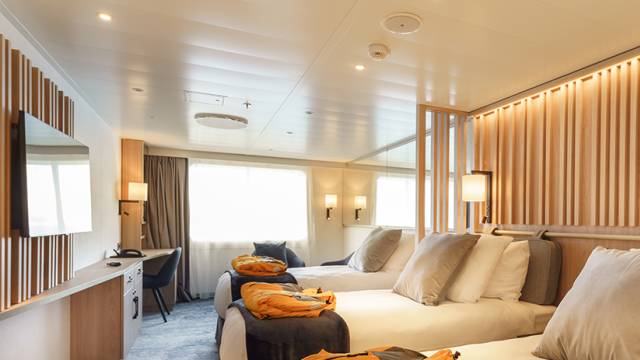
Expedition Ships









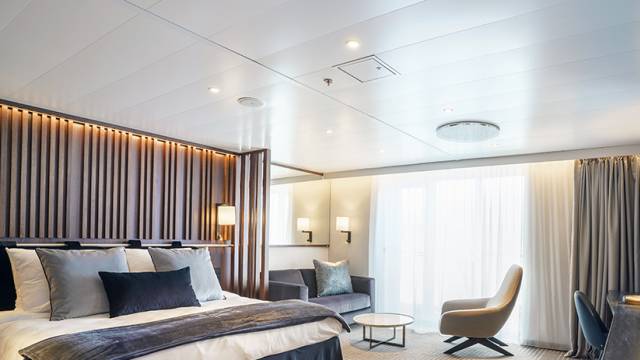


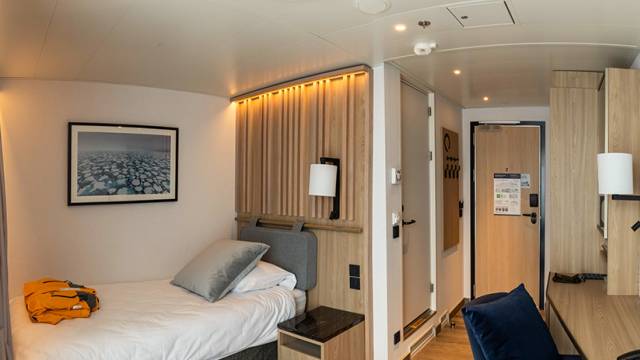


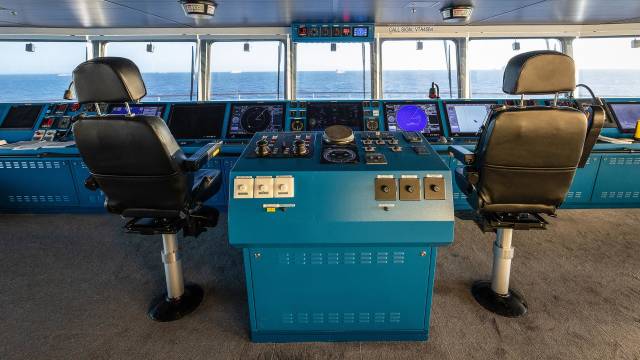


Possible Excursions
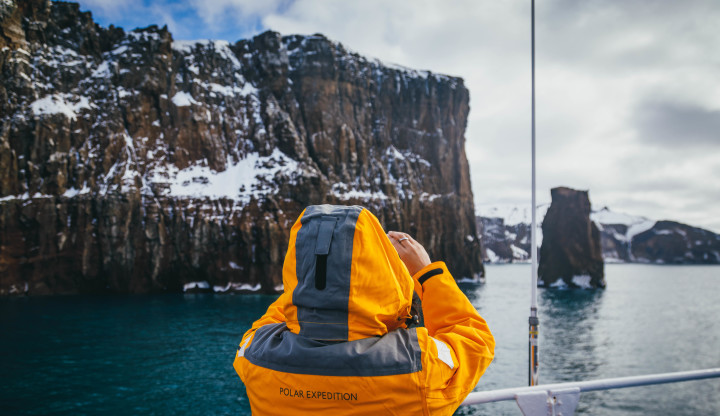
When traveling in extremely remote regions, your Expedition Team must consider the sea, ice and weather to guide the route and itinerary details. The following sites are a sample of what you may experience on your expedition, whether by ship, Zodiac cruise, helicopter, or shore landing.
South Shetland Islands

Antarctic Peninsula

The Antarctic Circle
South Shetland Islands
-
Aitcho Islands
This group of small islands, some still unnamed, is situated in the northern entrance of the English Strait. You can often spot a great mix of wildlife in the area, with gentoo and chinstrap penguins having established rookeries on the islands. Southern elephant and fur seals frequently haul out here, too.
-
Deception Island
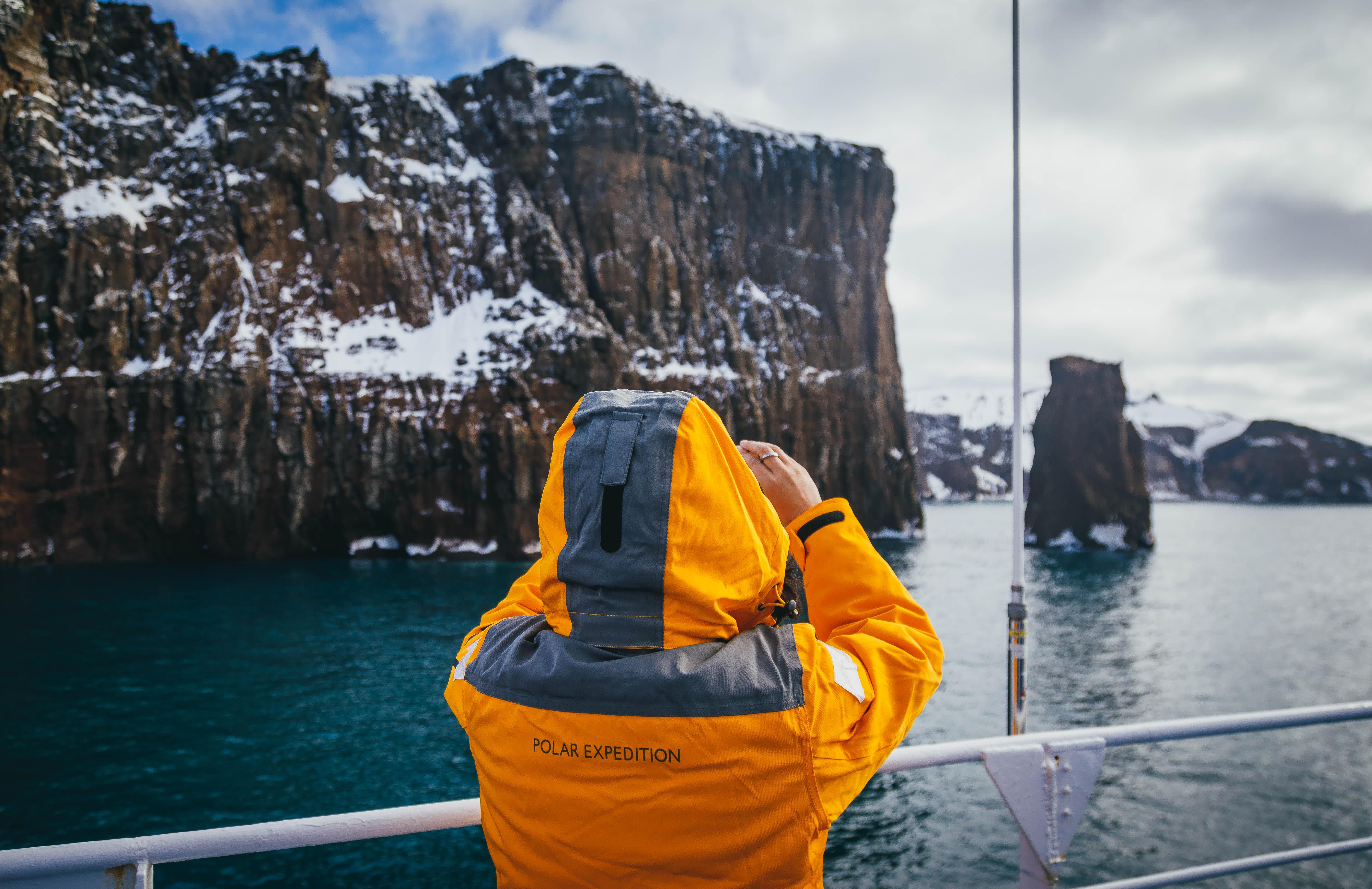
Deception Island is a flooded circular caldera formed by the collapse of an active volcano. To reach this protected harbor, it is necessary to sail through a narrow passage called Neptune’s Bellows. Inside are several bays used at various times for whaling and scientific research. Along with waddling penguins and lounging seals, you’ll see the rusting remains of whaling operations on the beach in some locations. The landscape of Deception Island often presents opportunities for longer walks to striking vistas. The stark contrast between snow and dark volcanic sand and the steam along the shoreline from geothermic activity when the tide is right, gives this location an atmospheric feel.
-
Yankee Harbour
Gentoo penguins have established a rookery at this harbor, situated on the southwest side of Greenwich Island. Here, you can see an abandoned Argentine refuge hut and a large glacier that stretches along the east and north sides of the bay. An abandoned sealing try pot is all that remains of the activity that brought men thousands of miles in tall ships to seek their fortune. Enjoy a rare chance for a longer walk along the expansive beach, dotted with historical artifacts and wildlife.
Antarctic Peninsula

-
Paradise Harbour (Paradise Bay)
Paradise Harbor is a wide bay and natural harbor on the West Antarctic Peninsula. Mountains, glaciers and ice cliffs offer spectacular views. Icebergs regularly calve from the glaciers, providing a place for seals, penguins and seabirds to rest and play. An Argentine research base, Almirante Brown Station—named after Admiral Guillermo Brown, father of the Argentine Navy—is also located in Paradise Harbor, and was operated from 1951 until a large section of it burned down in 1984. It has since been partially rebuilt and is used as a summer research base.
-
Yalour Islands
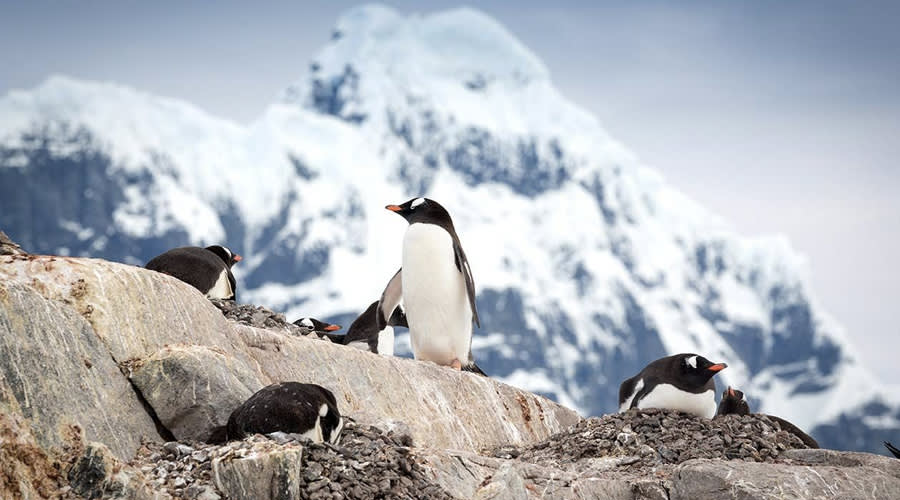
These islands were named for an Argentine Navy lieutenant who rescued the shipwrecked members of the Swedish Antarctic Expedition in 1903. Approximately 8,000 pairs of Adélie penguins nest in the islands, sometimes parading for visitors. Yellow lichens and grass give colour to the landscape, and icebergs are easy to spot from your Zodiac cruise.
-
Lemaire Channel
One of the most scenic locations on the peninsula’s west coast, this dramatic strait runs between Booth Island and the Antarctic Peninsula. The channel may become impassable when ice fills the narrow, 6.8-mile (11 km)-long passageway, so we’ll hope for clear waters.
The Antarctic Circle
-
Carvajal Station
On the southwest extreme tip of Adelaide Island lies a handful of red huts connected to Chile’s Teniente Luis Carvajal Villaroel Antarctic Base, often simply called Carvajal Station. Originally built by the Falkland Islands Dependency Survey in 1961, it was known as Station T. The glacier in the background provided an ideal skiway for aircraft, and from 1961 to 1977 the British Antarctic Survey (BAS) used the base for meteorology, glaciology and geology research. When the skiway deteriorated, the BAS closed the base and transferred operations to nearby Rothera Station. In 1984, seven years after the British closure, the BAS transferred it to Chile, who have since operated it as a summer base. Today, while the base contains laboratory facilities, its function is mainly logistical: it’s used by the Chilean air force as a jump-off point for exploration into the interior of Antarctica. The buildings lie on a patch of bare rock of the predominantly glaciated Adelaide Island.
-
Crystal Sound
Crystal Sound, home to various islands named after scientists who studied ice crystals, is cut by the Antarctic Circle and is thus a “quarry” sought by people who feel they absolutely must cross this imaginary line. Ships usually don’t get this far south along the Antarctic Peninsula until the very end of the austral summer, when ice cover is at a minimum. Even then, it’s a long ride through the Penola Strait—with lots of ice. There’s the potential to see towering icebergs that reach 30 to 50 meters (18.5 miles to 30 miles) high. Some of the smaller islands within the Barcroft Islands have no ice cover and little snow, revealing greenish-tan, homogeneous textured, well-jointed rocks.
-
Debenham Islands
These islands, located in northeast Marguerite Bay, were first surveyed during the ground-breaking British Graham Land Expedition (BLGE) of 1934-37 and named in honor of Frank Debenham, who was a member of the advisory committee for the BLGE. He was also founder and first director of Scott Polar Research Institute. In fact, Debenham, as a younger man in 1910, joined Captain Scott’s Antarctic Terra Nova expedition as a geologist. The six main islands—Ann Island, Audrey Island, Barbara Island, Barry Island, Brian Island and June Island—are named after Debenham’s six children.
-
Detaille Island
Detaille Island lies in Lallemand Fjord, just south of the Antarctic Circle. Station W, of the British Antarctic Survey, is a historical research hut established in 1956. Researchers overwintered here, setting out on expeditions and conducting scientific investigations. Stepping inside is a walk back in time as the hut has been impeccably preserved. Revel in 1950s memorabilia such as jars of HP Sauce and canned butter, a little beyond their expiry dates, and imagine overwintering here, below the Circle.
-
Fish Islands
The Fish Islands are located west of Prospect Point, off the western extremity of Graham Land. Individual islands are named after different fish species; hence, Flounder Island and the islets known as The Minnows. The islands are low-lying and occupied by an estimated 4,000 breeding pairs of Adélie penguins between 12 colonies. Blue-eyed shags also breed on the islands. This area is known for its stunning glacial scenery and tabular icebergs birthed from ice shelves further south in the Bellingshausen Sea.
-
Horseshoe Island
Named for a horseshoe-shaped arrangement of peaks that reach 600 to 900 meters (1,950 to 2,950 feet), this island lies in the northeast corner of Marguerite Bay, on the Graham Land coast of the Antarctic Peninsula. Discovered in 1937 by Australian John Rymill of the British Graham Land expedition, the island played an important role in both British and, subsequently, Antarctic history because of its research station, Base Y or colloquially, Horseshoe Base (HSM 63). Built in 1955 by the Falkland Islands Dependency Survey, the research station’s purpose was geological and survey work. Today it remains as a time capsule of another era. At that time in Antarctic history, airplanes were being introduced and Horseshoe and Detaille Islands provided a ground control network for aerial photography. In an unusual twist of scientific endeavor in 2019, Turkey launched their third Antarctic expedition and chose Horseshoe Island to set up their first meteorological station, transforming the British legacy on this once forgotten island.
-
Petermann Island
Here, near the Lemaire Channel, you can stand ashore and see the southernmost breeding colony of gentoo penguins. Adélie penguins, shags and south polar skuas also inhabit the island.
-
Pleneau Island
The 1.2 kilometer-long (1 mile, approximately) Pleneau Island lies just south of the Lemaire Channel, separating Hovgaard Island and the Antarctic Peninsula. Here we can find an iceberg garden, where both large tabular icebergs and older, rolled icebergs (also known as overturned or flipped) have run aground. Many of these icebergs have originated from as far south as the Ross Ice Shelf. From the cobbled beach on the eastern coast, smooth rock terraces slope gently upwards towards a large crevassed ice-cap, which covers the western two-thirds of the island. Leopard seals can be seen off-shore, and Weddell and Southern Elephant seals regularly haul out here. The island is also home to South Polar skuas, Kelp gulls, Gentoo penguins, Blue-eyed shags and Antarctic terns. Keep your eyes out on possible shore landings for swards of moss species, Caloplaca. and other lichens, green algae such as Prasiola crispa, and snow algae.
-
Port Charcot
Port Charcot lies on the northern coast of Booth Island (previously named Wandel island). It was discovered by Jean-Baptiste Charcot in 1904 and named for his father. Charcot’s crew spent the winter of 1904 in this location. Their ship, the Français, was moored here and although the men slept on board the ship, they established a shore station for scientific observations and as an emergency shelter.
-
Pour Quoi Pas Island
Why Not Island—translated from its French name—was discovered by the French Antarctic Expedition led by Jean-Baptiste Charcot. However, it was later named by John Rymill of the British Graham Land Expedition (1934–37) after Charcot’s ship, Pourquoi-Pas?
At 27 kilmeters (17 miles) long, this is a sizeable, glaciated island at the northern end of Marguerite Bay, between Adelaide Island and Graham Land. Adding to its intrigue, several landmarks are named after characters from Jules Verne’s Twenty Thousand Leagues Under the Sea, including Mount Arronax. Rising to 1,585 meters (5,200 feet), the peak dominates the surrounding landscape.
Adélie penguins nest here, while Weddell seals haul out along the shore. Later in the season, Antarctic fur seals may also be observed. Expanses of glacial debris add a strong geological and glaciological dimension to any landing.
-
Red Rock Ridge
Red Rock Ridge rises steeply from Marguerite Bay to 2,264 ft (690 m). It’s no wonder that Jean-Baptiste Charcot, John Rymill, and the Falkland Islands Dependency Survey explored and surveyed it. Charcot named it Cap Pavie or Ile Pavie in 1909, but later it was Rymill that provided the descriptive name. Picturesque, the red-hued rock has been smoothed and rounded by erosion, seeming more reminiscent of Utah or Arizona than Antarctica. A short climb from shore offers spectacular views of Marguerite Bay and lovely place to sit and feel immersed in a different kind of Antarctica. The serene views lie in contrast to the assortment of wildlife ashore and plying the waters including nesting Adélies and Antarctic Cormorants as well as seal and whale species.
-
Stonington Island
Two abandoned research stations can be found on this island south of the Antarctic Circle. The first women to overwinter in Antarctica were housed at East Base. The British built Base E is about 656 feet (200 m) away from East Base, which was built by the United States Antarctic Service Expedition.
-
Stonehouse Bay
Tucked into the inner coast of Adelaide Island is Stonehouse Bay, a cathedral of ice and rock branching off Laubeuf Fjord, which separates Adelaide Island from Graham Land. At 139 kilometers (86 miles) long, Adelaide Island is both sizable and mountainous. Its extensive glaciation results in the island’s largest glacier, Shamble’s Glacier, at 10 kilometers (6.2 miles) wide, pouring into Stonehouse Bay, with Stoke’s peaks peering over the iceberg-strewn waters. While Adelaide Island was discovered during the British Southern Ocean Expedition led by John Biscoe in 1832, it was surveyed by Jean Baptiste Charcot on the French Antarctic Expedition of 1909. The bay was named by the British after Bernard Stonehouse, a leader, biologist and meteorologist of the Falkland Islands Dependency Survey.
-
The Gullet
As its name suggests, The Gullet is an extremely narrow and dramatic passage way between Adelaide Island and Graham Land. Jean-Baptiste Charcot f irst surveyed the area and speculated its existence by sketching it on his expedition charts. But it was John Rymill of the British Graham Land Expedition of 1936 who navigated and surveyed the narrow channel, followed by the Falkland Islands Dependency Survey, resurveying and naming it in 1948. This channel, which connects Laubeuf Fjord to the south with Hanusse Bay to the north, provides a spectacular shortcut between the two waterways—when it’s ice-free and navigable.
Your Life Onboard
This is polar exploration at its finest. Our ships are intimate, luxurious floating hotels, packed with exciting experiences.


Enjoy panoramic views while you mingle in our comfy lounges, or head outside and chat with fellow adventurers on the wraparound deck. Our social spaces foster connections & shared experiences.

Engage with world-class experts in our auditorium. Presentations cover wildlife, history, marine biology, ecology, & geology, to enhance your polar knowledge & excitement for exploration.

Enjoy onboard amenities, attend lectures, or watch for wildlife from our observation decks. Sea days offer a perfect blend of education, relaxation, and anticipation.

Find tranquility in our well-stocked library, perfect for reading or quiet contemplation. The glass-domed Observation Lounge offers a peaceful retreat to reflect & enjoy awe-inspiring polar views.

Prepare for off-ship excursions in our spacious mudroom. Kayak, paddleboard, or take a plunge in polar waters. Stay active onboard with our gym, outdoor track, and pool facilities.


Know Before You Go
For your personal safety—and to ensure you get the most enjoyment out of your polar adventure—please assess your mobility and medical requirements before booking. It is essential that guests have a high level of mobility to get in and out of Zodiac boats, and for off-ship activities such as hiking on uneven terrain. Our destinations are remote. Apart from our basic ship infirmary, it could take up to 72 hours to reach adequate medical facilities. For more details to help you assess your mobility and medical requirements before booking your voyage, please review Health & Safety.
Some of our expeditions have included transfers and these will be detailed in your Invoice and Trip Brochure.
Please note that if you have an airport transfer included in your trip, it is only available if you arrive on Day 1 of the itinerary. Please ensure your flight information on your Passenger Forms is up to date so our ground crew know when to expect you. There will be someone with a sign in Arrivals waiting for you. Please look for them and they will direct you to our group shuttle.
If you do not have included transfers, or you are arriving before Day 1, you will need to make your own way to the hotel. Most airports we travel in and out of have good taxi ranks in the Arrivals area, or you can often prebook a transfer online.
Packing is an exciting part of the trip for many of us. You will find a handy packing list towards the end of your Trip Brochure. You will have received a copy of this when you first booked. We also have two excellent videos, which you can check out here: What to Pack
Whether you are thinking of an expedition, or you’ve booked the trip of a lifetime with Quark Expeditions, review all our FAQs for comprehensive tips to help you prepare for the Polar Regions and how to make the most out of your voyage with the most experienced expedition team in the industry. If your specific question isn’t covered below, please reach out to your Polar Travel Advisor or helpful Client Experience Team at customerops@exodus.co.uk.