


GUIDED PHOTOGRAPHY PROGRAM
Learn from the Best Photographers in the Polar Regions
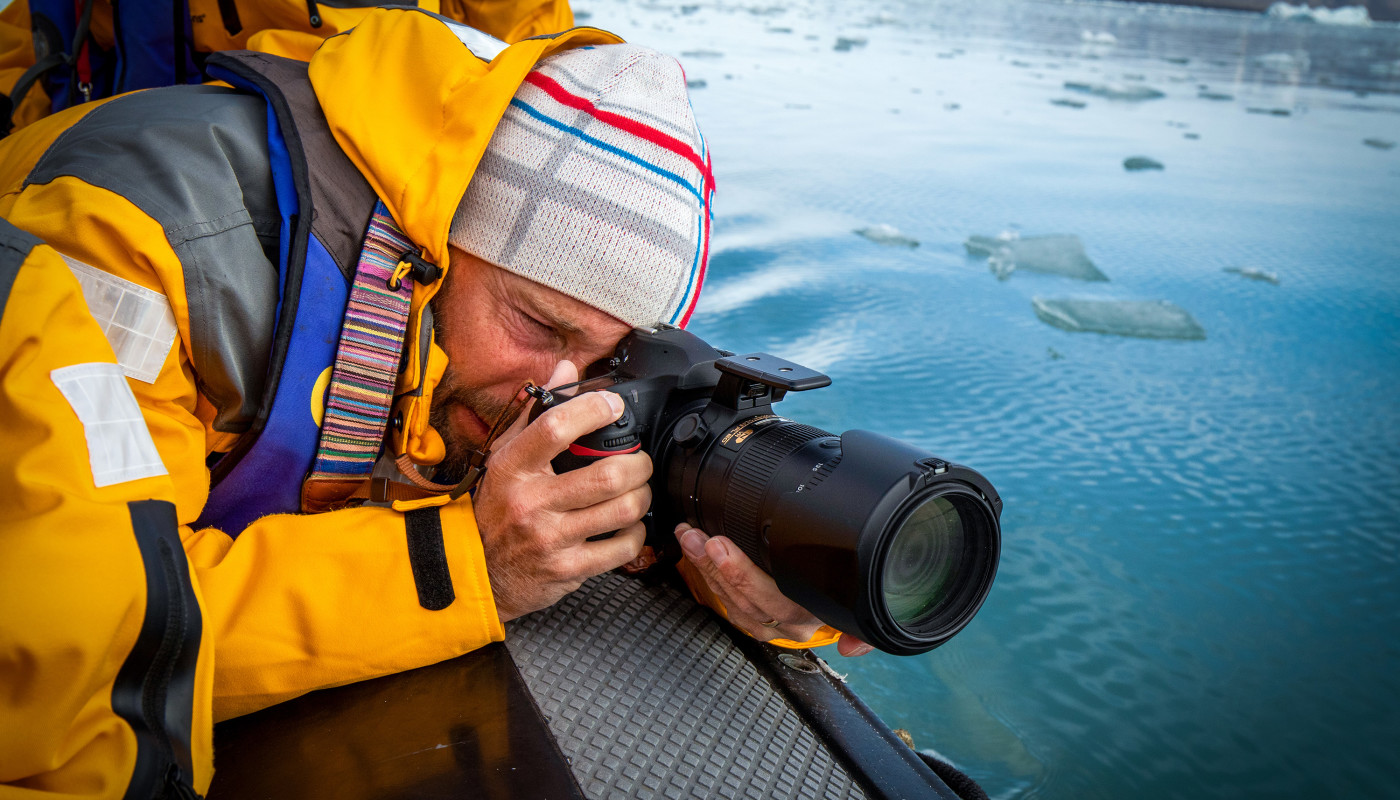
In our Guided Photography Programme, you’ll spend the voyage with a professional photographer who coaches you both in the field and on the ship. You’ll learn to recognize great photo opportunities, grow more comfortable with your camera, and refine your technique.
Programme Highlights
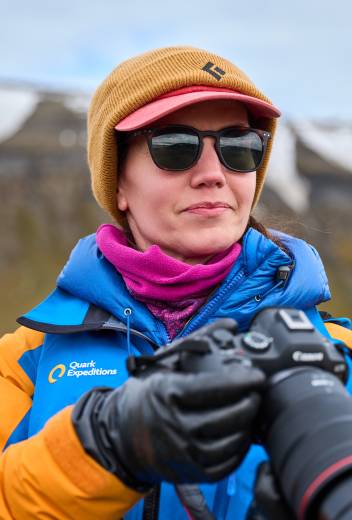
World-Class Photographers
Develop your skills with professional polar photographers who are with you throughout the voyage.
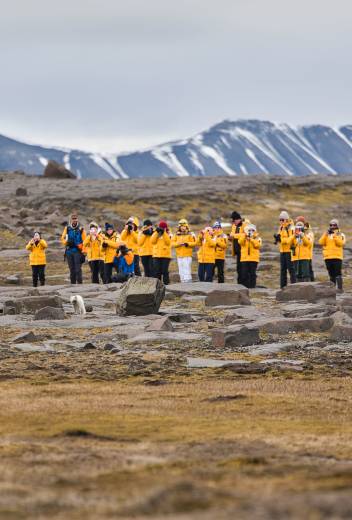
Professional Guidance
Get help spotting photo opportunities, choosing camera settings, and positioning for the shot.
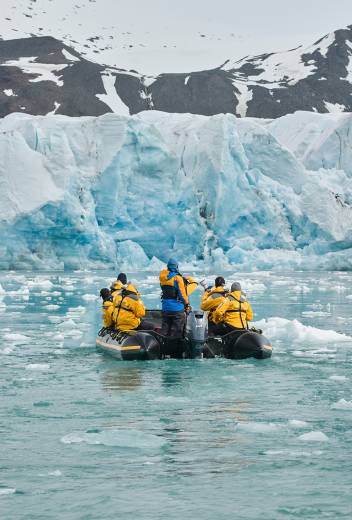
Maximize Time Off-Ship
Be among the first Zodiacs out and the last back, so you spend more time photographing polar landscapes.
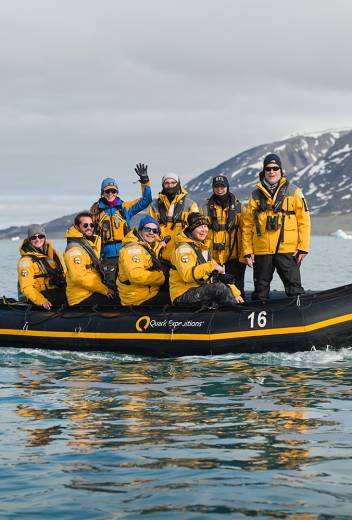
Small Group Learning
Only 8 guests in each Zodiac, brought together by your common interest in photography.
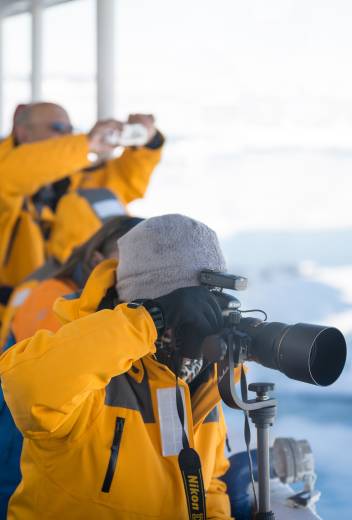
On-Ship Workshops
Receive additional guidance on composition, exposure, and shooting in the polar regions.
Get to Know Our Photographers
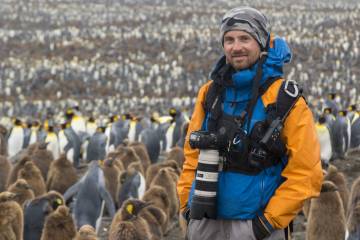
David Merron
Joined Quark Expeditions in 2014
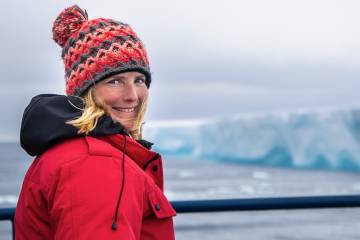
Nicky Souness
Joined Quark Expeditions in 2015
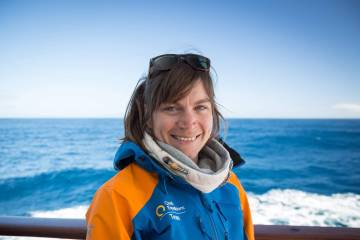
Françoise Gervais
Joined Quark Expeditions in 2017
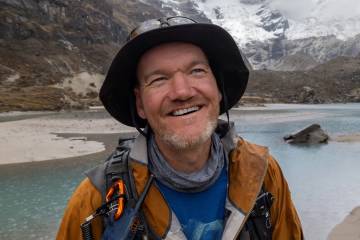
Kris Andres
Joined Quark Expeditions in 2019
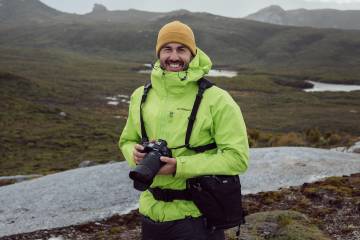
Scott Sinton
Joined Quark Expeditions in 2022
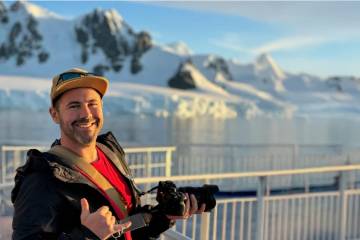
Jarryd Salem
Joined Quark Expeditions in 2025
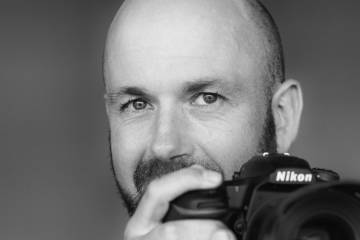
Steve Bradley
Joined Quark Expeditions in 2025
Programme Details
Skills You’ll Develop
- General photography tips specific to the Arctic and Antarctica
- Creative composition in the polar regions
- Getting out of auto settings (understanding the exposure triangle, camera modes, and manual settings)
- Mastering exposure compensation
- Working with focus areas and modes
- Growing smartphone photography skills
- Backing up, cataloging, and archiving images
- Basic editing using any software
- Advanced editing using Lightroom
- Video workshop for those interested
Key Programme Information
- Add-on adventure option
- Up to 16 guests per voyage
- 1 to 3 hours per outing
- Ability to enter and exit a Zodiac is required
- No past photography experience is required
- Available on select Ultramarine and Ocean Explorer voyages
Suggested Equipment
On top of the warm clothing you’ll need in the elements, we recommend the following to get the most from this programme.
- DSLR or mirrorless camera (recommended), point-and-shoot camera, or newer smartphone
- Camera lenses (if using a DSLR or mirrorless) that cover the following ranges, in full-frame equivalent:
- Wide-angle: 16-24mm, for landscapes and icebergs
- Standard zoom: 24-70mm, for general shots and scenes on land
- Telephoto: 70-200mm to 400mm for Antarctica, up to 600mm for the Arctic, for wildlife
- Spare batteries and chargers
- Memory cards
- Laptop or tablet to view, back up, and edit your images, with any adapters needed for your memory cards
- External hard drive for backing up your images
- Waterproof camera bag, or a dry bag that your camera bag fits into
- Warm gloves or glove liners that let you operate the camera (touchscreen-compatible if using a smartphone)
- Camera rain cover
- Camera strap (wrist or neck)
Frequently Asked Questions
A high-end smartphone is fully capable of capturing great photos, particularly in Antarctica, and our photographers are happy to coach you on any device you choose to bring. Ideally, bring a phone with multiple lenses so you can shoot wide, standard, and zoom. Keep in mind that even phones with a telephoto lens fall short of a long camera lens for distant subjects, and digital zoom (cropping in on the image) reduces quality noticeably.
For the best results, we recommend a camera with interchangeable lenses. A wide-angle lens (around 24mm full-frame equivalent or wider) suits landscapes and icebergs, and a 70–200mm or 100–400mm zoom helps with wildlife in Antarctica.
In the Arctic, a long lens matters more, since wildlife is often farther away and hard to capture on a phone. For example, polar bear sightings can be more than 500 meters away, so a 200–600mm lens is the minimum we recommend.
Some guests bring both a camera for standard and zoom shots and a phone for wide-angle scenes, where phones often perform well.
No past photography experience is required. However, we recommend this programme for guests who:
- Have an interest in photography and a desire to grow their skills.
- Have the patience to capture the right shot.
- Are open to working with others.
- Are comfortable with a slower pace while photographing.
The programme has a maximum capacity of 16 guests across 2 Zodiacs (8 guests per Zodiac).