


Antarctic · From 12 Days
Antarctic Peninsula
A Rare Exploration of the Weddell Sea
Starts from $19,695 USD
$16,741 USD
-

default
-
-

-
-
-
- Starting from
- Ushuaia, Argentina
- Ships
- Ocean Explorer
- Departures
- 1 Departure in December 2027
From $19,695 USD
$ 16,741 USD
default





Expedition Overview
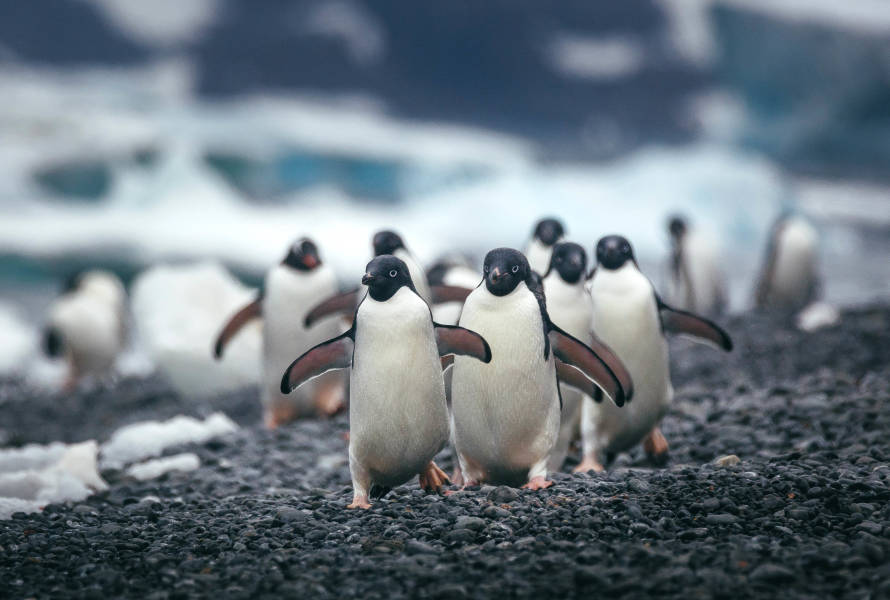
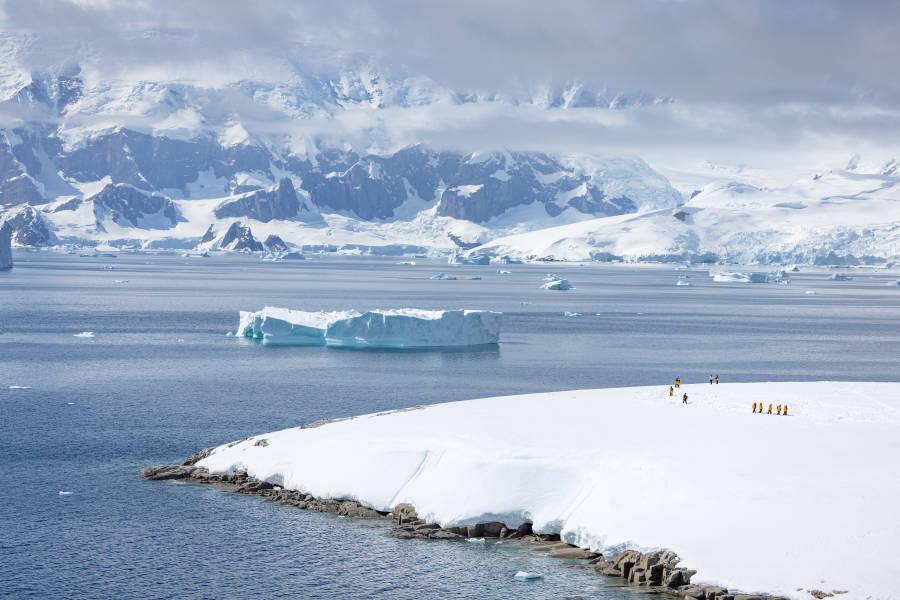
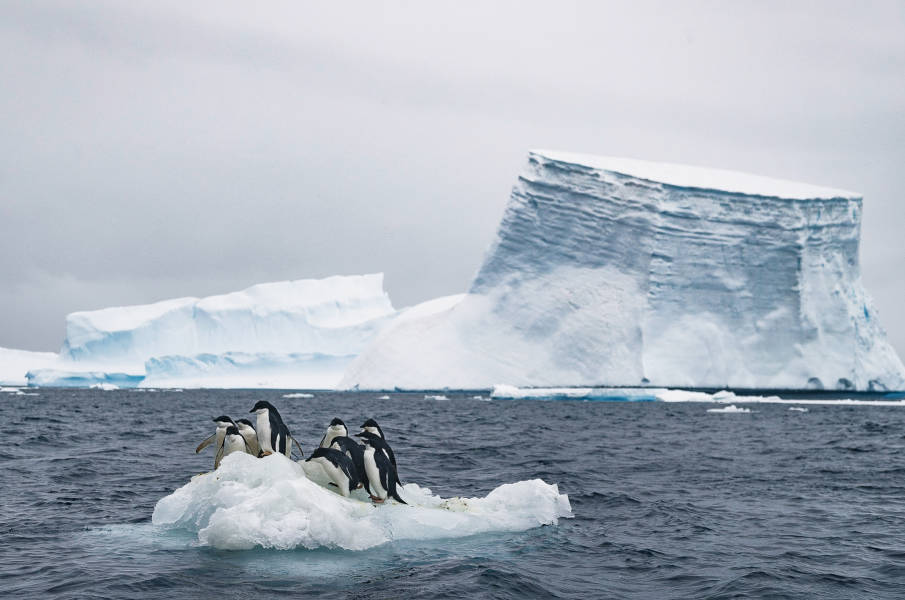
Spend more time in the remote, ice-laden Weddell Sea—home to massive Adélie penguin colonies and colossal tabular icebergs—than you ever imagined possible. While many Antarctic itineraries attempt to include the Weddell, they typically spend just a day here, two at most. Our 12-day Antarctic Peninsula: A Rare Exploration of the Weddell Sea devotes three to four days in the farthest reaches of the Weddell Sea and Antarctic Sound. In fact, our arrival in Antarctica coincides with the Winter Solstice, December 21, 2027. Guided by our seasoned Expedition Team, this route is designed with maximum flexibility to adapt to shifting conditions and reach rarely visited sites few travelers ever see.
Highlights
Join a rare, in-depth journey into the remote Weddell Sea and Antarctic Sound
Photograph massive flat-topped tabular icebergs
Visit archeological sites amid volcanic and scenic landscapes
See tens of thousands of Adélie penguins
Spot a variety of whales: Humpbacks, minkes, fin, and, possibly, killer whales.
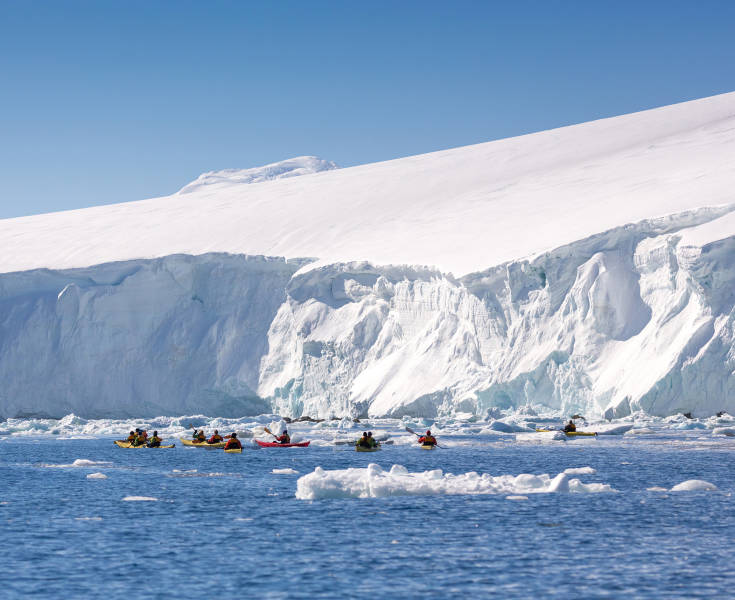
Explore off-ship by Zodiac and kayak.
Select Your Season & Itinerary
Select Season
Ushuaia, Argentina
12 Days · Ocean Explorer
Starts from $16,741 USD
Select Itinerary
Ushuaia, Argentina
12 Days · Ocean Explorer
Starts from $16,741 USD
12 Days – From Ushuaia, Argentina on Ocean Explorer (Season 2027.28)
Day By Day & Map
-
Day 1
Arrive in Ushuaia, Argentina
You may arrive in Ushuaia at any time on Day 1. Many guests choose to arrive a day or two before embarkation day to explore this quaint port city at the bottom of South America, and the surrounding region. Based on the arrival information you send in advance, we will arrange for a transfer from the airport to your hotel.
-
Day 2
Embarkation
Embarkation will occur in the late afternoon, after which your vessel will sail down the historic Beagle Channel, transecting the Tierra del Fuego archipelago in the extreme south of South America. Expect an air of anticipation as you depart—the next time you see land, you’ll be at the world’s most southern continent.
-
Day 3 & 4
At Sea: Crossing the Drake Passage
You have many options of activities during the 800-km (500 mile) Drake crossing. As you gain your sea legs, our Expedition Team will begin their series of presentations to help prepare you for your upcoming Zodiac and land excursions. You officially enter Antarctica when your ship crosses the Antarctic Convergence, a boundary that f luctuates around 60° south. This is also a great opportunity to meet your fellow travelers—many of whom will become friends by the voyage end.
-
Day 5 to 9
Antarctic Sound and the Weddell Sea
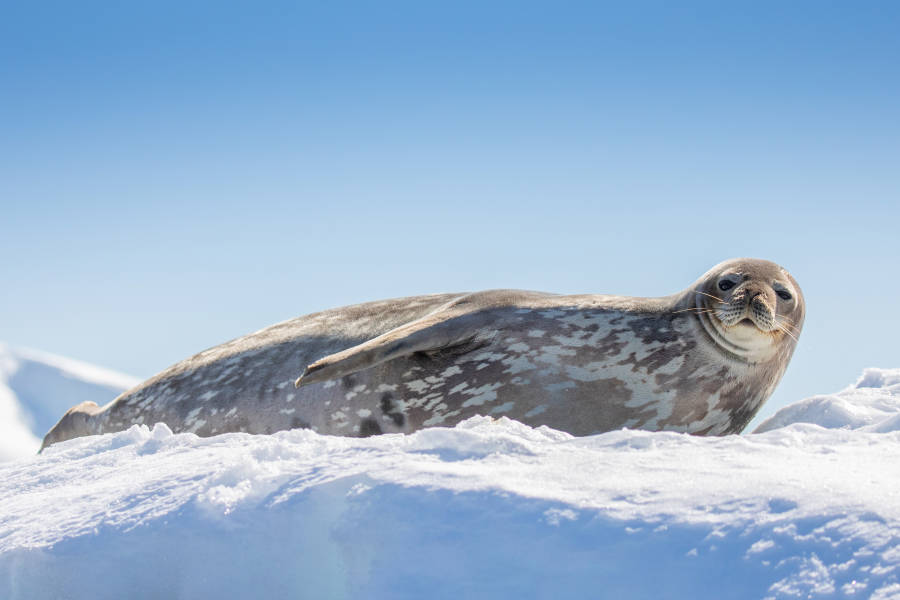
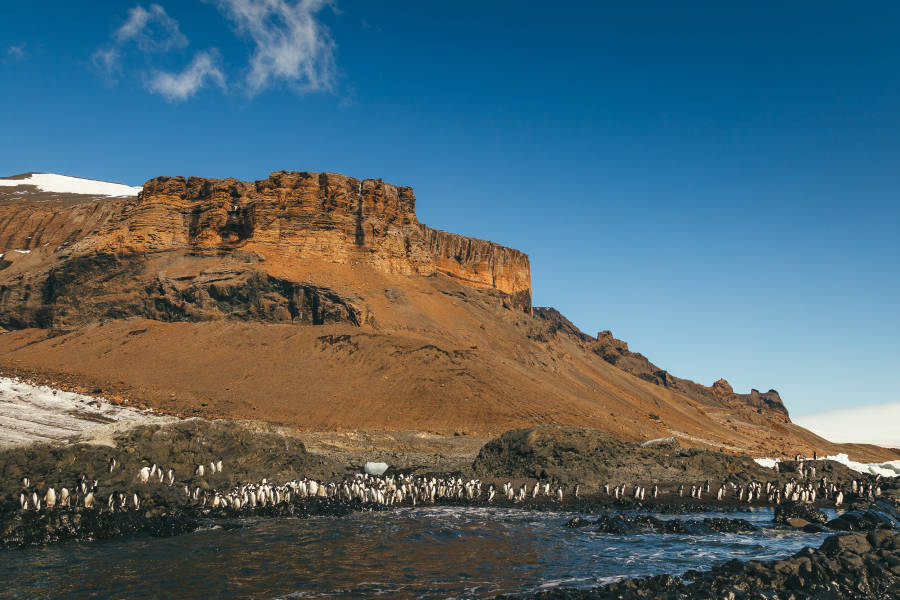
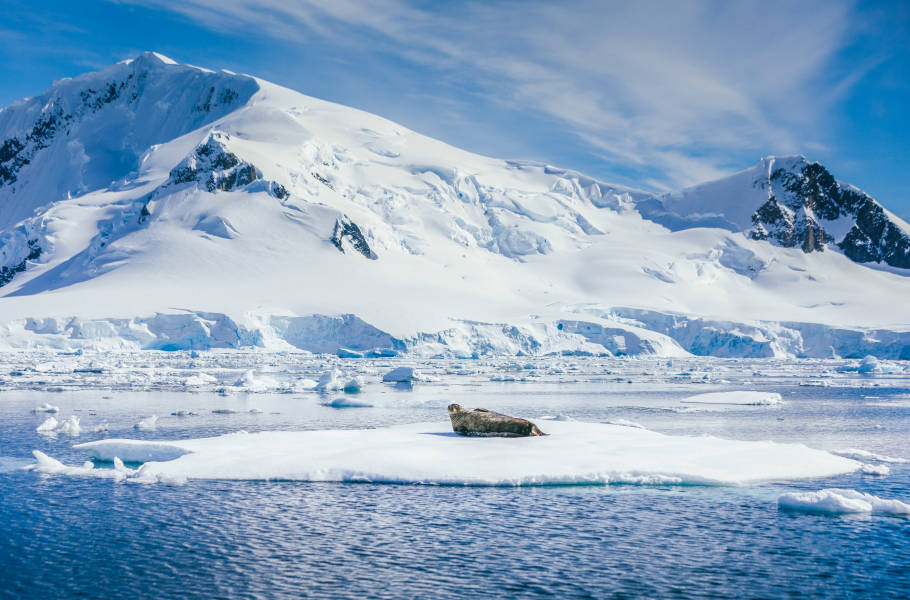
One word best describes the Weddell Sea and Antarctic Sound: immense. That applies equally to the ice formations, penguin colonies, and vast stretches of sea. In Antarctic Sound and the Weddell Sea, we will encounter massive tabular icebergs. These bergs don’t calve from tidewater glaciers but from ice shelves— and many will dwarf Ocean Explorer. Some in the Weddell Sea reach the size of a football field or larger. Their smooth, tabletop-flat surfaces reflect the ocean beneath: flat seas yield flat ice. Ice shelves stretch from land into the sea. In the northwest corner of the Weddell Sea, penguin colonies can number in the tens of thousands. For travelers seeking Adélie penguins, Antarctic Sound and the Weddell Sea offer prime viewing of this iconic species—the most southerly breeding penguin, and possibly bird, on Earth (though snow petrels, prevalent here, are also a contender for that crown). Gentoo penguins are found here too, and you’ll have chances to spot chinstraps. The legendary Snow Hill Emperor colony lies in this region; while we won’t reach it, we may encounter individual members on the ice. The Weddell Sea is less visited than the Gerlache Strait, not for lack of beauty, but due to its ever-shifting ice. On this voyage, we’ve added an extra day in this area—time enough for a true adventure into this endless wilderness, and to ensure we can fully embrace the dance with the ice. In the Weddell Sea, penguins are our priority—but ice will guide our course. Alongside towering tabular icebergs, we’ll likely encounter vast stretches of sea ice, more than on the Peninsula’s west side. Your Expedition Team and bridge officers will track charts and forecasts, seeking openings to navigate toward the region’s highlights, and intentionally visiting the ice edge to maximize our time in this remarkable environment. Our route will be shaped by sea ice and weather, but every destination— whichever we visit first or last—will be exceptional, evoking words like profound, humbling, and surreal. We’ll make every effort to visit large Adélie penguin colonies—at Brown Bluff, Paulet Island, or Tay Head—ranging from 20,000 to several hundred thousand penguins, including gentoo. Photos and documentaries can’t match the experience of standing before tens of thousands of penguins. The sounds alone—partners calling, chicks crying for parents, wind and waves against the shore, and the distant crack of calving glaciers—create an acoustic landscape of pure wildness. Add the sight of a penguin-covered landscape, and you have an encounter that’s impossible to replicate. The currents of Antarctic and Active sounds are mesmerizing. While you’re in a Zodiac, you may observe ice—large and small—flowing through narrow straits at several kilometers per hour, a raw display of the power of water. From shore, you may glimpse or sense the ice’s movement. Your Zodiac may pass through open water, while your return ride could weave among drifting floes, crackling brash, and scattered bergy bits. The Weddell Sea is known for superb birdwatching—especially cape, snow, and southern giant petrels—and the chance to spot Weddell, crabeater, or leopard seals onshore or catching rides on the drifting ice. Sightings may occur near Adélie colonies or at sites like Kinnes Cove and Active Sound. When ice opens in the Weddell Sea’s northwest, whales follow—lured by the feeding opportunities. Humpbacks and minkes are most common, with occasional killer whales. Conditions may also allow us to explore areas frequented by fin whales, and possibly southern rights. For historians, the Weddell Sea brims with stories—from Shackleton’s legendary Endurance survival and Nordenskjöld’s gallows-humored ordeal on Antarctic to far older histories told by the 60-million-year-old fossils on The Naze, Vega Island, and Cockburn Island. Fossils are discovered here partly because large areas remain relatively snow-free. Volcanic activity has painted these sites—as well as Brown Bluff on the Peninsula’s mainland—in rich reds, burnt oranges, and chocolate browns. In a landscape dominated by white, gray, and blue, these colors add a vivid layer to a region steeped in both human and ancient geological history. This itinerary offers the best of a polar expedition—soak in the vastness of the Weddell Sea and Antarctic Sound from your ship, then get up close to stunning geological formations by Zodiac or kayak.
-
Day 10 & 11
At Sea: Homeward-bound across the Drake Passage
The journey back across the 800-km (500 mile) Drake Passage provides final opportunities to enjoy the crisp Antarctic air, spend time on the outer deck watching for seabirds and whales, or attending one of our team’s expert-led polar presentations.
-
Day 12
Disembark in Ushuaia
Your ship is scheduled to arrive in Ushuaia between 7 a.m. and 8 a.m. Once the ship has docked, you will bid farewell to your Expedition Team and shipmates before completing your disembarkation. You are then free to take advantage of the included transfer to the airport or, depending on the time of your flight, explore the town on your own and take a taxi to the airport later.

What’s Included & Excluded
- An official Quark Expeditions parka to keep
- Leadership throughout the voyage by our experienced Expedition Team, including shore landings and other activities
- All Zodiac transfers and cruising as per the daily program
- All shore landings as per the daily program
- Shipboard accommodation with daily housekeeping
- All meals, snacks, soft drinks and juices on board throughout your voyage.
- Complimentary select beer, wines and cocktails during bar service hours and dinner
- Complimentary coffee, tea and cocoa available around the clock
- Formal and informal presentations by our Expedition Team and guest speakers as scheduled
- A photographic journal documenting your expedition
- A pair of waterproof expedition boots on loan for landings and Zodiac cruising excursions
- Hair dryer and bathrobes in every cabin
- Complimentary Wi-Fi service on one device permitting basic Internet browsing, email, posting on social media and voice applications. (Premium packages are available for more data-intensive applications.) Note: Internet access in the polar regions is subject to geography, climate, and other factors beyond our control.
- All miscellaneous service taxes and port charges throughout the program
- All luggage handling aboard the ship
- Group arrival transfer in Ushuaia from airport to pre-expedition hotel on Day 1
- One night’s pre-expedition hotel accommodation in Ushuaia with breakfast. (Note: The number of guests per room is the same as cabin occupancy on the ship. Due to limited availability, travelers who reserve a suite on board are accommodated in standard rooms at the hotel. Triple rooms may not be available.)
- Group transfer from hotel to ship on embarkation day
- Group departure transfer upon disembarkation in Ushuaia from ship to local airport or to luggage.
- International airfare
- Passport and applicable visa expenses
- Government arrival and departure taxes not mentioned
- Government arrival and departure taxes not mentioned
- Government arrival and departure taxes not mentioned
- Mandatory waterproof pants for Zodiac landing and cruising excursions, or any other gear not mentioned
- Laundry, bar, spa services and other personal charges, unless specified
- Phone charges may vary by location
- Our basic complimentary Wi-Fi service does not include Premium packages which enable more data-intensive applications
- Our basic complimentary Wi-Fi service does not include Premium packages which enable more data-intensive applications
- Additional overnight accommodation
- Arrival and departure transfers, except where explicitly stated
- Adventure Options not listed in Included Activities.
12 Days – From Ushuaia, Argentina on Ocean Explorer (Season 2027.28)
12 Days – From Ushuaia, Argentina on Ocean Explorer (Season 2027.28)
-
Day 1
Arrive in Ushuaia, Argentina
You may arrive in Ushuaia at any time on Day 1. Many guests choose to arrive a day or two before embarkation day to explore this quaint port city at the bottom of South America, and the surrounding region. Based on the arrival information you send in advance, we will arrange for a transfer from the airport to your hotel.
-
Day 2
Embarkation
Embarkation will occur in the late afternoon, after which your vessel will sail down the historic Beagle Channel, transecting the Tierra del Fuego archipelago in the extreme south of South America. Expect an air of anticipation as you depart—the next time you see land, you’ll be at the world’s most southern continent.
-
Day 3 & 4
At Sea: Crossing the Drake Passage
You have many options of activities during the 800-km (500 mile) Drake crossing. As you gain your sea legs, our Expedition Team will begin their series of presentations to help prepare you for your upcoming Zodiac and land excursions. You officially enter Antarctica when your ship crosses the Antarctic Convergence, a boundary that f luctuates around 60° south. This is also a great opportunity to meet your fellow travelers—many of whom will become friends by the voyage end.
-
Day 5 to 9
Antarctic Sound and the Weddell Sea
One word best describes the Weddell Sea and Antarctic Sound: immense. That applies equally to the ice formations, penguin colonies, and vast stretches of sea. In Antarctic Sound and the Weddell Sea, we will encounter massive tabular icebergs. These bergs don’t calve from tidewater glaciers but from ice shelves— and many will dwarf Ocean Explorer. Some in the Weddell Sea reach the size of a football field or larger. Their smooth, tabletop-flat surfaces reflect the ocean beneath: flat seas yield flat ice. Ice shelves stretch from land into the sea. In the northwest corner of the Weddell Sea, penguin colonies can number in the tens of thousands. For travelers seeking Adélie penguins, Antarctic Sound and the Weddell Sea offer prime viewing of this iconic species—the most southerly breeding penguin, and possibly bird, on Earth (though snow petrels, prevalent here, are also a contender for that crown). Gentoo penguins are found here too, and you’ll have chances to spot chinstraps. The legendary Snow Hill Emperor colony lies in this region; while we won’t reach it, we may encounter individual members on the ice. The Weddell Sea is less visited than the Gerlache Strait, not for lack of beauty, but due to its ever-shifting ice. On this voyage, we’ve added an extra day in this area—time enough for a true adventure into this endless wilderness, and to ensure we can fully embrace the dance with the ice. In the Weddell Sea, penguins are our priority—but ice will guide our course. Alongside towering tabular icebergs, we’ll likely encounter vast stretches of sea ice, more than on the Peninsula’s west side. Your Expedition Team and bridge officers will track charts and forecasts, seeking openings to navigate toward the region’s highlights, and intentionally visiting the ice edge to maximize our time in this remarkable environment. Our route will be shaped by sea ice and weather, but every destination— whichever we visit first or last—will be exceptional, evoking words like profound, humbling, and surreal. We’ll make every effort to visit large Adélie penguin colonies—at Brown Bluff, Paulet Island, or Tay Head—ranging from 20,000 to several hundred thousand penguins, including gentoo. Photos and documentaries can’t match the experience of standing before tens of thousands of penguins. The sounds alone—partners calling, chicks crying for parents, wind and waves against the shore, and the distant crack of calving glaciers—create an acoustic landscape of pure wildness. Add the sight of a penguin-covered landscape, and you have an encounter that’s impossible to replicate. The currents of Antarctic and Active sounds are mesmerizing. While you’re in a Zodiac, you may observe ice—large and small—flowing through narrow straits at several kilometers per hour, a raw display of the power of water. From shore, you may glimpse or sense the ice’s movement. Your Zodiac may pass through open water, while your return ride could weave among drifting floes, crackling brash, and scattered bergy bits. The Weddell Sea is known for superb birdwatching—especially cape, snow, and southern giant petrels—and the chance to spot Weddell, crabeater, or leopard seals onshore or catching rides on the drifting ice. Sightings may occur near Adélie colonies or at sites like Kinnes Cove and Active Sound. When ice opens in the Weddell Sea’s northwest, whales follow—lured by the feeding opportunities. Humpbacks and minkes are most common, with occasional killer whales. Conditions may also allow us to explore areas frequented by fin whales, and possibly southern rights. For historians, the Weddell Sea brims with stories—from Shackleton’s legendary Endurance survival and Nordenskjöld’s gallows-humored ordeal on Antarctic to far older histories told by the 60-million-year-old fossils on The Naze, Vega Island, and Cockburn Island. Fossils are discovered here partly because large areas remain relatively snow-free. Volcanic activity has painted these sites—as well as Brown Bluff on the Peninsula’s mainland—in rich reds, burnt oranges, and chocolate browns. In a landscape dominated by white, gray, and blue, these colors add a vivid layer to a region steeped in both human and ancient geological history. This itinerary offers the best of a polar expedition—soak in the vastness of the Weddell Sea and Antarctic Sound from your ship, then get up close to stunning geological formations by Zodiac or kayak.
-
Day 10 & 11
At Sea: Homeward-bound across the Drake Passage
The journey back across the 800-km (500 mile) Drake Passage provides final opportunities to enjoy the crisp Antarctic air, spend time on the outer deck watching for seabirds and whales, or attending one of our team’s expert-led polar presentations.
-
Day 12
Disembark in Ushuaia
Your ship is scheduled to arrive in Ushuaia between 7 a.m. and 8 a.m. Once the ship has docked, you will bid farewell to your Expedition Team and shipmates before completing your disembarkation. You are then free to take advantage of the included transfer to the airport or, depending on the time of your flight, explore the town on your own and take a taxi to the airport later.
Explore Activities and Extensions
Activities vary by itinerary, ship, destination and are subject to weather conditions. Checkout our Itineraries to explore what’s included in each voyage.


Expedition Ships




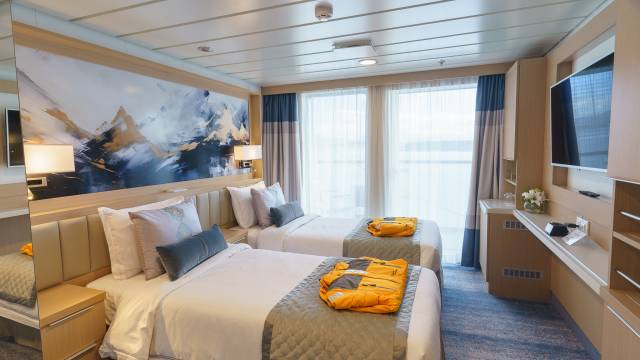

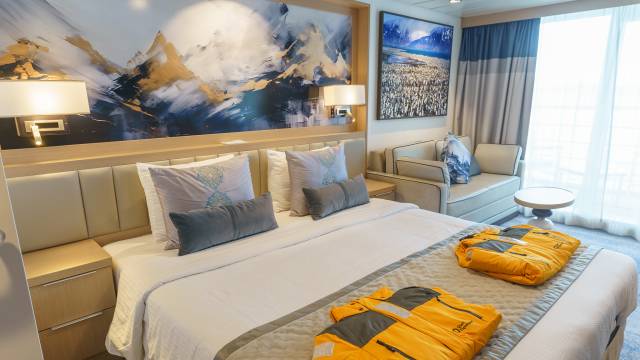


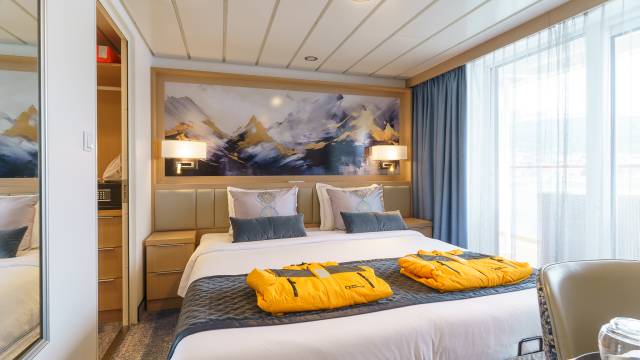


Possible Excursions
When traveling in extremely remote regions, your Expedition Team must consider the sea, ice and weather to guide the route and itinerary details. The following sites are a sample of what you may experience on your expedition, whether by ship, Zodiac cruise, helicopter, or shore landing.

Antarctic Peninsula
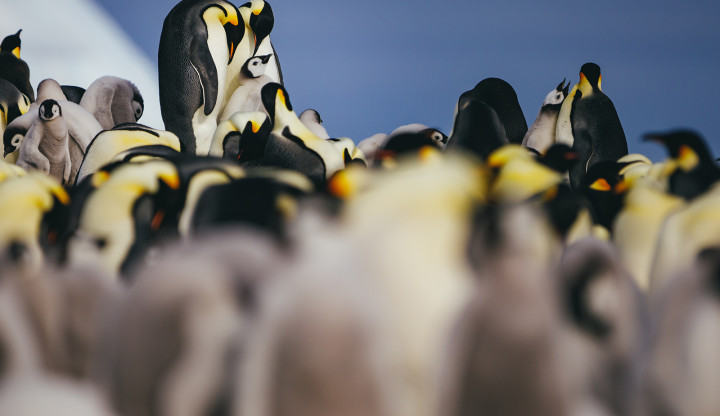
Snow Hill Island
Antarctic Peninsula

-
Active Sound
A long, narrow body of water, Active Sound separates Dundee and Joinville islands. The currents here can be extreme, making for fascinating displays of drifting pack ice and icebergs. We may Zodiac cruise among the ice and possibly spot flocks of cape petrels foraging in the rich waters.
-
Kinnes Cove
Kinnes Cove is a small, sheltered inlet on the western shore of Joinville Island. Here, we aim to offer sea kayaking, paddling, Zodiac cruising, and a challenging hike for those who are interested. From this coastal vantage point, you can enjoy sweeping views of the Adélie penguin colonies atop the hill, framed by a surrounding mountainous amphitheater.
-
The Naze
The Naze is an ice-free peninsula near the northern edge of James Ross Island. Accessing this location can be difficult, as experienced by early explorers such as James Clark Ross and Otto Nordenskjöld. In summer, its open terrain offers excellent hiking in a crevasse-free landscape. Burnt orange and rusty red volcanic rocks contrast beautifully with the surrounding blue-white ice. Remarkably, this is one of the few places in Antarctica where dinosaur fossils have been found. Near the landing site between James Ross and Vega islands, drifting sea ice and both irregular and tabular icebergs may be visible.
-
Tay Head
Tay Head is a striking headland at the northeastern tip of Joinville Island, its rocky mass thrusting boldly from the rugged, icy landscape. This prominence has long served as a vital landmark for navigation and exploration in the region. Framed by this dramatic backdrop, visitors can observe an array of wildlife, including Adélie and Weddell penguins, fur seals, and giant petrels.
Snow Hill Island
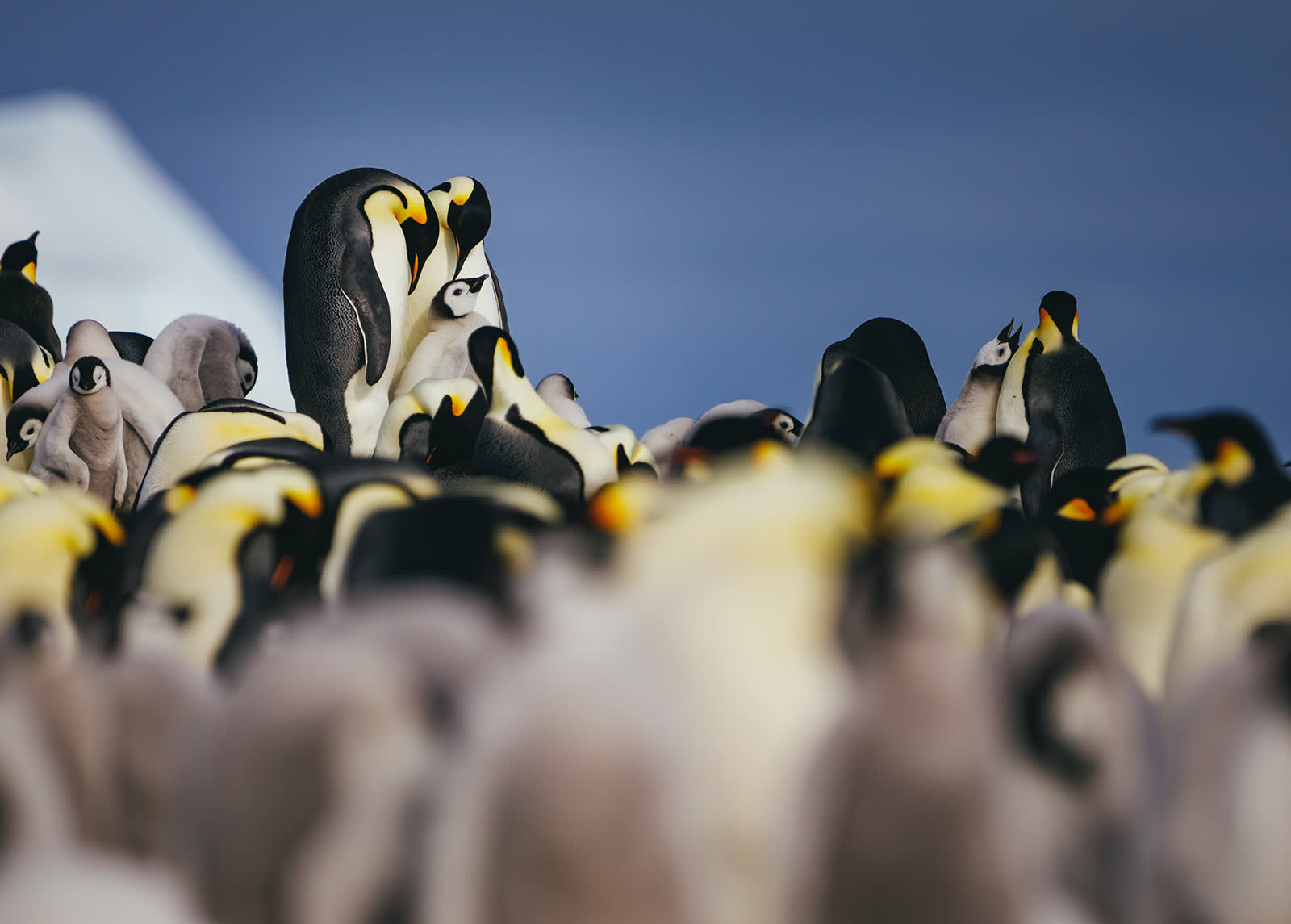
-
Brown Bluff
A dormant volcano, Brown Bluff towers 2,225 feet (678 meters) over the rookeries of Adélie and gentoo penguins, which number in the thousands. These penguins will create a symphony of background noise while you explore the bluff.
-
Devil Island
The Swedish Antarctic Expedition of 1901-04 discovered the narrow island, which is 1 mile (1.6 km) long and has a low summit at each end.
-
Paulet Island
Located in the northwestern Weddell Sea, Paulet Island is home to a large Adélie penguin rookery. With a volcanic cone that rises 1,158 feet (353 meters), the island reminds you that this was once a very active landscape. In addition to penguins, you may be interested in visiting the remains of a historic hut built by members of the Swedish Antarctic Expedition of 1901-04. A cross marks the grave site of Ole Wennersgaard, a member of the crew.
Your Life Onboard
This is polar exploration at its finest. Our ships are intimate, luxurious floating hotels, packed with exciting experiences.


Enjoy panoramic views while you mingle in our comfy lounges, or head outside and chat with fellow adventurers on the wraparound deck. Our social spaces foster connections & shared experiences.

Engage with world-class experts in our auditorium. Presentations cover wildlife, history, marine biology, ecology, & geology, to enhance your polar knowledge & excitement for exploration.

Enjoy onboard amenities, attend lectures, or watch for wildlife from our observation decks. Sea days offer a perfect blend of education, relaxation, and anticipation.

Find tranquility in our well-stocked library, perfect for reading or quiet contemplation. The glass-domed Observation Lounge offers a peaceful retreat to reflect & enjoy awe-inspiring polar views.

Prepare for off-ship excursions in our spacious mudroom. Kayak, paddleboard, or take a plunge in polar waters. Stay active onboard with our gym, outdoor track, and pool facilities.

Know Before You Go
For your personal safety—and to ensure you get the most enjoyment out of your polar adventure—please assess your mobility and medical requirements before booking. It is essential that guests have a high level of mobility to get in and out of Zodiac boats, and for off-ship activities such as hiking on uneven terrain. Our destinations are remote. Apart from our basic ship infirmary, it could take up to 72 hours to reach adequate medical facilities. For more details to help you assess your mobility and medical requirements before booking your voyage, please review Health & Safety.
Some of our expeditions have included transfers and these will be detailed in your Invoice and Trip Brochure.
Please note that if you have an airport transfer included in your trip, it is only available if you arrive on Day 1 of the itinerary. Please ensure your flight information on your Passenger Forms is up to date so our ground crew know when to expect you. There will be someone with a sign in Arrivals waiting for you. Please look for them and they will direct you to our group shuttle.
If you do not have included transfers, or you are arriving before Day 1, you will need to make your own way to the hotel. Most airports we travel in and out of have good taxi ranks in the Arrivals area, or you can often prebook a transfer online.
Packing is an exciting part of the trip for many of us. You will find a handy packing list towards the end of your Trip Brochure. You will have received a copy of this when you first booked. We also have two excellent videos, which you can check out here: What to Pack
Our Protection Promise allows you to make a purchase decision that will leave you worry-free in the event your plans change down the road. Please review details for each term in our Quark Expeditions Protection Promise.
Whether you are thinking of an expedition, or you’ve booked the trip of a lifetime with Quark Expeditions, review all our FAQs for comprehensive tips to help you prepare for the Polar Regions and how to make the most out of your voyage with the most experienced expedition team in the industry. If your specific question isn’t covered below, please reach out to your Polar Travel Advisor or helpful Client Experience Team at guest@quarkexpeditions.com.