


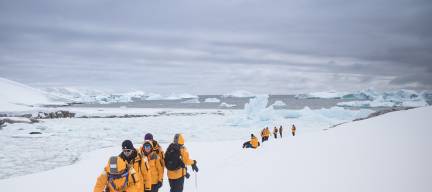
In the high Arctic, time moves differently. Glaciers advance and retreat over centuries, light lingers for months, and silence carries weight. Right now, scientists and explorers agree we’re living through a brief but important window—one where travelers can still witness vast tidewater glaciers up close, before continued warming reshapes them yet again. For those drawn to meaningful Arctic expedition travel, this is exactly why journeys with Quark Expeditions feel so timely.
Tucked deep inside Krossfjorden on Spitsbergen’s west coast, the Lilliehöök Glacier stands as one of Svalbard’s most visually striking ice fronts. Stretching nearly seven miles wide, it rises like a frozen wall from the sea, releasing icebergs that drift silently through the fjord. Seeing it in person offers perspective—on scale, on climate, and on how deeply ice has shaped the Arctic world.

Why this moment matters for travelers
Glaciologists have documented measurable retreat across many Arctic glaciers over the past century, driven by warmer air and ocean temperatures. Yet places like Lilliehöök remain accessible for now, especially during the Arctic summer when sea ice loosens its grip and daylight allows safe navigation deep into fjords.
This makes a well-planned Arctic expedition especially valuable. Unlike fixed land routes, expedition ships adapt to ice conditions and weather, giving travelers the best possible chance to reach glacier fronts at the right moment. For many, it’s not just about seeing ice—it’s about understanding change while the evidence is still visible.
A glacier shaped by time
From ancient ice to modern science
The Lilliehöök Glacier formed over thousands of years as snow compacted into ice, flowing slowly from Spitsbergen’s interior toward the sea. Its dramatic face reveals compressed layers that tell a story of colder eras, volcanic ash deposits, and long-term climate cycles.
Researchers have used this glacier to study calving dynamics—how and why massive slabs of ice break away. For travelers, those studies translate into unforgettable moments: the low rumble of shifting ice, followed by the splash of a newly formed iceberg.
Icebergs as moving landmarks
Once calved, icebergs become sculptures in motion. Some are cathedral-sized, others jagged and blue-veined, shaped by wind and water. Floating among them during a Zodiac cruise offers visual storytelling at its most powerful, especially against the stark backdrop of dark Arctic mountains and lingering snowfields.

Why a polar cruise is the best way to experience it
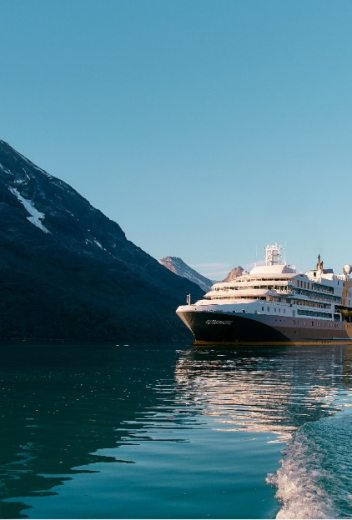
There are no roads to Lilliehöök. No viewpoints. No infrastructure. Access depends entirely on sea conditions, ice, and expert judgment. A polar expedition vessel provides:
- Mobility: The ability to reposition quickly as ice shifts
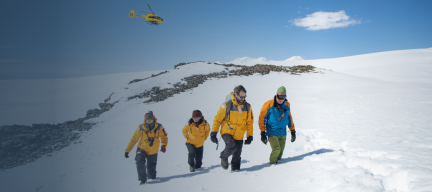
- Proximity: Zodiac landings that bring travelers close—safely—to the glacier face
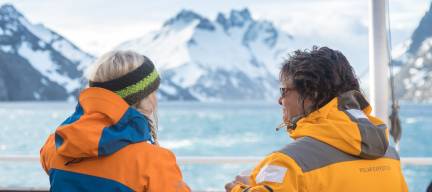
- Expert insight: Guides who explain glacial processes in real time
This combination turns a dramatic landscape into a learning experience. Travelers often discover that an Arctic voyage is as much about interpretation as exploration.
One itinerary where travelers may encounter Lilliehöök is the Svalbard Explorer: Best of High Arctic Norway journey:
👉 https://www.quarkexpeditions.com/expeditions/svalbard-explorer-best-of-high-arctic-norway
Seasonal access, planning windows, and expedition timing are outlined here:
👉 https://www.quarkexpeditions.com/arctic/new-season
What travelers can expect at the glacier
Approaching the ice is a sensory experience—quiet, cold air, and the occasional crack echoing across the fjord.
Highlights often include:
- Zodiac cruises along the ice front
- Encounters with seals resting on ice floes
- Seabirds circling above newly calved bergs
- Shifting light that turns ice shades of blue and silver
Few environments showcase Arctic ice so clearly, where its beauty and fragility exist side by side.

Layers of history beneath the ice
Long before modern explorers reached Svalbard, Norse seafarers navigated northern waters guided by stars, currents, and instinct. While Vikings never settled permanently in Svalbard, Viking history is woven into the broader story of Arctic exploration—of pushing boundaries and adapting to extreme environments.
That legacy continues today through science-led travel. Standing before Lilliehöök, travelers often reflect on how navigation, survival, and respect for nature connect past and present in the Arctic.
The wider Arctic context
Glaciers like Lilliehöök don’t exist in isolation. They are part of a vast system that includes Greenland’s ice sheet, Arctic Ocean currents, and global sea levels. Experiencing one glacier often sparks curiosity about others.
For travelers interested in comparing Arctic regions, the Northeast Greenland: Glaciers and Fjords expedition offers a different perspective on ice-dominated landscapes:
👉 https://www.quarkexpeditions.com/expeditions/northeast-greenland-glaciers-and-fjords
A broader overview of Arctic destinations and expedition styles is available here:
👉 https://www.quarkexpeditions.com/arctic
By the second half of an arctic voyage, many travelers realize the journey isn’t about ticking landmarks off a list. It’s about context—how glaciers, wildlife, and human history intersect across latitude and time.
A fleeting privilege
Access to places like the Lilliehook Glacier is never guaranteed. Ice conditions change daily, and strict environmental guidelines limit how and when ships approach. That uncertainty is part of the experience—and part of what makes it meaningful.
Those who reach the glacier often describe it as a quiet turning point: a moment of awe paired with awareness. With Quark Expeditions, travelers don’t just witness ice—they leave with a deeper understanding of why it matters.