




I used to sell Antarctica expeditions from an office in India. I wrote descriptions of penguin colonies and spoke confidently about the Drake Passage. Then I went to Antarctica.
After months of coordinating logistics and reading briefing materials, I finally stopped talking about our Antarctica expedition offerings and booked one for myself. This wasn’t a marketing trip. It was a familiarisation journey—a chance to stand where our guests stand, to feel the cold they feel, and to understand what happens when a remote polar adventure moves from the brochure into your bones.
What I discovered across eight days completely rewired how I understand what we do at Quark Expeditions.
Why Antarctica, and Why Now
The Antarctic Peninsula is currently in its austral summer. Between November and January, the continent experiences 24-hour daylight, and the ice is just stable enough for safe landings. The sea ice has begun to break apart, which sounds destructive but is the pulse of Antarctic ecology: it triggers the release of krill, which draws whales, seals, and penguins to coastal waters.
I had read these facts dozens of times. Standing on the peninsula with a thermometer reading -3°C and watching a humpback breach twenty metres from my Zodiac, I finally understood them.
The Antarctic Peninsula and the South Shetland Islands have become the most accessible gateway to the continent for most travelers. The region is remote enough to feel genuinely wild, yet developed enough that expedition teams can run safe, controlled operations. Our approach to a polar adventure here means no compromise between comfort and authenticity. The Antarctic Express: Fly South, Sail North itinerary does exactly this: a charter flight from Punta Arenas to King George Island eliminates the notorious Drake Passage crossing on the way south, leaving you fresh for the expedition itself, and then you sail back to Ushuaia through the Passage—giving you the complete polar geography without the wear.
What I Expected vs. What I Experienced
Days 1–2: The Approach
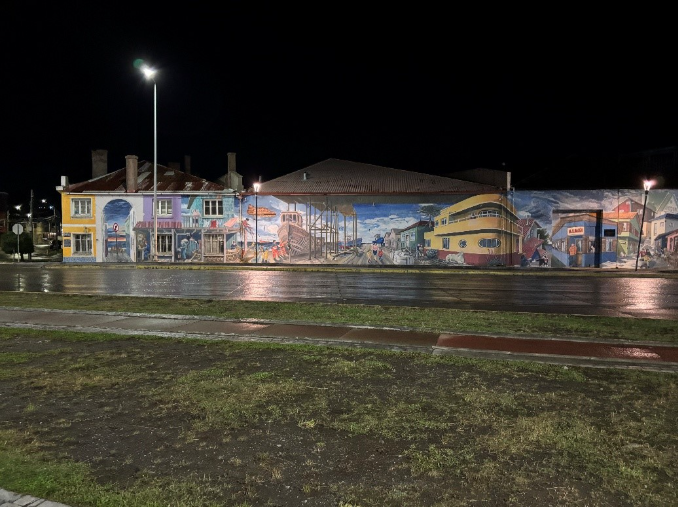
Punta Arenas is a wind-scoured Chilean port town with mural-covered walls and a frontier feel. I checked in at the Dreams Hotel, attended the mandatory biosecurity briefing (IAATO guidelines are strict, and rightfully so), and met the other guests over dinner. Some guests asked a strange question: “Will we see polar bears?” The answer, which I’d learned to give carefully, is that Antarctica doesn’t have polar bears—that’s an Arctic thing. But the wildlife here is equally compelling.
The next morning, we boarded a charter flight to King George Island. Two hours later, I was standing on Antarctic soil for the first time, watching our ship, the Ocean Explorer, come into view. She’s a hybrid-powered vessel—a full-fledged expedition ship—and sleek in a way that surprised me. I’d seen the spec sheets. Seeing her framed against the South Shetland Islands was different.

Day 3: The First Landing
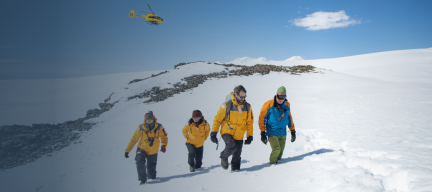
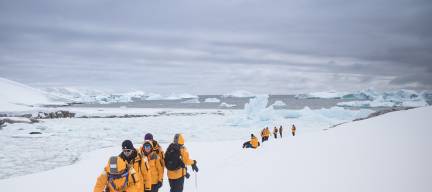
Our first continental landing was on the Antarctic Peninsula at Portal Point. We were divided into groups led by Polar Expedition Leaders—guides trained for both wildlife behaviour and emergency response. They move with quiet authority, pointing out which fur seals are resting and which are alert, making sure we maintain the required distances that AECO guidelines demand.
I did a guided walk through the penguin colonies. There is no way to prepare for the sound and smell of thousands of Gentoo penguins. The acrid ammonia of their guano mixed with the salt air and the constant noise—a thousand small arguments happening at once. They were indifferent to us. That was the surprise. I’d imagined a kind of cuddly interaction. Instead, I was a curious observer in their world, welcome only because I followed strict protocols.
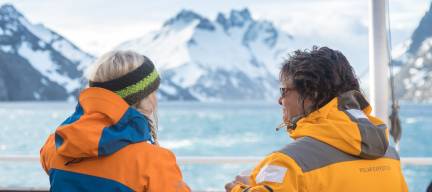
The afternoon brought us to Bancroft Bay for a Zodiac cruise. Our guide cut the engine and let us drift. Three humpback whales were working the water nearby, feeding on krill. One surfaced beside us. Then it breached—a 40-tonne animal launching itself skyward, water streaming off its sides. It happened twice more. My camera was shaking.

Day 4: Danco Island and the Rare Sighting
We woke at Danco Island—a small rocky outcrop crowned with gentoo penguins. The morning landing gave us an hour among the colony. I sat on the slope watching chicks beg from their parents, watching adults return from the sea with bellies full of krill, watching the social hierarchy play out. A British research station sits on the island (operated since 1944). Its weathered huts remind you that humans have been coming to Antarctica for centuries, and they’ve barely scratched the surface.
On the return Zodiac, our guide spotted something unusual: a chinstrap penguin. These penguins are common further north, but finding one here at Danco—at this time of year—was notable. Our guide explained the sighting, the possible reasons for its presence, the route migrations take. This is the kind of knowledge that doesn’t make it into marketing copy: the specifics, the uncertainty, the honest “we don’t entirely know” that sits underneath expert observation.
That afternoon at Useful Island, we saw minke whales, crabeater seals, and even a brief orca sighting from the ship. The animals were living their lives. We were fortunate to be nearby.

Day 5: The Polar Plunge
Neko Harbour offered a morning landing and afternoon paddling excursions for those comfortable in sea kayaks. The water was calm—unusual for Antarctica—and kayakers glided past icebergs that hung blue and fractured above the surface.
At Paradise Harbour, the expedition leader announced that conditions were perfect for the polar plunge—a brief immersion in Antarctic waters. I watched three guests change into their swimwear, walk to the ship’s platform, and step into water that read -1°C. They had roughly fifteen seconds in the water before returning to a waiting towel and the ship’s sauna.
I didn’t do the plunge. I watched from the deck as their faces went from shock to grin to relief when they hit the warmth of the sauna. Later, one of them told me it was the most alive she’d ever felt. “Your body doesn’t lie,” she said. “It knows where you are.”

Day 6: The Weight of History
Deception Island feels like no other place in Antarctica. It’s geologically active—the Earth’s crust beneath your feet is thin. The island’s rusted whaling station remnants litter the black volcanic beach. Massive steel boilers sit half-buried in the sand, monuments to an era when humanity came to Antarctica not to study or conserve, but to extract.
We landed on the beach and walked among the ruins. One of our Polar Expedition Leaders explained the whaling operations: how many ships, how many seals were killed, how quickly the populations collapsed. The facts are difficult. Knowing them while standing on the actual site—feeling the cold on your face, hearing the silence where tens of thousands of whales once filled these waters—changes something in you.
By evening, we’d sailed out of Antarctic waters. I spent the night watching the horizon, knowing it was my last chance to see the continent I’d come to see.
Days 7–8: The Drake Passage and the Return
The Drake Passage earned its reputation. “Drake Lake,” we were told, referred to calm conditions. We had the opposite. For nearly 24 hours, the Ocean Explorer pitched and heeled as waves larger than apartment buildings rolled beneath us. There were no Zodiac cruises. Many guests remained in cabins. I spent time in the library, watching a documentary about polar exploration, occasionally checking the horizon and feeling grateful for a hybrid-powered ship designed for exactly these conditions.
By the time we reached Cape Horn—the southern tip of South America—the seas had calmed. We motored past the famous albatross monument, visible on the rocky headland. These birds navigate the Drake Passage without engines or maps, relying on decades of evolutionary adaptation. That fact, more than any statistic, crystallized what I’d been feeling: Antarctica teaches you about scale and survival in a language no office can translate.
Ushuaia, Argentina, appeared the same evening—mountains, low buildings, the end of the continent. We docked at 8 PM. I left the ship with the crew card they give you (a small piece of cardboard proving you were there), a journal full of notes, and the odd sensation of having been altered in a way I didn’t yet have words for.
Key Takeaways
- Remote doesn’t mean uncomfortable. The Ocean Explorer offers genuine expedition conditions without sacrificing rest, food, or safety. You can experience authentic Antarctic wilderness and sleep in a warm cabin with an ocean view.
- The wildlife is abundant but not guaranteed. We saw humpback whales, multiple penguin species, seals, and orcas. We could have seen none of it. Weather and animal behaviour are unpredictable. That uncertainty is part of the real experience.
- History shapes how you see the present. Walking among the whaling station ruins shifts something. Knowing where animals are hunted versus where they’re protected changes how you understand conservation.
- Eight days is both enough and not nearly enough. You can see a tremendous amount and feel genuinely transformed. You’ll also leave wanting to return.
FAQ
Q: Is an Antarctica expedition physically demanding?
A: Landings are manageable for most fitness levels. Zodiac cruises involve boarding small boats and can be choppy. The Drake Passage crossing can be rough, though the Fly-South, Sail-North option mitigates this on the journey down. Medical staff are onboard, and the expedition team is trained for all age ranges.
Q: Will I see penguins?
A: In austral summer, yes. We encountered multiple penguin colonies. But wildlife sightings are never guaranteed weather and animal behaviour are variables beyond any operator’s control. What’s guaranteed is the opportunity, guided by experts who know where to look.
Q: What’s the actual cost of time away?
A: Eight days out of the office isn’t insignificant. For most people, it’s a once-in-a-decade decision. The scale of what you absorb in that time—the landscape, the wildlife, the isolation, the history—is difficult to exaggerate. The cost is high. The return is immeasurable.
Q: Do I need special gear?
A: Quark provides expedition parkas and boots. Bring thermal layers, waterproofs, and a positive attitude. The on-ground team makes sure you have what you need.
Next Steps: Booking Your Own Journey
If you’re reading this and recognizing your own curiosity about the polar regions, the Antarctic Express: Fly South, Sail North voyage operates during the austral summer season (November – March). It’s one of several ways to access the Antarctica expedition experience, designed to balance time, comfort, and authentic polar exploration.
Our expedition pages offer full itineraries, vessel specifications, and detailed breakdowns of what’s included. The team in our offices is used to questions from people who are terrified and excited in equal measure. That’s normal. I asked all the same questions before I went.
What surprised me most was that the experience matched neither the brochure nor my anxiety. It was something altogether different—more grounded, more real, more difficult, and more worth it than any marketing material could capture.
The Antarctica expedition I took altered how I understand my own place in this world. It’s a shift that starts beneath your ribs and radiates outward. If you’re feeling it, contact our team to discuss timing and options. They’re used to conversations with people who are terrified and excited in equal measure.


