



Antarctic · From 20 Days
Falkland Islands and South Georgia
20-Day Wildlife Adventure
Starts from $26,395 USD
$21,956 USD
- Starting from
- Buenos Aires, Argentina, Puerto Madryn, Argentina
- Ships
- Ultramarine, Ocean Explorer
- Departures
- 3 Departures between October 2027 to November 2028
From $26,395 USD
$ 21,956 USD






Expedition Overview
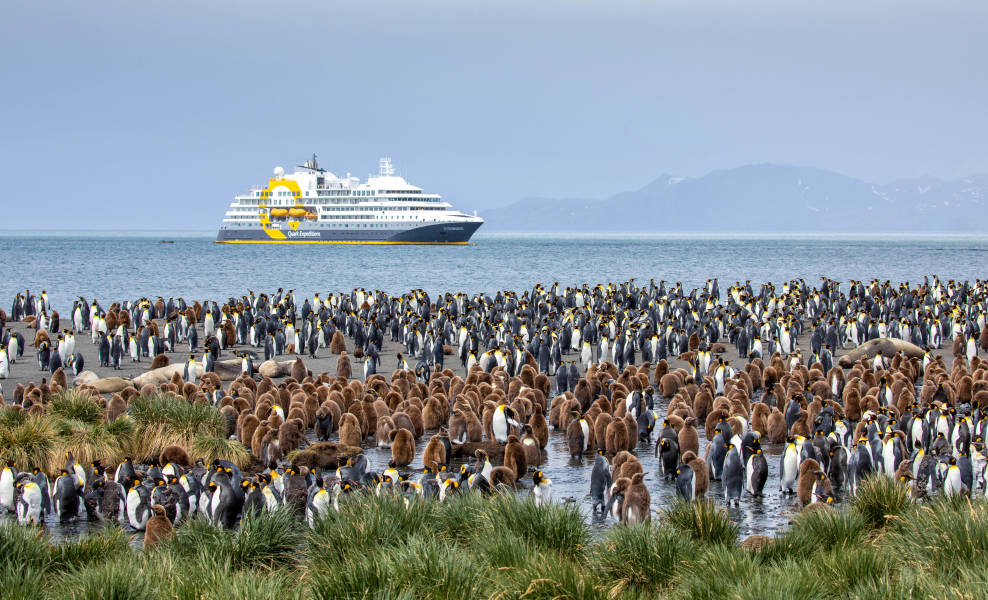
No other voyage compares: spend more time exploring the Falkland Islands and South Georgia than ever before on our exclusive Falkland Islands and South Georgia: 20-Day Wildlife Adventure. Sailing from the Patagonian coastal city of Puerto Madryn, you’ll reach the northwesternmost islands of the Falklands—a rare achievement for even the most seasoned polar adventurers. Enjoy three days exploring the Falklands archipelago, with visits to spectacular sites like Steeple Jason—the world’s largest black-browed albatross colony—and New Island. Then immerse yourself for six full days in wildlife-rich South Georgia—virtually unheard of in expedition travel.
Highlights
Enjoy more time in the Falklands and South Georgia than any other itinerary
Explore spectacular Steeple Jason and New Island, famous for diverse wildlife
Encounter southern elephant seals during peak pupping season
Potentially see six penguin species: gentoo, chinstrap, Magellanic, rockhopper, king and macaroni
Pay homage at the grave of explorer Sir Ernest Shackleton
Potentially see four species of dolphins: Commerson’s, Peale’s, dusky, and hourglass.
Select Your Season & Itinerary
Select Season
Buenos Aires, Argentina
20 Days · Ultramarine
Starts from $30,656 USD
Buenos Aires, Argentina
20 Days · Ultramarine
Starts from $25,431 USD
Puerto Madryn, Argentina
20 Days · Ocean Explorer
Starts from $21,956 USD
Select Itinerary
Buenos Aires, Argentina
20 Days · Ultramarine
Starts from $30,656 USD
Buenos Aires, Argentina
20 Days · Ultramarine
Starts from $25,431 USD
Puerto Madryn, Argentina
20 Days · Ocean Explorer
Starts from $21,956 USD
20 Days – From Buenos Aires, Argentina on Ultramarine (Season 2027.28)
Day By Day & Map
-
Day 1
Arrive in Buenos Aires, Argentina
Upon arriving in this cosmopolitan city, known for its architecture and rich European heritage, you will independently transfer to your group hotel, which is in your Charter Flight and Hotel Package.
-
Day 2
Fly to Puerto Madryn and Embark
Following breakfast at our hotel, we will transfer to the airport for our charter flight to Puerto Madryn, in the Patagonian province of Chubut on Argentina’s stunning Atlantic coast. Upon arrival in Puerto Madryn, your checked bags will be transferred directly to your cabin on Ultramarine, leaving you free to explore this lively Patagonian port town. As you stroll the shoreline, you may spot sea lions basking on the beach or catch sight of southern right whales offshore. Visit the local cafés and artisan markets for a taste of the region’s Welsh-Argentine heritage. In the afternoon, we’ll gather for the group transfer to the port to board Ultramarine. After check-in, you’ll be shown to your comfortable cabin— your home for the next 18 nights. Once you’ve settled in, your warm and friendly Expedition Team will introduce themselves and the ship, sharing important details about the voyage ahead. Expect an air of excitement as we set off toward the wildlife-rich subAntarctic islands of the Falkland Islands and South Georgia.
-
Day 3 & 4
At Sea: Getting to know your ship and fellow travelers
From Puerto Madryn we set our course for Islas Malvinas, also known as the Falkland Islands, where we aim to dedicate at least three days to exploration. En route, we will transit rich waters that support an array of wildlife, and in these latitudes—between 42 and 51 degrees north—you may spot avian and marine species you might not see further south. Be sure to spend time on the outer decks taking in the open water, and keep your binoculars handy for any wildlife sightings. Your Expedition Team will host expert presentations about the Patagonian coastlines and the isolated wildlife hotspots of the Falklands and South Georgia. Time at sea also provides opportunities to slow down and relax, and spend time getting to know your fellow ship mates who have traveled from diverse countries around the globe—and who share your passion for wildlife and adventure. It’s not uncommon for guests to make lifelong friends. As we near the Falkland Islands (also known as Islas Malvinas) sometime in the evening of our second day at sea, you may notice an increase in seabirds, particularly albatrosses. We’ll set course for the farthest—and rarely visited— northwest islands in the archipelago. Some of these islands are annual nesting sites for tens of thousands of birds, including the black-browed albatross. While many eyes may be trained toward the horizon and above in search of birds, stay alert to signs of movement above and beneath the surface of the water. Peale’s, Commerson’s, and dusky dolphins can be seen here, along with the occasional baleen and long-finned pilot whale.
-
Day 5 to 7
The Falkland Islands (Las Malvinas)
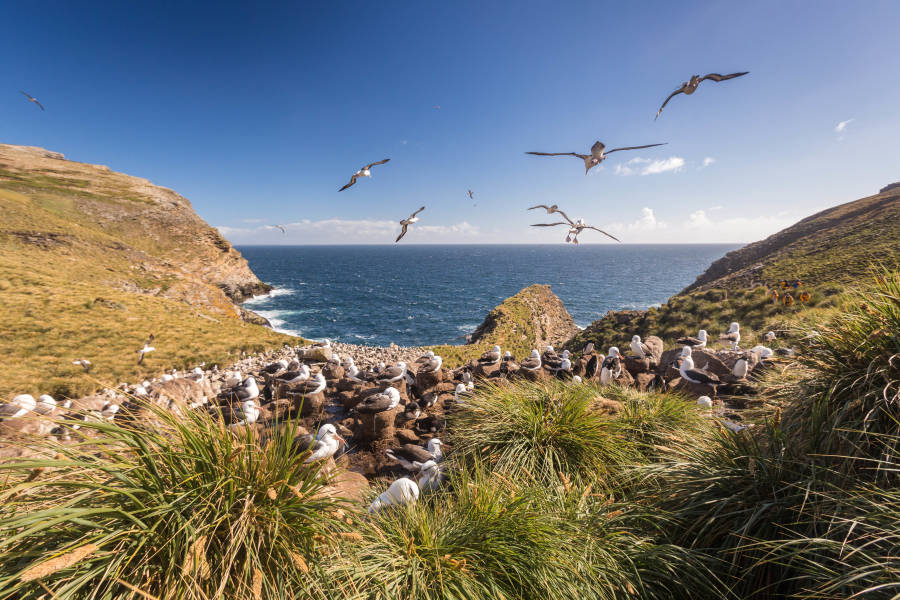
With extended time in the Falklands, we’ll seek opportunities to visit seldom explored sites renowned for birdlife and beauty. Our destinations will depend entirely on weather and marine forecasts, as the outer Falklands are exposed to oceanic swells. We’ll choose locations that offer the best—and safest—conditions for exploration. One such site is the small, slender Steeple Jason, one of the most northwesterly islands in the Falklands. Difficult to access, it has been featured in numerous wildlife documentaries for its prolific black-browed albatross colony—the largest in the world, with an estimated 100,000 to 180,000 breeding pairs. It’s truly a sight to behold. Their closely packed nests stretch for hundreds of meters along the shoreline, just beyond dense tussock grasses. Looking west to sea, you’ll likely see albatross riding the wind. The walk to the colony crosses uneven terrain and impressive tussock grass, which provides critical habitat for many other bird species. These vivid green grasses, rooted in rocky soil, create a striking contrast with the sharp ridgeline in the background. Largely untouched by humans, Steeple Jason is home to a small shepherd’s outpost and a research field station— overshadowed by vast wilderness. Steeple Jason offers a rare chance to feel truly remote amid a vast ecosystem alive with countless animals. Our explorations may also take us to New Island, just over thirty nautical miles south of Steeple Jason. A paradise for birders, this small island boasts coves with white sandy beaches sheltered from the open ocean, and is considered one of the most beautiful in the Falklands. Around 25,000 to 30,000 black-browed albatross nest here, joined by Magellanic, gentoo, and southern rockhopper penguins—each with its own distinct nesting style. Other common sightings include songbirds and the formidable striated caracara. Dolphins, including those in shallow waters, are frequently seen in the area, adding to the island’s remarkable wildlife encounters. Other wilderness destinations may include bird-rich West Point and Saunders Islands in the western Falklands. Saunders Island will amaze you with its long white-sand beaches, the northern shore stretching for kilometers and facing the open sea. It’s almost surreal—particularly if you’ve encountered penguins in ice-and snowladen Antarctica on previous voyages— to watch gentoo, Magellanic, and southern rockhopper penguins making their way to the water along sandy stretches. There’s also a smaller colony of black-browed albatross nests on a nearby cliff, sharing the gently sloped, grassy island with grazing sheep tended by the warm-hearted Saunders family. Look for Commerson’s dolphins, often spotted in the shallow waters near Saunders’ sandy beaches. West Point Island is another Falkland gem, with vibrant green vegetation and blooming spring flowers. From the rocky beach, a gentle walk (with slight elevation) leads through a picturesque meadow to a cliff where black-browed albatross nest. West Point Island is home to 2,000 breeding pairs. We’ll visit a small section of the colony for intimate views of albatross in their nests and soaring above the waters. The walk passes through grassy fields dotted with wildflowers, blending the domestic with the wild. Energetic hikers may tackle Mt. Ararat for sweeping views, while others can travel by 4X4 to the colony and overlooks. Peale’s dolphins, Falkland steamer ducks, and striated caracara are often seen here. Carcass is another excellent destination. Like Saunders and New islands, Carcass boasts stunning white-sand beaches meeting the cold, blue waters of the South Atlantic. Magellanic and gentoo penguins nest here, and the tussock grasses are especially impressive. Look overhead for peregrine falcons soaring high above. No visit to the Falklands is complete without a stop in its largest community— Stanley. Highlights include the museum (admission covered) and the striking arch monument built from the jaws of blue whales. Pop into a local restaurant or traditional British pub for Falkland f ish and chips, or a pint while chatting with locals about life on this windswept sub-Antarctic island. Stanley has a distinct boundary—where residential streets end and open wilderness and sheep meadows begin to stretch into the horizon. We’ll set sail in early afternoon, allowing plenty of time to cover the 700+ nautical miles to our next destination: South Georgia.
-
Day 8 & 9
At Sea: Traversing the Antarctic Convergence
While at sea, we may become aware of our transit over the Antarctic Convergence, or Polar Front. This biological boundary marks where the South Atlantic meets the Southern Ocean, and we’ll notice the change as we cross it. Below the Convergence, the water is much colder; where it meets the warmer Atlantic, cloudy or foggy conditions often form. This mixing of currents creates an ideal foraging ground for a variety of birds and marine mammals. We’ll likely be accompanied by albatross, petrels, and shearwaters, and may spot whales—some species more often than others. Far from shore, we might see Antarctic fur seals. Seeing prions (part of the petrel family) and shags in greater numbers indicates we’re approaching South Georgia.
-
Day 10 to 15
South Georgia: Galapagos of the South Seas
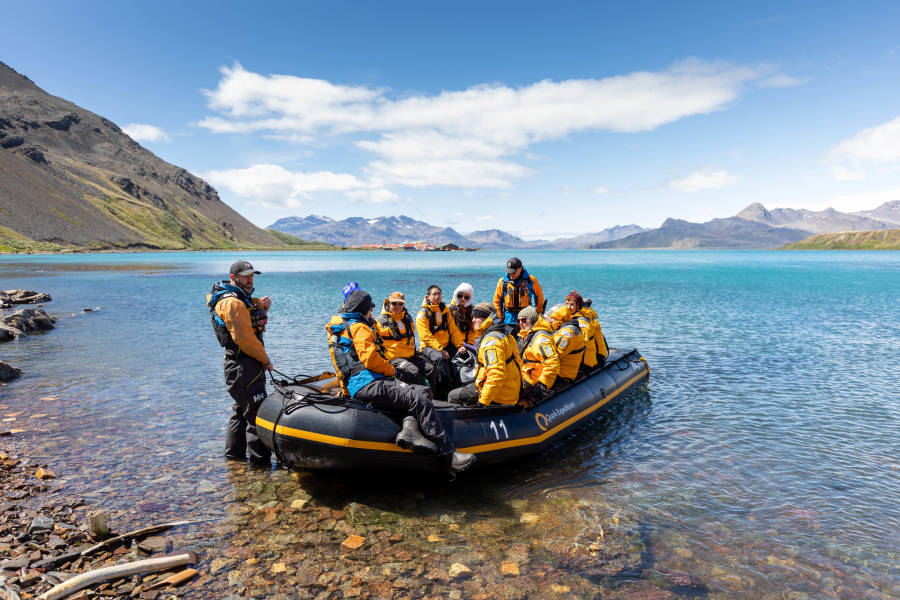
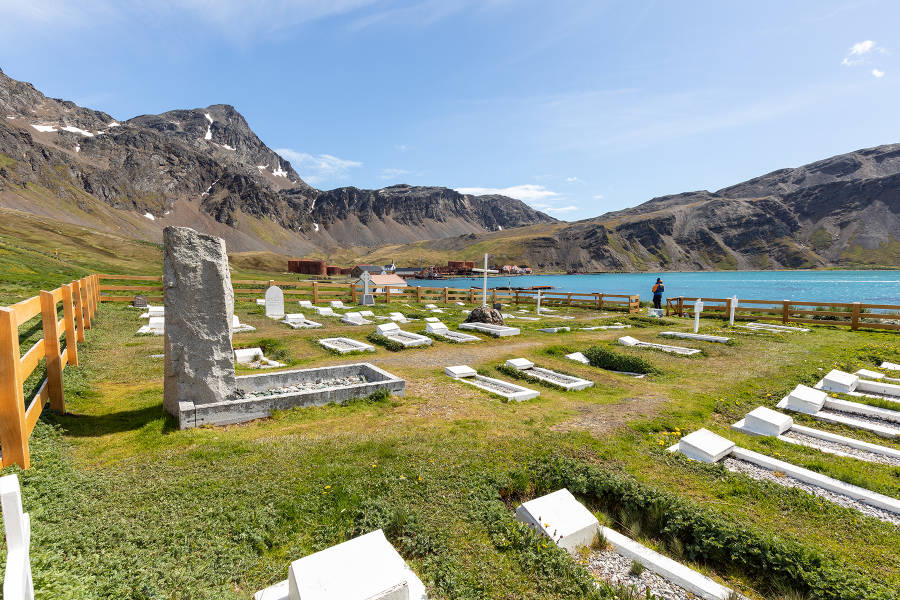
After enjoying South Georgia from a distance, we’ll head toward its numerous beaches to find a bay for your first excursion. Landing sites are varied, largely determined by the weather conditions. The sites you visit will deliver wildlife encounters unrivaled anywhere else on Earth. Biodiverse South Georgia—often described as the Galapagos of the south seas—is one of the most fertile breeding grounds in the world for sub-Antarctic wildlife, with beaches blanketed with penguins and seals. It won’t take you long to realize that you are in a birder’s paradise, as burrowing seabirds, albatrosses, and petrels can be seen in abundance. You’ll find that South Georgia, once a popular base for whalers and sealers, is also scattered with abandoned relics and evidence of human activity from centuries gone by. Your Expedition Team will help bring those days to life when you visit old whaling stations and enjoy presentations on the South Georgia then and now. One of the most significant sites you will visit on South Georgia is Grytviken. This settlement is one of the first whaling stations established in sub-Antarctic waters. Grytviken has a special appeal largely because it’s the site of the grave of Sir Ernest Shackleton, one of the most famous Antarctic explorers. Guests and expedition team members uphold a cherished tradition at the Grytviken cemetery, raising a toast to one of the greatest polar heroes. Mid-October and early November are exceptional times to visit South Georgia, especially for wildlife enthusiasts. At this time of year, male elephant seals battle for control of beach sections, securing breeding rights for females entering their territories. These bouts are fought in bursts, with rest periods between clashes. As the largest pinniped species on the planet, watching these giants spar is a true spectacle. Mid-October and early November are exceptional times to visit South Georgia, especially for wildlife enthusiasts. At this time of year, male elephant seals battle for control of beach sections, securing breeding rights for females entering their territories. These bouts are fought in bursts, with rest periods between clashes. As the largest pinniped species on the planet, watching these giants spar is a true spectacle. With extra time in South Georgia, we’ll have greater flexibility to explore more sites. If conditions allow, we may visit King Haakon Bay and the very beach where Ernest Shackleton and his party aboard the James Caird landed after their perilous journey from Elephant Island. If not, we’ll spend more time along the island’s leeward coast, aiming to visit its massive king penguin coloniesThe largest of these colonies. St. Andrew’s, which—by conservative estimates—is home to more than 150,000 breeding pairs. We’ll also seek out macaroni penguin colonies—conditions permitting—as these birds favor rugged, exposed coastlines. Possible sites include Hercules Bay, Royal Bay, and Cooper Bay. Expect to encounter some of the island’s millions of petrels and prions. For those craving some active off-ship adventure, we plan to offer (weatherpermitting) an extended hike along the f inal stretch of the route taken by Ernest Shackleton, Frank Worsley, and Tom Crean to the Stromness whaling station in May 1916.
-
Day 16 to 19
At Sea: Starting the Journey Home
To say that South Georgia is remote would be an understatement, and as such, we’ll need to invest the necessary time to travel the more than 1,000 nautical miles on our return to South America. We’ll begin our westward journey through the Southern Ocean, crossing back over the Antarctic Convergence and passing near Burwood Bank—a shallow underwater plateau surrounded by deeper waters. All three of these dynamic regions can provide opportunities for bird-watching and marine mammal sightings, and we’ll feel the gradual shift from the chillier ecological Antarctic to the somewhat warmer environments of Tierra del Fuego. If the skies are clear and visibility is good, we might catch our first views of the South American mountains on the horizon well before nightfall. As with other regions we’ve visited, the shelves near the continent can be rich with birdlife and occasionally marine mammals—but the journey isn’t over quite yet. After dinner, we will sail west through the famous Beagle Channel on our approach to Ushuaia, Argentina.
-
Day 20
Disembark in Ushuaia and Fly to Buenos Aires
We will arrive in Ushuaia in the morning and disembark after breakfast. You will be transferred to the airport for the return group charter flight to Buenos Aires, which is part of your Charter Flight and Hotel Package.

What’s Included & Excluded
- An official Quark Expeditions parka to keep
- Leadership throughout the voyage by our experienced Expedition Team, including shore landings and other activities
- All Zodiac transfers and cruising as per the daily program
- All shore landings as per the daily program
- Shipboard accommodation with daily housekeeping
- All meals, snacks, soft drinks and juices on board throughout your voyage.
- Complimentary select beer, wines and cocktails during bar service hours and dinner
- Complimentary coffee, tea and cocoa available around the clock
- Formal and informal presentations by our Expedition Team and guest speakers as scheduled
- A photographic journal documenting your expedition
- A pair of waterproof expedition boots on loan for landings and Zodiac cruising excursions
- Hair dryer and bathrobes in every cabin
- World Voyager guests will receive a free 1GB data card for limited Wi-Fi access for use on one device, permitting basic Internet browsing, email, posting on social media and voice applications. (Additional data can be purchased on ship.) Note: Internet access in the polar regions is subject to geography, climate, and other factors beyond our control.
- All miscellaneous service taxes and port charges throughout the program
- All luggage handling aboard the ship
- Charter Flight & Hotel Package
- International airfare
- Passport and applicable visa expenses
- Government arrival and departure taxes not mentioned
- Baggage, cancellation, interruption and medical travel insurance—strongly recommended
- Excess-baggage fees on international and domestic flights
- Mandatory waterproof pants for Zodiac landing and cruising excursions, or any other gear not mentioned
- Laundry, bar, spa services and other personal charges, unless specified
- Phone charges may vary by location
- Our basic complimentary Wi-Fi service does not include Premium packages which enable more data-intensive applications
- Voluntary gratuity at the end of the voyage for expedition staff and shipboard crew
- Additional overnight accommodation
- Arrival and departure transfers, except where explicitly stated
- Adventure Options not listed in Included Activities.
Charter Flight and Hotel Package
Package valued at $995 USD is included in the expedition
- One night’s pre-expedition hotel accommodation in Buenos Aires with breakfast (Note: The number of guests per room is the same as cabin occupancy on the ship. Due to limited availability, travelers who reserve a suite on board are accommodated in standard rooms at the hotel. Triple rooms may not be available.)
- Group flight departing from Buenos Aires’ domestic airport (Aeroparque/AEP) to Puerto Madryn, and returning flight from Ushuaia to Buenos Aires International airport (Ezeiza/EZE).
- Group transfer from hotel to airport in Buenos Aires
- Group transfer from Puerto Madryn airport to the ship, and group transfer from ship to Ushuaia airport upon your return. (Note: Transfer on arrival in Buenos Aires from airport to hotel at the beginning of the journey is not included. Please make your way to the included hotel.)
20 Days – From Buenos Aires, Argentina on Ultramarine (Season 2027.28)
20 Days – From Buenos Aires, Argentina on Ultramarine (Season 2027.28)
-
Day 1
Arrive in Buenos Aires, Argentina
Upon arriving in this cosmopolitan city, known for its architecture and rich European heritage, you will independently transfer to your group hotel, which is in your Charter Flight and Hotel Package.
-
Day 2
Fly to Puerto Madryn and Embark
Following breakfast at our hotel, we will transfer to the airport for our charter flight to Puerto Madryn, in the Patagonian province of Chubut on Argentina’s stunning Atlantic coast. Upon arrival in Puerto Madryn, your checked bags will be transferred directly to your cabin on Ultramarine, leaving you free to explore this lively Patagonian port town. As you stroll the shoreline, you may spot sea lions basking on the beach or catch sight of southern right whales offshore. Visit the local cafés and artisan markets for a taste of the region’s Welsh-Argentine heritage. In the afternoon, we’ll gather for the group transfer to the port to board Ultramarine. After check-in, you’ll be shown to your comfortable cabin— your home for the next 18 nights. Once you’ve settled in, your warm and friendly Expedition Team will introduce themselves and the ship, sharing important details about the voyage ahead. Expect an air of excitement as we set off toward the wildlife-rich subAntarctic islands of the Falkland Islands and South Georgia.
-
Day 3 & 4
At Sea: Getting to know your ship and fellow travelers
From Puerto Madryn we set our course for Islas Malvinas, also known as the Falkland Islands, where we aim to dedicate at least three days to exploration. En route, we will transit rich waters that support an array of wildlife, and in these latitudes—between 42 and 51 degrees north—you may spot avian and marine species you might not see further south. Be sure to spend time on the outer decks taking in the open water, and keep your binoculars handy for any wildlife sightings. Your Expedition Team will host expert presentations about the Patagonian coastlines and the isolated wildlife hotspots of the Falklands and South Georgia. Time at sea also provides opportunities to slow down and relax, and spend time getting to know your fellow ship mates who have traveled from diverse countries around the globe—and who share your passion for wildlife and adventure. It’s not uncommon for guests to make lifelong friends. As we near the Falkland Islands (also known as Islas Malvinas) sometime in the evening of our second day at sea, you may notice an increase in seabirds, particularly albatrosses. We’ll set course for the farthest—and rarely visited— northwest islands in the archipelago. Some of these islands are annual nesting sites for tens of thousands of birds, including the black-browed albatross. While many eyes may be trained toward the horizon and above in search of birds, stay alert to signs of movement above and beneath the surface of the water. Peale’s, Commerson’s, and dusky dolphins can be seen here, along with the occasional baleen and long-finned pilot whale.
-
Day 5 to 7
The Falkland Islands (Las Malvinas)
With extended time in the Falklands, we’ll seek opportunities to visit seldom explored sites renowned for birdlife and beauty. Our destinations will depend entirely on weather and marine forecasts, as the outer Falklands are exposed to oceanic swells. We’ll choose locations that offer the best—and safest—conditions for exploration. One such site is the small, slender Steeple Jason, one of the most northwesterly islands in the Falklands. Difficult to access, it has been featured in numerous wildlife documentaries for its prolific black-browed albatross colony—the largest in the world, with an estimated 100,000 to 180,000 breeding pairs. It’s truly a sight to behold. Their closely packed nests stretch for hundreds of meters along the shoreline, just beyond dense tussock grasses. Looking west to sea, you’ll likely see albatross riding the wind. The walk to the colony crosses uneven terrain and impressive tussock grass, which provides critical habitat for many other bird species. These vivid green grasses, rooted in rocky soil, create a striking contrast with the sharp ridgeline in the background. Largely untouched by humans, Steeple Jason is home to a small shepherd’s outpost and a research field station— overshadowed by vast wilderness. Steeple Jason offers a rare chance to feel truly remote amid a vast ecosystem alive with countless animals. Our explorations may also take us to New Island, just over thirty nautical miles south of Steeple Jason. A paradise for birders, this small island boasts coves with white sandy beaches sheltered from the open ocean, and is considered one of the most beautiful in the Falklands. Around 25,000 to 30,000 black-browed albatross nest here, joined by Magellanic, gentoo, and southern rockhopper penguins—each with its own distinct nesting style. Other common sightings include songbirds and the formidable striated caracara. Dolphins, including those in shallow waters, are frequently seen in the area, adding to the island’s remarkable wildlife encounters. Other wilderness destinations may include bird-rich West Point and Saunders Islands in the western Falklands. Saunders Island will amaze you with its long white-sand beaches, the northern shore stretching for kilometers and facing the open sea. It’s almost surreal—particularly if you’ve encountered penguins in ice-and snowladen Antarctica on previous voyages— to watch gentoo, Magellanic, and southern rockhopper penguins making their way to the water along sandy stretches. There’s also a smaller colony of black-browed albatross nests on a nearby cliff, sharing the gently sloped, grassy island with grazing sheep tended by the warm-hearted Saunders family. Look for Commerson’s dolphins, often spotted in the shallow waters near Saunders’ sandy beaches. West Point Island is another Falkland gem, with vibrant green vegetation and blooming spring flowers. From the rocky beach, a gentle walk (with slight elevation) leads through a picturesque meadow to a cliff where black-browed albatross nest. West Point Island is home to 2,000 breeding pairs. We’ll visit a small section of the colony for intimate views of albatross in their nests and soaring above the waters. The walk passes through grassy fields dotted with wildflowers, blending the domestic with the wild. Energetic hikers may tackle Mt. Ararat for sweeping views, while others can travel by 4X4 to the colony and overlooks. Peale’s dolphins, Falkland steamer ducks, and striated caracara are often seen here. Carcass is another excellent destination. Like Saunders and New islands, Carcass boasts stunning white-sand beaches meeting the cold, blue waters of the South Atlantic. Magellanic and gentoo penguins nest here, and the tussock grasses are especially impressive. Look overhead for peregrine falcons soaring high above. No visit to the Falklands is complete without a stop in its largest community— Stanley. Highlights include the museum (admission covered) and the striking arch monument built from the jaws of blue whales. Pop into a local restaurant or traditional British pub for Falkland f ish and chips, or a pint while chatting with locals about life on this windswept sub-Antarctic island. Stanley has a distinct boundary—where residential streets end and open wilderness and sheep meadows begin to stretch into the horizon. We’ll set sail in early afternoon, allowing plenty of time to cover the 700+ nautical miles to our next destination: South Georgia.
-
Day 8 & 9
At Sea: Traversing the Antarctic Convergence
While at sea, we may become aware of our transit over the Antarctic Convergence, or Polar Front. This biological boundary marks where the South Atlantic meets the Southern Ocean, and we’ll notice the change as we cross it. Below the Convergence, the water is much colder; where it meets the warmer Atlantic, cloudy or foggy conditions often form. This mixing of currents creates an ideal foraging ground for a variety of birds and marine mammals. We’ll likely be accompanied by albatross, petrels, and shearwaters, and may spot whales—some species more often than others. Far from shore, we might see Antarctic fur seals. Seeing prions (part of the petrel family) and shags in greater numbers indicates we’re approaching South Georgia.
-
Day 10 to 15
South Georgia: Galapagos of the South Seas
After enjoying South Georgia from a distance, we’ll head toward its numerous beaches to find a bay for your first excursion. Landing sites are varied, largely determined by the weather conditions. The sites you visit will deliver wildlife encounters unrivaled anywhere else on Earth. Biodiverse South Georgia—often described as the Galapagos of the south seas—is one of the most fertile breeding grounds in the world for sub-Antarctic wildlife, with beaches blanketed with penguins and seals. It won’t take you long to realize that you are in a birder’s paradise, as burrowing seabirds, albatrosses, and petrels can be seen in abundance. You’ll find that South Georgia, once a popular base for whalers and sealers, is also scattered with abandoned relics and evidence of human activity from centuries gone by. Your Expedition Team will help bring those days to life when you visit old whaling stations and enjoy presentations on the South Georgia then and now. One of the most significant sites you will visit on South Georgia is Grytviken. This settlement is one of the first whaling stations established in sub-Antarctic waters. Grytviken has a special appeal largely because it’s the site of the grave of Sir Ernest Shackleton, one of the most famous Antarctic explorers. Guests and expedition team members uphold a cherished tradition at the Grytviken cemetery, raising a toast to one of the greatest polar heroes. Mid-October and early November are exceptional times to visit South Georgia, especially for wildlife enthusiasts. At this time of year, male elephant seals battle for control of beach sections, securing breeding rights for females entering their territories. These bouts are fought in bursts, with rest periods between clashes. As the largest pinniped species on the planet, watching these giants spar is a true spectacle. Mid-October and early November are exceptional times to visit South Georgia, especially for wildlife enthusiasts. At this time of year, male elephant seals battle for control of beach sections, securing breeding rights for females entering their territories. These bouts are fought in bursts, with rest periods between clashes. As the largest pinniped species on the planet, watching these giants spar is a true spectacle. With extra time in South Georgia, we’ll have greater flexibility to explore more sites. If conditions allow, we may visit King Haakon Bay and the very beach where Ernest Shackleton and his party aboard the James Caird landed after their perilous journey from Elephant Island. If not, we’ll spend more time along the island’s leeward coast, aiming to visit its massive king penguin coloniesThe largest of these colonies. St. Andrew’s, which—by conservative estimates—is home to more than 150,000 breeding pairs. We’ll also seek out macaroni penguin colonies—conditions permitting—as these birds favor rugged, exposed coastlines. Possible sites include Hercules Bay, Royal Bay, and Cooper Bay. Expect to encounter some of the island’s millions of petrels and prions. For those craving some active off-ship adventure, we plan to offer (weatherpermitting) an extended hike along the f inal stretch of the route taken by Ernest Shackleton, Frank Worsley, and Tom Crean to the Stromness whaling station in May 1916.
-
Day 16 to 19
At Sea: Starting the Journey Home
To say that South Georgia is remote would be an understatement, and as such, we’ll need to invest the necessary time to travel the more than 1,000 nautical miles on our return to South America. We’ll begin our westward journey through the Southern Ocean, crossing back over the Antarctic Convergence and passing near Burwood Bank—a shallow underwater plateau surrounded by deeper waters. All three of these dynamic regions can provide opportunities for bird-watching and marine mammal sightings, and we’ll feel the gradual shift from the chillier ecological Antarctic to the somewhat warmer environments of Tierra del Fuego. If the skies are clear and visibility is good, we might catch our first views of the South American mountains on the horizon well before nightfall. As with other regions we’ve visited, the shelves near the continent can be rich with birdlife and occasionally marine mammals—but the journey isn’t over quite yet. After dinner, we will sail west through the famous Beagle Channel on our approach to Ushuaia, Argentina.
-
Day 20
Disembark in Ushuaia and Fly to Buenos Aires
We will arrive in Ushuaia in the morning and disembark after breakfast. You will be transferred to the airport for the return group charter flight to Buenos Aires, which is part of your Charter Flight and Hotel Package.
20 Days – From Buenos Aires, Argentina on Ultramarine (Season 2027.28)
Day By Day & Map
-
Day 1
Arrive in Buenos Aires, Argentina
Upon arriving in this splendid city, known for its vibrant Argentinian culture, European architecture and cosmopolitan vibe, you will independently transfer to the designated group hotel, which is included in your Charter Flight & Hotel package.
-
Day 2
Fly to Puerto Madryn and Embark
Following breakfast at our hotel, we will transfer to the airport for our charter flight to Puerto Madryn, in the Patagonian province of Chubut on Argentina’s stunning Atlantic coast. Upon arrival in Puerto Madryn, your checked bags will be transferred directly to your ship cabin, leaving you free to explore this lively Patagonian port town. As you stroll the shoreline, you may spot sea lions basking on the beach or catch sight of southern right whales offshore. Visit the local cafés and artisan markets for a taste of the region’s Welsh Argentine heritage. In the afternoon, we’ll gather for the group transfer to the port to board the ship. After check-in, you’ll be shown to your comfortable cabin— your home for the next 18 nights. Once you’ve settled in, your warm and friendly Expedition Team will introduce themselves and the ship, sharing important details about the voyage ahead. Expect an air of excitement as we set off toward the wildlife-rich sub-Antarctic islands of the Falkland Islands and South Georgia.
-
Day 3 & 4
At Sea: Getting to Know Your Ship and Fellow Travelers
From Puerto Madryn we set our course for Islas Malvinas, also known as the Falkland Islands, where we aim to dedicate at least three days to exploration. En route, we will transit rich waters that support an array of wildlife, and in these latitudes—between 42 and 51 degrees north—you may spot avian and marine species you might not see further south. Be sure to spend time on the outer decks taking in the open water, and keep your binoculars handy for any wildlife sightings. Your Expedition Team will host expert presentations about the Patagonian coastlines and the isolated wildlife hotspots of the Falklands and South Georgia. Time at sea also provides opportunities to slow down and relax, and spend time getting to know your fellow ship mates who have traveled from diverse countries around the globe—and who share your passion for wildlife and adventure. It’s not uncommon for guests to make lifelong friends. As we near the Falkland Islands (also known as Islas Malvinas) sometime in the evening of our second day at sea, you may notice an increase in seabirds, particularly albatrosses. We’ll set course for the farthest—and rarely visited—northwest islands in the archipelago. Some of these islands are annual nesting sites for tens of thousands of birds, including the black-browed albatross. While many eyes may be trained toward the horizon and above in search of birds, stay alert to signs of movement above and beneath the surface of the water. Peale’s, Commerson’s, and dusky dolphins can be seen here, along with the occasional baleen and long-finned pilot whale.
-
Day 5 to 7
The Falkland Islands (Islas Malvinas)
With extended time in the Falklands, we’ll seek opportunities to visit seldom explored sites renowned for birdlife and beauty. Our destinations will depend entirely on weather and marine forecasts, as the outer Falklands are exposed to oceanic swells. We’ll choose locations that offer the best—and safest—conditions for exploration. One such site is the small, slender Steeple Jason, one of the most northwesterly islands in the Falklands. Difficult to access, it has been featured in numerous wildlife documentaries for its prolific black-browed albatross colony—the largest in the world, with an estimated 100,000 to 180,000 breeding pairs. It’s truly a sight to behold. Their closely packed nests stretch for hundreds of meters along the shoreline, just beyond dense tussock grasses. Looking west to sea, you’ll likely see albatross riding the wind. The walk to the colony crosses uneven terrain and impressive tussock grass, which provides critical habitat for many other bird species. These vivid green grasses, rooted in rocky soil, create a striking contrast with the sharp ridgeline in the background. Largely untouched by humans, Steeple Jason is home to a small shepherd’s outpost and a research field station—overshadowed by vast wilderness. Steeple Jason offers a rare chance to feel truly remote amid a vast ecosystem alive with countless animals. Our explorations may also take us to New Island, just over thirty nautical miles south of Steeple Jason. A paradise for birders, this small island boasts coves with white sandy beaches sheltered from the open ocean, and is considered one of the most beautiful in the Falklands. Around 25,000 to 30,000 black-browed albatross nest here, joined by Magellanic, gentoo, and southern rockhopper penguins—each with its own distinct nesting style. Other common sightings include songbirds and the formidable striated caracara. Dolphins, including those in shallow waters, are frequently seen in the area, adding to the island’s remarkable wildlife encounters. Other wilderness destinations may include bird-rich West Point and Saunders Islands in the western Falklands. Saunders Island will amaze you with its long white-sand beaches, the northern shore stretching for kilometers and facing the open sea. It’s almost surreal— particularly if you’ve encountered penguins in ice-and snow-laden Antarctica on previous voyages—to watch gentoo, Magellanic, and southern rockhopper penguins making their way to the water along sandy stretches. There’s also a smaller colony of black-browed albatross nests on a nearby cliff, sharing the gently sloped, grassy island with grazing sheep tended by the warm-hearted Saunders family. Look for Commerson’s dolphins, often spotted in the shallow waters near Saunders’ sandy beaches. West Point Island is another Falkland gem, with vibrant green vegetation and blooming spring flowers. From the rocky beach, a gentle walk (with slight elevation) leads through a picturesque meadow to a cliff where black-browed albatross nest. West Point Island is home to 2,000 breeding pairs. We’ll visit a small section of the colony for intimate views of albatross in their nests and soaring above the waters. The walk passes through grassy fields dotted with wildflowers, blending the domestic with the wild. Energetic hikers may tackle Mt. Ararat for sweeping views, while others can travel by 4X4 to the colony and overlooks. Peale’s dolphins, Falkland steamer ducks, and striated caracara are often seen here. Carcass is also an exciting destination. Like Saunders and New islands, Carcass boasts stunning white-sand beaches meeting the cold, blue waters of the South Atlantic. Magellanic and gentoo penguins nest here, and the tussock grasses are especially impressive. Look overhead for peregrine falcons soaring high above. No visit to the Falklands is complete without a stop in its largest community—Stanley. Highlights include the museum (admission covered) and the striking arch monument built from the jaws of blue whales. Pop into a local restaurant or traditional British pub for Falkland fish and chips, or a pint while chatting with locals about life on this windswept sub-Antarctic island. Stanley has a distinct boundary—where residential streets end and open wilderness and sheep meadows begin to stretch into the horizon. We’ll set sail in early afternoon, allowing plenty of time to cover the 700+ nautical miles to our next destination: South Georgia.
-
Day 8 & 9
At Sea: Traversing the Antarctic Convergence
While at sea, we may become aware of our transit over the Antarctic Convergence, or Polar Front. This biological boundary marks where the South Atlantic meets the Southern Ocean, and we’ll notice the change as we cross it. Below the Convergence, the water is much colder; where it meets the warmer Atlantic, cloudy or foggy conditions often form. This mixing of currents creates an ideal foraging ground for a variety of birds and marine mammals. We’ll likely be accompanied by albatross, petrels, and shearwaters, and may spot whales—some species more often than others. Far from shore, we might see Antarctic fur seals. Seeing prions (part of the petrel family) and shags in greater numbers indicates we’re approaching South Georgia.
-
Day 10 to 15
South Georgia: Galapagos of the South Seas
With extended time in the Falklands, we’ll seek opportunities to visit seldom explored sites renowned for birdlife and beauty. Destinations will depend on weather and marine forecasts, as the outer Falklands are exposed to oceanic swells. We’ll choose locations offering the best—and safest—conditions for exploration. One such site is Steeple Jason, a small, slender island among the northwesterly reaches of the Falklands. Difficult to access, it has been featured in numerous wildlife documentaries for its prolific black-browed albatross colony—the largest in the world, with an estimated 100,000 to 180,000 breeding pairs. Their closely packed nests stretch for hundreds of meters along the shoreline, just beyond dense tussock grasses. Looking west to sea, you’ll likely spot albatross riding the wind. The walk to the colony crosses uneven terrain and impressive tussock grass, which provides critical habitat for many bird species. These vivid green grasses, rooted in rocky soil, contrast sharply with the rugged ridgeline beyond. Largely untouched by humans, Steeple Jason is home to a small shepherd’s outpost and a research field station, dwarfed by vast wilderness— an ideal place to feel truly remote. Our explorations may also take us to New Island, just over thirty nautical miles south of Steeple Jason. A paradise for birders, it features sheltered coves with white sandy beaches and is considered one of the most beautiful in the Falklands. Around 25,000 to 30,000 black-browed albatross nest here, alongside Magellanic, gentoo, and southern rockhopper penguins. Songbirds and striated caracara are common, and dolphins— including those in shallow waters—are frequently seen. Other wilderness destinations may include West Point Island and Saunders Island in the western Falklands. Saunders Island impresses with long white-sand beaches, its northern shore stretching for kilometers along the open sea. It’s almost surreal to watch gentoo, Magellanic, and southern rockhopper penguins making their way to the water across sandy stretches. A smaller colony of black-browed albatross nests on a nearby cliff, while grazing sheep, tended by the Saunders family, roam the grassy slopes. Look for Commerson’s dolphins in the shallows. West Point Island is another highlight, with vibrant green vegetation and blooming spring flowers. A gentle walk leads to a cliffside colony of about 2,000 breeding pairs of blackbrowed albatross. Energetic hikers may tackle Mt. Ararat, while others can travel by 4×4. Peale’s dolphins, Falkland steamer ducks, and striated caracara are often seen here. Carcass is another excellent destination. Like Saunders Island and New Island, it features white-sand beaches meeting the cold, blue waters of the South Atlantic. Magellanic and gentoo penguins nest here, and peregrine falcons are often seen overhead. No visit to the Falklands is complete without time in Stanley, its largest community. Highlights include the museum and the striking arch monument built from the jaws of blue whales. Visit a local restaurant or traditional British pub for Falkland fish and chips, or enjoy a pint while chatting with locals. We’ll set sail in the early afternoon for the 700+ nautical mile journey to South Georgia.
-
Day 16 to 19
At Sea: Starting the Journey Home
To say that South Georgia is remote would be an understatement, and as such, we’ll need to invest the necessary time to travel the more than 1,000 nautical miles on our return to South America. We’ll begin our westward journey through the Southern Ocean, crossing back over the Antarctic Convergence and passing near Burwood Bank—a shallow underwater plateau surrounded by deeper waters. All three of these dynamic regions can provide opportunities for bird-watching and marine mammal sightings, and we’ll feel the gradual shift from the chillier ecological Antarctic to the somewhat warmer environments of Tierra del Fuego. If the skies are clear and visibility is good, we might catch our first views of the South American mountains on the horizon well before nightfall. As with other regions we’ve visited, the shelves near the continent can be rich with birdlife and occasionally marine mammals—but the journey isn’t over quite yet. After dinner, we will sail west through the famous Beagle Channel on our approach to Ushuaia, Argentina.
-
Day 20
Disembark In Ushuaia and Fly To Buenos Aires
We will arrive in Ushuaia in the morning and disembark after breakfast. You will be transferred to the airport for the return group charter flight to Buenos Aires, which is part of your Charter Flight & Hotel Package.

What’s Included & Excluded
- An official Quark Expeditions® parka to keep
- Leadership throughout your voyage by our experienced Expedition Leaders, including shore landings and other activities
- All Zodiac transfers and cruising as per the daily program
- All shore landings as per the daily program
- Shipboard accommodation with daily housekeeping
- All meals, snacks, soft drinks and juices on board throughout your voyage (Please inform us of any dietary requirements as far in advance as possible.)
- Complimentary select beer, wines and cocktails during bar service hours and dinner
- Complimentary coffee, tea and cocoa available around the clock
- Formal and informal presentations by our Expedition Team and guest speakers as scheduled
- A photographic journal documenting the expedition
- A pair of waterproof expedition boots on loan for landings and Zodiac cruising excursions
- Hair dryer and bathrobes in every cabin
- Complimentary Wi-Fi service on one device permitting basic Internet browsing, email, posting on social media and voice applications. (Premium packages are available for more data-intensive applications.) Note: Internet access in the polar regions is subject to geography, climate, and other factors beyond our control
- All miscellaneous service taxes and port charges throughout the program
- All luggage handling aboard the ship
- Charter Flight & Hotel Package* (when applicable – please review trip-specific details below)
- International airfare
- Arrival and departure transfers
- Passport and visa expenses
- Government arrival and departure taxes not mentioned above
- Meals ashore unless otherwise specified
- Baggage, cancellation, interruption and medical travel insurance—strongly recommended
- Excess-baggage fees on international and domestic flights
- Mandatory waterproof pants for Zodiac cruising, or any other gear not mentioned
- Laundry, bar, spa and other personal charges unless specified
- Phone charges may vary by location
- Voluntary gratuity at the end of the voyage for shipboard staff and crew
- Additional overnight accommodation
- Adventure Options not listed in Included Activities
Charter Flight and Hotel Package
Package valued at $1,045 USD is included in the expedition
- One night’s pre-expedition hotel accommodation in Buenos Aires with breakfast (Note: The number of guests per room is the same as cabin occupancy on the ship. Due to limited availability, travelers who reserve a suite on board are accommodated in standard rooms at the hotel. Triple rooms may not be available.)
- Group flight departing from Buenos Aires’ domestic airport (Aeroparque/AEP) to Puerto Madryn and returning flight from Ushuaia to Buenos Aires International airport (Ezeiza/EZE).
- Group transfer from hotel to airport in Buenos Aires
- Group transfer from Puerto Madryn airport to the ship, and group transfer from ship to Ushuaia airport upon your return. (Note: Transfer on arrival in Buenos Aires from airport to hotel at the beginning of the journey is not included. Please make your way to the included hotel.)
20 Days – From Buenos Aires, Argentina on Ultramarine (Season 2027.28)
20 Days – From Buenos Aires, Argentina on Ultramarine (Season 2027.28)
-
Day 1
Arrive in Buenos Aires, Argentina
Upon arriving in this splendid city, known for its vibrant Argentinian culture, European architecture and cosmopolitan vibe, you will independently transfer to the designated group hotel, which is included in your Charter Flight & Hotel package.
-
Day 2
Fly to Puerto Madryn and Embark
Following breakfast at our hotel, we will transfer to the airport for our charter flight to Puerto Madryn, in the Patagonian province of Chubut on Argentina’s stunning Atlantic coast. Upon arrival in Puerto Madryn, your checked bags will be transferred directly to your ship cabin, leaving you free to explore this lively Patagonian port town. As you stroll the shoreline, you may spot sea lions basking on the beach or catch sight of southern right whales offshore. Visit the local cafés and artisan markets for a taste of the region’s Welsh Argentine heritage. In the afternoon, we’ll gather for the group transfer to the port to board the ship. After check-in, you’ll be shown to your comfortable cabin— your home for the next 18 nights. Once you’ve settled in, your warm and friendly Expedition Team will introduce themselves and the ship, sharing important details about the voyage ahead. Expect an air of excitement as we set off toward the wildlife-rich sub-Antarctic islands of the Falkland Islands and South Georgia.
-
Day 3 & 4
At Sea: Getting to Know Your Ship and Fellow Travelers
From Puerto Madryn we set our course for Islas Malvinas, also known as the Falkland Islands, where we aim to dedicate at least three days to exploration. En route, we will transit rich waters that support an array of wildlife, and in these latitudes—between 42 and 51 degrees north—you may spot avian and marine species you might not see further south. Be sure to spend time on the outer decks taking in the open water, and keep your binoculars handy for any wildlife sightings. Your Expedition Team will host expert presentations about the Patagonian coastlines and the isolated wildlife hotspots of the Falklands and South Georgia. Time at sea also provides opportunities to slow down and relax, and spend time getting to know your fellow ship mates who have traveled from diverse countries around the globe—and who share your passion for wildlife and adventure. It’s not uncommon for guests to make lifelong friends. As we near the Falkland Islands (also known as Islas Malvinas) sometime in the evening of our second day at sea, you may notice an increase in seabirds, particularly albatrosses. We’ll set course for the farthest—and rarely visited—northwest islands in the archipelago. Some of these islands are annual nesting sites for tens of thousands of birds, including the black-browed albatross. While many eyes may be trained toward the horizon and above in search of birds, stay alert to signs of movement above and beneath the surface of the water. Peale’s, Commerson’s, and dusky dolphins can be seen here, along with the occasional baleen and long-finned pilot whale.
-
Day 5 to 7
The Falkland Islands (Islas Malvinas)
With extended time in the Falklands, we’ll seek opportunities to visit seldom explored sites renowned for birdlife and beauty. Our destinations will depend entirely on weather and marine forecasts, as the outer Falklands are exposed to oceanic swells. We’ll choose locations that offer the best—and safest—conditions for exploration. One such site is the small, slender Steeple Jason, one of the most northwesterly islands in the Falklands. Difficult to access, it has been featured in numerous wildlife documentaries for its prolific black-browed albatross colony—the largest in the world, with an estimated 100,000 to 180,000 breeding pairs. It’s truly a sight to behold. Their closely packed nests stretch for hundreds of meters along the shoreline, just beyond dense tussock grasses. Looking west to sea, you’ll likely see albatross riding the wind. The walk to the colony crosses uneven terrain and impressive tussock grass, which provides critical habitat for many other bird species. These vivid green grasses, rooted in rocky soil, create a striking contrast with the sharp ridgeline in the background. Largely untouched by humans, Steeple Jason is home to a small shepherd’s outpost and a research field station—overshadowed by vast wilderness. Steeple Jason offers a rare chance to feel truly remote amid a vast ecosystem alive with countless animals. Our explorations may also take us to New Island, just over thirty nautical miles south of Steeple Jason. A paradise for birders, this small island boasts coves with white sandy beaches sheltered from the open ocean, and is considered one of the most beautiful in the Falklands. Around 25,000 to 30,000 black-browed albatross nest here, joined by Magellanic, gentoo, and southern rockhopper penguins—each with its own distinct nesting style. Other common sightings include songbirds and the formidable striated caracara. Dolphins, including those in shallow waters, are frequently seen in the area, adding to the island’s remarkable wildlife encounters. Other wilderness destinations may include bird-rich West Point and Saunders Islands in the western Falklands. Saunders Island will amaze you with its long white-sand beaches, the northern shore stretching for kilometers and facing the open sea. It’s almost surreal— particularly if you’ve encountered penguins in ice-and snow-laden Antarctica on previous voyages—to watch gentoo, Magellanic, and southern rockhopper penguins making their way to the water along sandy stretches. There’s also a smaller colony of black-browed albatross nests on a nearby cliff, sharing the gently sloped, grassy island with grazing sheep tended by the warm-hearted Saunders family. Look for Commerson’s dolphins, often spotted in the shallow waters near Saunders’ sandy beaches. West Point Island is another Falkland gem, with vibrant green vegetation and blooming spring flowers. From the rocky beach, a gentle walk (with slight elevation) leads through a picturesque meadow to a cliff where black-browed albatross nest. West Point Island is home to 2,000 breeding pairs. We’ll visit a small section of the colony for intimate views of albatross in their nests and soaring above the waters. The walk passes through grassy fields dotted with wildflowers, blending the domestic with the wild. Energetic hikers may tackle Mt. Ararat for sweeping views, while others can travel by 4X4 to the colony and overlooks. Peale’s dolphins, Falkland steamer ducks, and striated caracara are often seen here. Carcass is also an exciting destination. Like Saunders and New islands, Carcass boasts stunning white-sand beaches meeting the cold, blue waters of the South Atlantic. Magellanic and gentoo penguins nest here, and the tussock grasses are especially impressive. Look overhead for peregrine falcons soaring high above. No visit to the Falklands is complete without a stop in its largest community—Stanley. Highlights include the museum (admission covered) and the striking arch monument built from the jaws of blue whales. Pop into a local restaurant or traditional British pub for Falkland fish and chips, or a pint while chatting with locals about life on this windswept sub-Antarctic island. Stanley has a distinct boundary—where residential streets end and open wilderness and sheep meadows begin to stretch into the horizon. We’ll set sail in early afternoon, allowing plenty of time to cover the 700+ nautical miles to our next destination: South Georgia.
-
Day 8 & 9
At Sea: Traversing the Antarctic Convergence
While at sea, we may become aware of our transit over the Antarctic Convergence, or Polar Front. This biological boundary marks where the South Atlantic meets the Southern Ocean, and we’ll notice the change as we cross it. Below the Convergence, the water is much colder; where it meets the warmer Atlantic, cloudy or foggy conditions often form. This mixing of currents creates an ideal foraging ground for a variety of birds and marine mammals. We’ll likely be accompanied by albatross, petrels, and shearwaters, and may spot whales—some species more often than others. Far from shore, we might see Antarctic fur seals. Seeing prions (part of the petrel family) and shags in greater numbers indicates we’re approaching South Georgia.
-
Day 10 to 15
South Georgia: Galapagos of the South Seas
With extended time in the Falklands, we’ll seek opportunities to visit seldom explored sites renowned for birdlife and beauty. Destinations will depend on weather and marine forecasts, as the outer Falklands are exposed to oceanic swells. We’ll choose locations offering the best—and safest—conditions for exploration. One such site is Steeple Jason, a small, slender island among the northwesterly reaches of the Falklands. Difficult to access, it has been featured in numerous wildlife documentaries for its prolific black-browed albatross colony—the largest in the world, with an estimated 100,000 to 180,000 breeding pairs. Their closely packed nests stretch for hundreds of meters along the shoreline, just beyond dense tussock grasses. Looking west to sea, you’ll likely spot albatross riding the wind. The walk to the colony crosses uneven terrain and impressive tussock grass, which provides critical habitat for many bird species. These vivid green grasses, rooted in rocky soil, contrast sharply with the rugged ridgeline beyond. Largely untouched by humans, Steeple Jason is home to a small shepherd’s outpost and a research field station, dwarfed by vast wilderness— an ideal place to feel truly remote. Our explorations may also take us to New Island, just over thirty nautical miles south of Steeple Jason. A paradise for birders, it features sheltered coves with white sandy beaches and is considered one of the most beautiful in the Falklands. Around 25,000 to 30,000 black-browed albatross nest here, alongside Magellanic, gentoo, and southern rockhopper penguins. Songbirds and striated caracara are common, and dolphins— including those in shallow waters—are frequently seen. Other wilderness destinations may include West Point Island and Saunders Island in the western Falklands. Saunders Island impresses with long white-sand beaches, its northern shore stretching for kilometers along the open sea. It’s almost surreal to watch gentoo, Magellanic, and southern rockhopper penguins making their way to the water across sandy stretches. A smaller colony of black-browed albatross nests on a nearby cliff, while grazing sheep, tended by the Saunders family, roam the grassy slopes. Look for Commerson’s dolphins in the shallows. West Point Island is another highlight, with vibrant green vegetation and blooming spring flowers. A gentle walk leads to a cliffside colony of about 2,000 breeding pairs of blackbrowed albatross. Energetic hikers may tackle Mt. Ararat, while others can travel by 4×4. Peale’s dolphins, Falkland steamer ducks, and striated caracara are often seen here. Carcass is another excellent destination. Like Saunders Island and New Island, it features white-sand beaches meeting the cold, blue waters of the South Atlantic. Magellanic and gentoo penguins nest here, and peregrine falcons are often seen overhead. No visit to the Falklands is complete without time in Stanley, its largest community. Highlights include the museum and the striking arch monument built from the jaws of blue whales. Visit a local restaurant or traditional British pub for Falkland fish and chips, or enjoy a pint while chatting with locals. We’ll set sail in the early afternoon for the 700+ nautical mile journey to South Georgia.
-
Day 16 to 19
At Sea: Starting the Journey Home
To say that South Georgia is remote would be an understatement, and as such, we’ll need to invest the necessary time to travel the more than 1,000 nautical miles on our return to South America. We’ll begin our westward journey through the Southern Ocean, crossing back over the Antarctic Convergence and passing near Burwood Bank—a shallow underwater plateau surrounded by deeper waters. All three of these dynamic regions can provide opportunities for bird-watching and marine mammal sightings, and we’ll feel the gradual shift from the chillier ecological Antarctic to the somewhat warmer environments of Tierra del Fuego. If the skies are clear and visibility is good, we might catch our first views of the South American mountains on the horizon well before nightfall. As with other regions we’ve visited, the shelves near the continent can be rich with birdlife and occasionally marine mammals—but the journey isn’t over quite yet. After dinner, we will sail west through the famous Beagle Channel on our approach to Ushuaia, Argentina.
-
Day 20
Disembark In Ushuaia and Fly To Buenos Aires
We will arrive in Ushuaia in the morning and disembark after breakfast. You will be transferred to the airport for the return group charter flight to Buenos Aires, which is part of your Charter Flight & Hotel Package.
20 Days – From Puerto Madryn, Argentina on Ocean Explorer (Season 2027.28)
Day By Day & Map
-
Day 1
Arrive in Puerto Madryn, Argentina
Arrive in Puerto Madryn and transfer independently to your hotel. Depending on your arrival time, you may wish to explore this vibrant coastal city, known for its sweeping beaches and rich marine life along the shores of the Golfo Nuevo. Puerto Madryn offers a unique blend of nature and culture, with opportunities to observe diverse wildlife and enjoy the tranquil waters that define this Patagonian gateway.
-
Day 2
Embarkation in Puerto Madryn
Following breakfast at your hotel, you’ll board your vessel in Puerto Madryn and begin your expedition. Get ready for an unforgettable adventure ahead.
-
Day 3 & 4
At Sea: Getting to Know Your Ship and Fellow Travelers
From Puerto Madryn we set our course for Islas Malvinas, also known as the Falkland Islands, where we aim to dedicate at least three days to exploration. En route, we will transit rich waters that support an array of wildlife, and in these latitudes—between 42 and 51 degrees north—you may spot avian and marine species you might not see further south. Be sure to spend time on the outer decks taking in the open water, and keep your binoculars handy for any wildlife sightings. Your Expedition Team will host expert presentations about the Patagonian coastlines and the isolated wildlife hotspots of the Falklands and South Georgia. Time at sea also provides opportunities to slow down and relax, and spend time getting to know your fellow ship mates who have traveled from diverse countries around the globe—and who share your passion for wildlife and adventure. It’s not uncommon for guests to make lifelong friends. As we near the Falkland Islands (also known as Islas Malvinas) sometime in the evening of our second day at sea, you may notice an increase in seabirds, particularly albatrosses. We’ll set course for the farthest—and rarely visited—northwest islands in the archipelago. Some of these islands are annual nesting sites for tens of thousands of birds, including the black-browed albatross. While many eyes may be trained toward the horizon and above in search of birds, stay alert to signs of movement above and beneath the surface of the water. Peale’s, Commerson’s, and dusky dolphins can be seen here, along with the occasional baleen and long-finned pilot whale.
-
Day 5 to 7
The Falkland Islands (Islas Malvinas)
With extended time in the Falklands, we’ll seek opportunities to visit seldom explored sites renowned for birdlife and beauty. Our destinations will depend entirely on weather and marine forecasts, as the outer Falklands are exposed to oceanic swells. We’ll choose locations that offer the best—and safest—conditions for exploration. One such site is the small, slender Steeple Jason, one of the most northwesterly islands in the Falklands. Difficult to access, it has been featured in numerous wildlife documentaries for its prolific black-browed albatross colony—the largest in the world, with an estimated 100,000 to 180,000 breeding pairs. It’s truly a sight to behold. Their closely packed nests stretch for hundreds of meters along the shoreline, just beyond dense tussock grasses. Looking west to sea, you’ll likely see albatross riding the wind. The walk to the colony crosses uneven terrain and impressive tussock grass, which provides critical habitat for many other bird species. These vivid green grasses, rooted in rocky soil, create a striking contrast with the sharp ridgeline in the background. Largely untouched by humans, Steeple Jason is home to a small shepherd’s outpost and a research field station—overshadowed by vast wilderness. Steeple Jason offers a rare chance to feel truly remote amid a vast ecosystem alive with countless animals. Our explorations may also take us to New Island, just over thirty nautical miles south of Steeple Jason. A paradise for birders, this small island boasts coves with white sandy beaches sheltered from the open ocean, and is considered one of the most beautiful in the Falklands. Around 25,000 to 30,000 black-browed albatross nest here, joined by Magellanic, gentoo, and southern rockhopper penguins—each with its own distinct nesting style. Other common sightings include songbirds and the formidable striated caracara. Dolphins, including those in shallow waters, are frequently seen in the area, adding to the island’s remarkable wildlife encounters. Other wilderness destinations may include bird-rich West Point and Saunders Islands in the western Falklands. Saunders Island will amaze you with its long white-sand beaches, the northern shore stretching for kilometers and facing the open sea. It’s almost surreal— particularly if you’ve encountered penguins in ice-and snow-laden Antarctica on previous voyages—to watch gentoo, Magellanic, and southern rockhopper penguins making their way to the water along sandy stretches. There’s also a smaller colony of black-browed albatross nests on a nearby cliff, sharing the gently sloped, grassy island with grazing sheep tended by the warm-hearted Saunders family. Look for Commerson’s dolphins, often spotted in the shallow waters near Saunders’ sandy beaches. West Point Island is another Falkland gem, with vibrant green vegetation and blooming spring flowers. From the rocky beach, a gentle walk (with slight elevation) leads through a picturesque meadow to a cliff where black-browed albatross nest. West Point Island is home to 2,000 breeding pairs. We’ll visit a small section of the colony for intimate views of albatross in their nests and soaring above the waters. The walk passes through grassy fields dotted with wildflowers, blending the domestic with the wild. Energetic hikers may tackle Mt. Ararat for sweeping views, while others can travel by 4X4 to the colony and overlooks. Peale’s dolphins, Falkland steamer ducks, and striated caracara are often seen here. Carcass is also an exciting destination. Like Saunders and New islands, Carcass boasts stunning white-sand beaches meeting the cold, blue waters of the South Atlantic. Magellanic and gentoo penguins nest here, and the tussock grasses are especially impressive. Look overhead for peregrine falcons soaring high above. No visit to the Falklands is complete without a stop in its largest community—Stanley. Highlights include the museum (admission covered) and the striking arch monument built from the jaws of blue whales. Pop into a local restaurant or traditional British pub for Falkland fish and chips, or a pint while chatting with locals about life on this windswept sub-Antarctic island. Stanley has a distinct boundary—where residential streets end and open wilderness and sheep meadows begin to stretch into the horizon. We’ll set sail in early afternoon, allowing plenty of time to cover the 700+ nautical miles to our next destination: South Georgia.
-
Day 8 & 9
At Sea: Traversing the Antarctic Convergence
While at sea, we may become aware of our transit over the Antarctic Convergence, or Polar Front. This biological boundary marks where the South Atlantic meets the Southern Ocean, and we’ll notice the change as we cross it. Below the Convergence, the water is much colder; where it meets the warmer Atlantic, cloudy or foggy conditions often form. This mixing of currents creates an ideal foraging ground for a variety of birds and marine mammals. We’ll likely be accompanied by albatross, petrels, and shearwaters, and may spot whales—some species more often than others. Far from shore, we might see Antarctic fur seals. Seeing prions (part of the petrel family) and shags in greater numbers indicates we’re approaching South Georgia.
-
Day 10 to 15
South Georgia: Galapagos of the South Seas
With extended time in the Falklands, we’ll seek opportunities to visit seldom explored sites renowned for birdlife and beauty. Destinations will depend on weather and marine forecasts, as the outer Falklands are exposed to oceanic swells. We’ll choose locations offering the best—and safest—conditions for exploration. One such site is Steeple Jason, a small, slender island among the northwesterly reaches of the Falklands. Difficult to access, it has been featured in numerous wildlife documentaries for its prolific black-browed albatross colony—the largest in the world, with an estimated 100,000 to 180,000 breeding pairs. Their closely packed nests stretch for hundreds of meters along the shoreline, just beyond dense tussock grasses. Looking west to sea, you’ll likely spot albatross riding the wind. The walk to the colony crosses uneven terrain and impressive tussock grass, which provides critical habitat for many bird species. These vivid green grasses, rooted in rocky soil, contrast sharply with the rugged ridgeline beyond. Largely untouched by humans, Steeple Jason is home to a small shepherd’s outpost and a research field station, dwarfed by vast wilderness—an ideal place to feel truly remote. Our explorations may also take us to New Island, just over thirty nautical miles south of Steeple Jason. A paradise for birders, it features sheltered coves with white sandy beaches and is considered one of the most beautiful in the Falklands. Around 25,000 to 30,000 black-browed albatross nest here, alongside Magellanic, gentoo, and southern rockhopper penguins. Songbirds and striated caracara are common, and dolphins— including those in shallow waters—are frequently seen. Other wilderness destinations may include West Point Island and Saunders Island in the western Falklands. Saunders Island impresses with long white-sand beaches, its northern shore stretching for kilometers along the open sea. It’s almost surreal to watch gentoo, Magellanic, and southern rockhopper penguins making their way to the water across sandy stretches. A smaller colony of black-browed albatross nests on a nearby cliff, while grazing sheep, tended by the Saunders family, roam the grassy slopes. Look for Commerson’s dolphins in the shallows. West Point Island is another highlight, with vibrant green vegetation and blooming spring flowers. A gentle walk leads to a cliffside colony of about 2,000 breeding pairs of blackbrowed albatross. Energetic hikers may tackle Mt. Ararat, while others can travel by 4×4. Peale’s dolphins, Falkland steamer ducks, and striated caracara are often seen here. Carcass is another excellent destination. Like Saunders Island and New Island, it features white-sand beaches meeting the cold, blue waters of the South Atlantic. Magellanic and gentoo penguins nest here, and peregrine falcons are often seen overhead. No visit to the Falklands is complete without time in Stanley, its largest community. Highlights include the museum and the striking arch monument built from the jaws of blue whales. Visit a local restaurant or traditional British pub for Falkland fish and chips, or enjoy a pint while chatting with locals. We’ll set sail in the early afternoon for the 700+ nautical mile journey to South Georgia.
-
Day 16 to 19
At Sea: Starting the Journey Home
To say that South Georgia is remote would be an understatement, and as such, we’ll need to invest the necessary time to travel the more than 1,000 nautical miles on our return to South America. We’ll begin our westward journey through the Southern Ocean, crossing back over the Antarctic Convergence and passing near Burwood Bank—a shallow underwater plateau surrounded by deeper waters. All three of these dynamic regions can provide opportunities for bird-watching and marine mammal sightings, and we’ll feel the gradual shift from the chillier ecological Antarctic to the somewhat warmer environments of Tierra del Fuego. If the skies are clear and visibility is good, we might catch our first views of the South American mountains on the horizon well before nightfall. As with other regions we’ve visited, the shelves near the continent can be rich with birdlife and occasionally marine mammals—but the journey isn’t over quite yet. After dinner, we will sail west through the famous Beagle Channel on our approach to Ushuaia, Argentina.
-
Day 20
Disembark in Ushuaia
Once the ship has docked in Ushuaia, you will bid farewell to your Expedition Team and shipmates before completing your disembarkation. You are then free to continue your onward journey.

What’s Included & Excluded
- An official Quark Expeditions® parka to keep
- Leadership throughout your voyage by our experienced Expedition Leaders, including shore landings and other activities
- All Zodiac transfers and cruising as per the daily program
- All shore landings as per the daily program
- Shipboard accommodation with daily housekeeping
- All meals, snacks, soft drinks and juices on board throughout your voyage (Please inform us of any dietary requirements as far in advance as possible.)
- Complimentary select beer, wines and cocktails during bar service hours and dinner
- Complimentary coffee, tea and cocoa available around the clock
- Formal and informal presentations by our Expedition Team and guest speakers as scheduled
- A photographic journal documenting the expedition
- A pair of waterproof expedition boots on loan for landings and Zodiac cruising excursions
- Hair dryer and bathrobes in every cabin
- Complimentary Wi-Fi service on one device permitting basic Internet browsing, email, posting on social media and voice applications. (Premium packages are available for more data-intensive applications.) Note: Internet access in the polar regions is subject to geography, climate, and other factors beyond our control
- All miscellaneous service taxes and port charges throughout the program
- All luggage handling aboard the ship
- Charter Flight & Hotel Package* (when applicable – please review trip-specific details below)
- International airfare
- Arrival and departure transfers
- Passport and visa expenses
- Government arrival and departure taxes not mentioned above
- Meals ashore unless otherwise specified
- Baggage, cancellation, interruption and medical travel insurance—strongly recommended
- Excess-baggage fees on international and domestic flights
- Mandatory waterproof pants for Zodiac cruising, or any other gear not mentioned
- Laundry, bar, spa and other personal charges unless specified
- Phone charges may vary by location
- Voluntary gratuity at the end of the voyage for shipboard staff and crew
- Additional overnight accommodation
- Adventure Options not listed in Included Activities
20 Days – From Puerto Madryn, Argentina on Ocean Explorer (Season 2027.28)
20 Days – From Puerto Madryn, Argentina on Ocean Explorer (Season 2027.28)
-
Day 1
Arrive in Puerto Madryn, Argentina
Arrive in Puerto Madryn and transfer independently to your hotel. Depending on your arrival time, you may wish to explore this vibrant coastal city, known for its sweeping beaches and rich marine life along the shores of the Golfo Nuevo. Puerto Madryn offers a unique blend of nature and culture, with opportunities to observe diverse wildlife and enjoy the tranquil waters that define this Patagonian gateway.
-
Day 2
Embarkation in Puerto Madryn
Following breakfast at your hotel, you’ll board your vessel in Puerto Madryn and begin your expedition. Get ready for an unforgettable adventure ahead.
-
Day 3 & 4
At Sea: Getting to Know Your Ship and Fellow Travelers
From Puerto Madryn we set our course for Islas Malvinas, also known as the Falkland Islands, where we aim to dedicate at least three days to exploration. En route, we will transit rich waters that support an array of wildlife, and in these latitudes—between 42 and 51 degrees north—you may spot avian and marine species you might not see further south. Be sure to spend time on the outer decks taking in the open water, and keep your binoculars handy for any wildlife sightings. Your Expedition Team will host expert presentations about the Patagonian coastlines and the isolated wildlife hotspots of the Falklands and South Georgia. Time at sea also provides opportunities to slow down and relax, and spend time getting to know your fellow ship mates who have traveled from diverse countries around the globe—and who share your passion for wildlife and adventure. It’s not uncommon for guests to make lifelong friends. As we near the Falkland Islands (also known as Islas Malvinas) sometime in the evening of our second day at sea, you may notice an increase in seabirds, particularly albatrosses. We’ll set course for the farthest—and rarely visited—northwest islands in the archipelago. Some of these islands are annual nesting sites for tens of thousands of birds, including the black-browed albatross. While many eyes may be trained toward the horizon and above in search of birds, stay alert to signs of movement above and beneath the surface of the water. Peale’s, Commerson’s, and dusky dolphins can be seen here, along with the occasional baleen and long-finned pilot whale.
-
Day 5 to 7
The Falkland Islands (Islas Malvinas)
With extended time in the Falklands, we’ll seek opportunities to visit seldom explored sites renowned for birdlife and beauty. Our destinations will depend entirely on weather and marine forecasts, as the outer Falklands are exposed to oceanic swells. We’ll choose locations that offer the best—and safest—conditions for exploration. One such site is the small, slender Steeple Jason, one of the most northwesterly islands in the Falklands. Difficult to access, it has been featured in numerous wildlife documentaries for its prolific black-browed albatross colony—the largest in the world, with an estimated 100,000 to 180,000 breeding pairs. It’s truly a sight to behold. Their closely packed nests stretch for hundreds of meters along the shoreline, just beyond dense tussock grasses. Looking west to sea, you’ll likely see albatross riding the wind. The walk to the colony crosses uneven terrain and impressive tussock grass, which provides critical habitat for many other bird species. These vivid green grasses, rooted in rocky soil, create a striking contrast with the sharp ridgeline in the background. Largely untouched by humans, Steeple Jason is home to a small shepherd’s outpost and a research field station—overshadowed by vast wilderness. Steeple Jason offers a rare chance to feel truly remote amid a vast ecosystem alive with countless animals. Our explorations may also take us to New Island, just over thirty nautical miles south of Steeple Jason. A paradise for birders, this small island boasts coves with white sandy beaches sheltered from the open ocean, and is considered one of the most beautiful in the Falklands. Around 25,000 to 30,000 black-browed albatross nest here, joined by Magellanic, gentoo, and southern rockhopper penguins—each with its own distinct nesting style. Other common sightings include songbirds and the formidable striated caracara. Dolphins, including those in shallow waters, are frequently seen in the area, adding to the island’s remarkable wildlife encounters. Other wilderness destinations may include bird-rich West Point and Saunders Islands in the western Falklands. Saunders Island will amaze you with its long white-sand beaches, the northern shore stretching for kilometers and facing the open sea. It’s almost surreal— particularly if you’ve encountered penguins in ice-and snow-laden Antarctica on previous voyages—to watch gentoo, Magellanic, and southern rockhopper penguins making their way to the water along sandy stretches. There’s also a smaller colony of black-browed albatross nests on a nearby cliff, sharing the gently sloped, grassy island with grazing sheep tended by the warm-hearted Saunders family. Look for Commerson’s dolphins, often spotted in the shallow waters near Saunders’ sandy beaches. West Point Island is another Falkland gem, with vibrant green vegetation and blooming spring flowers. From the rocky beach, a gentle walk (with slight elevation) leads through a picturesque meadow to a cliff where black-browed albatross nest. West Point Island is home to 2,000 breeding pairs. We’ll visit a small section of the colony for intimate views of albatross in their nests and soaring above the waters. The walk passes through grassy fields dotted with wildflowers, blending the domestic with the wild. Energetic hikers may tackle Mt. Ararat for sweeping views, while others can travel by 4X4 to the colony and overlooks. Peale’s dolphins, Falkland steamer ducks, and striated caracara are often seen here. Carcass is also an exciting destination. Like Saunders and New islands, Carcass boasts stunning white-sand beaches meeting the cold, blue waters of the South Atlantic. Magellanic and gentoo penguins nest here, and the tussock grasses are especially impressive. Look overhead for peregrine falcons soaring high above. No visit to the Falklands is complete without a stop in its largest community—Stanley. Highlights include the museum (admission covered) and the striking arch monument built from the jaws of blue whales. Pop into a local restaurant or traditional British pub for Falkland fish and chips, or a pint while chatting with locals about life on this windswept sub-Antarctic island. Stanley has a distinct boundary—where residential streets end and open wilderness and sheep meadows begin to stretch into the horizon. We’ll set sail in early afternoon, allowing plenty of time to cover the 700+ nautical miles to our next destination: South Georgia.
-
Day 8 & 9
At Sea: Traversing the Antarctic Convergence
While at sea, we may become aware of our transit over the Antarctic Convergence, or Polar Front. This biological boundary marks where the South Atlantic meets the Southern Ocean, and we’ll notice the change as we cross it. Below the Convergence, the water is much colder; where it meets the warmer Atlantic, cloudy or foggy conditions often form. This mixing of currents creates an ideal foraging ground for a variety of birds and marine mammals. We’ll likely be accompanied by albatross, petrels, and shearwaters, and may spot whales—some species more often than others. Far from shore, we might see Antarctic fur seals. Seeing prions (part of the petrel family) and shags in greater numbers indicates we’re approaching South Georgia.
-
Day 10 to 15
South Georgia: Galapagos of the South Seas
With extended time in the Falklands, we’ll seek opportunities to visit seldom explored sites renowned for birdlife and beauty. Destinations will depend on weather and marine forecasts, as the outer Falklands are exposed to oceanic swells. We’ll choose locations offering the best—and safest—conditions for exploration. One such site is Steeple Jason, a small, slender island among the northwesterly reaches of the Falklands. Difficult to access, it has been featured in numerous wildlife documentaries for its prolific black-browed albatross colony—the largest in the world, with an estimated 100,000 to 180,000 breeding pairs. Their closely packed nests stretch for hundreds of meters along the shoreline, just beyond dense tussock grasses. Looking west to sea, you’ll likely spot albatross riding the wind. The walk to the colony crosses uneven terrain and impressive tussock grass, which provides critical habitat for many bird species. These vivid green grasses, rooted in rocky soil, contrast sharply with the rugged ridgeline beyond. Largely untouched by humans, Steeple Jason is home to a small shepherd’s outpost and a research field station, dwarfed by vast wilderness—an ideal place to feel truly remote. Our explorations may also take us to New Island, just over thirty nautical miles south of Steeple Jason. A paradise for birders, it features sheltered coves with white sandy beaches and is considered one of the most beautiful in the Falklands. Around 25,000 to 30,000 black-browed albatross nest here, alongside Magellanic, gentoo, and southern rockhopper penguins. Songbirds and striated caracara are common, and dolphins— including those in shallow waters—are frequently seen. Other wilderness destinations may include West Point Island and Saunders Island in the western Falklands. Saunders Island impresses with long white-sand beaches, its northern shore stretching for kilometers along the open sea. It’s almost surreal to watch gentoo, Magellanic, and southern rockhopper penguins making their way to the water across sandy stretches. A smaller colony of black-browed albatross nests on a nearby cliff, while grazing sheep, tended by the Saunders family, roam the grassy slopes. Look for Commerson’s dolphins in the shallows. West Point Island is another highlight, with vibrant green vegetation and blooming spring flowers. A gentle walk leads to a cliffside colony of about 2,000 breeding pairs of blackbrowed albatross. Energetic hikers may tackle Mt. Ararat, while others can travel by 4×4. Peale’s dolphins, Falkland steamer ducks, and striated caracara are often seen here. Carcass is another excellent destination. Like Saunders Island and New Island, it features white-sand beaches meeting the cold, blue waters of the South Atlantic. Magellanic and gentoo penguins nest here, and peregrine falcons are often seen overhead. No visit to the Falklands is complete without time in Stanley, its largest community. Highlights include the museum and the striking arch monument built from the jaws of blue whales. Visit a local restaurant or traditional British pub for Falkland fish and chips, or enjoy a pint while chatting with locals. We’ll set sail in the early afternoon for the 700+ nautical mile journey to South Georgia.
-
Day 16 to 19
At Sea: Starting the Journey Home
To say that South Georgia is remote would be an understatement, and as such, we’ll need to invest the necessary time to travel the more than 1,000 nautical miles on our return to South America. We’ll begin our westward journey through the Southern Ocean, crossing back over the Antarctic Convergence and passing near Burwood Bank—a shallow underwater plateau surrounded by deeper waters. All three of these dynamic regions can provide opportunities for bird-watching and marine mammal sightings, and we’ll feel the gradual shift from the chillier ecological Antarctic to the somewhat warmer environments of Tierra del Fuego. If the skies are clear and visibility is good, we might catch our first views of the South American mountains on the horizon well before nightfall. As with other regions we’ve visited, the shelves near the continent can be rich with birdlife and occasionally marine mammals—but the journey isn’t over quite yet. After dinner, we will sail west through the famous Beagle Channel on our approach to Ushuaia, Argentina.
-
Day 20
Disembark in Ushuaia
Once the ship has docked in Ushuaia, you will bid farewell to your Expedition Team and shipmates before completing your disembarkation. You are then free to continue your onward journey.
Explore Activities and Extensions
Activities vary by itinerary, ship, destination and are subject to weather conditions. Checkout our Itineraries to explore what’s included in each voyage.


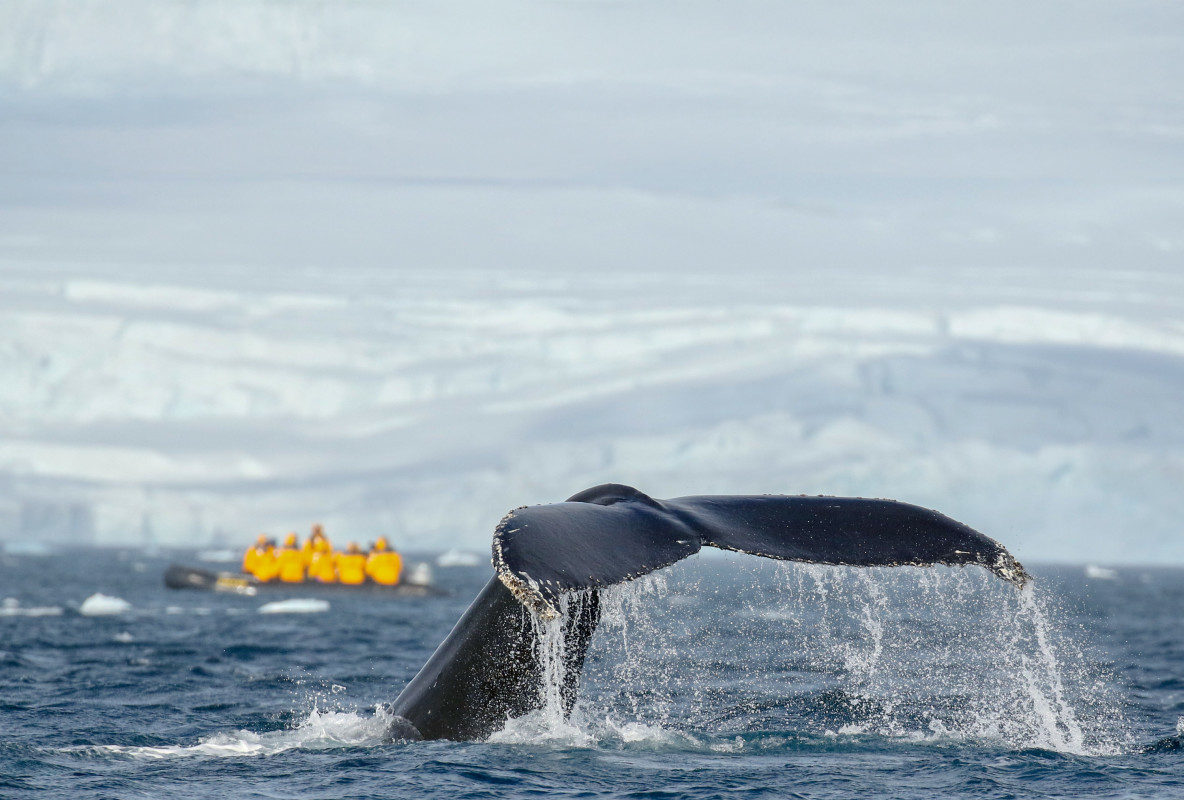


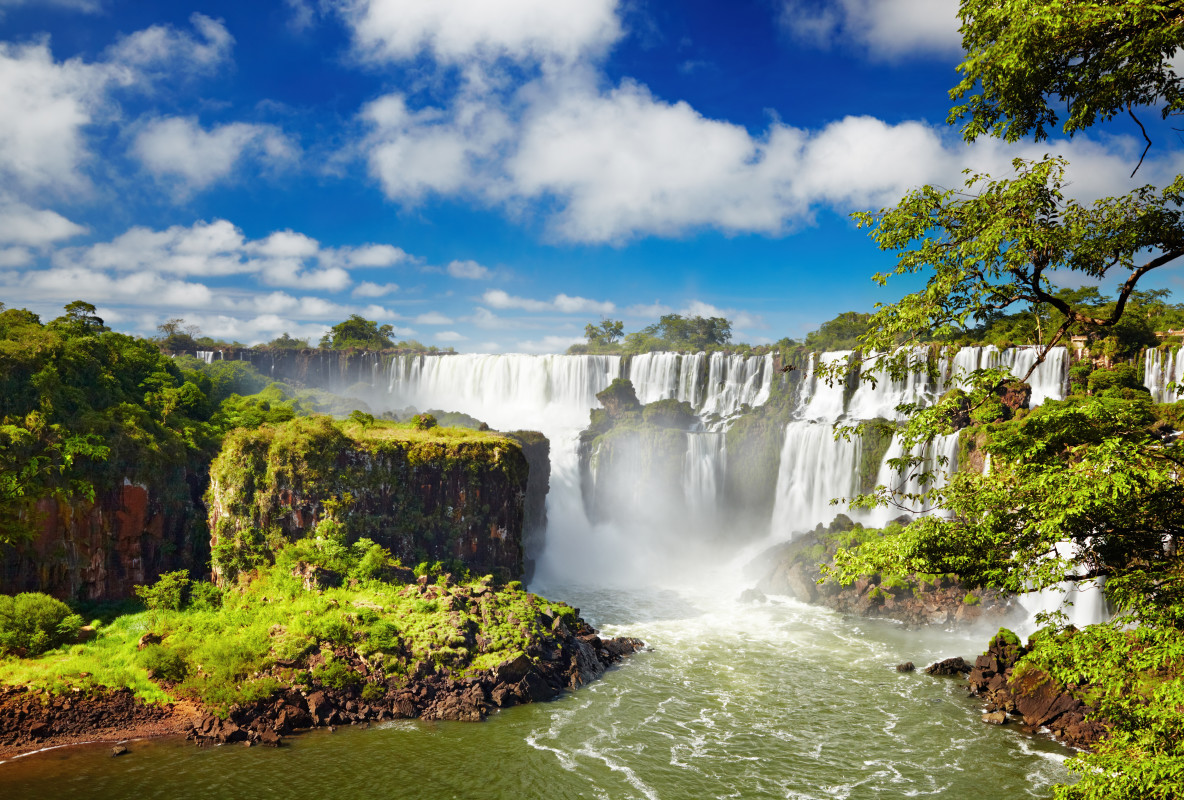
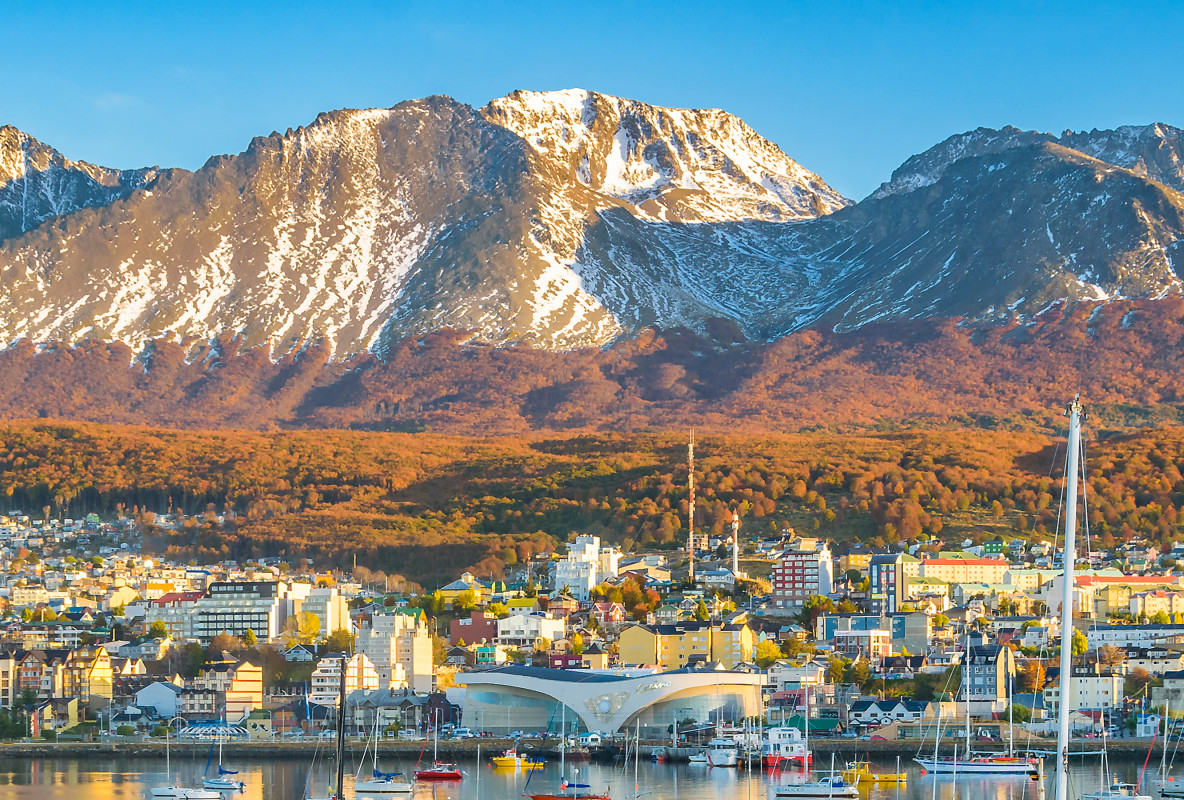
Expedition Ships







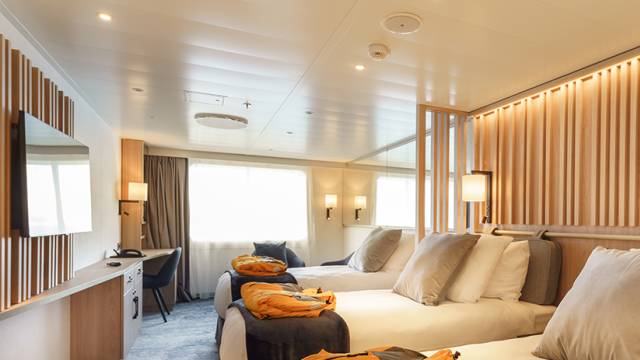





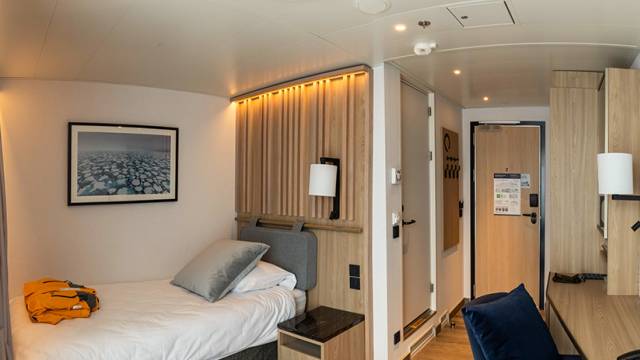


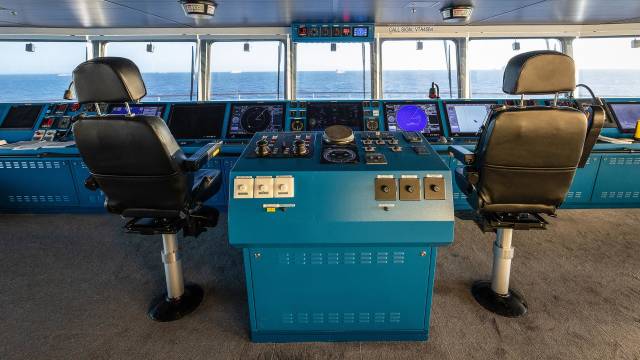




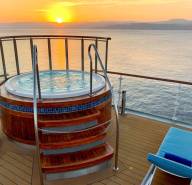







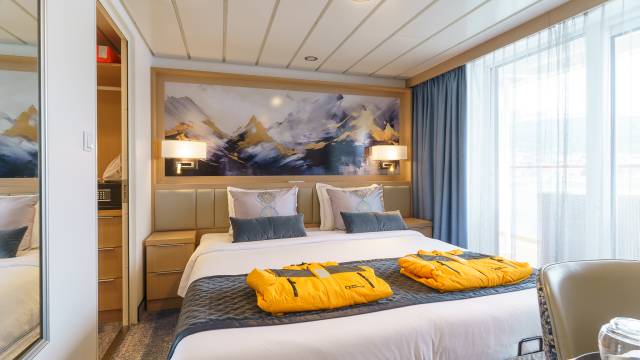


Possible Excursions
When traveling in extremely remote regions, your Expedition Team must consider the sea, ice and weather to guide the route and itinerary details. The following sites are a sample of what you may experience on your expedition, whether by ship, Zodiac cruise, helicopter, or shore landing.
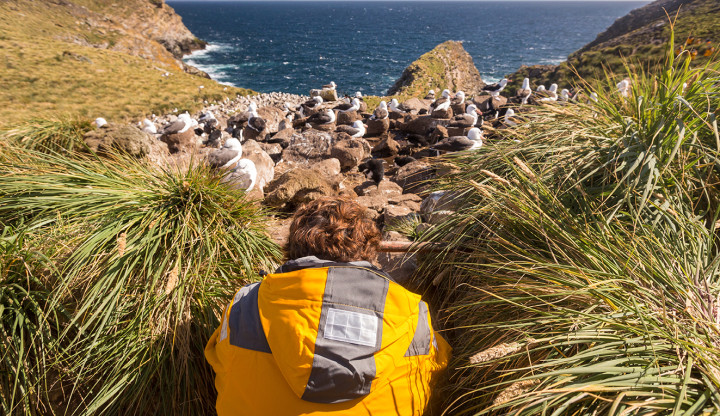
Falkland Islands (Islas Malvinas)

South Georgia
Falkland Islands (Islas Malvinas)
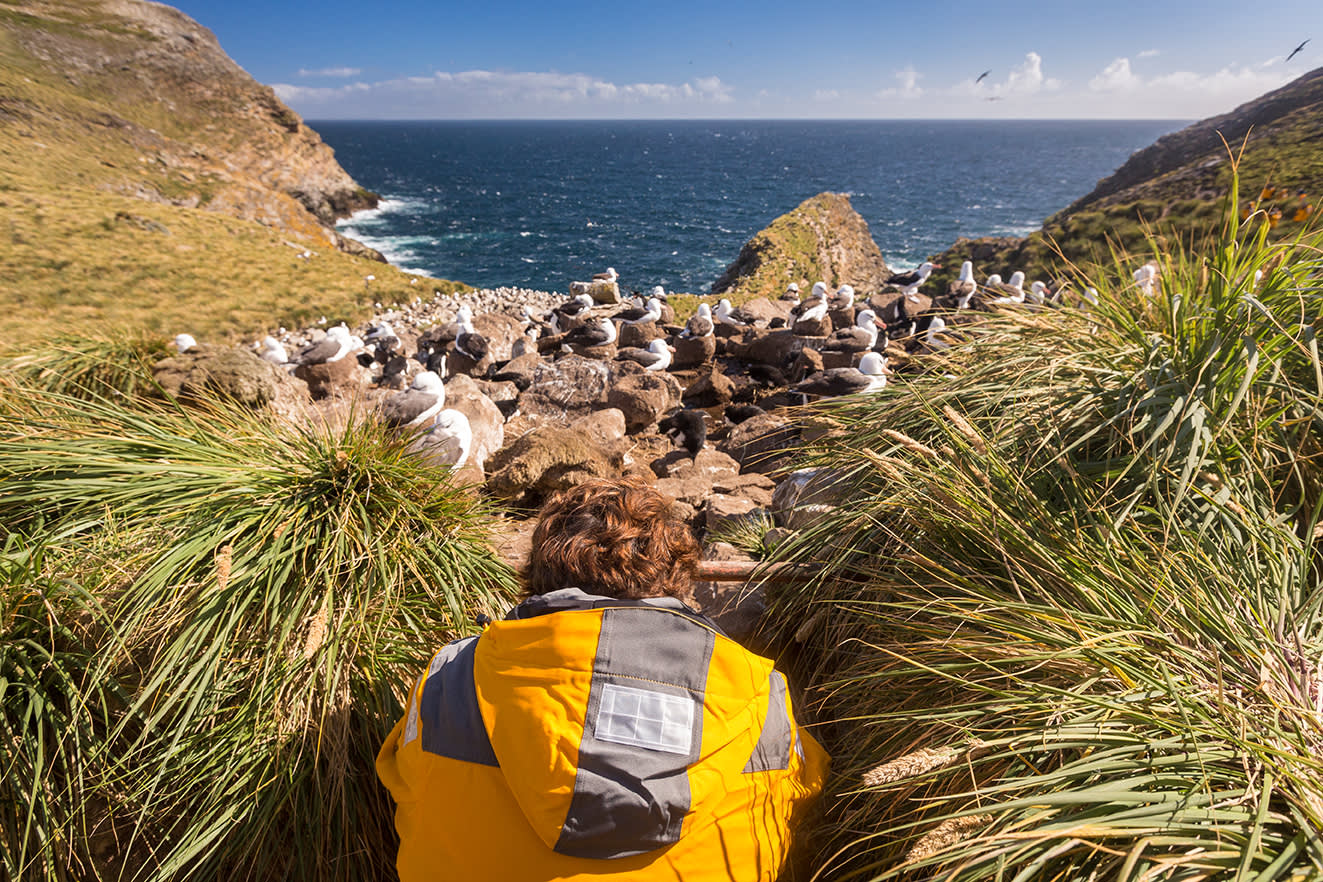
-
Carcass Island
This five-mile (8 km) island northwest of West Falkland is owned by Rob and Lorraine McGill. Named for the Royal Navy ship HMS Carcass, which arrived in 1766, it is a picturesque place, where songbirds nest amongst the luxuriant growth that covers the gently rolling landscape.
-
New Island
New Island, about 30 nautical miles south of Steeple Jason, is a haven for birders. Its sheltered coves and white sandy beaches add to its beauty—it’s often called the most stunning island in the Falklands. Around 25,000 to 30,000 black-browed albatross nest here, along with Magellanic, gentoo, and southern rockhopper penguins. Other residents include songbirds, striated caracaras, and dolphins, sometimes seen in the island’s shallow waters.
-
Saunders Island
Saunders Island is the fourth largest island in the Falklands and has been designated an Important Bird Area due to the high density of nesting seabirds. Nesting species on the island include rockhopper, gentoo and king penguins as well as black-browed albatross and king cormorants, among many others. Keep on the lookout for Commerson’s dolphins by the shore, and for whale blows out at sea.
-
Stanley
Stanley’s deep-water harbor has been the economic mainstay of the community since the port’s completion in 1845. Carrying fortune seekers from the west coast of the Americas, ships battered by rough waters near Cape Horn often called in at Stanley as well. Take a stroll through this quaint English town, visiting the cathedral, museum, or one of its many pubs.
-
Steeple Jason
Steeple Jason, one of the most northwesterly Falkland islands, is a wildlife haven rarely visited due to its remote location. Home to the world’s largest black-browed albatross colony— up to 180,000 breeding pairs—it’s an aweinspiring sight. Nests stretch along the shoreline beyond dense tussock grasses. Minimal human presence, dramatic ridgelines, and sweeping ocean views create a sense of remoteness in a place where nature reigns supreme.
-
West Point Island
The Napier family has owned West Point Island since the 1860s. On the island’s west coast, thousands of black-browed albatross nest in colonies on cliffs along the water’s edge. Rockhopper penguins share the cliffs, while Commerson’s dolphins can often be seen in the surrounding waters.
South Georgia
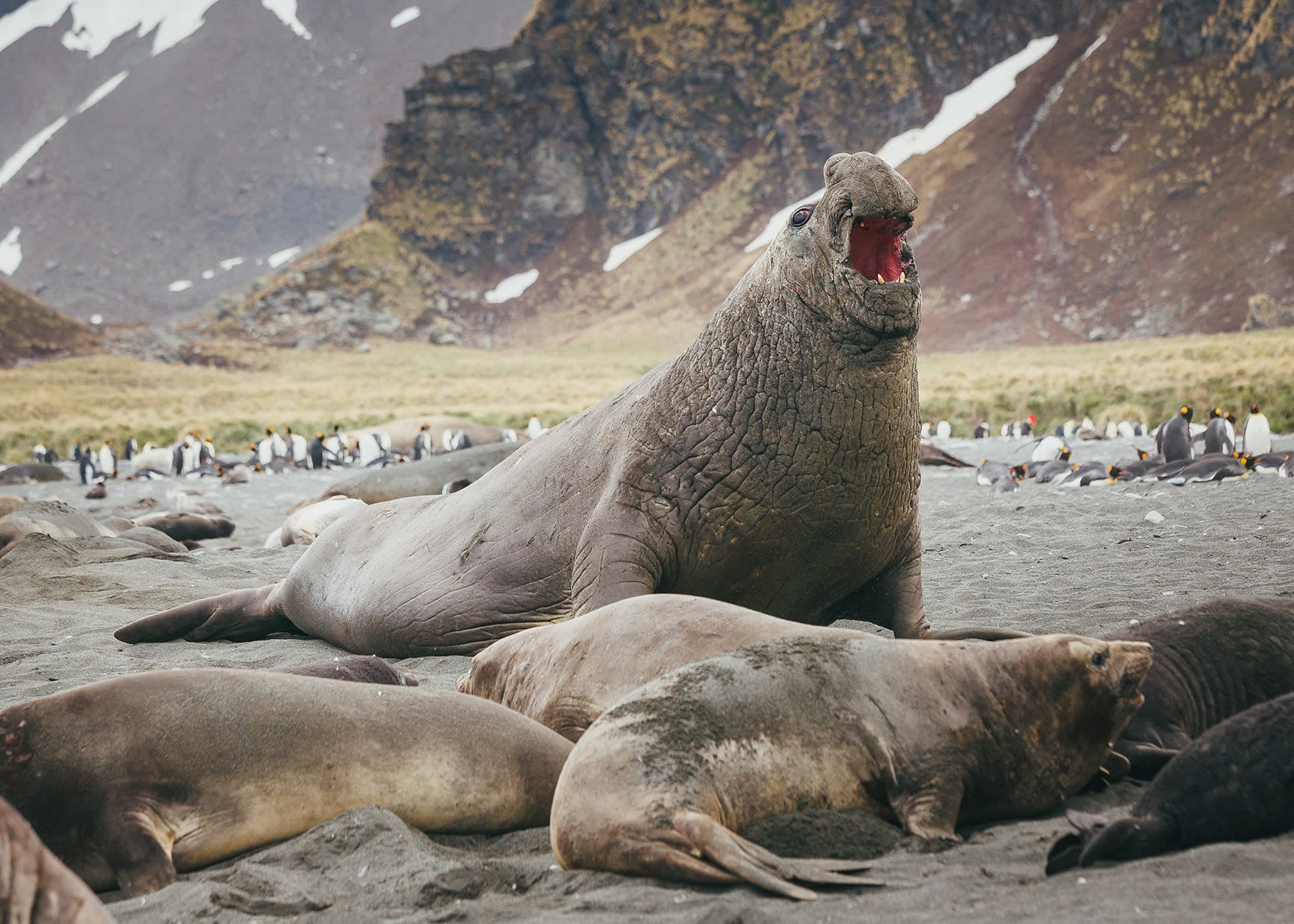
-
Cooper Bay
-
Drygalski Fjord
This is a photogenic and dramatic fjord, with sharp and jagged peaks rising out of the sea. Glaciation never reached the peaks, giving Drygalski its unique landscape.
-
Godthul
-
Grytviken
Only a handful of people live, albeit temporarily, on South Georgia, a British overseas territory. Two of them are curators of the South Georgia Museum, located in the former villa of the whaling station manager. The local church, built for the whaling community, is the only building in Grytviken still used for its original purpose. Buried in the church cemetery is one of Antarctica’s most famous explorers, Sir Ernest Shackleton, at whose grave you can pay your respects.
-
Hercules Bay
-
Saint Andrew's Bay
Over 150,000 breeding pairs of king penguins nest at St. Andrew’s Bay—the largest and fastest growing king penguin rookery on South Georgia, and a wildlife spectacle to behold.
Your Life Onboard
This is polar exploration at its finest. Our ships are intimate, luxurious floating hotels, packed with exciting experiences.


Enjoy panoramic views while you mingle in our comfy lounges, or head outside and chat with fellow adventurers on the wraparound deck. Our social spaces foster connections & shared experiences.

Engage with world-class experts in our auditorium. Presentations cover wildlife, history, marine biology, ecology, & geology, to enhance your polar knowledge & excitement for exploration.

Enjoy onboard amenities, attend lectures, or watch for wildlife from our observation decks. Sea days offer a perfect blend of education, relaxation, and anticipation.

Find tranquility in our well-stocked library, perfect for reading or quiet contemplation. The glass-domed Observation Lounge offers a peaceful retreat to reflect & enjoy awe-inspiring polar views.

Prepare for off-ship excursions in our spacious mudroom. Kayak, paddleboard, or take a plunge in polar waters. Stay active onboard with our gym, outdoor track, and pool facilities.


Know Before You Go
For your personal safety—and to ensure you get the most enjoyment out of your polar adventure—please assess your mobility and medical requirements before booking. It is essential that guests have a high level of mobility to get in and out of Zodiac boats, and for off-ship activities such as hiking on uneven terrain. Our destinations are remote. Apart from our basic ship infirmary, it could take up to 72 hours to reach adequate medical facilities. For more details to help you assess your mobility and medical requirements before booking your voyage, please review Health & Safety.
Some of our expeditions have included transfers and these will be detailed in your Invoice and Trip Brochure.
Please note that if you have an airport transfer included in your trip, it is only available if you arrive on Day 1 of the itinerary. Please ensure your flight information on your Passenger Forms is up to date so our ground crew know when to expect you. There will be someone with a sign in Arrivals waiting for you. Please look for them and they will direct you to our group shuttle.
If you do not have included transfers, or you are arriving before Day 1, you will need to make your own way to the hotel. Most airports we travel in and out of have good taxi ranks in the Arrivals area, or you can often prebook a transfer online.
Packing is an exciting part of the trip for many of us. You will find a handy packing list towards the end of your Trip Brochure. You will have received a copy of this when you first booked. We also have two excellent videos, which you can check out here: What to Pack
Our Protection Promise allows you to make a purchase decision that will leave you worry-free in the event your plans change down the road. Please review details for each term in our Quark Expeditions Protection Promise.
Whether you are thinking of an expedition, or you’ve booked the trip of a lifetime with Quark Expeditions, review all our FAQs for comprehensive tips to help you prepare for the Polar Regions and how to make the most out of your voyage with the most experienced expedition team in the industry. If your specific question isn’t covered below, please reach out to your Polar Travel Advisor or helpful Client Experience Team at guest@quarkexpeditions.com.