



Arctic · From 14 Days
Greenland to Newfoundland
Mountains, Wildlife and Viking History
Starts from $15,240 USD
$12,921 USD
-

-

Glacial fjord at Cape Mercy, Cumberland Sound, Baffin Island, Nunavut, Canada
-

-

-

-
- Starting from
- Reykjavík, Iceland
- Ships
- Ultramarine, Ocean Explorer
- Departures
- 4 Departures between September 2027 to September 2028
From $15,240 USD
$ 12,921 USD
Glacial fjord at Cape Mercy, Cumberland Sound, Baffin Island, Nunavut, Canada


Expedition Overview
Our 14-day Greenland to Newfoundland: Mountains, Wildlife and Viking History is our only itinerary that features Greenland, the Canadian High Arctic and the East Coast of Canada. This brand-new itinerary is also unique because it enables you to explore both Arctic and boreal environments. This means you’ll have the opportunity to experience boreal biomes— also known as taiga—which are cold, dense forests dominated by coniferous trees, boreal woodlands and boreal wildlife such as caribou, black bears, red and Arctic foxes, and peregrine falcons. This is a sharp contrast to what you’ll experience in Arctic biomes, treeless regions marked by extreme winters, low vegetation consisting mostly of mosses and lichens, and wildlife species such as polar bears, seals and migratory birds call home.
“Greenland to Newfoundland” starts with a charter flight from Reykjavik, Iceland, to your embarkation port in Kangerlussuaq, West Greenland. Within a few days we’ll cross the Davis Strait to Nunavut, then south to Labrador, and ultimately to St. John’s, Newfoundland. Our team designed this itinerary so guests could immerse themselves in a cross-section of cultural traditions: Greenlandic culture in places like Sisimiut; Inuit and Nunatsiavut culture in Nunavut and Labrador; Viking history at l’Anse Aux Meadows in Newfoundland; then the welcoming East Coast hospitality of St. John’s, famously steeped in Celtic music and history thanks to its vast population of Irish descendants.
On this voyage you’ll get to visit three UNESCO World Heritage sites: Greenland’s Ilulissat Icefjord, home to some of the most active glaciers on the planet; Red Bay Basque Whaling Station in Labrador; and the 11th century Viking ruins at l’Anse aux Meadows National Historic Site.
Greenland to Newfoundland: Mountains, Wildlife and Viking History will deliver one of the most diverse adventures of a lifetime as you journey from the Arctic to the Atlantic.
Highlights
Experience the unique features of both Arctic and boreal environments
Witness countless icebergs at Ilulissat Icefjord
Visit the Viking ruins at l’Anse aux Meadows UNESCO World Heritage Site
Explore the unrivalled wilderness of Torngat Mountains National Park
Experience northern Indigenous cultures in Greenland and Labrador
End your voyage in St. John’s, Newfoundland, one of the oldest cities in North America.
Select Your Season & Itinerary
Select Season
Reykjavík, Iceland
14 Days · Ultramarine
Starts from $13,551 USD
Reykjavík, Iceland
14 Days · Ocean Explorer
Starts from $13,551 USD
Reykjavík, Iceland
14 Days · Ocean Explorer
Starts from $12,921 USD
Reykjavík, Iceland
14 Days · Ultramarine
Starts from $12,921 USD
Select Itinerary
Reykjavík, Iceland
14 Days · Ultramarine
Starts from $13,551 USD
Reykjavík, Iceland
14 Days · Ocean Explorer
Starts from $13,551 USD
Reykjavík, Iceland
14 Days · Ocean Explorer
Starts from $12,921 USD
Reykjavík, Iceland
14 Days · Ultramarine
Starts from $12,921 USD
14 Days – From Reykjavík, Iceland on Ultramarine (Season 2027)
Day By Day & Map
-
Day 1
Arrive in Iceland
Upon arrival at Keflavik International Airport (outside Reykjavik), make your way to the nearby group hotel, included in the Charter Flight & Hotel Package. You will have the rest of the day to explore fascinating Reykjavik, known for its Norse history and stunning architecture. Make sure you allow for a one-hour transfer (by taxi or public transit) from the Keflavik hotel and airport area to Reykjavik city centre.
-
Day 2
Fly to Kangerlussuaq, Greenland and embark on Ocean Explorer
This morning you’ll catch your charter f light to Kangerlussuaq, Greenland, where you’ll board your vessel and begin your expedition. Get ready for great adventures ahead. Expect a welcome and safety briefing from your Expedition Leader.
-
Day 3
Explore Sisimut
Today we’ll explore in the Qeqqata Municipality on the west coast of Greenland along the Davis Strait. You will have time to wander through the historic town of Sisimiut, where several 18th-century colonial buildings still stand, one of which is Bethel Church. Just look for the striking blue-and-red wooden place of worship. Today’s activities also include a demonstration of the traditional art of kayak making. Experiencing a cultural resurgence, the kayak is a symbol of Greenland and can be traced back over 4,000 years to the Inuit, who used the vessels for hunting and transportation. We also aim to team up with our local mountain-biking partners in Sisimiut, exploring trails that lead outside the town limits.
-
Day 4
Ilulissat: Iceberg viewing at the UNESCO World Heritage site
Ilulissat, Greenlandic for icebergs, is one of the highlights of any journey along west Greenland. Declared a UNESCO World Heritage Site in 2004, Ilulissat Icefjord gives birth to countless icebergs. In fact, it’s home to one of the most productive glaciers in the northern hemisphere, Sermeq Kujalleq (also known as Jakobshavn Glacier). A Zodiac excursion is a unique way to enjoy the spectacle of enormous bergs floating out to Disko Bay. We plan to Zodiac cruise ashore to visit the nearby town of Ilulissat, and from there we’ll hike to the icefjord, where you can view this incredible parade of icebergs from the rocky shore. Expect to see a lot of dogs while you’re in town. There was a time when sled dogs actually outnumbered citizens in Ilulissat, which, unsurprisingly, is the birthplace of the first European to traverse the Northwest Passage by dogsled, explorer Knud Rasmussen. If time allows, you can visit a local museum dedicated to his memory.
-
Day 5
At Sea: Crossing the Davis Strait
As your ship navigates across the Davis Strait, onboard polar experts will present on a variety of topics such as glaciology, history and wildlife. You may even get a taste of the traditional music of Newfoundland and Labrador and learn about the origins of the famous kitchen party tradition.
-
Day 6
Pangnirtung: Stronghold of Inuit culture
Today is our first day exploring the Canadian Arctic as we arrive in Nunavut, Canada’s youngest territory. Nunavut, which means “our land” in the Inuktitut language, stretches north of the Arctic Circle and covers over 1.8 million square kilometers (695,000 square miles), and is considered the homeland of the Inuit in Canada. Guests will get to spend time in Pangnirtung, located at the mouth of Pangnirtung Fjord, which merges with Cumberland Sound. It’s a stronghold of the Inuit community, and an ideal place to learn about Inuit culture while admiring finely crafted traditional art, especially the textiles. You may want to purchase a famous Pang toque, a musthave knit cap for anyone visiting the community.
-
Day 7
Monumental Island: Ice, Wildlife, and History
Located just off the southeast shore of Baffin Island, Monumental Island— Oomienwa in Inuktitut—was named by Arctic explorer Charles Francis Hall in tribute to Sir John Franklin, who vanished searching for the Northwest Passage. Like the adjacent lands, the island is barren, rocky, and windblown. Yet, positioned at a confluence of currents, it hosts prolific numbers of black guillemots in peak summer, nesting, incubating, and fledging. Monumental is also known for massive walruses with impressive tusks, often seen in groups at haul-outs. If the wind is right, you’ll smell them before you see them. Shoals here capture massive icebergs drifting south, and Zodiac cruising on the edge of Davis Strait— linking Baffin Bay to the Labrador Sea— is unforgettable.
-
Day 8 & 9
Torngat Mountain National Park: Exploring the boreal wilderness
Torngat Mountains National Park will leave you awestruck. Within the 10,000 square-kilometer (3,861 square mile) national park, established in 2008, are Canada’s highest mountains east of the venerable Rockies. The park is a wilderness landscape painting brought to life: breathtaking fjords, dramatic glacial formations, stunning landscapes, boreal woodlands and wildlife. For students of Indigenous history, Torngat Mountain National Park is especially meaningful: the park is located at the northern edge of semiautonomous Nunatsiavut territory, which was recognized as the homeland of the Labrador Inuit in 2005, operating under its own constitution and administration. In fact, these lands have been home to the Nunatsiavut and their predecessors for over 7,500 years. We are honored to explore this majestic wilderness territory with you. Torngat, in Inuktitut, means “place of the spirits,” which reflects the spiritual significance of the region to the Inuit communities. As a national park, this wilderness domain offers protection to boreal woodland caribou, black bears, Labrador wolves, red and Arctic foxes, polar bears, and peregrine falcons, among other species. You will have opportunities to explore this national wilderness area during Zodiac and kayaking excursions, as well as guided hikes.
-
Day 10
Nain, Nunatsiavut: Home of the Labrador Inuit
Nain, which has a population of approximately 1,200, is the administrative capital of Nunatsiavut, the semi-autonomous region in northern Labrador claimed by the Inuit. Visitors can learn about Labrador Inuit heritage through interactive exhibits, artwork, and cultural programs at the very modern-looking Illusuak Cultural Centre. Then, to learn about the other cultural group that influenced the region, stroll through town to discover the historic Moravian Mission complex, established in 1771. The white-painted church and mission house bear witness to centuries of cultural exchanges between the Inuit and European missionaries. You’ll have time to engage with friendly locals to hear stories passed down through the generations, and sample traditional foods like arctic char and cloudberries. There will be a guided hike to take in breathtaking vistas of the surrounding mountains and sea.
-
Day 11
At Sea
As our ship heads south, enjoy the views of the Labrador coast. While at sea for the day, join expedition staff out on deck as they look for whales and birdlife. This is also your chance to relax with a glass of wine or hot tea and simply take in the wondrous beauty around you.
-
Day 12
L'Anse aux Meadows: Vikings in North America
Consider the wooden longboats that transported the Vikings an incredible 2,180 kilometers (842 square miles) from Greenland to Newfoundland in 1000 AD. Today, you’re going to visit the archeological remains at the place they landed in their hand-hewn vessels. L’Anse aux Meadows National Historic Site (also a recognized UNESCO World Heritage Site) is the only confirmed Norse or Viking settlement in North America. Join a guided tour to see where Norseman Leif Erikson, son of Erik the Red, is believed to have founded “Vinland” (the East Coast area including what would later be known as Newfoundland) around 1000 AD. Explore the reconstructed sod huts and Norse ruins throughout the historic site—proof that Vikings discovered North America 500 years before Christopher Columbus’ much-chronicled arrival.
-
Day 13
At Sea
Your final at-sea day is a great opportunity for you to ask any lingering questions you have for our team of onboard experts, attend one last presentation, or relax in one of the outdoor Jacuzzis.
-
Day 14
Disembark in St. John's, Newfoundland
Your ship arrives at the pier in St. John’s for a morning disembarkation. After breakfast, you may make your way to St. John’s International Airport to connect with your onward flight, or stay longer if you have booked additional accommodation.

What’s Included & Excluded
- An official Quark Expeditions® parka to keep
- Leadership throughout your voyage by our experienced Expedition Leaders, including shore landings and other activities
- All Zodiac transfers and cruising as per the daily program
- All shore landings as per the daily program
- Shipboard accommodation with daily housekeeping
- All meals, snacks, soft drinks and juices on board throughout your voyage (Please inform us of any dietary requirements as far in advance as possible.)
- Complimentary select beer, wines and cocktails during bar service hours and dinner
- Complimentary coffee, tea and cocoa available around the clock
- Formal and informal presentations by our Expedition Team and guest speakers as scheduled
- A photographic journal documenting the expedition
- A pair of waterproof expedition boots on loan for landings and Zodiac cruising excursions
- Hair dryer and bathrobes in every cabin
- Complimentary Wi-Fi service on one device permitting basic Internet browsing, email, posting on social media and voice applications. (Premium packages are available for more data-intensive applications.) Note: Internet access in the polar regions is subject to geography, climate, and other factors beyond our control.
- All miscellaneous service taxes and port charges throughout the program
- All luggage handling aboard the ship
- Charter Flight & Hotel Package*
- International airfare
- Arrival and departure transfers in Reykjavik and St. John’s
- Passport and visa expenses
- Passport and visa expenses
- Government arrival and departure taxes not mentioned above
- Baggage, cancellation, interruption and medical travel insurance—strongly recommended
- Excess-baggage fees on international and domestic flights
- Mandatory waterproof pants for Zodiac cruising, or any other gear not mentioned
- Laundry, bar, spa and other personal charges unless specified
- Phone charges may vary by location
- Voluntary gratuity at the end of the voyage for shipboard staff and crew
- Additional overnight accommodation
- Adventure Options not listed in Included Activities
Charter Flight and Hotel Package
Package valued at $995 USD is included in the expedition
- One night’s pre-expedition hotel accommodation in Reykjavik
- Group transfer from the Reykjavik hotel to the airport on Day 2
- Charter flight between Reykjavik and Kangerlussuaq
- Transfer to the ship at Kangerlussuaq
14 Days – From Reykjavík, Iceland on Ultramarine (Season 2027)
14 Days – From Reykjavík, Iceland on Ultramarine (Season 2027)
-
Day 1
Arrive in Iceland
Upon arrival at Keflavik International Airport (outside Reykjavik), make your way to the nearby group hotel, included in the Charter Flight & Hotel Package. You will have the rest of the day to explore fascinating Reykjavik, known for its Norse history and stunning architecture. Make sure you allow for a one-hour transfer (by taxi or public transit) from the Keflavik hotel and airport area to Reykjavik city centre.
-
Day 2
Fly to Kangerlussuaq, Greenland and embark on Ocean Explorer
This morning you’ll catch your charter f light to Kangerlussuaq, Greenland, where you’ll board your vessel and begin your expedition. Get ready for great adventures ahead. Expect a welcome and safety briefing from your Expedition Leader.
-
Day 3
Explore Sisimut
Today we’ll explore in the Qeqqata Municipality on the west coast of Greenland along the Davis Strait. You will have time to wander through the historic town of Sisimiut, where several 18th-century colonial buildings still stand, one of which is Bethel Church. Just look for the striking blue-and-red wooden place of worship. Today’s activities also include a demonstration of the traditional art of kayak making. Experiencing a cultural resurgence, the kayak is a symbol of Greenland and can be traced back over 4,000 years to the Inuit, who used the vessels for hunting and transportation. We also aim to team up with our local mountain-biking partners in Sisimiut, exploring trails that lead outside the town limits.
-
Day 4
Ilulissat: Iceberg viewing at the UNESCO World Heritage site
Ilulissat, Greenlandic for icebergs, is one of the highlights of any journey along west Greenland. Declared a UNESCO World Heritage Site in 2004, Ilulissat Icefjord gives birth to countless icebergs. In fact, it’s home to one of the most productive glaciers in the northern hemisphere, Sermeq Kujalleq (also known as Jakobshavn Glacier). A Zodiac excursion is a unique way to enjoy the spectacle of enormous bergs floating out to Disko Bay. We plan to Zodiac cruise ashore to visit the nearby town of Ilulissat, and from there we’ll hike to the icefjord, where you can view this incredible parade of icebergs from the rocky shore. Expect to see a lot of dogs while you’re in town. There was a time when sled dogs actually outnumbered citizens in Ilulissat, which, unsurprisingly, is the birthplace of the first European to traverse the Northwest Passage by dogsled, explorer Knud Rasmussen. If time allows, you can visit a local museum dedicated to his memory.
-
Day 5
At Sea: Crossing the Davis Strait
As your ship navigates across the Davis Strait, onboard polar experts will present on a variety of topics such as glaciology, history and wildlife. You may even get a taste of the traditional music of Newfoundland and Labrador and learn about the origins of the famous kitchen party tradition.
-
Day 6
Pangnirtung: Stronghold of Inuit culture
Today is our first day exploring the Canadian Arctic as we arrive in Nunavut, Canada’s youngest territory. Nunavut, which means “our land” in the Inuktitut language, stretches north of the Arctic Circle and covers over 1.8 million square kilometers (695,000 square miles), and is considered the homeland of the Inuit in Canada. Guests will get to spend time in Pangnirtung, located at the mouth of Pangnirtung Fjord, which merges with Cumberland Sound. It’s a stronghold of the Inuit community, and an ideal place to learn about Inuit culture while admiring finely crafted traditional art, especially the textiles. You may want to purchase a famous Pang toque, a musthave knit cap for anyone visiting the community.
-
Day 7
Monumental Island: Ice, Wildlife, and History
Located just off the southeast shore of Baffin Island, Monumental Island— Oomienwa in Inuktitut—was named by Arctic explorer Charles Francis Hall in tribute to Sir John Franklin, who vanished searching for the Northwest Passage. Like the adjacent lands, the island is barren, rocky, and windblown. Yet, positioned at a confluence of currents, it hosts prolific numbers of black guillemots in peak summer, nesting, incubating, and fledging. Monumental is also known for massive walruses with impressive tusks, often seen in groups at haul-outs. If the wind is right, you’ll smell them before you see them. Shoals here capture massive icebergs drifting south, and Zodiac cruising on the edge of Davis Strait— linking Baffin Bay to the Labrador Sea— is unforgettable.
-
Day 8 & 9
Torngat Mountain National Park: Exploring the boreal wilderness
Torngat Mountains National Park will leave you awestruck. Within the 10,000 square-kilometer (3,861 square mile) national park, established in 2008, are Canada’s highest mountains east of the venerable Rockies. The park is a wilderness landscape painting brought to life: breathtaking fjords, dramatic glacial formations, stunning landscapes, boreal woodlands and wildlife. For students of Indigenous history, Torngat Mountain National Park is especially meaningful: the park is located at the northern edge of semiautonomous Nunatsiavut territory, which was recognized as the homeland of the Labrador Inuit in 2005, operating under its own constitution and administration. In fact, these lands have been home to the Nunatsiavut and their predecessors for over 7,500 years. We are honored to explore this majestic wilderness territory with you. Torngat, in Inuktitut, means “place of the spirits,” which reflects the spiritual significance of the region to the Inuit communities. As a national park, this wilderness domain offers protection to boreal woodland caribou, black bears, Labrador wolves, red and Arctic foxes, polar bears, and peregrine falcons, among other species. You will have opportunities to explore this national wilderness area during Zodiac and kayaking excursions, as well as guided hikes.
-
Day 10
Nain, Nunatsiavut: Home of the Labrador Inuit
Nain, which has a population of approximately 1,200, is the administrative capital of Nunatsiavut, the semi-autonomous region in northern Labrador claimed by the Inuit. Visitors can learn about Labrador Inuit heritage through interactive exhibits, artwork, and cultural programs at the very modern-looking Illusuak Cultural Centre. Then, to learn about the other cultural group that influenced the region, stroll through town to discover the historic Moravian Mission complex, established in 1771. The white-painted church and mission house bear witness to centuries of cultural exchanges between the Inuit and European missionaries. You’ll have time to engage with friendly locals to hear stories passed down through the generations, and sample traditional foods like arctic char and cloudberries. There will be a guided hike to take in breathtaking vistas of the surrounding mountains and sea.
-
Day 11
At Sea
As our ship heads south, enjoy the views of the Labrador coast. While at sea for the day, join expedition staff out on deck as they look for whales and birdlife. This is also your chance to relax with a glass of wine or hot tea and simply take in the wondrous beauty around you.
-
Day 12
L'Anse aux Meadows: Vikings in North America
Consider the wooden longboats that transported the Vikings an incredible 2,180 kilometers (842 square miles) from Greenland to Newfoundland in 1000 AD. Today, you’re going to visit the archeological remains at the place they landed in their hand-hewn vessels. L’Anse aux Meadows National Historic Site (also a recognized UNESCO World Heritage Site) is the only confirmed Norse or Viking settlement in North America. Join a guided tour to see where Norseman Leif Erikson, son of Erik the Red, is believed to have founded “Vinland” (the East Coast area including what would later be known as Newfoundland) around 1000 AD. Explore the reconstructed sod huts and Norse ruins throughout the historic site—proof that Vikings discovered North America 500 years before Christopher Columbus’ much-chronicled arrival.
-
Day 13
At Sea
Your final at-sea day is a great opportunity for you to ask any lingering questions you have for our team of onboard experts, attend one last presentation, or relax in one of the outdoor Jacuzzis.
-
Day 14
Disembark in St. John's, Newfoundland
Your ship arrives at the pier in St. John’s for a morning disembarkation. After breakfast, you may make your way to St. John’s International Airport to connect with your onward flight, or stay longer if you have booked additional accommodation.
14 Days – From Reykjavík, Iceland on Ocean Explorer (Season 2027)
Day By Day & Map
-
Day 1
Arrive in Iceland
Upon arrival at Keflavik International Airport (outside Reykjavik), make your way to the nearby group hotel, included in the Charter Flight & Hotel Package. You will have the rest of the day to explore fascinating Reykjavik, known for its Norse history and stunning architecture. Make sure you allow for a one-hour transfer (by taxi or public transit) from the Keflavik hotel and airport area to Reykjavik city centre.
-
Day 2
Fly to Kangerlussuaq, Greenland and embark on Ocean Explorer
This morning you’ll catch your charter f light to Kangerlussuaq, Greenland, where you’ll board your vessel and begin your expedition. Get ready for great adventures ahead. Expect a welcome and safety briefing from your Expedition Leader.
-
Day 3
Explore Sisimut
Today we’ll explore in the Qeqqata Municipality on the west coast of Greenland along the Davis Strait. You will have time to wander through the historic town of Sisimiut, where several 18th-century colonial buildings still stand, one of which is Bethel Church. Just look for the striking blue-and-red wooden place of worship. Today’s activities also include a demonstration of the traditional art of kayak making. Experiencing a cultural resurgence, the kayak is a symbol of Greenland and can be traced back over 4,000 years to the Inuit, who used the vessels for hunting and transportation. We also aim to team up with our local mountain-biking partners in Sisimiut, exploring trails that lead outside the town limits.
-
Day 4
Ilulissat: Iceberg viewing at the UNESCO World Heritage site
Ilulissat, Greenlandic for icebergs, is one of the highlights of any journey along west Greenland. Declared a UNESCO World Heritage Site in 2004, Ilulissat Icefjord gives birth to countless icebergs. In fact, it’s home to one of the most productive glaciers in the northern hemisphere, Sermeq Kujalleq (also known as Jakobshavn Glacier). A Zodiac excursion is a unique way to enjoy the spectacle of enormous bergs floating out to Disko Bay. We plan to Zodiac cruise ashore to visit the nearby town of Ilulissat, and from there we’ll hike to the icefjord, where you can view this incredible parade of icebergs from the rocky shore. Expect to see a lot of dogs while you’re in town. There was a time when sled dogs actually outnumbered citizens in Ilulissat, which, unsurprisingly, is the birthplace of the first European to traverse the Northwest Passage by dogsled, explorer Knud Rasmussen. If time allows, you can visit a local museum dedicated to his memory.
-
Day 5
At Sea: Crossing the Davis Strait
As your ship navigates across the Davis Strait, onboard polar experts will present on a variety of topics such as glaciology, history and wildlife. You may even get a taste of the traditional music of Newfoundland and Labrador and learn about the origins of the famous kitchen party tradition.
-
Day 6
Pangnirtung: Stronghold of Inuit culture
Today is our first day exploring the Canadian Arctic as we arrive in Nunavut, Canada’s youngest territory. Nunavut, which means “our land” in the Inuktitut language, stretches north of the Arctic Circle and covers over 1.8 million square kilometers (695,000 square miles), and is considered the homeland of the Inuit in Canada. Guests will get to spend time in Pangnirtung, located at the mouth of Pangnirtung Fjord, which merges with Cumberland Sound. It’s a stronghold of the Inuit community, and an ideal place to learn about Inuit culture while admiring finely crafted traditional art, especially the textiles. You may want to purchase a famous Pang toque, a musthave knit cap for anyone visiting the community.
-
Day 7
Monumental Island: Ice, Wildlife, and History
Located just off the southeast shore of Baffin Island, Monumental Island— Oomienwa in Inuktitut—was named by Arctic explorer Charles Francis Hall in tribute to Sir John Franklin, who vanished searching for the Northwest Passage. Like the adjacent lands, the island is barren, rocky, and windblown. Yet, positioned at a confluence of currents, it hosts prolific numbers of black guillemots in peak summer, nesting, incubating, and fledging. Monumental is also known for massive walruses with impressive tusks, often seen in groups at haul-outs. If the wind is right, you’ll smell them before you see them. Shoals here capture massive icebergs drifting south, and Zodiac cruising on the edge of Davis Strait— linking Baffin Bay to the Labrador Sea— is unforgettable.
-
Day 8 & 9
Torngat Mountain National Park: Exploring the boreal wilderness
Torngat Mountains National Park will leave you awestruck. Within the 10,000 square-kilometer (3,861 square mile) national park, established in 2008, are Canada’s highest mountains east of the venerable Rockies. The park is a wilderness landscape painting brought to life: breathtaking fjords, dramatic glacial formations, stunning landscapes, boreal woodlands and wildlife. For students of Indigenous history, Torngat Mountain National Park is especially meaningful: the park is located at the northern edge of semiautonomous Nunatsiavut territory, which was recognized as the homeland of the Labrador Inuit in 2005, operating under its own constitution and administration. In fact, these lands have been home to the Nunatsiavut and their predecessors for over 7,500 years. We are honored to explore this majestic wilderness territory with you. Torngat, in Inuktitut, means “place of the spirits,” which reflects the spiritual significance of the region to the Inuit communities. As a national park, this wilderness domain offers protection to boreal woodland caribou, black bears, Labrador wolves, red and Arctic foxes, polar bears, and peregrine falcons, among other species. You will have opportunities to explore this national wilderness area during Zodiac and kayaking excursions, as well as guided hikes.
-
Day 10
Nain, Nunatsiavut: Home of the Labrador Inuit
Nain, which has a population of approximately 1,200, is the administrative capital of Nunatsiavut, the semi-autonomous region in northern Labrador claimed by the Inuit. Visitors can learn about Labrador Inuit heritage through interactive exhibits, artwork, and cultural programs at the very modern-looking Illusuak Cultural Centre. Then, to learn about the other cultural group that influenced the region, stroll through town to discover the historic Moravian Mission complex, established in 1771. The white-painted church and mission house bear witness to centuries of cultural exchanges between the Inuit and European missionaries. You’ll have time to engage with friendly locals to hear stories passed down through the generations, and sample traditional foods like arctic char and cloudberries. There will be a guided hike to take in breathtaking vistas of the surrounding mountains and sea.
-
Day 11
At Sea
As our ship heads south, enjoy the views of the Labrador coast. While at sea for the day, join expedition staff out on deck as they look for whales and birdlife. This is also your chance to relax with a glass of wine or hot tea and simply take in the wondrous beauty around you.
-
Day 12
L'Anse aux Meadows: Vikings in North America
Consider the wooden longboats that transported the Vikings an incredible 2,180 kilometers (842 square miles) from Greenland to Newfoundland in 1000 AD. Today, you’re going to visit the archeological remains at the place they landed in their hand-hewn vessels. L’Anse aux Meadows National Historic Site (also a recognized UNESCO World Heritage Site) is the only confirmed Norse or Viking settlement in North America. Join a guided tour to see where Norseman Leif Erikson, son of Erik the Red, is believed to have founded “Vinland” (the East Coast area including what would later be known as Newfoundland) around 1000 AD. Explore the reconstructed sod huts and Norse ruins throughout the historic site—proof that Vikings discovered North America 500 years before Christopher Columbus’ much-chronicled arrival.
-
Day 13
At Sea
Your final at-sea day is a great opportunity for you to ask any lingering questions you have for our team of onboard experts, attend one last presentation, or relax in one of the outdoor Jacuzzis.
-
Day 14
Disembark in St. John's, Newfoundland
Your ship arrives at the pier in St. John’s for a morning disembarkation. After breakfast, you may make your way to St. John’s International Airport to connect with your onward flight, or stay longer if you have booked additional accommodation.
What’s Included & Excluded
- An official Quark Expeditions® parka to keep
- Leadership throughout your voyage by our experienced Expedition Leaders, including shore landings and other activities
- All Zodiac transfers and cruising as per the daily program
- All shore landings as per the daily program
- Shipboard accommodation with daily housekeeping
- All meals, snacks, soft drinks and juices on board throughout your voyage (Please inform us of any dietary requirements as far in advance as possible.)
- Complimentary select beer, wines and cocktails during bar service hours and dinner
- Complimentary coffee, tea and cocoa available around the clock
- Formal and informal presentations by our Expedition Team and guest speakers as scheduled
- A photographic journal documenting the expedition
- A pair of waterproof expedition boots on loan for landings and Zodiac cruising excursions
- Hair dryer and bathrobes in every cabin
- Complimentary Wi-Fi service on one device permitting basic Internet browsing, email, posting on social media and voice applications. (Premium packages are available for more data-intensive applications.) Note: Internet access in the polar regions is subject to geography, climate, and other factors beyond our control.
- All miscellaneous service taxes and port charges throughout the program
- All luggage handling aboard the ship
- Charter Flight & Hotel Package*
- International airfare
- Arrival and departure transfers in Reykjavik and St. John’s
- Passport and visa expenses
- Passport and visa expenses
- Government arrival and departure taxes not mentioned above
- Baggage, cancellation, interruption and medical travel insurance—strongly recommended
- Excess-baggage fees on international and domestic flights
- Mandatory waterproof pants for Zodiac cruising, or any other gear not mentioned
- Laundry, bar, spa and other personal charges unless specified
- Phone charges may vary by location
- Voluntary gratuity at the end of the voyage for shipboard staff and crew
- Additional overnight accommodation
- Adventure Options not listed in Included Activities
Charter Flight and Hotel Package
Package valued at $995 USD is included in the expedition
- One night’s pre-expedition hotel accommodation in Reykjavik
- Group transfer from the Reykjavik hotel to the airport on Day 2
- Charter flight between Reykjavik and Kangerlussuaq
- Transfer to the ship at Kangerlussuaq
14 Days – From Reykjavík, Iceland on Ocean Explorer (Season 2027)
14 Days – From Reykjavík, Iceland on Ocean Explorer (Season 2027)
-
Day 1
Arrive in Iceland
Upon arrival at Keflavik International Airport (outside Reykjavik), make your way to the nearby group hotel, included in the Charter Flight & Hotel Package. You will have the rest of the day to explore fascinating Reykjavik, known for its Norse history and stunning architecture. Make sure you allow for a one-hour transfer (by taxi or public transit) from the Keflavik hotel and airport area to Reykjavik city centre.
-
Day 2
Fly to Kangerlussuaq, Greenland and embark on Ocean Explorer
This morning you’ll catch your charter f light to Kangerlussuaq, Greenland, where you’ll board your vessel and begin your expedition. Get ready for great adventures ahead. Expect a welcome and safety briefing from your Expedition Leader.
-
Day 3
Explore Sisimut
Today we’ll explore in the Qeqqata Municipality on the west coast of Greenland along the Davis Strait. You will have time to wander through the historic town of Sisimiut, where several 18th-century colonial buildings still stand, one of which is Bethel Church. Just look for the striking blue-and-red wooden place of worship. Today’s activities also include a demonstration of the traditional art of kayak making. Experiencing a cultural resurgence, the kayak is a symbol of Greenland and can be traced back over 4,000 years to the Inuit, who used the vessels for hunting and transportation. We also aim to team up with our local mountain-biking partners in Sisimiut, exploring trails that lead outside the town limits.
-
Day 4
Ilulissat: Iceberg viewing at the UNESCO World Heritage site
Ilulissat, Greenlandic for icebergs, is one of the highlights of any journey along west Greenland. Declared a UNESCO World Heritage Site in 2004, Ilulissat Icefjord gives birth to countless icebergs. In fact, it’s home to one of the most productive glaciers in the northern hemisphere, Sermeq Kujalleq (also known as Jakobshavn Glacier). A Zodiac excursion is a unique way to enjoy the spectacle of enormous bergs floating out to Disko Bay. We plan to Zodiac cruise ashore to visit the nearby town of Ilulissat, and from there we’ll hike to the icefjord, where you can view this incredible parade of icebergs from the rocky shore. Expect to see a lot of dogs while you’re in town. There was a time when sled dogs actually outnumbered citizens in Ilulissat, which, unsurprisingly, is the birthplace of the first European to traverse the Northwest Passage by dogsled, explorer Knud Rasmussen. If time allows, you can visit a local museum dedicated to his memory.
-
Day 5
At Sea: Crossing the Davis Strait
As your ship navigates across the Davis Strait, onboard polar experts will present on a variety of topics such as glaciology, history and wildlife. You may even get a taste of the traditional music of Newfoundland and Labrador and learn about the origins of the famous kitchen party tradition.
-
Day 6
Pangnirtung: Stronghold of Inuit culture
Today is our first day exploring the Canadian Arctic as we arrive in Nunavut, Canada’s youngest territory. Nunavut, which means “our land” in the Inuktitut language, stretches north of the Arctic Circle and covers over 1.8 million square kilometers (695,000 square miles), and is considered the homeland of the Inuit in Canada. Guests will get to spend time in Pangnirtung, located at the mouth of Pangnirtung Fjord, which merges with Cumberland Sound. It’s a stronghold of the Inuit community, and an ideal place to learn about Inuit culture while admiring finely crafted traditional art, especially the textiles. You may want to purchase a famous Pang toque, a musthave knit cap for anyone visiting the community.
-
Day 7
Monumental Island: Ice, Wildlife, and History
Located just off the southeast shore of Baffin Island, Monumental Island— Oomienwa in Inuktitut—was named by Arctic explorer Charles Francis Hall in tribute to Sir John Franklin, who vanished searching for the Northwest Passage. Like the adjacent lands, the island is barren, rocky, and windblown. Yet, positioned at a confluence of currents, it hosts prolific numbers of black guillemots in peak summer, nesting, incubating, and fledging. Monumental is also known for massive walruses with impressive tusks, often seen in groups at haul-outs. If the wind is right, you’ll smell them before you see them. Shoals here capture massive icebergs drifting south, and Zodiac cruising on the edge of Davis Strait— linking Baffin Bay to the Labrador Sea— is unforgettable.
-
Day 8 & 9
Torngat Mountain National Park: Exploring the boreal wilderness
Torngat Mountains National Park will leave you awestruck. Within the 10,000 square-kilometer (3,861 square mile) national park, established in 2008, are Canada’s highest mountains east of the venerable Rockies. The park is a wilderness landscape painting brought to life: breathtaking fjords, dramatic glacial formations, stunning landscapes, boreal woodlands and wildlife. For students of Indigenous history, Torngat Mountain National Park is especially meaningful: the park is located at the northern edge of semiautonomous Nunatsiavut territory, which was recognized as the homeland of the Labrador Inuit in 2005, operating under its own constitution and administration. In fact, these lands have been home to the Nunatsiavut and their predecessors for over 7,500 years. We are honored to explore this majestic wilderness territory with you. Torngat, in Inuktitut, means “place of the spirits,” which reflects the spiritual significance of the region to the Inuit communities. As a national park, this wilderness domain offers protection to boreal woodland caribou, black bears, Labrador wolves, red and Arctic foxes, polar bears, and peregrine falcons, among other species. You will have opportunities to explore this national wilderness area during Zodiac and kayaking excursions, as well as guided hikes.
-
Day 10
Nain, Nunatsiavut: Home of the Labrador Inuit
Nain, which has a population of approximately 1,200, is the administrative capital of Nunatsiavut, the semi-autonomous region in northern Labrador claimed by the Inuit. Visitors can learn about Labrador Inuit heritage through interactive exhibits, artwork, and cultural programs at the very modern-looking Illusuak Cultural Centre. Then, to learn about the other cultural group that influenced the region, stroll through town to discover the historic Moravian Mission complex, established in 1771. The white-painted church and mission house bear witness to centuries of cultural exchanges between the Inuit and European missionaries. You’ll have time to engage with friendly locals to hear stories passed down through the generations, and sample traditional foods like arctic char and cloudberries. There will be a guided hike to take in breathtaking vistas of the surrounding mountains and sea.
-
Day 11
At Sea
As our ship heads south, enjoy the views of the Labrador coast. While at sea for the day, join expedition staff out on deck as they look for whales and birdlife. This is also your chance to relax with a glass of wine or hot tea and simply take in the wondrous beauty around you.
-
Day 12
L'Anse aux Meadows: Vikings in North America
Consider the wooden longboats that transported the Vikings an incredible 2,180 kilometers (842 square miles) from Greenland to Newfoundland in 1000 AD. Today, you’re going to visit the archeological remains at the place they landed in their hand-hewn vessels. L’Anse aux Meadows National Historic Site (also a recognized UNESCO World Heritage Site) is the only confirmed Norse or Viking settlement in North America. Join a guided tour to see where Norseman Leif Erikson, son of Erik the Red, is believed to have founded “Vinland” (the East Coast area including what would later be known as Newfoundland) around 1000 AD. Explore the reconstructed sod huts and Norse ruins throughout the historic site—proof that Vikings discovered North America 500 years before Christopher Columbus’ much-chronicled arrival.
-
Day 13
At Sea
Your final at-sea day is a great opportunity for you to ask any lingering questions you have for our team of onboard experts, attend one last presentation, or relax in one of the outdoor Jacuzzis.
-
Day 14
Disembark in St. John's, Newfoundland
Your ship arrives at the pier in St. John’s for a morning disembarkation. After breakfast, you may make your way to St. John’s International Airport to connect with your onward flight, or stay longer if you have booked additional accommodation.
14 Days – From Reykjavík, Iceland on Ocean Explorer (Season 2027)
Day By Day & Map
-
Day 1
Arrive in Iceland
Upon arrival at Keflavik International Airport (outside Reykjavik), make your way to the group hotel, included in the Charter Flight & Hotel Package. You will have the rest of the day to explore fascinating Reykjavik, known for its Norse history and stunning architecture. Make sure you allow for a one-hour transfer (by taxi or public transit) from the Keflavik hotel and airport area to Reykjavik city centre.
-
Day 2
Fly to Kangerlussuaq, Greenland and Embark on Ocean Explorer
This morning you’ll catch your charter flight to Kangerlussuaq, Greenland, where you’ll board your vessel and begin your expedition. Get ready for great adventures ahead. Expect a welcome and safety briefing from your Expedition Leader.
-
Day 3
Explore Sisimut
Today we’ll explore in the Qeqqata Municipality on the west coast of Greenland along the Davis Strait. You will have time to wander through the historic town of Sisimiut, where several 18th-century colonial buildings still stand, one of which is Bethel Church. Just look for the striking blue-and-red wooden place of worship. Today’s activities also include a demonstration of the traditional art of kayak making. Experiencing a cultural resurgence, the kayak is a symbol of Greenland and can be traced back over 4,000 years to the Inuit, who used the vessels for hunting and transportation. We also aim to team up with our local mountain-biking partners in Sisimiut, exploring trails that lead outside the town limits. (Limited spaces available; offered at an additional cost.)
-
Day 4
Illusissat: Iceberg Viewing at the UNESCO World Heritage site
Ilulissat, Greenlandic for icebergs, is one of the highlights of any journey along west Greenland. Declared a UNESCO World Heritage Site in 2004, Ilulissat Icefjord gives birth to countless icebergs. In fact, it’s home to one of the most productive glaciers in the northern hemisphere, Sermeq Kujalleq (also known as Jakobshavn Glacier). A Zodiac excursion is a unique way to enjoy the spectacle of enormous bergs floating out to Disko Bay. We plan to Zodiac cruise ashore to visit the nearby town of Ilulissat, and from there we’ll hike to the icefjord, where you can view this incredible parade of icebergs from the rocky shore. Expect to see a lot of dogs while you’re in town. There was a time when sled dogs actually outnumbered citizens in Ilulissat, which, unsurprisingly, is the birthplace of the first European to traverse the Northwest Passage by dogsled, explorer Knud Rasmussen. If time allows, you can visit a local museum dedicated to his memory
-
Day 5
At Sea: Crossing the Davis Strait
As your ship navigates across the Davis Strait, onboard polar experts will present on a variety of topics such as glaciology, history and wildlife. You may even get a taste of the traditional music of Newfoundland and Labrador and learn about the origins of the famous kitchen party tradition (see page 6).
-
Day 6
Pangnirtung: Stronghold of Inuit Culture
Today is our first day exploring the Canadian Arctic as we arrive in Nunavut, Canada’s youngest territory. Nunavut, which means “our land” in the Inuktitut language, stretches north of the Arctic Circle and covers over 1.8 million square kilometers (695,000 square miles), and is considered the homeland of the Inuit in Canada. Guests will get to spend time in Pangnirtung, located at the mouth of Pangnirtung Fjord, which merges with Cumberland Sound. It’s a stronghold of the Inuit community, and an ideal place to learn about Inuit culture while admiring finely crafted traditional art, especially the textiles. You may want to purchase a famous Pang toque, a must-have knit cap for anyone visiting the community.
-
Day 7
Monumental Island: Ice, Wildlife and History
Located just off the southeast shore of Baffin Island, Monumental Island—Oomienwa in Inuktitut—was named by Arctic explorer Charles Francis Hall in tribute to Sir John Franklin, who vanished searching for the Northwest Passage. Like the adjacent lands, the island is barren, rocky, and windblown. Yet, positioned at a confluence of currents, it hosts prolific numbers of black guillemots in peak summer, nesting, incubating, and fledging. Monumental is also known for massive walruses with impressive tusks, often seen in groups at haul-outs. If the wind is right, you’ll smell them before you see them. Shoals here capture massive icebergs drifting south, and Zodiac cruising on the edge of Davis Strait—linking Baffin Bay to the Labrador Sea—is unforgettable.
-
Day 8 & 9
Torngat Mountain National Park: Exploring the Boreal Wilderness
Torngat Mountains National Park will leave you awestruck. Within the 10,000 square kilometer (3,861 square mile) national park, established in 2008, are Canada’s highest mountains east of the venerable Rockies. The park is a wilderness landscape painting brought to life: breathtaking fjords, dramatic glacial formations, stunning landscapes, boreal woodlands and wildlife. For students of Indigenous history, Torngat Mountain National Park is especially meaningful: the park is located at the northern edge of semi-autonomous Nunatsiavut territory, which was recognized as the homeland of the Labrador Inuit in 2005, operating under its own constitution and administration. In fact, these lands have been home to the Nunatsiavut and their predecessors for over 7,500 years. We are honored to explore this majestic wilderness territory with you. Torngat, in Inuktitut, means “place of the spirits,” which reflects the spiritual significance of the region to the Inuit communities. As a national park, this wilderness domain offers protection to boreal woodland caribou, black bears, Labrador wolves, red and Arctic foxes, polar bears, and peregrine falcons, among other species. You will have opportunities to explore this national wilderness area during Zodiac and kayaking excursions, as well as guided hikes.
-
Day 10
Nain, Nunatsiavut: Home of the Labrador Inuit
Nain, which has a population of approximately 1,200, is the administrative capital of Nunatsiavut, the semi-autonomous region in northern Labrador claimed by the Inuit. Visitors can learn about Labrador Inuit heritage through interactive exhibits, artwork, and cultural programs at the very modern-looking Illusuak Cultural Centre. Then, to learn about the other cultural group that influenced the region, stroll through town to discover the historic Moravian Mission complex, established in 1771. The white-painted church and mission house bear witness to centuries of cultural exchanges between the Inuit and European missionaries. You’ll have time to engage with friendly locals to hear stories passed down through the generations, and sample traditional foods like arctic char and cloudberries. There will be a guided hike to take in breathtaking vistas of the surrounding mountains and sea.
-
Day 11
At Sea: the Labrador Coast
As our ship heads south, enjoy the views of the Labrador coast. While at sea for the day, join expedition staff out on deck as they look for whales and birdlife. This is also your chance to relax with a glass of wine or hot tea and simply take in the wondrous beauty around you.
-
Day 12
L’Anse aux Meadows: Vikings in North America
Consider the wooden longboats that transported the Vikings an incredible 2,180 kilometers (842 square miles) from Greenland to Newfoundland in 1000 AD. Today, you’re going to visit the archeological remains at the place they landed in their handhewn vessels. L’Anse aux Meadows National Historic Site (also a recognized UNESCO World Heritage Site) is the only confirmed Norse or Viking settlement in North America. Join a guided tour to see where Norseman Leif Erikson, son of Erik the Red, is believed to have founded “Vinland” (the East Coast area including what would later be known as Newfoundland) around 1000 AD. Explore the reconstructed sod huts and Norse ruins throughout the historic site—proof that Vikings discovered North America 500 years before Christopher Columbus’ much-chronicled arrival.
-
Day 13
At Sea
Your final at-sea day is a great opportunity for you to ask any lingering questions you have for our team of onboard experts, attend one last presentation, or relax.
-
Day 14
Disembark in St. John’s, Newfoundland
Your ship arrives at the pier in St. John’s for a morning disembarkation. After breakfast, you may make your way to St. John’s International Airport to connect with your onward flight, or stay longer if you have booked additional accommodation.

What’s Included & Excluded
- An official Quark Expeditions® parka to keep
- Leadership throughout your voyage by our experienced Expedition Leaders, including shore landings and other activities
- All Zodiac transfers and cruising as per the daily program
- All shore landings as per the daily program
- Shipboard accommodation with daily housekeeping
- All meals, snacks, soft drinks and juices on board throughout your voyage (Please inform us of any dietary requirements as far in advance as possible.)
- Complimentary select beer, wines and cocktails during bar service hours and dinner
- Complimentary coffee, tea and cocoa available around the clock
- Formal and informal presentations by our Expedition Team and guest speakers as scheduled
- A photographic journal documenting the expedition
- A pair of waterproof expedition boots on loan for landings and Zodiac cruising excursions
- Hair dryer and bathrobes in every cabin
- Complimentary Wi-Fi service on one device permitting basic Internet browsing, email, posting on social media and voice applications. (Premium packages are available for more data-intensive applications.) Note: Internet access in the polar regions is subject to geography, climate, and other factors beyond our control
- All miscellaneous service taxes and port charges throughout the program
- All luggage handling aboard the ship
- Charter Flight & Hotel Package*
- International airfare
- Arrival and departure transfers in Reykjavik and St. John’s
- Passport and visa expenses
- Passport and visa expenses
- Government arrival and departure taxes not mentioned above
- Baggage, cancellation, interruption and medical travel insurance—strongly recommended
- Excess-baggage fees on international and domestic flights
- Mandatory waterproof pants for Zodiac cruising, or any other gear not mentioned
- Laundry, bar, spa and other personal charges unless specified
- Phone charges may vary by location
- Voluntary gratuity at the end of the voyage for shipboard staff and crew
- Additional overnight accommodation
- Adventure Options not listed in Included Activities
Charter Flight and Hotel Package
Package valued at $1,045 USD is included in the expedition
- One night’s pre-expedition hotel accommodation in Reykjavik
- Group transfer from the Reykjavik hotel to the airport on Day 2
- Charter flight between Reykjavik and Kangerlussuaq
- Transfer to the ship at Kangerlussuaq
14 Days – From Reykjavík, Iceland on Ocean Explorer (Season 2027)
14 Days – From Reykjavík, Iceland on Ocean Explorer (Season 2027)
-
Day 1
Arrive in Iceland
Upon arrival at Keflavik International Airport (outside Reykjavik), make your way to the group hotel, included in the Charter Flight & Hotel Package. You will have the rest of the day to explore fascinating Reykjavik, known for its Norse history and stunning architecture. Make sure you allow for a one-hour transfer (by taxi or public transit) from the Keflavik hotel and airport area to Reykjavik city centre.
-
Day 2
Fly to Kangerlussuaq, Greenland and Embark on Ocean Explorer
This morning you’ll catch your charter flight to Kangerlussuaq, Greenland, where you’ll board your vessel and begin your expedition. Get ready for great adventures ahead. Expect a welcome and safety briefing from your Expedition Leader.
-
Day 3
Explore Sisimut
Today we’ll explore in the Qeqqata Municipality on the west coast of Greenland along the Davis Strait. You will have time to wander through the historic town of Sisimiut, where several 18th-century colonial buildings still stand, one of which is Bethel Church. Just look for the striking blue-and-red wooden place of worship. Today’s activities also include a demonstration of the traditional art of kayak making. Experiencing a cultural resurgence, the kayak is a symbol of Greenland and can be traced back over 4,000 years to the Inuit, who used the vessels for hunting and transportation. We also aim to team up with our local mountain-biking partners in Sisimiut, exploring trails that lead outside the town limits. (Limited spaces available; offered at an additional cost.)
-
Day 4
Illusissat: Iceberg Viewing at the UNESCO World Heritage site
Ilulissat, Greenlandic for icebergs, is one of the highlights of any journey along west Greenland. Declared a UNESCO World Heritage Site in 2004, Ilulissat Icefjord gives birth to countless icebergs. In fact, it’s home to one of the most productive glaciers in the northern hemisphere, Sermeq Kujalleq (also known as Jakobshavn Glacier). A Zodiac excursion is a unique way to enjoy the spectacle of enormous bergs floating out to Disko Bay. We plan to Zodiac cruise ashore to visit the nearby town of Ilulissat, and from there we’ll hike to the icefjord, where you can view this incredible parade of icebergs from the rocky shore. Expect to see a lot of dogs while you’re in town. There was a time when sled dogs actually outnumbered citizens in Ilulissat, which, unsurprisingly, is the birthplace of the first European to traverse the Northwest Passage by dogsled, explorer Knud Rasmussen. If time allows, you can visit a local museum dedicated to his memory
-
Day 5
At Sea: Crossing the Davis Strait
As your ship navigates across the Davis Strait, onboard polar experts will present on a variety of topics such as glaciology, history and wildlife. You may even get a taste of the traditional music of Newfoundland and Labrador and learn about the origins of the famous kitchen party tradition (see page 6).
-
Day 6
Pangnirtung: Stronghold of Inuit Culture
Today is our first day exploring the Canadian Arctic as we arrive in Nunavut, Canada’s youngest territory. Nunavut, which means “our land” in the Inuktitut language, stretches north of the Arctic Circle and covers over 1.8 million square kilometers (695,000 square miles), and is considered the homeland of the Inuit in Canada. Guests will get to spend time in Pangnirtung, located at the mouth of Pangnirtung Fjord, which merges with Cumberland Sound. It’s a stronghold of the Inuit community, and an ideal place to learn about Inuit culture while admiring finely crafted traditional art, especially the textiles. You may want to purchase a famous Pang toque, a must-have knit cap for anyone visiting the community.
-
Day 7
Monumental Island: Ice, Wildlife and History
Located just off the southeast shore of Baffin Island, Monumental Island—Oomienwa in Inuktitut—was named by Arctic explorer Charles Francis Hall in tribute to Sir John Franklin, who vanished searching for the Northwest Passage. Like the adjacent lands, the island is barren, rocky, and windblown. Yet, positioned at a confluence of currents, it hosts prolific numbers of black guillemots in peak summer, nesting, incubating, and fledging. Monumental is also known for massive walruses with impressive tusks, often seen in groups at haul-outs. If the wind is right, you’ll smell them before you see them. Shoals here capture massive icebergs drifting south, and Zodiac cruising on the edge of Davis Strait—linking Baffin Bay to the Labrador Sea—is unforgettable.
-
Day 8 & 9
Torngat Mountain National Park: Exploring the Boreal Wilderness
Torngat Mountains National Park will leave you awestruck. Within the 10,000 square kilometer (3,861 square mile) national park, established in 2008, are Canada’s highest mountains east of the venerable Rockies. The park is a wilderness landscape painting brought to life: breathtaking fjords, dramatic glacial formations, stunning landscapes, boreal woodlands and wildlife. For students of Indigenous history, Torngat Mountain National Park is especially meaningful: the park is located at the northern edge of semi-autonomous Nunatsiavut territory, which was recognized as the homeland of the Labrador Inuit in 2005, operating under its own constitution and administration. In fact, these lands have been home to the Nunatsiavut and their predecessors for over 7,500 years. We are honored to explore this majestic wilderness territory with you. Torngat, in Inuktitut, means “place of the spirits,” which reflects the spiritual significance of the region to the Inuit communities. As a national park, this wilderness domain offers protection to boreal woodland caribou, black bears, Labrador wolves, red and Arctic foxes, polar bears, and peregrine falcons, among other species. You will have opportunities to explore this national wilderness area during Zodiac and kayaking excursions, as well as guided hikes.
-
Day 10
Nain, Nunatsiavut: Home of the Labrador Inuit
Nain, which has a population of approximately 1,200, is the administrative capital of Nunatsiavut, the semi-autonomous region in northern Labrador claimed by the Inuit. Visitors can learn about Labrador Inuit heritage through interactive exhibits, artwork, and cultural programs at the very modern-looking Illusuak Cultural Centre. Then, to learn about the other cultural group that influenced the region, stroll through town to discover the historic Moravian Mission complex, established in 1771. The white-painted church and mission house bear witness to centuries of cultural exchanges between the Inuit and European missionaries. You’ll have time to engage with friendly locals to hear stories passed down through the generations, and sample traditional foods like arctic char and cloudberries. There will be a guided hike to take in breathtaking vistas of the surrounding mountains and sea.
-
Day 11
At Sea: the Labrador Coast
As our ship heads south, enjoy the views of the Labrador coast. While at sea for the day, join expedition staff out on deck as they look for whales and birdlife. This is also your chance to relax with a glass of wine or hot tea and simply take in the wondrous beauty around you.
-
Day 12
L’Anse aux Meadows: Vikings in North America
Consider the wooden longboats that transported the Vikings an incredible 2,180 kilometers (842 square miles) from Greenland to Newfoundland in 1000 AD. Today, you’re going to visit the archeological remains at the place they landed in their handhewn vessels. L’Anse aux Meadows National Historic Site (also a recognized UNESCO World Heritage Site) is the only confirmed Norse or Viking settlement in North America. Join a guided tour to see where Norseman Leif Erikson, son of Erik the Red, is believed to have founded “Vinland” (the East Coast area including what would later be known as Newfoundland) around 1000 AD. Explore the reconstructed sod huts and Norse ruins throughout the historic site—proof that Vikings discovered North America 500 years before Christopher Columbus’ much-chronicled arrival.
-
Day 13
At Sea
Your final at-sea day is a great opportunity for you to ask any lingering questions you have for our team of onboard experts, attend one last presentation, or relax.
-
Day 14
Disembark in St. John’s, Newfoundland
Your ship arrives at the pier in St. John’s for a morning disembarkation. After breakfast, you may make your way to St. John’s International Airport to connect with your onward flight, or stay longer if you have booked additional accommodation.
14 Days – From Reykjavík, Iceland on Ultramarine (Season 2027)
Day By Day & Map
-
Day 1
Arrive in Iceland
Upon arrival at Keflavik International Airport (outside Reykjavik), make your way to the group hotel, included in the Charter Flight & Hotel Package. You will have the rest of the day to explore fascinating Reykjavik, known for its Norse history and stunning architecture. Make sure you allow for a one-hour transfer (by taxi or public transit) from the Keflavik hotel and airport area to Reykjavik city centre.
-
Day 2
Fly to Kangerlussuaq, Greenland and Embark on Ocean Explorer
This morning you’ll catch your charter flight to Kangerlussuaq, Greenland, where you’ll board your vessel and begin your expedition. Get ready for great adventures ahead. Expect a welcome and safety briefing from your Expedition Leader.
-
Day 3
Explore Sisimut
Today we’ll explore in the Qeqqata Municipality on the west coast of Greenland along the Davis Strait. You will have time to wander through the historic town of Sisimiut, where several 18th-century colonial buildings still stand, one of which is Bethel Church. Just look for the striking blue-and-red wooden place of worship. Today’s activities also include a demonstration of the traditional art of kayak making. Experiencing a cultural resurgence, the kayak is a symbol of Greenland and can be traced back over 4,000 years to the Inuit, who used the vessels for hunting and transportation. We also aim to team up with our local mountain-biking partners in Sisimiut, exploring trails that lead outside the town limits. (Limited spaces available; offered at an additional cost.)
-
Day 4
Illusissat: Iceberg Viewing at the UNESCO World Heritage site
Ilulissat, Greenlandic for icebergs, is one of the highlights of any journey along west Greenland. Declared a UNESCO World Heritage Site in 2004, Ilulissat Icefjord gives birth to countless icebergs. In fact, it’s home to one of the most productive glaciers in the northern hemisphere, Sermeq Kujalleq (also known as Jakobshavn Glacier). A Zodiac excursion is a unique way to enjoy the spectacle of enormous bergs floating out to Disko Bay. We plan to Zodiac cruise ashore to visit the nearby town of Ilulissat, and from there we’ll hike to the icefjord, where you can view this incredible parade of icebergs from the rocky shore. Expect to see a lot of dogs while you’re in town. There was a time when sled dogs actually outnumbered citizens in Ilulissat, which, unsurprisingly, is the birthplace of the first European to traverse the Northwest Passage by dogsled, explorer Knud Rasmussen. If time allows, you can visit a local museum dedicated to his memory
-
Day 5
At Sea: Crossing the Davis Strait
As your ship navigates across the Davis Strait, onboard polar experts will present on a variety of topics such as glaciology, history and wildlife. You may even get a taste of the traditional music of Newfoundland and Labrador and learn about the origins of the famous kitchen party tradition (see page 6).
-
Day 6
Pangnirtung: Stronghold of Inuit Culture
Today is our first day exploring the Canadian Arctic as we arrive in Nunavut, Canada’s youngest territory. Nunavut, which means “our land” in the Inuktitut language, stretches north of the Arctic Circle and covers over 1.8 million square kilometers (695,000 square miles), and is considered the homeland of the Inuit in Canada. Guests will get to spend time in Pangnirtung, located at the mouth of Pangnirtung Fjord, which merges with Cumberland Sound. It’s a stronghold of the Inuit community, and an ideal place to learn about Inuit culture while admiring finely crafted traditional art, especially the textiles. You may want to purchase a famous Pang toque, a must-have knit cap for anyone visiting the community.
-
Day 7
Monumental Island: Ice, Wildlife and History
Located just off the southeast shore of Baffin Island, Monumental Island—Oomienwa in Inuktitut—was named by Arctic explorer Charles Francis Hall in tribute to Sir John Franklin, who vanished searching for the Northwest Passage. Like the adjacent lands, the island is barren, rocky, and windblown. Yet, positioned at a confluence of currents, it hosts prolific numbers of black guillemots in peak summer, nesting, incubating, and fledging. Monumental is also known for massive walruses with impressive tusks, often seen in groups at haul-outs. If the wind is right, you’ll smell them before you see them. Shoals here capture massive icebergs drifting south, and Zodiac cruising on the edge of Davis Strait—linking Baffin Bay to the Labrador Sea—is unforgettable.
-
Day 8 & 9
Torngat Mountain National Park: Exploring the Boreal Wilderness
Torngat Mountains National Park will leave you awestruck. Within the 10,000 square kilometer (3,861 square mile) national park, established in 2008, are Canada’s highest mountains east of the venerable Rockies. The park is a wilderness landscape painting brought to life: breathtaking fjords, dramatic glacial formations, stunning landscapes, boreal woodlands and wildlife. For students of Indigenous history, Torngat Mountain National Park is especially meaningful: the park is located at the northern edge of semi-autonomous Nunatsiavut territory, which was recognized as the homeland of the Labrador Inuit in 2005, operating under its own constitution and administration. In fact, these lands have been home to the Nunatsiavut and their predecessors for over 7,500 years. We are honored to explore this majestic wilderness territory with you. Torngat, in Inuktitut, means “place of the spirits,” which reflects the spiritual significance of the region to the Inuit communities. As a national park, this wilderness domain offers protection to boreal woodland caribou, black bears, Labrador wolves, red and Arctic foxes, polar bears, and peregrine falcons, among other species. You will have opportunities to explore this national wilderness area during Zodiac and kayaking excursions, as well as guided hikes.
-
Day 10
Nain, Nunatsiavut: Home of the Labrador Inuit
Nain, which has a population of approximately 1,200, is the administrative capital of Nunatsiavut, the semi-autonomous region in northern Labrador claimed by the Inuit. Visitors can learn about Labrador Inuit heritage through interactive exhibits, artwork, and cultural programs at the very modern-looking Illusuak Cultural Centre. Then, to learn about the other cultural group that influenced the region, stroll through town to discover the historic Moravian Mission complex, established in 1771. The white-painted church and mission house bear witness to centuries of cultural exchanges between the Inuit and European missionaries. You’ll have time to engage with friendly locals to hear stories passed down through the generations, and sample traditional foods like arctic char and cloudberries. There will be a guided hike to take in breathtaking vistas of the surrounding mountains and sea.
-
Day 11
At Sea: the Labrador Coast
As our ship heads south, enjoy the views of the Labrador coast. While at sea for the day, join expedition staff out on deck as they look for whales and birdlife. This is also your chance to relax with a glass of wine or hot tea and simply take in the wondrous beauty around you.
-
Day 12
L’Anse aux Meadows: Vikings in North America
Consider the wooden longboats that transported the Vikings an incredible 2,180 kilometers (842 square miles) from Greenland to Newfoundland in 1000 AD. Today, you’re going to visit the archeological remains at the place they landed in their handhewn vessels. L’Anse aux Meadows National Historic Site (also a recognized UNESCO World Heritage Site) is the only confirmed Norse or Viking settlement in North America. Join a guided tour to see where Norseman Leif Erikson, son of Erik the Red, is believed to have founded “Vinland” (the East Coast area including what would later be known as Newfoundland) around 1000 AD. Explore the reconstructed sod huts and Norse ruins throughout the historic site—proof that Vikings discovered North America 500 years before Christopher Columbus’ much-chronicled arrival.
-
Day 13
At Sea
Your final at-sea day is a great opportunity for you to ask any lingering questions you have for our team of onboard experts, attend one last presentation, or relax.
-
Day 14
Disembark in St. John’s, Newfoundland
Your ship arrives at the pier in St. John’s for a morning disembarkation. After breakfast, you may make your way to St. John’s International Airport to connect with your onward flight, or stay longer if you have booked additional accommodation.
What’s Included & Excluded
- An official Quark Expeditions® parka to keep
- Leadership throughout your voyage by our experienced Expedition Leaders, including shore landings and other activities
- All Zodiac transfers and cruising as per the daily program
- All shore landings as per the daily program
- Shipboard accommodation with daily housekeeping
- All meals, snacks, soft drinks and juices on board throughout your voyage (Please inform us of any dietary requirements as far in advance as possible.)
- Complimentary select beer, wines and cocktails during bar service hours and dinner
- Complimentary coffee, tea and cocoa available around the clock
- Formal and informal presentations by our Expedition Team and guest speakers as scheduled
- A photographic journal documenting the expedition
- A pair of waterproof expedition boots on loan for landings and Zodiac cruising excursions
- Hair dryer and bathrobes in every cabin
- Complimentary Wi-Fi service on one device permitting basic Internet browsing, email, posting on social media and voice applications. (Premium packages are available for more data-intensive applications.) Note: Internet access in the polar regions is subject to geography, climate, and other factors beyond our control
- All miscellaneous service taxes and port charges throughout the program
- All luggage handling aboard the ship
- Charter Flight & Hotel Package*
- International airfare
- Arrival and departure transfers in Reykjavik and St. John’s
- Passport and visa expenses
- Passport and visa expenses
- Government arrival and departure taxes not mentioned above
- Baggage, cancellation, interruption and medical travel insurance—strongly recommended
- Excess-baggage fees on international and domestic flights
- Mandatory waterproof pants for Zodiac cruising, or any other gear not mentioned
- Laundry, bar, spa and other personal charges unless specified
- Phone charges may vary by location
- Voluntary gratuity at the end of the voyage for shipboard staff and crew
- Additional overnight accommodation
- Adventure Options not listed in Included Activities
Charter Flight and Hotel Package
Package valued at $1,045 USD is included in the expedition
- One night’s pre-expedition hotel accommodation in Reykjavik
- Group transfer from the Reykjavik hotel to the airport on Day 2
- Charter flight between Reykjavik and Kangerlussuaq
- Transfer to the ship at Kangerlussuaq
14 Days – From Reykjavík, Iceland on Ultramarine (Season 2027)
14 Days – From Reykjavík, Iceland on Ultramarine (Season 2027)
-
Day 1
Arrive in Iceland
Upon arrival at Keflavik International Airport (outside Reykjavik), make your way to the group hotel, included in the Charter Flight & Hotel Package. You will have the rest of the day to explore fascinating Reykjavik, known for its Norse history and stunning architecture. Make sure you allow for a one-hour transfer (by taxi or public transit) from the Keflavik hotel and airport area to Reykjavik city centre.
-
Day 2
Fly to Kangerlussuaq, Greenland and Embark on Ocean Explorer
This morning you’ll catch your charter flight to Kangerlussuaq, Greenland, where you’ll board your vessel and begin your expedition. Get ready for great adventures ahead. Expect a welcome and safety briefing from your Expedition Leader.
-
Day 3
Explore Sisimut
Today we’ll explore in the Qeqqata Municipality on the west coast of Greenland along the Davis Strait. You will have time to wander through the historic town of Sisimiut, where several 18th-century colonial buildings still stand, one of which is Bethel Church. Just look for the striking blue-and-red wooden place of worship. Today’s activities also include a demonstration of the traditional art of kayak making. Experiencing a cultural resurgence, the kayak is a symbol of Greenland and can be traced back over 4,000 years to the Inuit, who used the vessels for hunting and transportation. We also aim to team up with our local mountain-biking partners in Sisimiut, exploring trails that lead outside the town limits. (Limited spaces available; offered at an additional cost.)
-
Day 4
Illusissat: Iceberg Viewing at the UNESCO World Heritage site
Ilulissat, Greenlandic for icebergs, is one of the highlights of any journey along west Greenland. Declared a UNESCO World Heritage Site in 2004, Ilulissat Icefjord gives birth to countless icebergs. In fact, it’s home to one of the most productive glaciers in the northern hemisphere, Sermeq Kujalleq (also known as Jakobshavn Glacier). A Zodiac excursion is a unique way to enjoy the spectacle of enormous bergs floating out to Disko Bay. We plan to Zodiac cruise ashore to visit the nearby town of Ilulissat, and from there we’ll hike to the icefjord, where you can view this incredible parade of icebergs from the rocky shore. Expect to see a lot of dogs while you’re in town. There was a time when sled dogs actually outnumbered citizens in Ilulissat, which, unsurprisingly, is the birthplace of the first European to traverse the Northwest Passage by dogsled, explorer Knud Rasmussen. If time allows, you can visit a local museum dedicated to his memory
-
Day 5
At Sea: Crossing the Davis Strait
As your ship navigates across the Davis Strait, onboard polar experts will present on a variety of topics such as glaciology, history and wildlife. You may even get a taste of the traditional music of Newfoundland and Labrador and learn about the origins of the famous kitchen party tradition (see page 6).
-
Day 6
Pangnirtung: Stronghold of Inuit Culture
Today is our first day exploring the Canadian Arctic as we arrive in Nunavut, Canada’s youngest territory. Nunavut, which means “our land” in the Inuktitut language, stretches north of the Arctic Circle and covers over 1.8 million square kilometers (695,000 square miles), and is considered the homeland of the Inuit in Canada. Guests will get to spend time in Pangnirtung, located at the mouth of Pangnirtung Fjord, which merges with Cumberland Sound. It’s a stronghold of the Inuit community, and an ideal place to learn about Inuit culture while admiring finely crafted traditional art, especially the textiles. You may want to purchase a famous Pang toque, a must-have knit cap for anyone visiting the community.
-
Day 7
Monumental Island: Ice, Wildlife and History
Located just off the southeast shore of Baffin Island, Monumental Island—Oomienwa in Inuktitut—was named by Arctic explorer Charles Francis Hall in tribute to Sir John Franklin, who vanished searching for the Northwest Passage. Like the adjacent lands, the island is barren, rocky, and windblown. Yet, positioned at a confluence of currents, it hosts prolific numbers of black guillemots in peak summer, nesting, incubating, and fledging. Monumental is also known for massive walruses with impressive tusks, often seen in groups at haul-outs. If the wind is right, you’ll smell them before you see them. Shoals here capture massive icebergs drifting south, and Zodiac cruising on the edge of Davis Strait—linking Baffin Bay to the Labrador Sea—is unforgettable.
-
Day 8 & 9
Torngat Mountain National Park: Exploring the Boreal Wilderness
Torngat Mountains National Park will leave you awestruck. Within the 10,000 square kilometer (3,861 square mile) national park, established in 2008, are Canada’s highest mountains east of the venerable Rockies. The park is a wilderness landscape painting brought to life: breathtaking fjords, dramatic glacial formations, stunning landscapes, boreal woodlands and wildlife. For students of Indigenous history, Torngat Mountain National Park is especially meaningful: the park is located at the northern edge of semi-autonomous Nunatsiavut territory, which was recognized as the homeland of the Labrador Inuit in 2005, operating under its own constitution and administration. In fact, these lands have been home to the Nunatsiavut and their predecessors for over 7,500 years. We are honored to explore this majestic wilderness territory with you. Torngat, in Inuktitut, means “place of the spirits,” which reflects the spiritual significance of the region to the Inuit communities. As a national park, this wilderness domain offers protection to boreal woodland caribou, black bears, Labrador wolves, red and Arctic foxes, polar bears, and peregrine falcons, among other species. You will have opportunities to explore this national wilderness area during Zodiac and kayaking excursions, as well as guided hikes.
-
Day 10
Nain, Nunatsiavut: Home of the Labrador Inuit
Nain, which has a population of approximately 1,200, is the administrative capital of Nunatsiavut, the semi-autonomous region in northern Labrador claimed by the Inuit. Visitors can learn about Labrador Inuit heritage through interactive exhibits, artwork, and cultural programs at the very modern-looking Illusuak Cultural Centre. Then, to learn about the other cultural group that influenced the region, stroll through town to discover the historic Moravian Mission complex, established in 1771. The white-painted church and mission house bear witness to centuries of cultural exchanges between the Inuit and European missionaries. You’ll have time to engage with friendly locals to hear stories passed down through the generations, and sample traditional foods like arctic char and cloudberries. There will be a guided hike to take in breathtaking vistas of the surrounding mountains and sea.
-
Day 11
At Sea: the Labrador Coast
As our ship heads south, enjoy the views of the Labrador coast. While at sea for the day, join expedition staff out on deck as they look for whales and birdlife. This is also your chance to relax with a glass of wine or hot tea and simply take in the wondrous beauty around you.
-
Day 12
L’Anse aux Meadows: Vikings in North America
Consider the wooden longboats that transported the Vikings an incredible 2,180 kilometers (842 square miles) from Greenland to Newfoundland in 1000 AD. Today, you’re going to visit the archeological remains at the place they landed in their handhewn vessels. L’Anse aux Meadows National Historic Site (also a recognized UNESCO World Heritage Site) is the only confirmed Norse or Viking settlement in North America. Join a guided tour to see where Norseman Leif Erikson, son of Erik the Red, is believed to have founded “Vinland” (the East Coast area including what would later be known as Newfoundland) around 1000 AD. Explore the reconstructed sod huts and Norse ruins throughout the historic site—proof that Vikings discovered North America 500 years before Christopher Columbus’ much-chronicled arrival.
-
Day 13
At Sea
Your final at-sea day is a great opportunity for you to ask any lingering questions you have for our team of onboard experts, attend one last presentation, or relax.
-
Day 14
Disembark in St. John’s, Newfoundland
Your ship arrives at the pier in St. John’s for a morning disembarkation. After breakfast, you may make your way to St. John’s International Airport to connect with your onward flight, or stay longer if you have booked additional accommodation.
Explore Activities and Extensions
Activities vary by itinerary, ship, destination and are subject to weather conditions. Checkout our Itineraries to explore what’s included in each voyage.
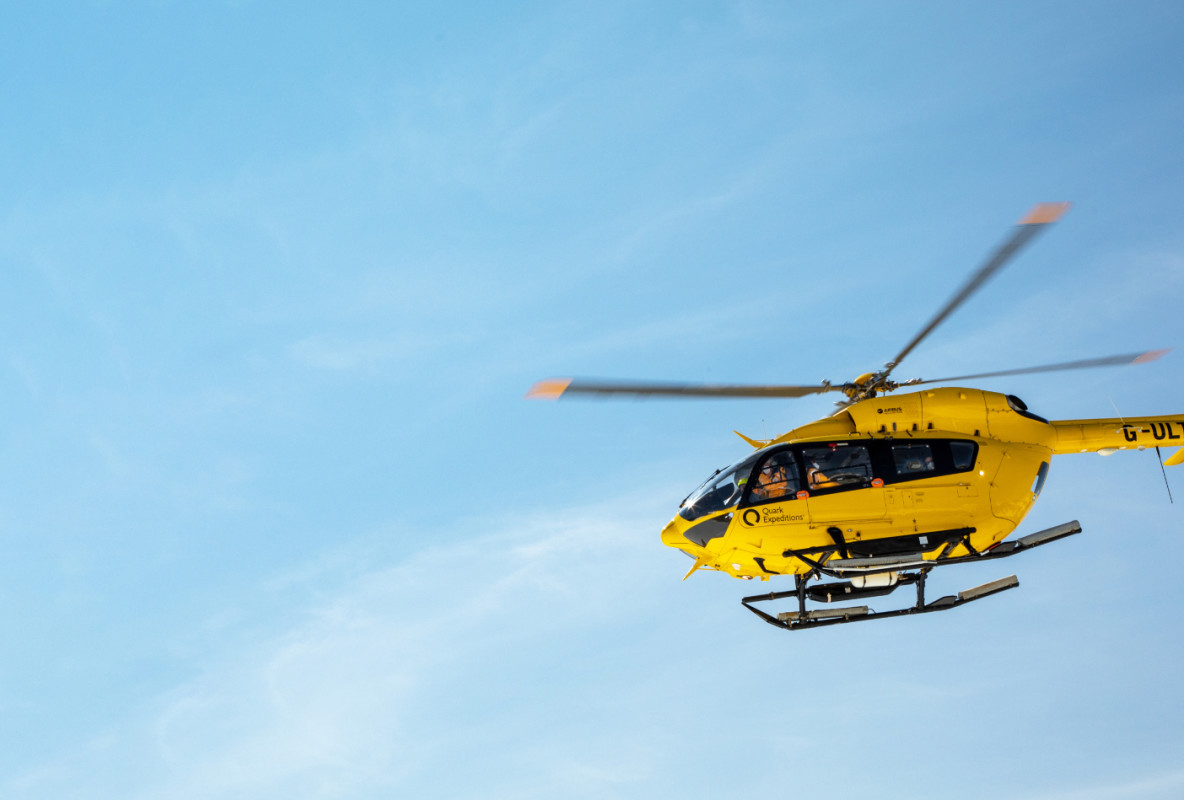


Expedition Ships


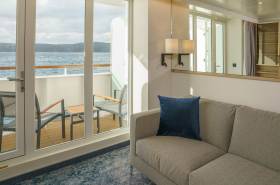





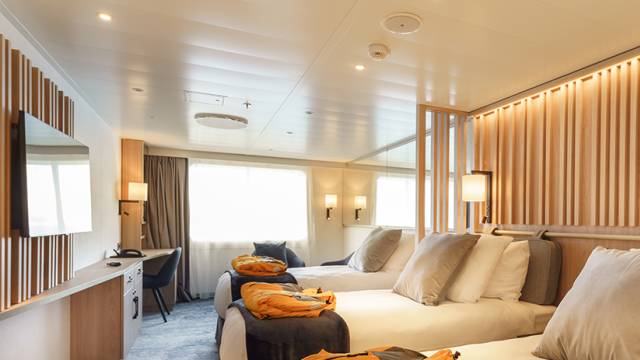


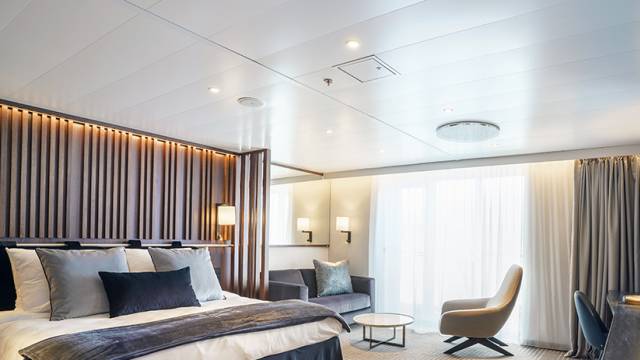


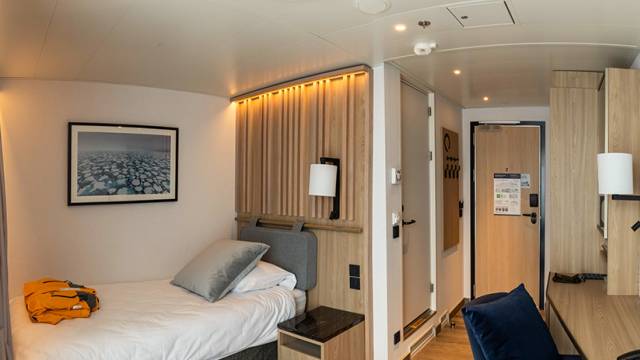


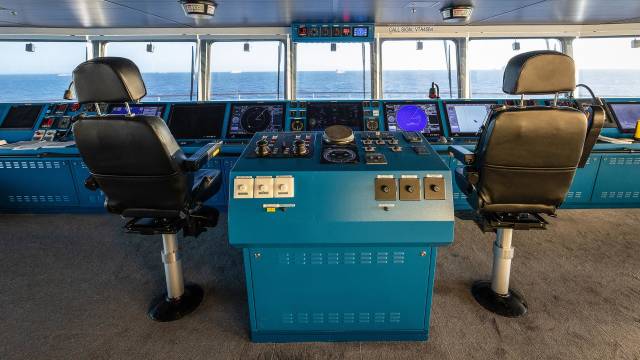


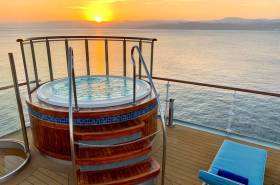


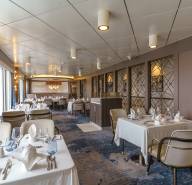


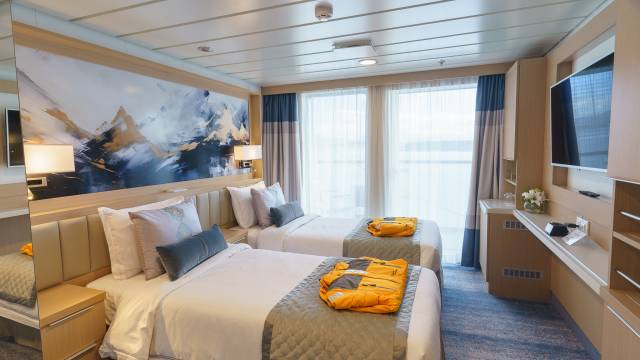

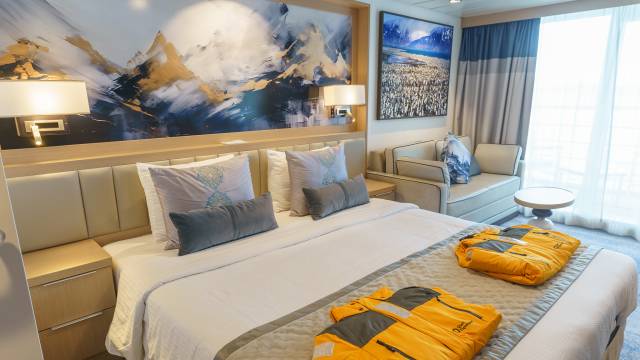


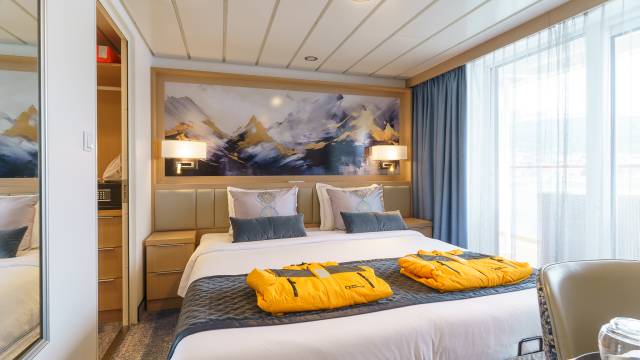


Possible Excursions
When traveling in extremely remote regions, your Expedition Team must consider the sea, ice and weather to guide the route and itinerary details. The following sites are a sample of what you may experience on your expedition, whether by ship, Zodiac cruise, helicopter, or shore landing.

Eastern Canada

Canada

West Greenland
Eastern Canada
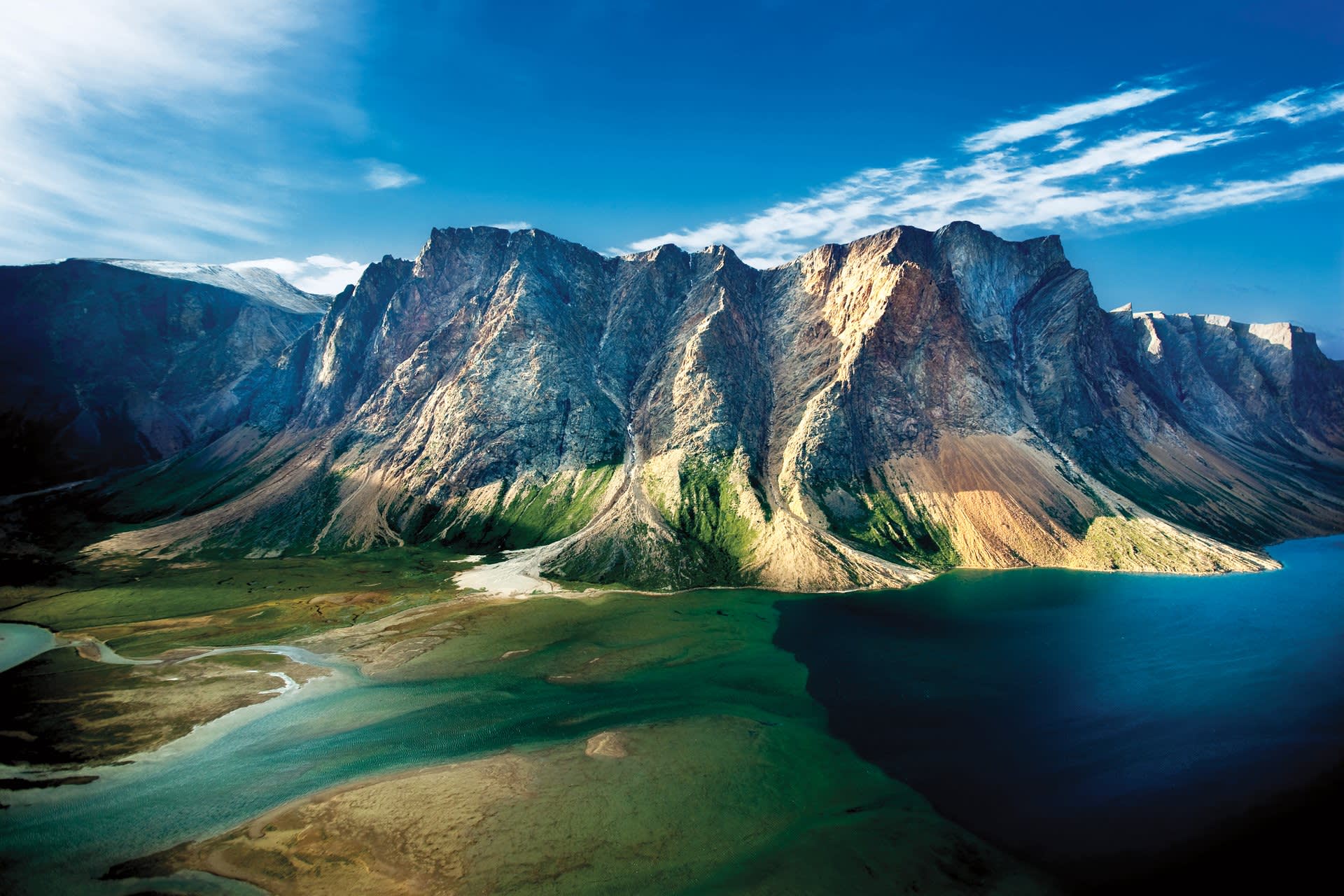
-
Nain, Nunatsiavut
Nain, the administrative capital of Nunatsiavut, the semi-autonomous region in northern Labrador claimed by the Inuit, offers a unique glimpse into Inuit culture and history. Upon arriving in this remote coastal town, you’ll see colorful houses dotting the rugged landscape. The Illusuak Cultural Centre, a distinctively modern landmark, invites visitors to learn about Labrador Inuit heritage through interactive exhibits, artwork, and cultural programs. There’s also the historic Moravian Mission complex, on the site of the original settlement established in 1771. You can get a sense of the centuries long cultural exchange between Inuit and European missionaries. Sample traditional foods such as arctic char and cloudberries, or join a guided hike to enjoy the scenic views of the surrounding mountains and sea.
-
Saglek Fjord and Silluak
At the southern border of Torngat Mountain National Park, we will sail through the stunning Saglek Fjord toward Silluak (North Arm). Keep an eye out for whales, seals and icebergs, all framed by towering fjord walls that reach up to 900 meters (3,000 feet). Silluak is an archaeologically rich area where it’s possible to see Inuit tent rings, food caches, burial sites, and the stone hunting blinds used for observing caribou movement. If conditions allow, it may be possible to hike to a waterfall. For the more adventurous, a refreshing dip in the cool waters awaits.
-
St. John’s, Newfoundland
One of the oldest cities on the continent, St. John’s has much to entice world travelers, from its trademark charm and Celtic music to its jelly bean-colored row houses and kitchen party traditions. As North America’s easternmost city, it 0 the city’s rich cultural heritage at The Rooms, a museum-art gallery complex with panoramic harbor views. The windy—and famously hilly— streets of St. John’s are home to an eclectic mix of boutiques, pubs, and restaurants serving local food, especially from the sea. For a taste of nature, hike the scenic trails of Signal Hill or the rugged coastline at Cape Spear.
-
Torngat Mountains National Park
Established in 2008, Torngat Mountains National Park is home to Canada’s highest mountains east of the venerable Rocky Mountains. The Torngats reach 1,652 meters (5,420 feet) above sea level. The 10,000 square-kilometer (3,861 square mile) park encompasses breathtaking fjords, dramatic glacial formations, stunning landscapes and diverse wildlife, such as boreal woodland caribou, black bears, Labrador wolves, red and Arctic foxes, polar bears and peregrine falcons. The vast wilderness park is located at the northern edge of the semi-autonomous Nunatsiavut territory, which was recognized as the homeland of the Labrador Inuit in 2005. Torngat, in Inuktitut, means “place of the spirits.”
Canada
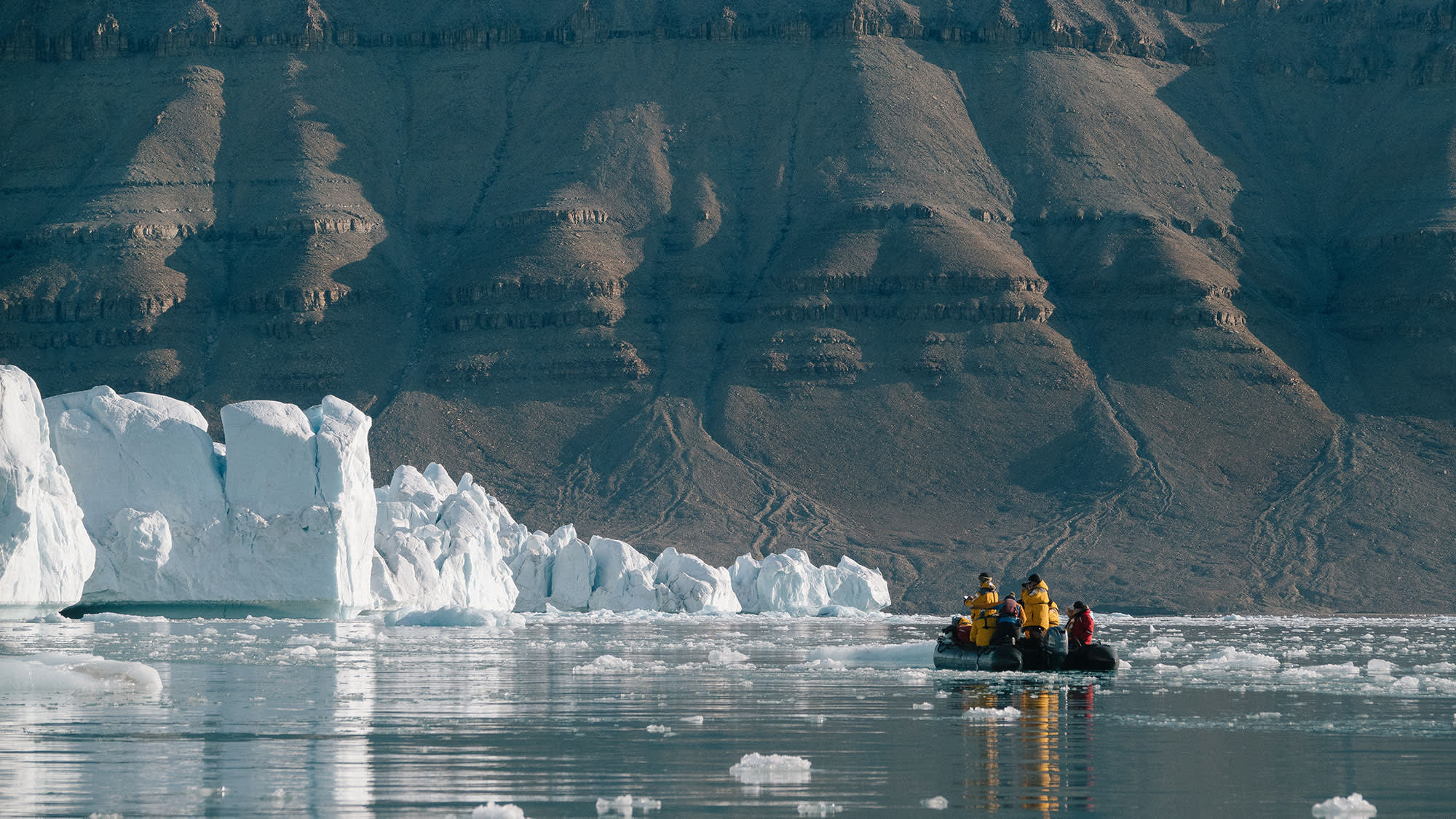
-
Monumental Island
Located just off the southeast shore of Baffin Island, Monumental Island— Oomienwa in Inuktitut—was named by Arctic explorer Charles Francis Hall in honor of Sir John Franklin, who vanished searching for the Northwest Passage. Barren, rocky, and windblown, the island sits at a confluence of currents where black guillemots thrive in summer, nesting and fledging in great numbers. Monumental is also known for walruses with massive tusks, often seen at haul-outs. Shoals trap icebergs drifting south, and Zodiac cruising along Davis Strait is unforgettable
-
Kekerton Island and Pangnirtung
Wandering the Kekerten Island Whaling Station National Historic Site, on this uninhabited island in Nunavut, it’s easy to imagine life at the height of the whaling era in Cumberland Sound. This whaling site was charted by Scottish whaler Captain William Penny in 1840 and soon became a major whaling destination. The site was abandoned around 1926, prompted by the decline of the whaling industry, and by the relocation of local Inuit families to the mainland community of Pangnirtung, about 30 kilometers (18 miles) away, where a trading post was established by the Hudson’s Bay Company. As you cruise toward picturesque Pangnirtung, you’ll see why this Inuit hamlet at the mouth of the Pangnirtung Fjord is called the “Switzerland of the Arctic.” Tucked beneath the snow-capped peaks of Mount Duval, Pang, as it’s known locally, is also a renowned artists’ haven. Stop by the studio at the Uqqurmiut Centre for Arts & Crafts to view drawings, prints and paintings. Here, you’ll also get a sense of traditional Inuit activities, such as sealing, fishing and hunting.
West Greenland

-
Ilulissat
Ilulissat (formerly Jakobshaven) lies approximately 350 km north of the Arctic Circle. With a population of over 4500, it is the third-largest city in Greenland, after Nuuk and Sisimiut. The city is home to more sledge-dogs than residents! Founded by Danish trader Jacob Saverin as a trading post in 1741, Ilulissat today is a center for shrimp-fishing in the region. Directly translated, “Ilulissat” is the Kalaallisut word for “icebergs.” The town is situated 2 km north of the legendary Ice Fjord, through which colossal icebergs travel out to sea. Ilulissat is also the birthplace of noted polar explorer and anthropologist Knud Rasmussen, Greenland’s revered native son. You’ll be able to enter the house where he was born in 1879 as it’s now a small museum dedicated to his achievements. From 1906 until the early 1930s, Kununnguaq, or “Little Knud,” devoted his life to Arctic studies. His greatest achievements included the Danish Ethnographical Expedition to Arctic North America, also known as the Fifth Thule Expedition, which enabled Rasmussen and his team to take archaeological, geographical and natural history data from Greenland right across the North American Arctic.
-
Kangerlussuaq
Kangerlussuaq sits at the head of a 118- mile (190 km) long fjord. The tiny town has Greenland’s largest airport and a unique history. Although Inuit and their predecessors occupied or visited the area, Kangerlussuaq’s modern incarnation dates back to the U.S. occupation of Greenland as an air force base beginning in World War II.
-
Sisimiut
The second-largest town in Greenland, Sisimiut is a place to stretch your legs. Inhabited for more than 4,000 years, Sisimiut has a history that is a mix of Saqqaq, Dorset and Thule cultures. The colorful wooden houses here are typical of Greenlandic communities today. Nasaasaaq, an impressive mountain, provides a scenic backdrop for this settlement.
Your Life Onboard
This is polar exploration at its finest. Our ships are intimate, luxurious floating hotels, packed with exciting experiences.


Enjoy panoramic views while you mingle in our comfy lounges, or head outside and chat with fellow adventurers on the wraparound deck. Our social spaces foster connections & shared experiences.

Engage with world-class experts in our auditorium. Presentations cover wildlife, history, marine biology, ecology, & geology, to enhance your polar knowledge & excitement for exploration.

Enjoy onboard amenities, attend lectures, or watch for wildlife from our observation decks. Sea days offer a perfect blend of education, relaxation, and anticipation.

Find tranquility in our well-stocked library, perfect for reading or quiet contemplation. The glass-domed Observation Lounge offers a peaceful retreat to reflect & enjoy awe-inspiring polar views.

Prepare for off-ship excursions in our spacious mudroom. Kayak, paddleboard, or take a plunge in polar waters. Stay active onboard with our gym, outdoor track, and pool facilities.

Know Before You Go
For your personal safety—and to ensure you get the most enjoyment out of your polar adventure—please assess your mobility and medical requirements before booking. It is essential that guests have a high level of mobility to get in and out of Zodiac boats, and for off-ship activities such as hiking on uneven terrain. Our destinations are remote. Apart from our basic ship infirmary, it could take up to 72 hours to reach adequate medical facilities. For more details to help you assess your mobility and medical requirements before booking your voyage, please review Health & Safety.
Some of our expeditions have included transfers and these will be detailed in your Invoice and Trip Brochure.
Please note that if you have an airport transfer included in your trip, it is only available if you arrive on Day 1 of the itinerary. Please ensure your flight information on your Passenger Forms is up to date so our ground crew know when to expect you. There will be someone with a sign in Arrivals waiting for you. Please look for them and they will direct you to our group shuttle.
If you do not have included transfers, or you are arriving before Day 1, you will need to make your own way to the hotel. Most airports we travel in and out of have good taxi ranks in the Arrivals area, or you can often prebook a transfer online.
Packing is an exciting part of the trip for many of us. You will find a handy packing list towards the end of your Trip Brochure. You will have received a copy of this when you first booked. We also have two excellent videos, which you can check out here: What to Pack
Our Protection Promise allows you to make a purchase decision that will leave you worry-free in the event your plans change down the road. Please review details for each term in our Quark Expeditions Protection Promise.
Whether you are thinking of an expedition, or you’ve booked the trip of a lifetime with Quark Expeditions, review all our FAQs for comprehensive tips to help you prepare for the Polar Regions and how to make the most out of your voyage with the most experienced expedition team in the industry. If your specific question isn’t covered below, please reach out to your Polar Travel Advisor or helpful Client Experience Team at guest@quarkexpeditions.com.