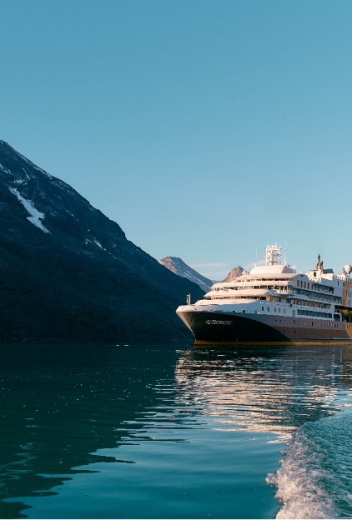




Every August, as pack ice loosens its grip along Nunavut’s eastern coastline, open leads form between the floes and narwhals move into shallow bays to feed. The window is narrow. Within weeks, freeze-up begins again and the whales retreat to deeper water. It’s one of the shortest, most weather-dependent viewing opportunities in the Arctic, and it’s exactly the kind of moment Quark Expeditions builds its Canadian High Arctic itineraries around, timing voyages through Lancaster Sound and the Northwest Passage when narwhal activity typically peaks.
The Tusk Isn’t What Most People Think
Ask most travelers for narwhal facts and the tusk comes up first, usually with a myth attached. It is not a jousting weapon, and males rarely use it in combat. The tusk is an elongated left canine tooth that can grow to roughly 2 to 3 metres, spiraling counter-clockwise, and it is embedded with millions of nerve endings. Researchers, including teams affiliated with NOAA Fisheries, have documented tusks responding to changes in water salinity, suggesting a sensory role rather than a purely combative one. Some encounters do involve males crossing tusks at the surface, but marine biologists increasingly read this as a form of communication, not conflict.
Where Do Narwhals Live, and Why Sightings Stay Rare
Narwhals are among the most habitat-specific whales on Earth. They spend the bulk of the year in the icy waters of Baffin Bay and Davis Strait, diving to significant depths to feed on Greenland halibut and Arctic cod, then migrate into the fjords and inlets of the Canadian High Arctic and Greenland as summer ice breaks up. Unlike more coastal species, narwhals rarely venture far from consolidated pack ice, which limits both their range and how often ships or shore parties encounter them.
That habitat preference is the real reason narwhal sightings in the Arctic stay rare, not scarcity of the species itself. The IUCN lists narwhals as Near Threatened, with population estimates that vary by source and survey year, but even in areas where they’re relatively common, weather, ice cover, and the animal’s own deep-diving habits mean any single voyage has no guarantee of a sighting.

Why This Window Matters for Travelers
Arctic sea ice has been trending downward for decades, and satellite data from NASA and the National Snow and Ice Data Center show the region warming faster than the global average. That shift is reshaping when and where narwhals, and much of the wildlife around them, become accessible to travelers. It’s also why timing an Arctic wildlife expedition to the narrow late-summer thaw matters more than it used to; the safe operating window for small ships in these waters is itself narrowing alongside the ice.
What an Expert-Led Voyage Adds
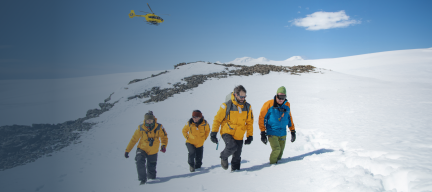
This is where local knowledge does the real work. Quark Expeditions’ Polar Expedition Leaders track ice charts and wildlife reports daily, adjusting routes in real time to reach open leads while staying within AECO’s distance and approach guidelines. Zodiac cruising and, on select voyages, helicopter reconnaissance extend the range scouted each day without disturbing the animals or their habitat.
Travelers on a High Arctic itinerary can expect:
- Passage through Lancaster Sound and sections of the historic Northwest Passage
- Zodiac excursions along ice edges and fjord mouths where narwhals feed
- Supporting wildlife, including beluga whales, walrus haul-outs, and migratory seabirds
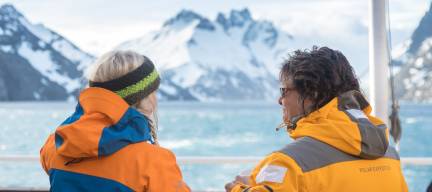
- Onboard naturalists explaining the science behind each sighting or near-miss
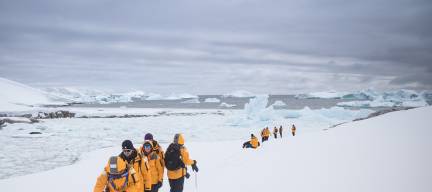
- Landings shaped by real-time ice conditions rather than a fixed script
Every wildlife encounter follows AECO protocols on distance and group size, led by trained Expedition Leaders. Any narwhal or wildlife photography used to illustrate these voyages is captured from a safe distance with a telephoto lens; nothing here implies close approach.
Planning Around the Odds, Not Against Them
The honest version of this story is that no voyage can promise a narwhal. What can be planned for is being in the right waters during the right ice conditions, with a team that reads both daily. For travelers weighing Quark Expeditions wildlife voyage options in the Canadian High Arctic, late summer remains the strongest bet, and the Canadian Arctic: Wildlife, Helicopters, and the Northwest Passage itinerary is built specifically around that seasonal overlap. For a broader look at Arctic departures and timing, the full Arctic expedition lineup outlines options by month and region.
FAQ
Do narwhals use their tusks to fight?
Rarely. Current research points to a sensory function, with tusk-crossing at the surface read by biologists as communication rather than combat.
Where do narwhals live?
Mainly in Baffin Bay, Davis Strait, and the fjords of the Canadian High Arctic and Greenland, staying close to pack ice year-round.
What’s the best time for a chance to see a narwhal?
Late summer, typically August, when seasonal ice retreat opens leads that narwhals use to feed closer to shore.
Are narwhal sightings guaranteed on an Arctic voyage?
No. Sightings depend on ice conditions, weather, and the animal’s own movements. No responsible operator can guarantee a wildlife encounter.
How close do ships or guests get to narwhals?
Encounters follow AECO guidelines on distance and group size, led by trained Expedition Leaders, to protect both wildlife and habitat.