


Ask where the Arctic “really” begins, and most people point to a line on a map: the Arctic Circle, 66°33′ north, the number stamped on every polar brochure. Scientists who study the region use a different, more useful set of boundaries, drawn not by latitude but by what can actually survive on the ground. Understanding those boundaries matters for anyone comparing arctic cruise regions before booking a Quark Expeditions High Arctic voyage, since itineraries in the Canadian Arctic, Svalbard, or Greenland can sit in genuinely different ecological zones even when they share a name on a map.
The Arctic is generally divided into three bands: the Subarctic, the Low Arctic, and the High Arctic. Each has its own climate, vegetation, and wildlife, and the differences are not subtle once you know what to look for.
Where the Subarctic Ends and the Arctic Begins
The first boundary sets the stage for the High Arctic vs Low Arctic question. The line between the Subarctic and the true Arctic is drawn at the tree line, the point past which trees at least two to three meters tall can no longer grow. That boundary roughly tracks the 10°C isotherm for average July temperatures: where the warmest month averages below that mark, trees struggle to seed and grow. South of the tree line lies boreal forest, or taiga. North of it, the true Arctic begins, so any honest comparison of Arctic vs Subarctic starts here, at the trees, not the thermometer alone.

What Actually Separates the Low Arctic from the High Arctic
This is where the two zones genuinely diverge, and where most arctic zones explained guides get vague. There is no fixed temperature line between the Low Arctic and the High Arctic. The boundary is set by vegetation. In the Low Arctic, woody plants such as dwarf birch, willow, and heather still grow, low to the ground but upright. In the High Arctic, the climate becomes too harsh even for that. Vegetation cover thins to scattered cushions of moss, lichen, sedges, and a handful of flowering plants like purple saxifrage an Arctic poppy, often with bare ground visible between patches.
Some of the driest parts of the High Arctic function as a polar desert, receiving as little as four to six inches of precipitation a year, comparable to parts of the Sahara, even though the ground stays snow-covered for much of the year.
Permafrost and the Ground Beneath Your Boots
Permafrost underlies both zones, but its character shifts. In the High Arctic, permafrost is continuous, unbroken, and can extend hundreds of meters deep, with only a thin active layer thawing each summer. Farther south, in parts of the Low Arctic and Subarctic, permafrost becomes discontinuous, patchy where local conditions allow deeper summer thaw. That difference shapes everything above it, from how rivers braid across the tundra to which plants can root deep enough to survive.

Wildlife Built for Two Different Arctics
- High Arctic: muskox, Peary caribou, Arctic hare, and collared lemming are the primary land mammals, with polar bears present as a sea-ice species rather than a true tundra resident. This is the wildlife roster of places like Ellesmere and Axel Heiberg islands in Canada’s high north, northern Greenland, and Svalbard.
- Low Arctic: a noticeably richer cast, including barren-ground caribou and reindeer in far larger numbers, with moose and snowshoe hare increasingly pushing north into habitat that once excluded them.
- Both zones share migratory seabirds, seals, and whales along the coast, though which species you see, and how many, shifts with latitude.
Sightings of any of these species are never guaranteed and depend on conditions; where and when wildlife appears is set by the animals, not the itinerary.
High Arctic vs Low Arctic at a Glance
| Feature | Low Arctic | High Arctic |
| Vegetation | Dwarf shrubs, willow, heather | Moss, lichen, sparse flowering plants (“polar desert”) |
| Permafrost | Often discontinuous | Continuous, hundreds of meters deep |
| Precipitation | Higher, supports denser plant cover | Very low; driest areas near desert levels |
| Signature wildlife | Barren-ground caribou/reindeer, expanding moose range | Muskox, Peary caribou, Arctic hare, collared lemming |
| Example regions | Southern Baffin Island, Iceland, northern Scandinavia | Ellesmere & Axel Heiberg islands, northern Greenland, Svalbard, Franz Josef Land |

Seeing Both Zones on One Voyage
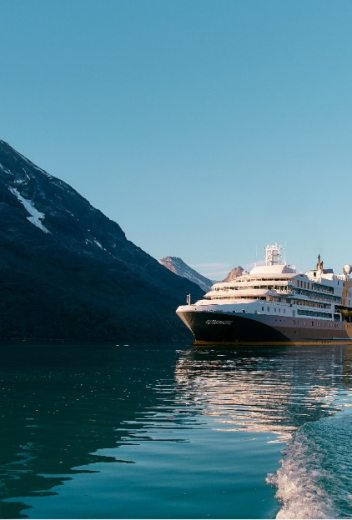
For travelers comparing polar expedition zones before choosing an itinerary, few trips make the contrast as visible as a Quark Expeditions High Arctic voyage that also touches the Low Arctic or Subarctic along the way.
A High Arctic expedition cruise like Northwest Passage: Epic High Arctic pushes deep into the Canadian High Arctic, threading past Baffin Island and Beechey Island and the waters around Ellesmere Island before crossing Smith Sound to Greenland, terrain defined by polar desert, muskox, and some of the world’s most remote Inuit hamlets.
A different kind of contrast unfolds on Greenland to Newfoundland: Mountains, Wildlife and Viking History, the only Quark itinerary built to link Greenland’s High Arctic coastline with the boreal forests of Atlantic Canada. Guests move from treeless, ice-scoured landscape in the north to the dense conifer woodlands of Newfoundland, home to caribou, black bears, and red and Arctic foxes, a shift in biome you can watch unfold across a single voyage rather than read about after the fact.
Choosing an Itinerary by Zone, Not Just by Map
Knowing the difference matters practically, not only academically, when comparing arctic cruise regions. A traveler hoping for muskox and true polar desert should look toward Canadian High Arctic itineraries; a traveler drawn to denser tundra wildflowers, larger caribou herds, and the transition into boreal forest may prefer a Low Arctic or mixed-zone route. Explore Quark’s Arctic voyages to compare the full range, or start with the Canadian High Arctic hub for itineraries built specifically around this zone.
Frequently Asked Questions
What is the difference between High Arctic and Low Arctic?
The boundary is set by vegetation and permafrost rather than temperature or latitude alone. The Low Arctic supports woody shrubs like dwarf birch and willow; the High Arctic is too harsh for them, supporting only moss, lichen, sedges, and scattered flowering plants over continuous permafrost.
Is Svalbard High Arctic or Low Arctic?
Svalbard is generally classified within the High Arctic, particularly its northern reaches, with vegetation, permafrost, and precipitation patterns consistent with that zone, though local variation exists across the archipelago.
What’s the difference between Arctic and Subarctic?
The Subarctic is a transition zone between boreal forest and the true Arctic, with the boundary marked by the tree line, roughly where average July temperatures fall below 10°C. North of that line, trees can no longer grow and the Arctic proper begins.
Do polar bears live in the High Arctic or Low Arctic?
Both. Polar bears are a sea-ice species rather than a vegetation-zone species, so their range follows pack ice and seal populations across High Arctic and Low Arctic coastlines alike. Sightings are never guaranteed and depend on ice and wildlife conditions at the time of travel.
Which Quark itinerary best shows the High Arctic vs Low Arctic transition?
Greenland to Newfoundland: Mountains, Wildlife and Viking History is Quark’s only itinerary built to move guests from Greenland’s High Arctic coastline into the boreal Low Arctic and Subarctic landscapes of Atlantic Canada within a single voyage.
Ready to See the Line for Yourself
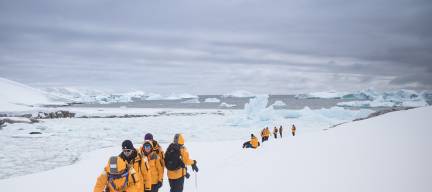
Maps flatten all of this into a single color. Standing on deck as the vegetation thins, the permafrost tightens its grip, and the wildlife changes species, the boundary between the Low Arctic and the High Arctic stops being a definition and starts being something you can actually watch happen. Browse Quark’s Arctic voyages to find the itinerary that puts you on the right side of that line, or both.