



Arctic · From 20 Days
Canadian Arctic
Wildlife, Helicopters, and the Northwest Passage
Starts from $22,090 USD
$18,291 USD
- Starting from
- Reykjavík, Iceland
- Ships
- Ultramarine
- Departures
- 2 Departures between August 2028 to September 2028
From $22,090 USD
$ 18,291 USD


Expedition Overview
Our brand-new 20-day Canadian Arctic: Wildlife, Helicopters, and the Northwest Passage itinerary is the most in-depth way for travelers to experience the legendary Northwest Passage— designed to take you deeper, farther, and with more time to truly see it all. From the dramatic cliffs of Sam Ford Fjord to the stark beauty of Devon Island, you’ll explore the full sweep of Lancaster Sound and beyond. With extended time in the High Arctic, maximize your chances of encountering whales, walruses, and muskoxen, while connecting with Inuit and Greenlandic communities. Add helicopter flightseeing, Zodiac cruising, and expert-led exploration, and this itinerary becomes the definitive Arctic journey.
Highlights
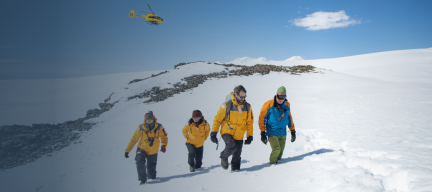
Soar in a helicopter over the wild Arctic
Visit Inuit and Greenlandic communities
Explore deep into the legendary Northwest Passage
Spot Arctic wildlife, such as whales, walrusesand muskoxen
Cruise in a Zodiac for stunning views of glaciers,fjords and icebergs
Select Your Season & Itinerary
Select Season
Reykjavík, Iceland
20 Days · Ultramarine
Starts from $18,291 USD
Reykjavík, Iceland
20 Days · Ultramarine
Starts from $20,811 USD
Select Itinerary
Reykjavík, Iceland
20 Days · Ultramarine
Starts from $18,291 USD
Reykjavík, Iceland
20 Days · Ultramarine
Starts from $20,811 USD
20 Days – From Reykjavík, Iceland on Ultramarine (Season 2028)
Day By Day & Map
-
Day 1
Arrive in Reykjavik, Iceland
Arrive in the Icelandic capital and make your way to the designated hotel, which is included in your Charter Flight & Hotel Package. You will have the day to explore this fascinating city known for its stunning modern architecture, contemporary music and Viking history.
-
Day 2
Fly to Nuuk, Greenland, and Embark
After breakfast, guests and their luggage will be transferred to the airport for the charter flight to Nuuk, the capital of Greenland. Upon arrival, guests will be transferred to their ship.
-
Day 3
At Sea: Crossing the Davis Strait
As we make our way across the Davis Strait, your Expedition Team will offer a series of polar presentations that will set the stage for the adventures ahead. You’ll learn about the storied history of the Arctic, its fascinating wildlife, geology and ecology. Our team will also keep a lookout for seabirds soaring above your ship, as well as whales that pass through these waters.
-
Day 4 to 6
Exploring Baffin Island Canada
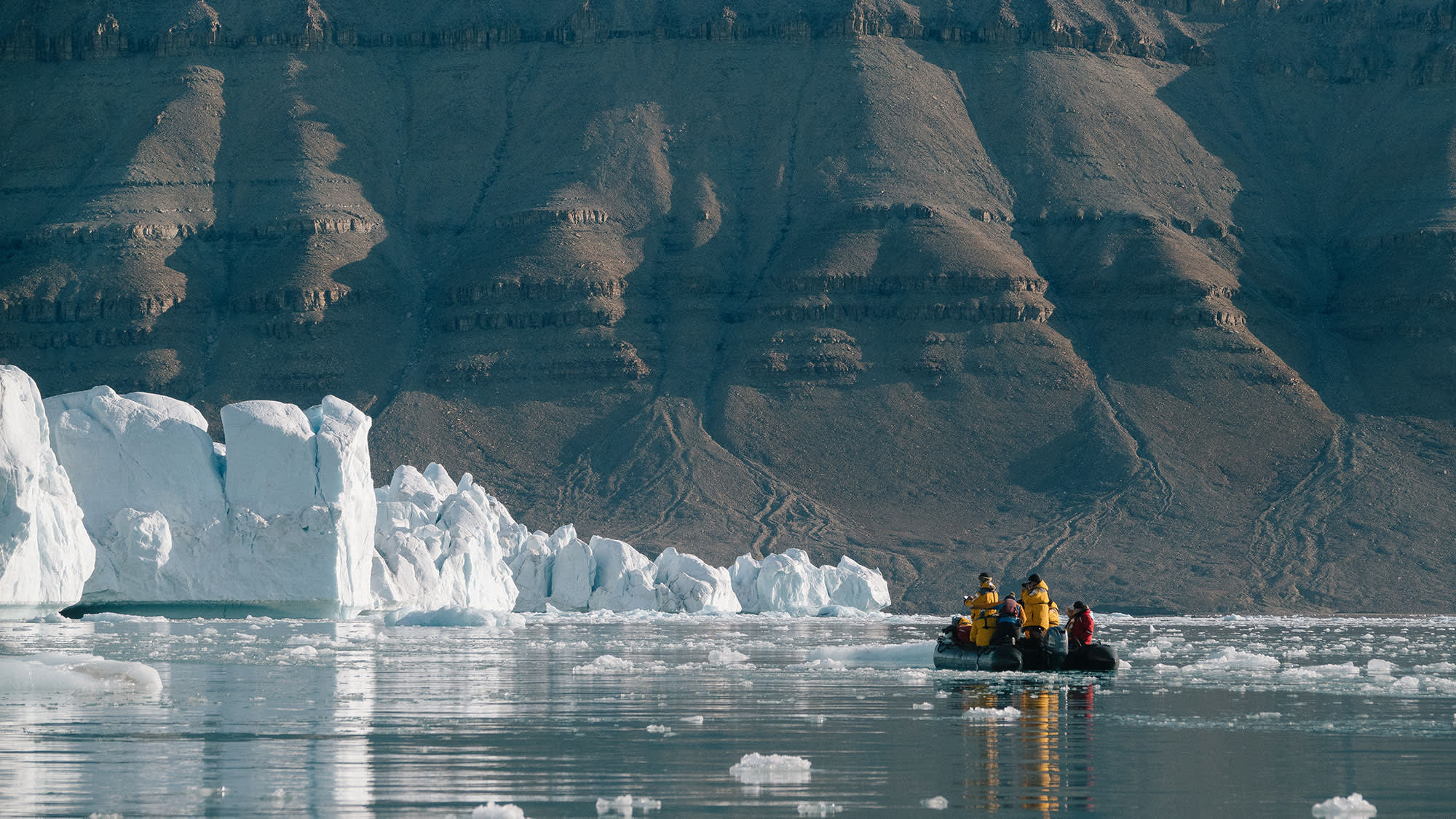
The Inuktitut name for Baffin Island—the fifth-largest island in the world—is Qikiqtaaluk. It has been home to Inuit for thousands of years. The island’s English name commemorates William Baffin, who explored the region in the early 17th century while searching for the fabled Northwest Passage, long after it was inhabited by Inuit. Sailing along the island’s eastern coast, each day is shaped by weather and ice conditions, making every landing distinct. Favorite destinations include Qikiqtarjuaq and Sam Ford Fjord, where towering mountains, deep fjords, vibrant tundra, and Inuit settlements define the landscape. The welcoming Inuit community of Qikiqtarjuaq—meaning “the big island” in Inuktitut— lies just north of the Arctic Circle on Broughton Island. Fondly known as “Qik” by locals, the hamlet offers sweeping views across the Davis Strait. Visitors may also have opportunities to support local Inuit artisans by purchasing handcrafted artwork, jewelry, and other crafts. Farther north, well within the Arctic Circle, Sam Ford Fjord stands out as one of Baffin Island’s most dramatic Arctic destinations. A traditional Inuit hunting area, the fjord is a striking study in contrasts, where sheer granite walls rise almost straight from the ocean, reaching heights of up to 457 meters (1,500 feet). If conditions allow, the region offers outstanding Zodiac cruising, sea kayaking, and opportunities to explore ashore. Arctic foxes may be spotted on land, while polar bears are sometimes seen during off-ship excursions. Cruising the fjord provides a powerful sense of scale: stretching approximately 110 kilometers (68 miles), Sam Ford Fjord narrows to less than 3 kilometers (2 miles) wide as it winds deeper inland.
-
Day 7 to 10
Gateway to Lancaster Sound
Located at the northeastern tip of Baffin Island, Pond Inlet (Mittimatalik) looks across Eclipse Sound to the glaciated peaks of Bylot Island, offering one of the most dramatic settings of any community in the Canadian Arctic. Mittimatalik provides a meaningful opportunity to connect with the people who have lived here for thousands of years, before the voyage turns northwest toward Lancaster Sound (Tallurutiup Imanga). Among the Arctic’s richest marine habitats, Lancaster Sound’s ice-free waters attract whales, walruses, and seals in remarkable numbers each summer. We explore by Zodiac, scanning for iconic wildlife—and, with luck, the elusive narwhal. Polar bear sightings are also possible. Nearby, Coburg Island’s soaring coastal cliffs, within the Nirjutiqavvik National Wildlife Area, support hundreds of thousands of nesting Brünnich’s guillemots, black-legged kittiwakes, northern fulmars, and black guillemots. At approximately 76° North off the east coast of Ellesmere Island, Cape Norton Shaw is likely the northernmost stop of the voyage. Here, multiple tidewater glaciers calve directly into iceberg-filled seas. We plan a combined helicopter and Zodiac operation to explore this rarely visited coastline by land and sea. If flying conditions are unsuitable, we reroute to Grise Fjord and Craig Harbour, the site of an RCMP outpost established in 1922, closed in the 1930s, and controversially reopened at the outset of the Cold War. On Devon Island’s southern shore, the weathered remains of a Royal Canadian Mounted Police detachment at Dundas Harbour quietly reflect Canada’s efforts to assert sovereignty in the High Arctic. The journey concludes in spectacular Croker Bay, where towering glaciated walls and calving ice deliver a sense of scale no photograph can fully convey.
-
Day 11 to 13
Heart of the Northwest Passage
As we push westward into the inner reaches of Lancaster Sound, the geography narrows and the sense of remoteness deepens. Rising from the confluence of Lancaster Sound and Barrow Strait, the sheer limestone cliffs of Prince Leopold Island form one of the most significant seabird sanctuaries in the eastern Arctic. We’ll see hundreds of thousands of birds wheeling above us as still waters stretch in every horizon, one of the defining sights of a High Arctic expedition. At the southern tip of Somerset Island, Fort Ross marks the entrance to Bellot Strait, the narrow, current-swept channel separating Somerset Island from the Boothia Peninsula and forming a critical link in the Northwest Passage. Once a Hudson’s Bay Company trading post, Fort Ross remains one of the most evocative reminders of a time when commerce, survival, and exploration converged at the top of the world. We will attempt to land at Beechey Island, a National Historic Site of Canada. Named for explorer Frederick William Beechey, the island is the final resting place of three members of Sir John Franklin’s 1845-46 Northwest Passage expedition, discovered in 1850 on a desolate raised beach. A shore visit to Radstock Bay may also be possible, home to one of the Arctic’s most impressive ancient Thule sites. Exploring the remains of subterranean houses—including whale bone supports—offers a powerful insight into how Paleo‑Inuit thrived in the Far North.
-
Day 14 & 15
Admiralty Inlet and Arctic Bay
Carved deep into northern Baffin Island, Admiralty Inlet is one of the Arctic’s longest fjords: a silent, ice -ringed channel where whale blows punctuate the stillness. Among the world’s most vital narwhal summering grounds, Zodiac cruising here may provide some of the expedition’s most unforgettable marine wildlife encounters. The Arctic Bay area has been inhabited by Inuit for over 5,000 years. With very few visitors, the community is typically quite excited to welcome a ship. Enjoy a gathering on the outskirts of town featuring Inuit arts, cultural activities and, possibly, tastings of local cuisine shared by elders and community members.
-
Day 16 & 17
At Sea
Enjoy the sail back across Baffin Bay where the presence of ice can lead to opportunities for polar bear sightings as well as whales and seabirds. Onboard the team will keep you engaged with presentations and wildlife watching. Guests often use sea days to take advantage of the ship’s Tundra Spa and Sauna.
-
Day 18
Meeting the People of Sisimiut
Arriving back in Greenland, we hope to visit the community of Sisimiut, where you may enjoy locally led city tours, including a “Taste of Greenland” experience featuring samples of traditional foods. Back onboard, head to the deck to watch a traditional kayak demonstration on the water.
-
Day 19
Disembark at Kangerlussuaq
Today, we disembark in Kangerlussuaq, formerly known as Søndre Strømfjord, and transfer you to your charter flight to Reykjavik, where you’ll spend the night in your group hotel, both of which are included in your Charter Flight & Hotel Package.
-
Day 20
Depart Reykjavik
Today, after breakfast, make your way independently to the airport for your flight home, or continue your personal travel plans as prearranged.

What’s Included & Excluded
- An official Quark Expeditions® parka to keep
- Leadership throughout your voyage by our experienced Expedition Leaders, including shore landings and other activities
- All Zodiac transfers and cruising as per the daily program
- All shore landings as per the daily program
- Shipboard accommodation with daily housekeeping
- All meals, snacks, soft drinks and juices on board throughout your voyage (Please inform us of any dietary requirements as far in advance as possible.)
- Complimentary select beer, wines and cocktails during bar service hours and dinner
- Complimentary coffee, tea and cocoa available around the clock
- Formal and informal presentations by our Expedition Team and guest speakers as scheduled
- A photographic journal documenting the expedition
- A pair of waterproof expedition boots on loan for landings and Zodiac cruising excursions
- Hair dryer and bathrobes in every cabin
- Complimentary Wi-Fi service on one device permitting basic Internet browsing, email, posting on social media and voice applications. (Premium packages are available for more data-intensive applications.) Note: Internet access in the polar regions is subject to geography, climate, and other factors beyond our control
- All miscellaneous service taxes and port charges throughout the program
- All luggage handling aboard the ship
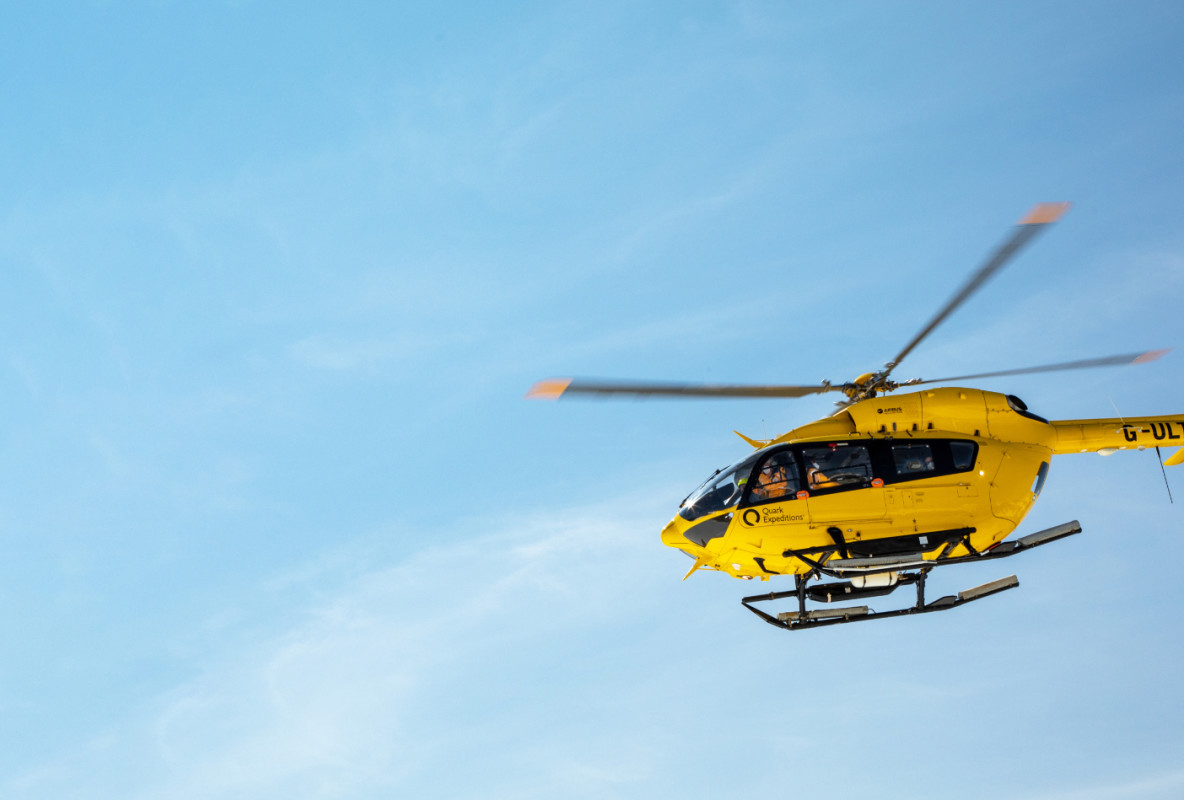
- One 10- to 15-minute helicopter flightseeing excursion (weather and logistics permitting)
- Charter Flight & Hotel Package* (when applicable – please review trip-specific details below)
- International airfare
- Arrival and departure transfers
- Passport and visa expenses
- Government arrival and departure taxes not mentioned above
- Meals ashore unless otherwise specified
- Baggage, cancellation, interruption and medical travel insurance—strongly recommended
- Excess-baggage fees on international and domestic flights
- Mandatory waterproof pants for Zodiac cruising, or any other gear not mentioned
- Laundry, bar, spa and other personal charges unless specified
- Phone charges may vary by location
- Voluntary gratuity at the end of the voyage for shipboard staff and crew
- Additional overnight accommodation
- Adventure Options not listed in Included Activities
Charter Flight and Hotel Package
Package valued at $2,095 USD is included in the expedition
- One night’s pre-expedition hotel accommodation Reykjavik, near Keflavik airport (breakfast included)
- Charter flight from Reykjavik to Nuuk
- Group transfer from the ship to the Kangerlussuaq airport on disembarkation day
- Charter flight from Kangerlussuaq to Reykjavik
- One night’s post-expedition airport hotel accommodation Reykjavik, near Keflavik airport (breakfast included)
20 Days – From Reykjavík, Iceland on Ultramarine (Season 2028)
20 Days – From Reykjavík, Iceland on Ultramarine (Season 2028)
-
Day 1
Arrive in Reykjavik, Iceland
Arrive in the Icelandic capital and make your way to the designated hotel, which is included in your Charter Flight & Hotel Package. You will have the day to explore this fascinating city known for its stunning modern architecture, contemporary music and Viking history.
-
Day 2
Fly to Nuuk, Greenland, and Embark
After breakfast, guests and their luggage will be transferred to the airport for the charter flight to Nuuk, the capital of Greenland. Upon arrival, guests will be transferred to their ship.
-
Day 3
At Sea: Crossing the Davis Strait
As we make our way across the Davis Strait, your Expedition Team will offer a series of polar presentations that will set the stage for the adventures ahead. You’ll learn about the storied history of the Arctic, its fascinating wildlife, geology and ecology. Our team will also keep a lookout for seabirds soaring above your ship, as well as whales that pass through these waters.
-
Day 4 to 6
Exploring Baffin Island Canada
The Inuktitut name for Baffin Island—the fifth-largest island in the world—is Qikiqtaaluk. It has been home to Inuit for thousands of years. The island’s English name commemorates William Baffin, who explored the region in the early 17th century while searching for the fabled Northwest Passage, long after it was inhabited by Inuit. Sailing along the island’s eastern coast, each day is shaped by weather and ice conditions, making every landing distinct. Favorite destinations include Qikiqtarjuaq and Sam Ford Fjord, where towering mountains, deep fjords, vibrant tundra, and Inuit settlements define the landscape. The welcoming Inuit community of Qikiqtarjuaq—meaning “the big island” in Inuktitut— lies just north of the Arctic Circle on Broughton Island. Fondly known as “Qik” by locals, the hamlet offers sweeping views across the Davis Strait. Visitors may also have opportunities to support local Inuit artisans by purchasing handcrafted artwork, jewelry, and other crafts. Farther north, well within the Arctic Circle, Sam Ford Fjord stands out as one of Baffin Island’s most dramatic Arctic destinations. A traditional Inuit hunting area, the fjord is a striking study in contrasts, where sheer granite walls rise almost straight from the ocean, reaching heights of up to 457 meters (1,500 feet). If conditions allow, the region offers outstanding Zodiac cruising, sea kayaking, and opportunities to explore ashore. Arctic foxes may be spotted on land, while polar bears are sometimes seen during off-ship excursions. Cruising the fjord provides a powerful sense of scale: stretching approximately 110 kilometers (68 miles), Sam Ford Fjord narrows to less than 3 kilometers (2 miles) wide as it winds deeper inland.
-
Day 7 to 10
Gateway to Lancaster Sound
Located at the northeastern tip of Baffin Island, Pond Inlet (Mittimatalik) looks across Eclipse Sound to the glaciated peaks of Bylot Island, offering one of the most dramatic settings of any community in the Canadian Arctic. Mittimatalik provides a meaningful opportunity to connect with the people who have lived here for thousands of years, before the voyage turns northwest toward Lancaster Sound (Tallurutiup Imanga). Among the Arctic’s richest marine habitats, Lancaster Sound’s ice-free waters attract whales, walruses, and seals in remarkable numbers each summer. We explore by Zodiac, scanning for iconic wildlife—and, with luck, the elusive narwhal. Polar bear sightings are also possible. Nearby, Coburg Island’s soaring coastal cliffs, within the Nirjutiqavvik National Wildlife Area, support hundreds of thousands of nesting Brünnich’s guillemots, black-legged kittiwakes, northern fulmars, and black guillemots. At approximately 76° North off the east coast of Ellesmere Island, Cape Norton Shaw is likely the northernmost stop of the voyage. Here, multiple tidewater glaciers calve directly into iceberg-filled seas. We plan a combined helicopter and Zodiac operation to explore this rarely visited coastline by land and sea. If flying conditions are unsuitable, we reroute to Grise Fjord and Craig Harbour, the site of an RCMP outpost established in 1922, closed in the 1930s, and controversially reopened at the outset of the Cold War. On Devon Island’s southern shore, the weathered remains of a Royal Canadian Mounted Police detachment at Dundas Harbour quietly reflect Canada’s efforts to assert sovereignty in the High Arctic. The journey concludes in spectacular Croker Bay, where towering glaciated walls and calving ice deliver a sense of scale no photograph can fully convey.
-
Day 11 to 13
Heart of the Northwest Passage
As we push westward into the inner reaches of Lancaster Sound, the geography narrows and the sense of remoteness deepens. Rising from the confluence of Lancaster Sound and Barrow Strait, the sheer limestone cliffs of Prince Leopold Island form one of the most significant seabird sanctuaries in the eastern Arctic. We’ll see hundreds of thousands of birds wheeling above us as still waters stretch in every horizon, one of the defining sights of a High Arctic expedition. At the southern tip of Somerset Island, Fort Ross marks the entrance to Bellot Strait, the narrow, current-swept channel separating Somerset Island from the Boothia Peninsula and forming a critical link in the Northwest Passage. Once a Hudson’s Bay Company trading post, Fort Ross remains one of the most evocative reminders of a time when commerce, survival, and exploration converged at the top of the world. We will attempt to land at Beechey Island, a National Historic Site of Canada. Named for explorer Frederick William Beechey, the island is the final resting place of three members of Sir John Franklin’s 1845-46 Northwest Passage expedition, discovered in 1850 on a desolate raised beach. A shore visit to Radstock Bay may also be possible, home to one of the Arctic’s most impressive ancient Thule sites. Exploring the remains of subterranean houses—including whale bone supports—offers a powerful insight into how Paleo‑Inuit thrived in the Far North.
-
Day 14 & 15
Admiralty Inlet and Arctic Bay
Carved deep into northern Baffin Island, Admiralty Inlet is one of the Arctic’s longest fjords: a silent, ice -ringed channel where whale blows punctuate the stillness. Among the world’s most vital narwhal summering grounds, Zodiac cruising here may provide some of the expedition’s most unforgettable marine wildlife encounters. The Arctic Bay area has been inhabited by Inuit for over 5,000 years. With very few visitors, the community is typically quite excited to welcome a ship. Enjoy a gathering on the outskirts of town featuring Inuit arts, cultural activities and, possibly, tastings of local cuisine shared by elders and community members.
-
Day 16 & 17
At Sea
Enjoy the sail back across Baffin Bay where the presence of ice can lead to opportunities for polar bear sightings as well as whales and seabirds. Onboard the team will keep you engaged with presentations and wildlife watching. Guests often use sea days to take advantage of the ship’s Tundra Spa and Sauna.
-
Day 18
Meeting the People of Sisimiut
Arriving back in Greenland, we hope to visit the community of Sisimiut, where you may enjoy locally led city tours, including a “Taste of Greenland” experience featuring samples of traditional foods. Back onboard, head to the deck to watch a traditional kayak demonstration on the water.
-
Day 19
Disembark at Kangerlussuaq
Today, we disembark in Kangerlussuaq, formerly known as Søndre Strømfjord, and transfer you to your charter flight to Reykjavik, where you’ll spend the night in your group hotel, both of which are included in your Charter Flight & Hotel Package.
-
Day 20
Depart Reykjavik
Today, after breakfast, make your way independently to the airport for your flight home, or continue your personal travel plans as prearranged.
20 Days – From Reykjavík, Iceland on Ultramarine (Season 2028)
Day By Day & Map
-
Day 1
Arrive in Reykjavik, Iceland
Arrive in the Icelandic capital and make your way to the designated hotel, which is included in your Charter Flight & Hotel Package. You will have the day to explore this fascinating city known for its stunning modern architecture, contemporary music and Viking history.
-
Day 2
Fly to Kangerlussuaq, Greenland, and Embark
After an early breakfast at the hotel, guests will transfer together to the airport and board our private charter flight to Kangerlussuaq, Greenland. For decades, this small town, in Kangerlussuaq, formerly known as Søndre Strømfjord, was home to Greenland’s primary airport. Upon arrival, you will be transferred to the small harbor, where your Expedition Team will provide Zodiac shuttles to your awaiting ship. After a late-afternoon embarkation, we will set sail for the stunning Arctic wilderness.
-
Day 3
At Sea: Crossing the Davis Strait
As we make our way across the Davis Strait, your Expedition Team will offer a series of polar presentations that will set the stage for the adventures ahead. You’ll learn about the storied history of the Arctic, its fascinating wildlife, geology and ecology. Our team will also keep a lookout for seabirds soaring above your ship, as well as whales that pass through these waters.
-
Day 4 to 6
Exploring Baffin Island Canada
The Inuktitut name for Baffin Island—the fifth-largest island in the world—is Qikiqtaaluk. It has been home to Inuit for thousands of years. The island’s English name commemorates William Baffin, who explored the region in the early 17th century while searching for the fabled Northwest Passage, long after it was inhabited by Inuit. Sailing along the island’s eastern coast, each day is shaped by weather and ice conditions, making every landing distinct. Favorite destinations include Qikiqtarjuaq and Sam Ford Fjord, where towering mountains, deep fjords, vibrant tundra, and Inuit settlements define the landscape. The welcoming Inuit community of Qikiqtarjuaq—meaning “the big island” in Inuktitut— lies just north of the Arctic Circle on Broughton Island. Fondly known as “Qik” by locals, the hamlet offers sweeping views across the Davis Strait. Visitors may also have opportunities to support local Inuit artisans by purchasing handcrafted artwork, jewelry, and other crafts. Farther north, well within the Arctic Circle, Sam Ford Fjord stands out as one of Baffin Island’s most dramatic Arctic destinations. A traditional Inuit hunting area, the fjord is a striking study in contrasts, where sheer granite walls rise almost straight from the ocean, reaching heights of up to 457 meters (1,500 feet). If conditions allow, the region offers outstanding Zodiac cruising, sea kayaking, and opportunities to explore ashore. Arctic foxes may be spotted on land, while polar bears are sometimes seen during off-ship excursions. Cruising the fjord provides a powerful sense of scale: stretching approximately 110 kilometers (68 miles), Sam Ford Fjord narrows to less than 3 kilometers (2 miles) wide as it winds deeper inland.
-
Day 7 to 10
Gateway to Lancaster Sound
Located at the northeastern tip of Baffin Island, Pond Inlet (Mittimatalik) looks across Eclipse Sound to the glaciated peaks of Bylot Island, offering one of the most dramatic settings of any community in the Canadian Arctic. Mittimatalik provides a meaningful opportunity to connect with the people who have lived here for thousands of years, before the voyage turns northwest toward Lancaster Sound (Tallurutiup Imanga). Among the Arctic’s richest marine habitats, Lancaster Sound’s ice-free waters attract whales, walruses, and seals in remarkable numbers each summer. We explore by Zodiac, scanning for iconic wildlife—and, with luck, the elusive narwhal. Polar bear sightings are also possible. Nearby, Coburg Island’s soaring coastal cliffs, within the Nirjutiqavvik National Wildlife Area, support hundreds of thousands of nesting Brünnich’s guillemots, black-legged kittiwakes, northern fulmars, and black guillemots. At approximately 76° North off the east coast of Ellesmere Island, Cape Norton Shaw is likely the northernmost stop of the voyage. Here, multiple tidewater glaciers calve directly into iceberg-filled seas. We plan a combined helicopter and Zodiac operation to explore this rarely visited coastline by land and sea. If flying conditions are unsuitable, we reroute to Grise Fjord and Craig Harbour, the site of an RCMP outpost established in 1922, closed in the 1930s, and controversially reopened at the outset of the Cold War. On Devon Island’s southern shore, the weathered remains of a Royal Canadian Mounted Police detachment at Dundas Harbour quietly reflect Canada’s efforts to assert sovereignty in the High Arctic. The journey concludes in spectacular Croker Bay, where towering glaciated walls and calving ice deliver a sense of scale no photograph can fully convey.
-
Day 11 to 13
Heart of the Northwest Passage
As we push westward into the inner reaches of Lancaster Sound, the geography narrows and the sense of remoteness deepens. Rising from the confluence of Lancaster Sound and Barrow Strait, the sheer limestone cliffs of Prince Leopold Island form one of the most significant seabird sanctuaries in the eastern Arctic. We’ll see hundreds of thousands of birds wheeling above us as still waters stretch in every horizon, one of the defining sights of a High Arctic expedition. At the southern tip of Somerset Island, Fort Ross marks the entrance to Bellot Strait, the narrow, current-swept channel separating Somerset Island from the Boothia Peninsula and forming a critical link in the Northwest Passage. Once a Hudson’s Bay Company trading post, Fort Ross remains one of the most evocative reminders of a time when commerce, survival, and exploration converged at the top of the world. We will attempt to land at Beechey Island, a National Historic Site of Canada. Named for explorer Frederick William Beechey, the island is the final resting place of three members of Sir John Franklin’s 1845-46 Northwest Passage expedition, discovered in 1850 on a desolate raised beach. A shore visit to Radstock Bay may also be possible, home to one of the Arctic’s most impressive ancient Thule sites. Exploring the remains of subterranean houses—including whale bone supports—offers a powerful insight into how Paleo‑Inuit thrived in the Far North.
-
Day 14 & 15
Admiralty Inlet and Arctic Bay
Carved deep into northern Baffin Island, Admiralty Inlet is one of the Arctic’s longest fjords: a silent, ice -ringed channel where whale blows punctuate the stillness. Among the world’s most vital narwhal summering grounds, Zodiac cruising here may provide some of the expedition’s most unforgettable marine wildlife encounters. The Arctic Bay area has been inhabited by Inuit for over 5,000 years. With very few visitors, the community is typically quite excited to welcome a ship. Enjoy a gathering on the outskirts of town featuring Inuit arts, cultural activities and, possibly, tastings of local cuisine shared by elders and community members.
-
Day 16 & 17
At Sea
Enjoy the sail back across Baffin Bay where the presence of ice can lead to opportunities for polar bear sightings as well as whales and seabirds. Onboard the team will keep you engaged with presentations and wildlife watching. Guests often use sea days to take advantage of the ship’s Tundra Spa and Sauna.
-
Day 18
Meeting the People of Sisimiut
Arriving back in Greenland, we hope to visit the community of Sisimiut, where you may enjoy locally led city tours, including a “Taste of Greenland” experience featuring samples of traditional foods. Back onboard, head to the deck to watch a traditional kayak demonstration on the water.
-
Disembark at Kangerlussuaq
Today, we disembark in Kangerlussuaq, formerly known as Søndre Strømfjord, and transfer you to your charter flight to Reykjavik, where you’ll spend the night in your group hotel, both of which are included in your Charter Flight & Hotel Package.
-
Day 20
Depart Reykjavik
Today, after breakfast, make your way independently to the airport for your flight home, or continue your personal travel plans as prearranged.

What’s Included & Excluded
- An official Quark Expeditions® parka to keep
- Leadership throughout your voyage by our experienced Expedition Leaders, including shore landings and other activities
- All Zodiac transfers and cruising as per the daily program
- All shore landings as per the daily program
- Shipboard accommodation with daily housekeeping
- All meals, snacks, soft drinks and juices on board throughout your voyage (Please inform us of any dietary requirements as far in advance as possible.)
- Complimentary select beer, wines and cocktails during bar service hours and dinner
- Complimentary coffee, tea and cocoa available around the clock
- Formal and informal presentations by our Expedition Team and guest speakers as scheduled
- A photographic journal documenting the expedition
- A pair of waterproof expedition boots on loan for landings and Zodiac cruising excursions
- Hair dryer and bathrobes in every cabin
- Complimentary Wi-Fi service on one device permitting basic Internet browsing, email, posting on social media and voice applications. (Premium packages are available for more data-intensive applications.) Note: Internet access in the polar regions is subject to geography, climate, and other factors beyond our control
- All miscellaneous service taxes and port charges throughout the program
- All luggage handling aboard the ship
- Charter Flight & Hotel Package* (when applicable – please review trip-specific details below)
- International airfare
- Arrival and departure transfers
- Passport and visa expenses
- Government arrival and departure taxes not mentioned above
- Meals ashore unless otherwise specified
- Baggage, cancellation, interruption and medical travel insurance—strongly recommended
- Excess-baggage fees on international and domestic flights
- Mandatory waterproof pants for Zodiac cruising, or any other gear not mentioned
- Laundry, bar, spa and other personal charges unless specified
- Phone charges may vary by location
- Voluntary gratuity at the end of the voyage for shipboard staff and crew
- Additional overnight accommodation
- Adventure Options not listed in Included Activities
Charter Flight and Hotel Package
Package valued at $2,095 USD is included in the expedition
- One night’s pre-expedition hotel accommodation in Reykjavik (breakfast included)
- Charter flight from Reykjavik to Kangerlussuaq
- Group transfer from the Kangerlussuaq airport to the ship on embarkation day
- Group transfer from the ship to the Kangerlussuaq airport on disembarkation day
- Charter flight from Kangerlussuaq to Reykjavik
- One night’s post-expedition airport hotel accommodation near Keflavik airport (breakfast included)
20 Days – From Reykjavík, Iceland on Ultramarine (Season 2028)
20 Days – From Reykjavík, Iceland on Ultramarine (Season 2028)
-
Day 1
Arrive in Reykjavik, Iceland
Arrive in the Icelandic capital and make your way to the designated hotel, which is included in your Charter Flight & Hotel Package. You will have the day to explore this fascinating city known for its stunning modern architecture, contemporary music and Viking history.
-
Day 2
Fly to Kangerlussuaq, Greenland, and Embark
After an early breakfast at the hotel, guests will transfer together to the airport and board our private charter flight to Kangerlussuaq, Greenland. For decades, this small town, in Kangerlussuaq, formerly known as Søndre Strømfjord, was home to Greenland’s primary airport. Upon arrival, you will be transferred to the small harbor, where your Expedition Team will provide Zodiac shuttles to your awaiting ship. After a late-afternoon embarkation, we will set sail for the stunning Arctic wilderness.
-
Day 3
At Sea: Crossing the Davis Strait
As we make our way across the Davis Strait, your Expedition Team will offer a series of polar presentations that will set the stage for the adventures ahead. You’ll learn about the storied history of the Arctic, its fascinating wildlife, geology and ecology. Our team will also keep a lookout for seabirds soaring above your ship, as well as whales that pass through these waters.
-
Day 4 to 6
Exploring Baffin Island Canada
The Inuktitut name for Baffin Island—the fifth-largest island in the world—is Qikiqtaaluk. It has been home to Inuit for thousands of years. The island’s English name commemorates William Baffin, who explored the region in the early 17th century while searching for the fabled Northwest Passage, long after it was inhabited by Inuit. Sailing along the island’s eastern coast, each day is shaped by weather and ice conditions, making every landing distinct. Favorite destinations include Qikiqtarjuaq and Sam Ford Fjord, where towering mountains, deep fjords, vibrant tundra, and Inuit settlements define the landscape. The welcoming Inuit community of Qikiqtarjuaq—meaning “the big island” in Inuktitut— lies just north of the Arctic Circle on Broughton Island. Fondly known as “Qik” by locals, the hamlet offers sweeping views across the Davis Strait. Visitors may also have opportunities to support local Inuit artisans by purchasing handcrafted artwork, jewelry, and other crafts. Farther north, well within the Arctic Circle, Sam Ford Fjord stands out as one of Baffin Island’s most dramatic Arctic destinations. A traditional Inuit hunting area, the fjord is a striking study in contrasts, where sheer granite walls rise almost straight from the ocean, reaching heights of up to 457 meters (1,500 feet). If conditions allow, the region offers outstanding Zodiac cruising, sea kayaking, and opportunities to explore ashore. Arctic foxes may be spotted on land, while polar bears are sometimes seen during off-ship excursions. Cruising the fjord provides a powerful sense of scale: stretching approximately 110 kilometers (68 miles), Sam Ford Fjord narrows to less than 3 kilometers (2 miles) wide as it winds deeper inland.
-
Day 7 to 10
Gateway to Lancaster Sound
Located at the northeastern tip of Baffin Island, Pond Inlet (Mittimatalik) looks across Eclipse Sound to the glaciated peaks of Bylot Island, offering one of the most dramatic settings of any community in the Canadian Arctic. Mittimatalik provides a meaningful opportunity to connect with the people who have lived here for thousands of years, before the voyage turns northwest toward Lancaster Sound (Tallurutiup Imanga). Among the Arctic’s richest marine habitats, Lancaster Sound’s ice-free waters attract whales, walruses, and seals in remarkable numbers each summer. We explore by Zodiac, scanning for iconic wildlife—and, with luck, the elusive narwhal. Polar bear sightings are also possible. Nearby, Coburg Island’s soaring coastal cliffs, within the Nirjutiqavvik National Wildlife Area, support hundreds of thousands of nesting Brünnich’s guillemots, black-legged kittiwakes, northern fulmars, and black guillemots. At approximately 76° North off the east coast of Ellesmere Island, Cape Norton Shaw is likely the northernmost stop of the voyage. Here, multiple tidewater glaciers calve directly into iceberg-filled seas. We plan a combined helicopter and Zodiac operation to explore this rarely visited coastline by land and sea. If flying conditions are unsuitable, we reroute to Grise Fjord and Craig Harbour, the site of an RCMP outpost established in 1922, closed in the 1930s, and controversially reopened at the outset of the Cold War. On Devon Island’s southern shore, the weathered remains of a Royal Canadian Mounted Police detachment at Dundas Harbour quietly reflect Canada’s efforts to assert sovereignty in the High Arctic. The journey concludes in spectacular Croker Bay, where towering glaciated walls and calving ice deliver a sense of scale no photograph can fully convey.
-
Day 11 to 13
Heart of the Northwest Passage
As we push westward into the inner reaches of Lancaster Sound, the geography narrows and the sense of remoteness deepens. Rising from the confluence of Lancaster Sound and Barrow Strait, the sheer limestone cliffs of Prince Leopold Island form one of the most significant seabird sanctuaries in the eastern Arctic. We’ll see hundreds of thousands of birds wheeling above us as still waters stretch in every horizon, one of the defining sights of a High Arctic expedition. At the southern tip of Somerset Island, Fort Ross marks the entrance to Bellot Strait, the narrow, current-swept channel separating Somerset Island from the Boothia Peninsula and forming a critical link in the Northwest Passage. Once a Hudson’s Bay Company trading post, Fort Ross remains one of the most evocative reminders of a time when commerce, survival, and exploration converged at the top of the world. We will attempt to land at Beechey Island, a National Historic Site of Canada. Named for explorer Frederick William Beechey, the island is the final resting place of three members of Sir John Franklin’s 1845-46 Northwest Passage expedition, discovered in 1850 on a desolate raised beach. A shore visit to Radstock Bay may also be possible, home to one of the Arctic’s most impressive ancient Thule sites. Exploring the remains of subterranean houses—including whale bone supports—offers a powerful insight into how Paleo‑Inuit thrived in the Far North.
-
Day 14 & 15
Admiralty Inlet and Arctic Bay
Carved deep into northern Baffin Island, Admiralty Inlet is one of the Arctic’s longest fjords: a silent, ice -ringed channel where whale blows punctuate the stillness. Among the world’s most vital narwhal summering grounds, Zodiac cruising here may provide some of the expedition’s most unforgettable marine wildlife encounters. The Arctic Bay area has been inhabited by Inuit for over 5,000 years. With very few visitors, the community is typically quite excited to welcome a ship. Enjoy a gathering on the outskirts of town featuring Inuit arts, cultural activities and, possibly, tastings of local cuisine shared by elders and community members.
-
Day 16 & 17
At Sea
Enjoy the sail back across Baffin Bay where the presence of ice can lead to opportunities for polar bear sightings as well as whales and seabirds. Onboard the team will keep you engaged with presentations and wildlife watching. Guests often use sea days to take advantage of the ship’s Tundra Spa and Sauna.
-
Day 18
Meeting the People of Sisimiut
Arriving back in Greenland, we hope to visit the community of Sisimiut, where you may enjoy locally led city tours, including a “Taste of Greenland” experience featuring samples of traditional foods. Back onboard, head to the deck to watch a traditional kayak demonstration on the water.
-
Disembark at Kangerlussuaq
Today, we disembark in Kangerlussuaq, formerly known as Søndre Strømfjord, and transfer you to your charter flight to Reykjavik, where you’ll spend the night in your group hotel, both of which are included in your Charter Flight & Hotel Package.
-
Day 20
Depart Reykjavik
Today, after breakfast, make your way independently to the airport for your flight home, or continue your personal travel plans as prearranged.
Explore Activities and Extensions
Activities vary by itinerary, ship, destination and are subject to weather conditions. Checkout our Itineraries to explore what’s included in each voyage.




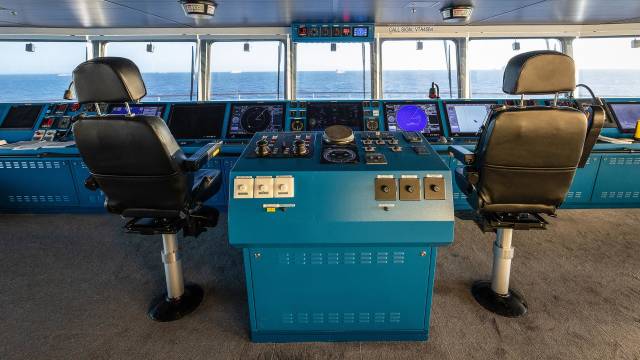
Expedition Ships


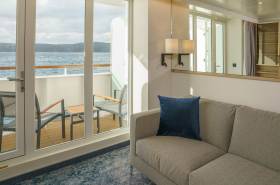





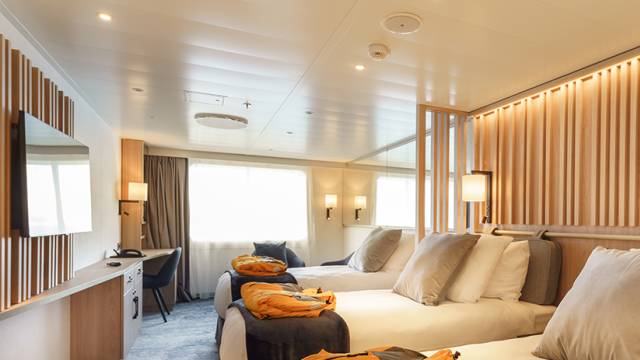


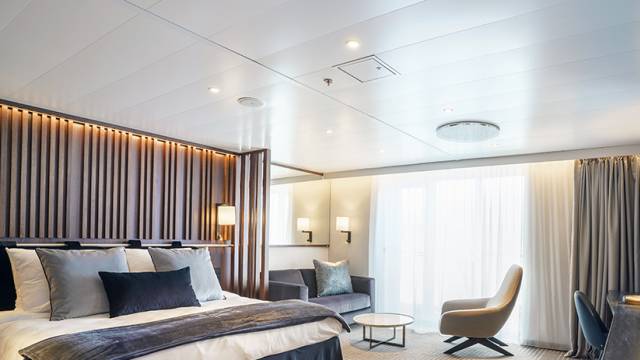


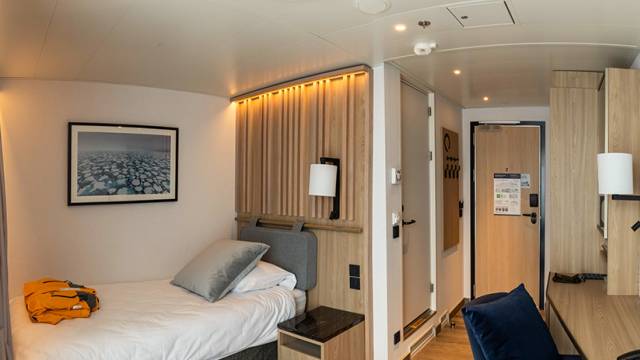




Possible Excursions

Canada
Canada
-
Arctic Bay
This picturesque and remote community maintains strong ties to the land and sea, as its Inuit inhabitants have lived as nomadic hunters in this region for almost 5,000 years. The protective high hills and sheltered shores of this hamlet make for an ideal nesting habitat for various Arctic birds, including thick-billed murres, kittiwakes, ivory gulls and Ross’s gulls. Seals, narwhals and bowhead whales call the waters here home.
-
Beechey Island
Named after Frederick William Beechey, an explorer with the Royal Navy, this is one of Canada’s most important Arctic sites and has been deemed a Canadian National Historic Site. During the Franklin expedition of 1845–46, two of Franklin’s ships, HMS Erebus and HMS Terror, anchored here with perilous results. Three of Franklin’s crew died here and are buried at marked gravesites.
-
Bellot Strait
The 1.2 mile (2 km) wide Bellot Strait separates Somerset Island from the Boothia Peninsula. During the transit, you’ll sail past the northernmost point of mainland North America, Zenith Point.
-
Croker Bay
On the south coast of Devon Island is Croker Bay. A glacier here actively calves off chunks of ice, creating a birthplace for icebergs. The bay was a popular stop during the 1800s, when a path to the Pacific (the Northwest Passage) was at the forefront of Arctic exploration.
-
Dundas Harbour
Located on Devon Island, there are the remains of a Royal Canadian Mounted Police post, dating back to 1924. The RCMP cemetery is tended annually by a contingent of Mounties, who arrive especially for that purpose. Other evidence of human habitation found nearby is centuries older.
-
Fort Ross
In 1937, the Hudson’s Bay Company established a trading post, named Fort Ross, on the coast of Somerset Island. Due to the harsh conditions and isolation of the post, it was closed in 1948. The store and manager’s house still stand.
-
Pond Inlet
Europeans have been visiting the area that came to be known as Pond Inlet since the 1600s. The first visitors arrived seeking the Northwest Passage. In the 1800s, whalers brought wood and barter goods to the community. These visitors were latecomers, as the indigenous peoples had been living in the region for thousands of years.
-
Prince Leopold Island
Impressive, vertical cliffs surround part of this small island. This creates an ideal environment for nesting seabirds, and they nest here in vast numbers—more than 300,000 strong! Thick-billed murres, black guillemots and northern fulmars are most commonly seen here.
-
Qikiqtarjuaq
Known until 1998 as Broughton Island, Qikiqtarjuaq boasts some of the highest mountains in North America east of the Rocky Mountains. From the cape, multitudes of icebergs can be seen coming down Davis Strait, and the rich arctic waters are home to numbers of seals and whales.
-
Radstock Bay
A Thule site here provides insight into how the pre-Inuit people survived and lived in the Arctic. A small polar bear observatory used by scientists in 1978 is also located on top of a rise.
Your Life Onboard
This is polar exploration at its finest. Our ships are intimate, luxurious floating hotels, packed with exciting experiences.


Enjoy panoramic views while you mingle in our comfy lounges, or head outside and chat with fellow adventurers on the wraparound deck. Our social spaces foster connections & shared experiences.

Engage with world-class experts in our auditorium. Presentations cover wildlife, history, marine biology, ecology, & geology, to enhance your polar knowledge & excitement for exploration.

Enjoy onboard amenities, attend lectures, or watch for wildlife from our observation decks. Sea days offer a perfect blend of education, relaxation, and anticipation.

Find tranquility in our well-stocked library, perfect for reading or quiet contemplation. The glass-domed Observation Lounge offers a peaceful retreat to reflect & enjoy awe-inspiring polar views.

Prepare for off-ship excursions in our spacious mudroom. Kayak, paddleboard, or take a plunge in polar waters. Stay active onboard with our gym, outdoor track, and pool facilities.

Know Before You Go
For your personal safety—and to ensure you get the most enjoyment out of your polar adventure—please assess your mobility and medical requirements before booking. It is essential that guests have a high level of mobility to get in and out of Zodiac boats, and for off-ship activities such as hiking on uneven terrain. Our destinations are remote. Apart from our basic ship infirmary, it could take up to 72 hours to reach adequate medical facilities. For more details to help you assess your mobility and medical requirements before booking your voyage, please review Health & Safety.
Some of our expeditions have included transfers and these will be detailed in your Invoice and Trip Brochure.
Please note that if you have an airport transfer included in your trip, it is only available if you arrive on Day 1 of the itinerary. Please ensure your flight information on your Passenger Forms is up to date so our ground crew know when to expect you. There will be someone with a sign in Arrivals waiting for you. Please look for them and they will direct you to our group shuttle.
If you do not have included transfers, or you are arriving before Day 1, you will need to make your own way to the hotel. Most airports we travel in and out of have good taxi ranks in the Arrivals area, or you can often prebook a transfer online.
Packing is an exciting part of the trip for many of us. You will find a handy packing list towards the end of your Trip Brochure. You will have received a copy of this when you first booked. We also have two excellent videos, which you can check out here: What to Pack
Our Protection Promise allows you to make a purchase decision that will leave you worry-free in the event your plans change down the road. Please review details for each term in our Quark Expeditions Protection Promise.
Whether you are thinking of an expedition, or you’ve booked the trip of a lifetime with Quark Expeditions, review all our FAQs for comprehensive tips to help you prepare for the Polar Regions and how to make the most out of your voyage with the most experienced expedition team in the industry. If your specific question isn’t covered below, please reach out to your Polar Travel Advisor or helpful Client Experience Team at guest@quarkexpeditions.com.