



Late summer on Devon Island or Somerset Island turns the tundra a deep rust and gold, and it’s often the best time to see two of the Arctic’s most resourceful residents at once. Arctic foxes and musk oxen share much of the same ground across the Canadian High Arctic, yet they’ve solved the same problem, staying alive through a winter with no sunlight and temperatures well below freezing, in almost opposite ways. An arctic wildlife voyage through this region gives travelers a rare chance to see both survival strategies play out in the same landscape, sometimes within the same afternoon.
The Arctic Fox: Built to Disappear and Endure
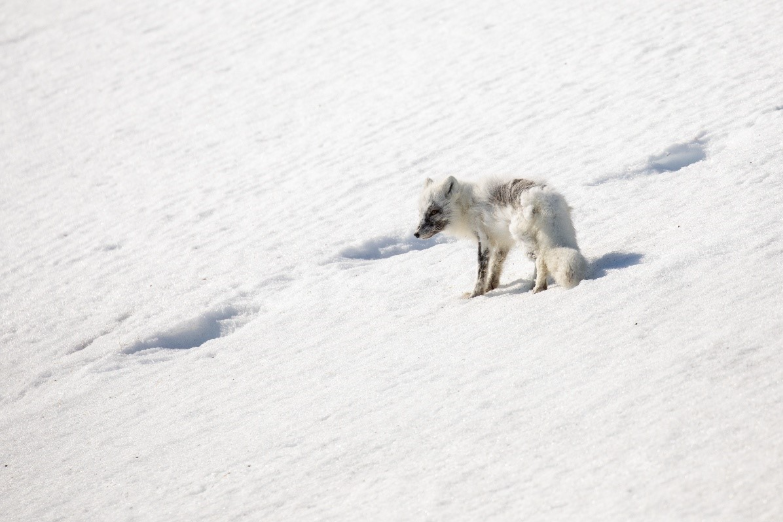
Arctic fox facts tend to start with the coat, and for good reason. Twice a year, the fox molts and regrows its fur to match the season: brilliant white in winter, brown or grey through the short summer. That shift isn’t just cosmetic. Per AECO’s own species guidance, the Arctic fox’s deep, thick winter coat provides such effective insulation that the animal can survive temperatures as low as minus 50 degrees Celsius, or minus 58 Fahrenheit, while maintaining a stable core temperature.
Arctic fox habitat spans the circumpolar tundra and coastline, and the species has one more advantage AECO highlights: short, rounded ears, a compact muzzle, and thickly furred paws, all of which reduce exposed surface area and minimize heat loss. Travelers most often spot arctic foxes near coastal dens, denning sites used across multiple generations, or trailing polar bears and seabird colonies to scavenge leftover food. On the Northwest Passage, shoreline landings near known den sites offer the better odds, particularly in early summer when kits are above ground.
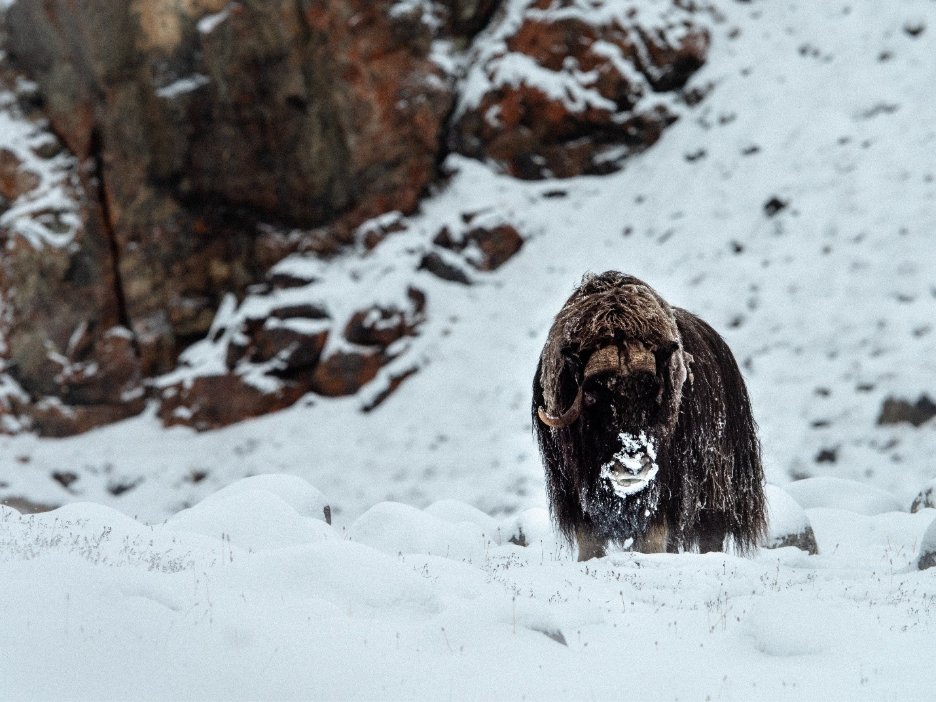
The Musk Ox: A Coat Built to Stay, Not Flee
Musk oxen take the opposite approach. Rather than migrating or hibernating, they simply outlast the winter where they stand. The key is qiviut, an extraordinarily fine underwool that grows beneath a long, coarse outer coat. The Alaska Department of Fish and Game puts qiviut’s insulating value at roughly eight times warmer than sheep’s wool by weight, among the most effective natural insulators documented in any animal fiber. Combined with a low surface-area-to-body-mass ratio and a thick layer of fat, musk oxen can remain active through polar night with minimal shelter.
Musk ox Arctic range centers on the Canadian Arctic Archipelago and parts of Greenland. Banks Island and Victoria Island have historically held the largest musk ox concentrations anywhere on Earth, though recent population surveys have recorded sharp, disease-driven declines on both islands over the past decade, a reminder that even well-established wildlife populations shift over time. Where herds remain established, groups of a dozen or more are typical, and when threatened, they form a defensive circle, calves protected at the center, horns facing outward. This behavior, along with their sheer physical presence, makes musk oxen one of the more reliably visible large mammals on inland tundra walks where herds are active, though as with all wildlife, timing and location still drive the outcome.
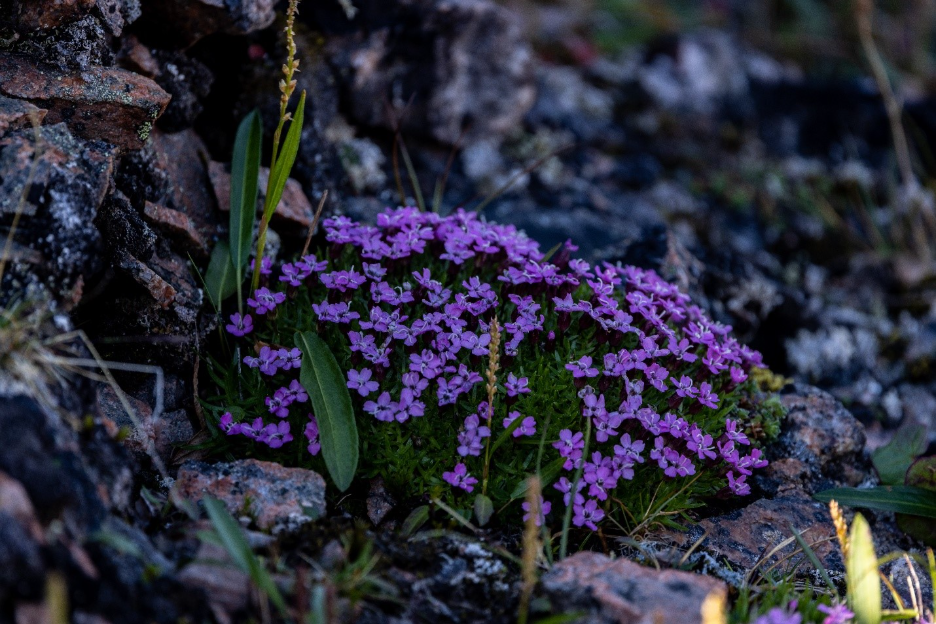
Where Tundra Wildlife Overlaps, and Where It Doesn’t
- Coastal zones and shoreline dens: best odds for Arctic foxes, especially near seabird cliffs or historic den sites
- Inland tundra and river valleys: typical musk ox grazing ground, often visible from a distance during guided walks
- Shared range: much of Nunavut’s High Arctic islands host both species, though rarely in the same immediate spot
- Seasonal factor: early-to-mid summer offers active fox dens; musk oxen are visible across a longer seasonal window since they don’t migrate
How Quark Expeditions Builds Access Around Both
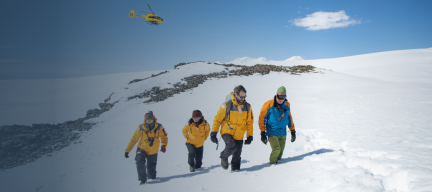
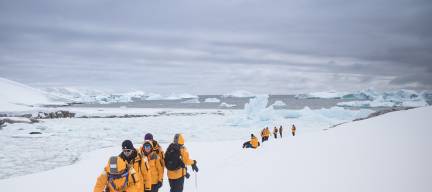
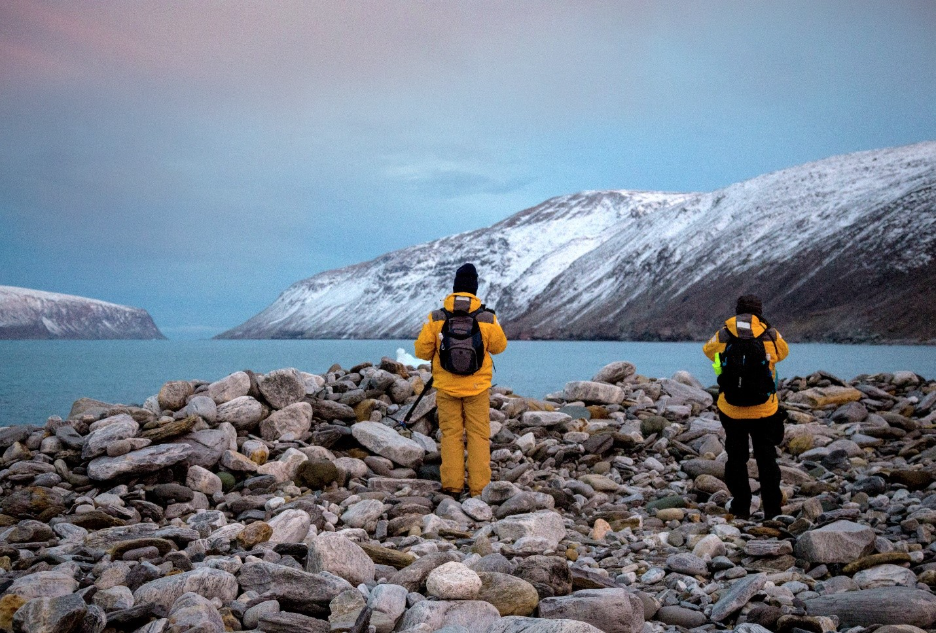
Spotting either species reliably takes more than luck. Quark Expeditions wildlife itineraries in the Canadian High Arctic are planned around known den sites, historical herd territories, and current field reports, with Polar Expedition Leaders adjusting landing plans day to day based on conditions and animal activity. Zodiac landings and guided tundra walks follow AECO protocols on distance and group size, keeping wildlife undisturbed while still giving guests a genuine, unhurried view. Any fox or musk ox imagery used to represent these itineraries is captured from a safe distance with a telephoto lens.
For travelers planning around this contrast, the Canadian Arctic Wildlife, Helicopters, and the Northwest Passage itinerary covers both coastal and inland terrain in a single voyage. A full view of Canadian High Arctic departures, and the broader Arctic expedition lineup, lays out seasonal timing for both species by region.
FAQ
Why do arctic foxes change color?
The seasonal molt from brown or grey to white provides camouflage against snow in winter and tundra ground cover in summer, while also adjusting coat density for warmth.
What keeps musk oxen warm without migrating?
Qiviut, a fine underwool beneath the outer coat and roughly eight times warmer than sheep’s wool by weight, combined with a compact body shape and fat reserves, lets them stay active through the coldest months in place.
Where do travelers typically see arctic foxes?
Most often near coastal den sites or scavenging near seabird colonies and larger predators, particularly in early summer.
Where do travelers typically see musk oxen?
On inland tundra, especially across Victoria Island and Banks Island, usually in herds of a dozen or more.
Are sightings of either animal guaranteed?
No. Both depend on season, location, and current activity. No responsible operator can guarantee a wildlife encounter.


