



Arctic · From 16 Days
West Greenland
Exploring the Far North
Starts from $23,190 USD
$19,281 USD
- Starting from
- Reykjavík, Iceland
- Ships
- Ocean Explorer
- Departures
- 2 Departures between September 2027 to September 2028
From $23,190 USD
$ 19,281 USD


Expedition Overview
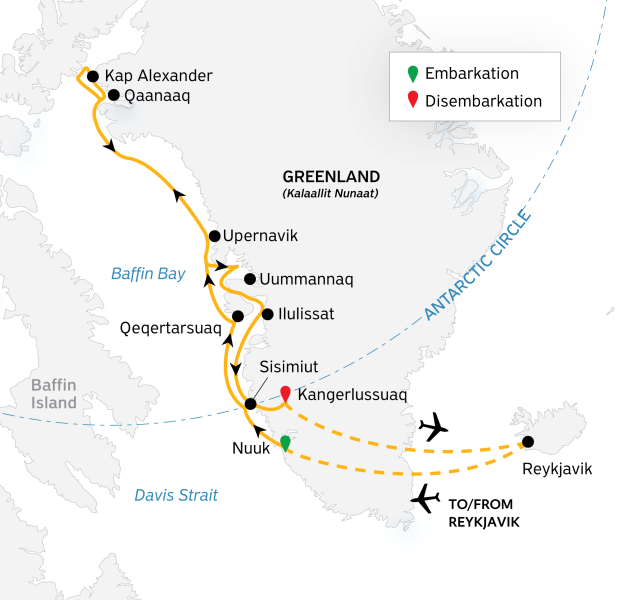
No other itinerary within our Greenland portfolio travels farther north than our 16-day West Greenland: Exploring the Far North—which has the potential to reach an astonishing 78° north latitude. Ideal for guests with a passion for discovery and rarely visited destinations, this voyage ventures into regions tied to legendary explorers like Knud Rasmussen and Robert Peary. In fact, this is the only 2027 Arctic itinerary to visit the remote communities of Upernavik—and to explore the remarkable Smith Sound, where, on a clear day, Greenland and Canada are visible on the same horizon. Journey with us to the Far North.
Highlights
Reach Kap Alexander and beyond for the most northerly destination on our journey
Explore the Illulisat Icefjord UNESCO World Heritage Site
Strong likelihood of viewing the enchanting Northern Lights
Visit the remote communities of Qanaaq and Upernavik
Reach Smith Sound, where Greenland and Canada are mere miles apart
Experience Greenlandic traditions at Uummannaq
Select Your Season & Itinerary
Select Season
Reykjavík, Iceland
16 Days · Ocean Explorer
Starts from $20,211 USD
Reykjavík, Iceland
16 Days · Ocean Explorer
Starts from $19,281 USD
Select Itinerary
Reykjavík, Iceland
16 Days · Ocean Explorer
Starts from $20,211 USD
Reykjavík, Iceland
16 Days · Ocean Explorer
Starts from $19,281 USD
16 Days – From Reykjavík, Iceland on Ocean Explorer (Season 2027)
Day By Day & Map
-
Day 1
Arrive in Reykjavik, Iceland
Arrive in the Icelandic capital and make your way to the group hotel near Keflavik airport, included in your Charter Flight & Hotel Package. You will have the rest of the day to explore this fascinating city, known for its Norse history and stunning architecture. If you do plan to visit Reykjavik, allow for a one-hour transfer to and from the airport area.
-
Day 2
Fly to Nuuk and embark
After breakfast, guests and their luggage will be transferred to the airport for the charter flight to Nuuk, the capital of Greenland. Upon arrival, guests will be transferred to their ship, Ocean Explorer.
-
Day 3
Sisimiut: First stop above the Arctic Circle
Congratulations, you’ve crossed 66°33’ north latitude. On our first-off ship excursion in the Arctic, we’ll visit Sisimiut, a community rich with Greenlandic history and culture. As we approach via the inner harbor, you’ll spot locals coming and going from the marina, bringing halibut, shrimp and other seafood freshly harvested from Baffin Bay. Upon reaching shore, we’ll walk winding roads through this vibrant town dotted with colorful homes and Arctic cotton grass blooming under the summer sun. While the waterfront may be lively with boat traffic, life uphill moves at a relaxed, peaceful pace. You may hear children laughing, sled dogs barking, and locals exchanging greetings. Greenlandic dogs, often seen in kennels throughout town, reflect the deep bond between owners and their canine teams. As in any Arctic community, always ask before petting or approaching these working dogs. Today’s activities feature a locally guided town walk that includes admission to the museum, and a taste of local Greenlandic food. You will also be able to converse with locals who will be eager to learn about your part of the world. One scenic walk leads to the Taseralik Cultural House, beside Nalunnguarfiup Tasia, a small tranquil lake at the base of the 780-meter (2,550 feet) Nasaasaaq Mountain. You’ll walk the same paths locals use every day, experiencing not just the look of Sisimiut, but its rhythm, sounds and genuine sense of place. Guests can also book our Mountain Bike Adventure Option. Led by local partners, this biking tour includes the town harbor area as well as the tundra surrounding Sisimiut.
-
Day 4
Disko Bay: Icebergs, stunning views, and a Greenlandic welcome
In September, Disko Bay is bathed in an ethereal autumn light—a phenomenon specific to the high latitudes. Giant icebergs drift with the currents, many of which can be seen in nearby Illulisat Icefjord, which was designated a UNESCO World Heritage Site in 2004 because of its outstanding natural beauty and its significance in understanding ice-cap glaciology. You’ll quickly realize that icebergs come in all shapes and sizes— some of them larger than Ocean Explorer. Disko Island shelters the expansive bay, where we hope to make landfall at or near the small community of Qeqertarsuaq. Colorfully painted homes dot the gentle rocky slopes of this quiet community, which moves at a pace set by the changing seasons, the tides, and the steady rhythm of small skiffs heading out from the harbor into the vast surrounding landscape. The sea horizon here feels endless. Icebergs drift past—some bound for Baffin Island, Labrador, or even Newfoundland—reminding us of our vast, interconnected world. From this point, we begin to leave behind the more populated regions of West Greenland and push farther northwards. Shortly after lunch, we set a course northward toward Ultima Thule—the extreme far north.
-
Day 5
Upernavik: Remote community visit in the far north
There’s a good chance you will wake up surrounded by icebergs and mountainous landscapes to the east. We continue our push north, arriving at the beautiful community of Upernavik around midday. Although much farther north than most Greenland communities, Upernavik is relatively large, with a population topping 1,000, most of whom live in brightly painted homes that climb the hillside from the sea. The signature quiet of the town amplifies the lap of waves on rock, barking sled dogs, children’s laughter, and the hum of ATVs. Down in the small harbor, you may see fishermen and hunters heading out or just returning from sea. Although Upernavik is an active harbor town, the pace is noticeably slower than in Sisimiut. There’s a deep connection to the sea and sea ice. Here, we’ll meet friendly, welcoming locals—proud of their home and local culture. We may visit the grave of Navarana, the wife of famous Arctic explorer Peter Freuchen, who was buried here in the 1920s. Navarana, a seasoned Arctic traveler, joined her husband and Knud Rasmussen on numerous expeditions, using her vast knowledge to guide them through the coastlines, ice, and cultures of northern Baffin Bay. We aim to leave Upernavik after dinner to continue our epic journey to the high north.
-
Day 6
At Sea: Sailing north into the vast Arctic wilderness
Reaching Ultima Thule, at the highest latitude on our voyage, is no small feat—it requires covering great distances at sea. Today you’ll be able to relax on board, gaze out at the horizon, spot icebergs and possibly marine mammals. Our Expedition Team will host a variety of presentations as they recap recent experiences and set the stage for what lies ahead. Sea days also offer opportunities to connect with fellow travelers from around the world—united by a shared passion for Arctic travel. Conversations flow easily here, many leading to lifelong friendships.
-
Day 7
Kap Alexander: The farthest point north
Today marks the northernmost point of our journey, in the region of Kap Alexander and Smith Sound—the famous narrow body of water separating Greenland and Canada by less than 55 kilometers (35 miles). On clear days, both coastlines may be visible from Smith Sound. This dynamic area is shaped by drifting sea ice from the Arctic Basin. Conditions vary daily—packed sea ice one day, open water the next. Your Expedition Team will navigate accordingly to make the most of our time in Kap Alexander. We may Zodiac cruise here, immersed in the remote, far-north landscapes—where drifting ice, resilient wildlife, and distant mountains of Greenland and Canada surround us. Shore landings may be possible in places few have ever set foot. In early September, migratory birds often gather, and other iconic Arctic species— polar bears, muskoxen, Arctic foxes, and belugas—are sometimes spotted. Wildlife is never guaranteed, but always worth watching for. Reaching this latitude is a rare privilege, and you’ll feel just how different it is here compared to regions 1,000 nautical miles to the south. While daylight hours still offer warmth by day and Northern Lights when darkness falls, you’ll sense the polar night approaching—ready to return and cloak this region in darkness for months. Here, time isn’t marked by conventional sunrises or weekdays, but by polar extremes. Take a moment to look north, deeper into Smith Sound, and let your imagination follow the Arctic wilderness as it stretches into the Arctic Basin and across the polar ice to Siberia. This is a place where nature—not the clock—sets the rhythm.
-
Day 8
Qaanaaq: Greenland's northernmost community
Approaching Qaanaaq (home to fewer than 700 people) along Inglefield Fjord, near the entrance to Smith Sound, we’ll likely encounter large icebergs drifting or resting in the waters around town. The ship will navigate through this maze of ice to reach Greenland’s northernmost community—and the second northernmost town in the world (after Longyearbyen, Svalbard). But unlike Longyearbyen, which welcomes tens of thousands of visitors annually, Qaanaaq is far more remote and receives only a small fraction of that number. We’ll reach this community by Zodiac, arriving at the end of the pier where we’ll likely be greeted by smiling children— just as curious about us as we are about their High Arctic way of life. In town, you’re welcome to wander among the colorful homes, where you’ll meet friendly locals and see many working sled dogs. As mentioned above, always ask before petting these dogs, who spend much of their life out on the sea ice. In town, we urge you to visit Qaanaaq Katersugaasivia (Qaanaaq Museum), which showcases the ingenious tools of Inuit hunters—including collapsible barbed hooks crafted from ivory, bone and animal hide. Historic photographs offer a glimpse into life at these northern extremes, and the friendly museum staff are happy to answer questions. Locals may also share stories of life on the sea ice, where hunting and fishing remain vital to survival. The legacies of explorers like Knud Rasmussen, Robert Peary, and Peter Freuchen and his Greenlandic Inuit wife, Arctic guide Navarana, are also celebrated in this museum. For those keen to explore outdoors, short hikes above town may be possible, weather permitting, of course. Keep your camera ready to capture the sweeping views of endless landscapes and seascapes. While this itinerary includes several community visits, Qaanaaq often leaves the strongest impression in terms of its deep, ongoing relationship with the surrounding wilderness. Located hundreds of miles farther north than most settlements, Qaanaaq is difficult to reach by boat, helicopter or plane. As a result, the community continues to rely on traditional skills refined over centuries of adaptation to this high Arctic environment. Expect to see a mix of modern conveniences—as well as tried-and-true practices of past generations. For example, while skiffs with outboard motors are anchored off shore, you will also see traditional kayaks, propelled by hand-carved paddles, gliding through the water. As we sail south, many travelers leave with a deep appreciation for this remarkable, remote community— wishing they could stay just a little longer.
-
Day 9 & 10
At Sea: Southbound to glaciers and scenic shores
We will spend two full days journeying southward until we reach the fjords just north of Disko Bay, where we will visit areas unexplored earlier in our voyage. Indulge in the amenities of Ocean Explorer: the two-story, light-filled library at the bow of the ship; two outdoor Jacuzzis, sauna and fitness center; our unique observation areas on Decks 7 and 8 that allow for higher, longer-view landscape photography; and stylish lounges where you can share a drink with new-found friends while enjoying even more incredible views.
-
Day 11
Uummannaq: Mountains, ice, and Greenlandic smiles
We arrive in Uummannaq Fjord in the morning and cruise toward the community of Uummannaq, which, in Greenlandic, translates to “heartshaped,” inspired by the dramatic mountain that rises above the town. Visiting this remote community is a rare privilege. We reach town by Zodiac and may be greeted by locals—and the eversmiling chief of police. It’s been said that smiles in Uummannaq are as common as drifting icebergs. Winding roads take you past colorful homes before reaching a meadow of turf houses and a stone church. You can visit the local museum and artisan market for a glimpse of life in northern Greenland. Another nearby museum honors artist Rockwell Kent, who was inspired by the landscapes of Uummannaq Fjord and Disko Bay. You may choose to join a guided walk or explore on your own. Several homes may open for kaffemik—a social gathering with warm drinks, light snacks, and a chance for locals and visitors to connect. Rest assured, the people of Uummannaq will be curious about your part of the world. Shy smiles and translated conversations are natural parts of these authentic cultural exchanges—and often become some of the most memorable moments of your time in this remote Greenlandic community. A parting gift from one local fisherman: “Keep life simple—simple is beautiful.”
-
Day 12
Eqip Sermia: One of Greenlands most active glaciers
Today we’ll explore the northern regions of Disko Bay, possibly including the Eqi Glacier—known locally as Eqip Sermia. This tidewater glacier is a highlight for many reasons. Its wide glacial face makes it one of Greenland’s most active glaciers, regularly calving ice into the sea. You’ll likely see icebergs drifting in the bay, along with smaller pieces called brash ice. On quiet days, you can hear the ice popping and crackling—and if you’re lucky, the thunderous rumble of the calving glacier. Though the glacier is the main attraction, the surrounding landscapes make for interesting shore excursions. Whether you prefer a slow walk among the tundra, taking in autumn vegetation and sweeping views, or a more vigorous hike for elevated glacial vistas, the terrain suits all levels. Underfoot, expect a mix of rock and vegetation, and we’ll tread carefully to protect the fragile plant life that thrives during the brief Arctic summer.
-
Day 13
Ilulissat: Explore a UNESCO World Heritage site
Ilulissat, located in Disko Bay, is home to the UNESCO World Heritage Site of Ilulissat Icefjord, which serves as the thoroughfare for countless icebergs calved from the world’s fastest-moving glacier, Sermeq Kujalleq. A small boardwalk leads to an elevated overlook, where you can view bergs of all sizes spread out before you. The overlook, a rocky outcropping, gives the feeling of standing at the edge of town and the beginning of a vast wilderness. Looking out over the ice evokes a humbling sense of scale. As you explore, notice the Arctic cotton grass and summer wildflowers thriving in theslong daylight hours. The inner harbor often holds evidence of the icefjord’s reach, with drifting icebergs mingling among fishing boats and skiffs. The town itself is well worth exploring, and has become one of Greenland’s top destinations. Recent years have brought growth— colorful homes now sit beside new restaurants, boutique hotels and small businesses. History buffs will be excited to know Ilulissat is the birthplace of Arctic explorer Knud Rasmussen, who traveled by dog sled from Greenland to Alaska (and briefly Siberia) during the Fifth Thule Expedition (1921–1924). Fluent in Kalaallisut, he moved slowly, learning from and documenting the Circumpolar Inuit he met—considered one of the Arctic’s greatest expeditions. The dramatic landscapes around Ilulissat inspired Rasmussen’s life of exploration. And as we approach town, watch out for whales, which occasionally frequent the iceberg-laden waters.
-
Day 14
Itilleq: Playing football with the local community
The small settlement of Itilleq is a favorite among guests and Expedition Team members, thanks to the warm welcome we’ve received over the years. When it comes to community charm, Itilleq stands out. Approximately 100 residents live among brightly painted homes—greens, pinks, purples, baby blues, mustard yellows, and chocolate browns. Many people earn their living at sea, as evidenced by the small seafood processing building near the pier. Despite its size, the village is full of life, from respected elders to playful children. You may be invited to a kaffemik (where people socialize over coffee and cake), or follow a short dirt road to a viewpoint near the cemetery. The view into the f jord and surrounding mountains is worth the walk. Watch your step— lichens, succulents, and mushrooms thrive underfoot. A longstanding tradition is a friendly football (soccer) match with locals, including guests, staff, crew, and residents. It’s a fun, memorable experience—whether you’re on the f ield or cheering from the sidelines.
-
Day 15
Disembark at Kangerlussuaq
Today, we disembark in Kangerlussuaq, formerly known as Søndre Strømfjord, and transfer you to your charter flight to Reykjavik, where you’ll spend the night in your included hotel, both of which are included in your Charter Flight & Hotel Package.
-
Day 16
Depart Reykjavik
Today, after breakfast, make your way independently to the airport for your f light home, or continue your personal travel plans as prearranged.

What’s Included & Excluded
- An official Quark Expeditions® parka to keep
- Leadership throughout your voyage by our experienced Expedition Leaders, including shore landings and other activities
- All Zodiac transfers and cruising as per the daily program
- All shore landings as per the daily program
- Shipboard accommodation with daily housekeeping
- All meals, snacks, soft drinks and juices on board throughout your voyage (Please inform us of any dietary requirements as far in advance as possible.)
- Complimentary select beer, wines and cocktails during bar service hours and dinner
- Complimentary coffee, tea and cocoa available around the clock
- Formal and informal presentations by our Expedition Team and guest speakers as scheduled
- A photographic journal documenting the expedition
- A pair of waterproof expedition boots on loan for landings and Zodiac cruising excursions
- Hair dryer and bathrobes in every cabin
- Complimentary Wi-Fi service on one device permitting basic Internet browsing, email, posting on social media and voice applications. (Premium packages are available for more data-intensive applications.) Note: Internet access in the polar regions is subject to geography, climate, and other factors beyond our control.
- All miscellaneous service taxes and port charges throughout the program
- All luggage handling aboard the ship
- Greenland voyages cruise passenger tax
- Charter Flight & Hotel Package*
- International airfare
- Arrival transfers in Reykjavik
- Passport and visa expenses
- Government arrival and departure taxes not mentioned above
- Baggage, cancellation, interruption and medical travel insurance—strongly recommended
- Excess-baggage fees on international and domestic flights
- Mandatory waterproof pants for Zodiac cruising, or any other gear not mentioned
- Laundry, bar, spa and other personal charges unless specified
- Phone charges may vary by location
- Phone charges may vary by location
- Additional overnight accommodation
- Adventure Options not listed in Included Activities
Charter Flight and Hotel Package
Package valued at $1,495 USD is included in the expedition
- One night’s pre-expedition hotel accommodation in Reykjavik (breakfast included)
- Charter flight from Reykjavik to Nuuk
- Group transfer from the ship to the Kangerlussuaq airport on disembarkation day
- Charter flight from Kangerlussuaq to Reykjavik
- One night’s post-expedition airport hotel accommodation near Keflavik airport (breakfast included)
16 Days – From Reykjavík, Iceland on Ocean Explorer (Season 2027)
16 Days – From Reykjavík, Iceland on Ocean Explorer (Season 2027)
-
Day 1
Arrive in Reykjavik, Iceland
Arrive in the Icelandic capital and make your way to the group hotel near Keflavik airport, included in your Charter Flight & Hotel Package. You will have the rest of the day to explore this fascinating city, known for its Norse history and stunning architecture. If you do plan to visit Reykjavik, allow for a one-hour transfer to and from the airport area.
-
Day 2
Fly to Nuuk and embark
After breakfast, guests and their luggage will be transferred to the airport for the charter flight to Nuuk, the capital of Greenland. Upon arrival, guests will be transferred to their ship, Ocean Explorer.
-
Day 3
Sisimiut: First stop above the Arctic Circle
Congratulations, you’ve crossed 66°33’ north latitude. On our first-off ship excursion in the Arctic, we’ll visit Sisimiut, a community rich with Greenlandic history and culture. As we approach via the inner harbor, you’ll spot locals coming and going from the marina, bringing halibut, shrimp and other seafood freshly harvested from Baffin Bay. Upon reaching shore, we’ll walk winding roads through this vibrant town dotted with colorful homes and Arctic cotton grass blooming under the summer sun. While the waterfront may be lively with boat traffic, life uphill moves at a relaxed, peaceful pace. You may hear children laughing, sled dogs barking, and locals exchanging greetings. Greenlandic dogs, often seen in kennels throughout town, reflect the deep bond between owners and their canine teams. As in any Arctic community, always ask before petting or approaching these working dogs. Today’s activities feature a locally guided town walk that includes admission to the museum, and a taste of local Greenlandic food. You will also be able to converse with locals who will be eager to learn about your part of the world. One scenic walk leads to the Taseralik Cultural House, beside Nalunnguarfiup Tasia, a small tranquil lake at the base of the 780-meter (2,550 feet) Nasaasaaq Mountain. You’ll walk the same paths locals use every day, experiencing not just the look of Sisimiut, but its rhythm, sounds and genuine sense of place. Guests can also book our Mountain Bike Adventure Option. Led by local partners, this biking tour includes the town harbor area as well as the tundra surrounding Sisimiut.
-
Day 4
Disko Bay: Icebergs, stunning views, and a Greenlandic welcome
In September, Disko Bay is bathed in an ethereal autumn light—a phenomenon specific to the high latitudes. Giant icebergs drift with the currents, many of which can be seen in nearby Illulisat Icefjord, which was designated a UNESCO World Heritage Site in 2004 because of its outstanding natural beauty and its significance in understanding ice-cap glaciology. You’ll quickly realize that icebergs come in all shapes and sizes— some of them larger than Ocean Explorer. Disko Island shelters the expansive bay, where we hope to make landfall at or near the small community of Qeqertarsuaq. Colorfully painted homes dot the gentle rocky slopes of this quiet community, which moves at a pace set by the changing seasons, the tides, and the steady rhythm of small skiffs heading out from the harbor into the vast surrounding landscape. The sea horizon here feels endless. Icebergs drift past—some bound for Baffin Island, Labrador, or even Newfoundland—reminding us of our vast, interconnected world. From this point, we begin to leave behind the more populated regions of West Greenland and push farther northwards. Shortly after lunch, we set a course northward toward Ultima Thule—the extreme far north.
-
Day 5
Upernavik: Remote community visit in the far north
There’s a good chance you will wake up surrounded by icebergs and mountainous landscapes to the east. We continue our push north, arriving at the beautiful community of Upernavik around midday. Although much farther north than most Greenland communities, Upernavik is relatively large, with a population topping 1,000, most of whom live in brightly painted homes that climb the hillside from the sea. The signature quiet of the town amplifies the lap of waves on rock, barking sled dogs, children’s laughter, and the hum of ATVs. Down in the small harbor, you may see fishermen and hunters heading out or just returning from sea. Although Upernavik is an active harbor town, the pace is noticeably slower than in Sisimiut. There’s a deep connection to the sea and sea ice. Here, we’ll meet friendly, welcoming locals—proud of their home and local culture. We may visit the grave of Navarana, the wife of famous Arctic explorer Peter Freuchen, who was buried here in the 1920s. Navarana, a seasoned Arctic traveler, joined her husband and Knud Rasmussen on numerous expeditions, using her vast knowledge to guide them through the coastlines, ice, and cultures of northern Baffin Bay. We aim to leave Upernavik after dinner to continue our epic journey to the high north.
-
Day 6
At Sea: Sailing north into the vast Arctic wilderness
Reaching Ultima Thule, at the highest latitude on our voyage, is no small feat—it requires covering great distances at sea. Today you’ll be able to relax on board, gaze out at the horizon, spot icebergs and possibly marine mammals. Our Expedition Team will host a variety of presentations as they recap recent experiences and set the stage for what lies ahead. Sea days also offer opportunities to connect with fellow travelers from around the world—united by a shared passion for Arctic travel. Conversations flow easily here, many leading to lifelong friendships.
-
Day 7
Kap Alexander: The farthest point north
Today marks the northernmost point of our journey, in the region of Kap Alexander and Smith Sound—the famous narrow body of water separating Greenland and Canada by less than 55 kilometers (35 miles). On clear days, both coastlines may be visible from Smith Sound. This dynamic area is shaped by drifting sea ice from the Arctic Basin. Conditions vary daily—packed sea ice one day, open water the next. Your Expedition Team will navigate accordingly to make the most of our time in Kap Alexander. We may Zodiac cruise here, immersed in the remote, far-north landscapes—where drifting ice, resilient wildlife, and distant mountains of Greenland and Canada surround us. Shore landings may be possible in places few have ever set foot. In early September, migratory birds often gather, and other iconic Arctic species— polar bears, muskoxen, Arctic foxes, and belugas—are sometimes spotted. Wildlife is never guaranteed, but always worth watching for. Reaching this latitude is a rare privilege, and you’ll feel just how different it is here compared to regions 1,000 nautical miles to the south. While daylight hours still offer warmth by day and Northern Lights when darkness falls, you’ll sense the polar night approaching—ready to return and cloak this region in darkness for months. Here, time isn’t marked by conventional sunrises or weekdays, but by polar extremes. Take a moment to look north, deeper into Smith Sound, and let your imagination follow the Arctic wilderness as it stretches into the Arctic Basin and across the polar ice to Siberia. This is a place where nature—not the clock—sets the rhythm.
-
Day 8
Qaanaaq: Greenland's northernmost community
Approaching Qaanaaq (home to fewer than 700 people) along Inglefield Fjord, near the entrance to Smith Sound, we’ll likely encounter large icebergs drifting or resting in the waters around town. The ship will navigate through this maze of ice to reach Greenland’s northernmost community—and the second northernmost town in the world (after Longyearbyen, Svalbard). But unlike Longyearbyen, which welcomes tens of thousands of visitors annually, Qaanaaq is far more remote and receives only a small fraction of that number. We’ll reach this community by Zodiac, arriving at the end of the pier where we’ll likely be greeted by smiling children— just as curious about us as we are about their High Arctic way of life. In town, you’re welcome to wander among the colorful homes, where you’ll meet friendly locals and see many working sled dogs. As mentioned above, always ask before petting these dogs, who spend much of their life out on the sea ice. In town, we urge you to visit Qaanaaq Katersugaasivia (Qaanaaq Museum), which showcases the ingenious tools of Inuit hunters—including collapsible barbed hooks crafted from ivory, bone and animal hide. Historic photographs offer a glimpse into life at these northern extremes, and the friendly museum staff are happy to answer questions. Locals may also share stories of life on the sea ice, where hunting and fishing remain vital to survival. The legacies of explorers like Knud Rasmussen, Robert Peary, and Peter Freuchen and his Greenlandic Inuit wife, Arctic guide Navarana, are also celebrated in this museum. For those keen to explore outdoors, short hikes above town may be possible, weather permitting, of course. Keep your camera ready to capture the sweeping views of endless landscapes and seascapes. While this itinerary includes several community visits, Qaanaaq often leaves the strongest impression in terms of its deep, ongoing relationship with the surrounding wilderness. Located hundreds of miles farther north than most settlements, Qaanaaq is difficult to reach by boat, helicopter or plane. As a result, the community continues to rely on traditional skills refined over centuries of adaptation to this high Arctic environment. Expect to see a mix of modern conveniences—as well as tried-and-true practices of past generations. For example, while skiffs with outboard motors are anchored off shore, you will also see traditional kayaks, propelled by hand-carved paddles, gliding through the water. As we sail south, many travelers leave with a deep appreciation for this remarkable, remote community— wishing they could stay just a little longer.
-
Day 9 & 10
At Sea: Southbound to glaciers and scenic shores
We will spend two full days journeying southward until we reach the fjords just north of Disko Bay, where we will visit areas unexplored earlier in our voyage. Indulge in the amenities of Ocean Explorer: the two-story, light-filled library at the bow of the ship; two outdoor Jacuzzis, sauna and fitness center; our unique observation areas on Decks 7 and 8 that allow for higher, longer-view landscape photography; and stylish lounges where you can share a drink with new-found friends while enjoying even more incredible views.
-
Day 11
Uummannaq: Mountains, ice, and Greenlandic smiles
We arrive in Uummannaq Fjord in the morning and cruise toward the community of Uummannaq, which, in Greenlandic, translates to “heartshaped,” inspired by the dramatic mountain that rises above the town. Visiting this remote community is a rare privilege. We reach town by Zodiac and may be greeted by locals—and the eversmiling chief of police. It’s been said that smiles in Uummannaq are as common as drifting icebergs. Winding roads take you past colorful homes before reaching a meadow of turf houses and a stone church. You can visit the local museum and artisan market for a glimpse of life in northern Greenland. Another nearby museum honors artist Rockwell Kent, who was inspired by the landscapes of Uummannaq Fjord and Disko Bay. You may choose to join a guided walk or explore on your own. Several homes may open for kaffemik—a social gathering with warm drinks, light snacks, and a chance for locals and visitors to connect. Rest assured, the people of Uummannaq will be curious about your part of the world. Shy smiles and translated conversations are natural parts of these authentic cultural exchanges—and often become some of the most memorable moments of your time in this remote Greenlandic community. A parting gift from one local fisherman: “Keep life simple—simple is beautiful.”
-
Day 12
Eqip Sermia: One of Greenlands most active glaciers
Today we’ll explore the northern regions of Disko Bay, possibly including the Eqi Glacier—known locally as Eqip Sermia. This tidewater glacier is a highlight for many reasons. Its wide glacial face makes it one of Greenland’s most active glaciers, regularly calving ice into the sea. You’ll likely see icebergs drifting in the bay, along with smaller pieces called brash ice. On quiet days, you can hear the ice popping and crackling—and if you’re lucky, the thunderous rumble of the calving glacier. Though the glacier is the main attraction, the surrounding landscapes make for interesting shore excursions. Whether you prefer a slow walk among the tundra, taking in autumn vegetation and sweeping views, or a more vigorous hike for elevated glacial vistas, the terrain suits all levels. Underfoot, expect a mix of rock and vegetation, and we’ll tread carefully to protect the fragile plant life that thrives during the brief Arctic summer.
-
Day 13
Ilulissat: Explore a UNESCO World Heritage site
Ilulissat, located in Disko Bay, is home to the UNESCO World Heritage Site of Ilulissat Icefjord, which serves as the thoroughfare for countless icebergs calved from the world’s fastest-moving glacier, Sermeq Kujalleq. A small boardwalk leads to an elevated overlook, where you can view bergs of all sizes spread out before you. The overlook, a rocky outcropping, gives the feeling of standing at the edge of town and the beginning of a vast wilderness. Looking out over the ice evokes a humbling sense of scale. As you explore, notice the Arctic cotton grass and summer wildflowers thriving in theslong daylight hours. The inner harbor often holds evidence of the icefjord’s reach, with drifting icebergs mingling among fishing boats and skiffs. The town itself is well worth exploring, and has become one of Greenland’s top destinations. Recent years have brought growth— colorful homes now sit beside new restaurants, boutique hotels and small businesses. History buffs will be excited to know Ilulissat is the birthplace of Arctic explorer Knud Rasmussen, who traveled by dog sled from Greenland to Alaska (and briefly Siberia) during the Fifth Thule Expedition (1921–1924). Fluent in Kalaallisut, he moved slowly, learning from and documenting the Circumpolar Inuit he met—considered one of the Arctic’s greatest expeditions. The dramatic landscapes around Ilulissat inspired Rasmussen’s life of exploration. And as we approach town, watch out for whales, which occasionally frequent the iceberg-laden waters.
-
Day 14
Itilleq: Playing football with the local community
The small settlement of Itilleq is a favorite among guests and Expedition Team members, thanks to the warm welcome we’ve received over the years. When it comes to community charm, Itilleq stands out. Approximately 100 residents live among brightly painted homes—greens, pinks, purples, baby blues, mustard yellows, and chocolate browns. Many people earn their living at sea, as evidenced by the small seafood processing building near the pier. Despite its size, the village is full of life, from respected elders to playful children. You may be invited to a kaffemik (where people socialize over coffee and cake), or follow a short dirt road to a viewpoint near the cemetery. The view into the f jord and surrounding mountains is worth the walk. Watch your step— lichens, succulents, and mushrooms thrive underfoot. A longstanding tradition is a friendly football (soccer) match with locals, including guests, staff, crew, and residents. It’s a fun, memorable experience—whether you’re on the f ield or cheering from the sidelines.
-
Day 15
Disembark at Kangerlussuaq
Today, we disembark in Kangerlussuaq, formerly known as Søndre Strømfjord, and transfer you to your charter flight to Reykjavik, where you’ll spend the night in your included hotel, both of which are included in your Charter Flight & Hotel Package.
-
Day 16
Depart Reykjavik
Today, after breakfast, make your way independently to the airport for your f light home, or continue your personal travel plans as prearranged.
16 Days – From Reykjavík, Iceland on Ocean Explorer (Season 2027)
Day By Day & Map
-
Day 1
Arrive in Reykjavik, Iceland
Arrive in the Icelandic capital and make your way to the designated hotel, which is included in your Charter Flight & Hotel Package. You will have the day to explore this fascinating city known for its stunning modern architecture, contemporary music and Viking history.
-
Day 2
Fly to Nuuk, Greenland, and Embark
After breakfast, guests and their luggage will be transferred to the airport for the charter flight to Nuuk, the capital of Greenland. Upon arrival, guests will be transferred to their ship.
-
Day 3
Sisimiut: First Stop Above the Arctic Circle
Congratulations, you’ve crossed 66°33’ north latitude. On our first-off ship excursion in the Arctic, we’ll visit Sisimiut, a community rich with Greenlandic history and culture. As we approach via the inner harbor, you’ll spot locals coming and going from the marina, bringing halibut, shrimp and other seafood freshly harvested from Baffin Bay. Upon reaching shore, we’ll walk winding roads through this vibrant town dotted with colorful homes and Arctic cotton grass blooming under the summer sun. While the waterfront may be lively with boat traffic, life uphill moves at a relaxed, peaceful pace. You may hear children laughing, sled dogs barking, and locals exchanging greetings. Greenlandic dogs, often seen in kennels throughout town, reflect the deep bond between owners and their canine teams. As in any Arctic community, always ask before petting or approaching these working dogs. Today’s activities feature a locally guided town walk that includes admission to the museum, and a taste of local Greenlandic food. You will also be able to converse with locals who will be eager to learn about your part of the world. One scenic walk leads to the Taseralik Cultural House, beside Nalunnguarfiup Tasia, a small tranquil lake at the base of the 780-meter (2,550 feet) Nasaasaaq Mountain. You’ll walk the same paths locals use every day, experiencing not just the look of Sisimiut, but its rhythm, sounds and genuine sense of place. Guests can also book our Mountain Bike Adventure Option. Led by local partners, this biking tour includes the town harbor area as well as the tundra surrounding Sisimiut.
-
Day 4
Disko Bay: Icebergs, Stunning Views and a Greenlandic Welcome
In September, Disko Bay is bathed in an ethereal autumn light—a phenomenon specific to the high latitudes. Giant icebergs drift with the currents, many of which can be seen in nearby Illulisat Icefjord, which was designated a UNESCO World Heritage Site in 2004 because of its outstanding natural beauty and its significance in understanding ice-cap glaciology. You’ll quickly realize that icebergs come in all shapes and sizes—some of them larger than Ocean Explorer. Disko Island shelters the expansive bay, where we hope to make landfall at or near the small community of Qeqertarsuaq. Colorfully painted homes dot the gentle rocky slopes of this quiet community, which moves at a pace set by the changing seasons, the tides, and the steady rhythm of small skiffs heading out from the harbor into the vast surrounding landscape. The sea horizon here feels endless. Icebergs drift past—some bound for Baffin Island, Labrador, or even Newfoundland—reminding us of our vast, interconnected world. From this point, we begin to leave behind the more populated regions of West Greenland and push farther northwards. Shortly after lunch, we set a course northward toward Ultima Thule—the extreme far north.
-
Day 5
Upernavik: Remote Community Visit in the Far North
There’s a good chance you will wake up surrounded by icebergs and mountainous landscapes to the east. We continue our push north, arriving at the beautiful community of Upernavik around midday. Although much farther north than most Greenland communities, Upernavik is relatively large, with a population topping 1,000, most of whom live in brightly painted homes that climb the hillside from the sea. The signature quiet of the town amplifies the lap of waves on rock, barking sled dogs, children’s laughter, and the hum of ATVs. Down in the small harbor, you may see fishermen and hunters heading out or just returning from sea. Although Upernavik is an active harbor town, the pace is noticeably slower than in Sisimiut. There’s a deep connection to the sea and sea ice. Here, we’ll meet friendly, welcoming locals—proud of their home and local culture. We may visit the grave of Navarana, the wife of famous Arctic explorer Peter Freuchen, who was buried here in the 1920s. Navarana, a seasoned Arctic traveler, joined her husband and Knud Rasmussen on numerous expeditions, using her vast knowledge to guide them through the coastlines, ice, and cultures of northern Baffin Bay. We aim to leave Upernavik after dinner to continue our epic journey to the high north.
-
Day 6
At Sea: Sailing North into the Vast Arctic Wilderness
Reaching Ultima Thule, at the highest latitude on our voyage, is no small feat—it requires covering great distances at sea. Today you’ll be able to relax on board, gaze out at the horizon, spot icebergs and possibly marine mammals. Our Expedition Team will host a variety of presentations as they recap recent experiences and set the stage for what lies ahead. Sea days also offer opportunities to connect with fellow travelers from around the world—united by a shared passion for Arctic travel. Conversations flow easily here, many leading to lifelong friendships.
-
Day 7
Kap Alexander: The Farthest Point North
Today marks the northernmost point of our journey, in the region of Kap Alexander and Smith Sound—the famous narrow body of water separating Greenland and Canada by less than 55 kilometers (35 miles). On clear days, both coastlines may be visible from Smith Sound. This dynamic area is shaped by drifting sea ice from the Arctic Basin. Conditions vary daily—packed sea ice one day, open water the next. Your Expedition Team will navigate accordingly to make the most of our time in Kap Alexander. We may Zodiac cruise here, immersed in the remote, far-north landscapes—where drifting ice, resilient wildlife, and distant mountains of Greenland and Canada surround us. Shore landings may be possible in places few have ever set foot. In early September, migratory birds often gather, and other iconic Arctic species—polar bears, muskoxen, Arctic foxes, and belugas—are sometimes spotted. Wildlife is never guaranteed, but always worth watching for. Reaching this latitude is a rare privilege, and you’ll feel just how different it is here compared to regions 1,000 nautical miles to the south. While daylight hours still offer warmth by day and Northern Lights when darkness falls, you’ll sense the polar night approaching—ready to return and cloak this region in darkness for months. Here, time isn’t marked by conventional sunrises or weekdays, but by polar extremes. Take a moment to look north, deeper into Smith Sound, and let your imagination follow the Arctic wilderness as it stretches into the Arctic Basin and across the polar ice to Siberia. This is a place where nature—not the clock—sets the rhythm.
-
Day 8
Qaanaaq: Greenland’s Northernmost Community
Approaching Qaanaaq (home to fewer than 700 people) along Inglefield Fjord, near the entrance to Smith Sound, we’ll likely encounter large icebergs drifting or resting in the waters around town. The ship will navigate through this maze of ice to reach Greenland’s northernmost community—and the second northernmost town in the world (after Longyearbyen, Svalbard). But unlike Longyearbyen, which welcomes tens of thousands of visitors annually, Qaanaaq is far more remote and receives only a small fraction of that number. We’ll reach this community by Zodiac, arriving at the end of the pier where we’ll likely be greeted by smiling children—just as curious about us as we are about their High Arctic way of life. In town, you’re welcome to wander among the colorful homes, where you’ll meet friendly locals and see many working sled dogs. As mentioned above, always ask before petting these dogs, who spend much of their life out on the sea ice. In town, we urge you to visit Qaanaaq Katersugaasivia (Qaanaaq Museum), which showcases the ingenious tools of Inuit hunters—including collapsible barbed hooks crafted from ivory, bone and animal hide. Historic photographs offer a glimpse into life at these northern extremes, and the friendly museum staff are happy to answer questions. Locals may also share stories of life on the sea ice, where hunting and fishing remain vital to survival. The legacies of explorers like Knud Rasmussen, Robert Peary, and Peter Freuchen and his Greenlandic Inuit wife, Arctic guide Navarana, are also celebrated in this museum. For those keen to explore outdoors, short hikes above town may be possible, weather permitting, of course. Keep your camera ready to capture the sweeping views of endless landscapes and seascapes. While this itinerary includes several community visits, Qaanaaq often leaves the strongest impression in terms of its deep, ongoing relationship with the surrounding wilderness. Located hundreds of miles farther north than most settlements, Qaanaaq is difficult to reach by boat, helicopter or plane. As a result, the community continues to rely on traditional skills refined over centuries of adaptation to this high Arctic environment. Expect to see a mix of modern conveniences—as well as tried-and-true practices of past generations. For example, while skiffs with outboard motors are anchored off shore, you will also see traditional kayaks, propelled by hand-carved paddles, gliding through the water. As we sail south, many travelers leave with a deep appreciation for this remarkable, remote community—wishing they could stay just a little longer.
-
Day 9 & 10
At Sea: Southbound to Glaciers and Scenic Shores
We will spend two full days journeying southward until we reach the fjords just north of Disko Bay, where we will visit areas unexplored earlier in our voyage. Indulge in the amenities of your ship: the two-story, light-filled library at the bow of the ship; two outdoor Jacuzzis, sauna and fitness center; our unique observation areas on Decks 7 and 8 that allow for higher, longer-view landscape photography; and stylish lounges where you can share a drink with new-found friends while enjoying even more incredible views.
-
Day 11
Uummannaq: Mountains, Ice and Greenlandic Smiles
We arrive in Uummannaq Fjord in the morning and cruise toward the community of Uummannaq, which, in Greenlandic, translates to “heart-shaped,” inspired by the dramatic mountain that rises above the town. Visiting this remote community is a rare privilege. We reach town by Zodiac and may be greeted by locals—and the ever-smiling chief of police. It’s been said that smiles in Uummannaq are as common as drifting icebergs. Winding roads take you past colorful homes before reaching a meadow of turf houses and a stone church. You can visit the local museum and artisan market for a glimpse of life in northern Greenland. Another nearby museum honors artist Rockwell Kent, who was inspired by the landscapes of Uummannaq Fjord and Disko Bay. You may choose to join a guided walk or explore on your own. Several homes may open for kaffemik—a social gathering with warm drinks, light snacks, and a chance for locals and visitors to connect. Rest assured, the people of Uummannaq will be curious about your part of the world. Shy smiles and translated conversations are natural parts of these authentic cultural exchanges—and often become some of the most memorable moments of your time in this remote Greenlandic community. A parting gift from one local fisherman: “Keep life simple—simple is beautiful.”
-
Day 12
Eqip Sermia: One of Greenland’s Most Active Glaciers
Today we’ll explore the northern regions of Disko Bay, possibly including the Eqi Glacier— known locally as Eqip Sermia. This tidewater glacier is a highlight for many reasons. Its wide glacial face makes it one of Greenland’s most active glaciers, regularly calving ice into the sea. You’ll likely see icebergs drifting in the bay, along with smaller pieces called brash ice. On quiet days, you can hear the ice popping and crackling—and if you’re lucky, the thunderous rumble of the calving glacier. Though the glacier is the main attraction, the surrounding landscapes make for interesting shore excursions. Whether you prefer a slow walk among the tundra, taking in autumn vegetation and sweeping views, or a more vigorous hike for elevated glacial vistas, the terrain suits all levels. Underfoot, expect a mix of rock and vegetation, and we’ll tread carefully to protect the fragile plant life that thrives during the brief Arctic summer.
-
Day 13
Illulisat: Explore a Unesco World Heritage Site
Ilulissat, located in Disko Bay, is home to the UNESCO World Heritage Site of Ilulissat Icefjord, which serves as the thoroughfare for countless icebergs calved from the world’s fastest-moving glacier, Sermeq Kujalleq. A small boardwalk leads to an elevated overlook, where you can view bergs of all sizes spread out before you. The overlook, a rocky outcropping, gives the feeling of standing at the edge of town and the beginning of a vast wilderness. Looking out over the ice evokes a humbling sense of scale. As you explore, notice the Arctic cotton grass and summer wildflowers thriving in theslong daylight hours. The inner harbor often holds evidence of the icefjord’s reach, with drifting icebergs mingling among fishing boats and skiffs. The town itself is well worth exploring, and has become one of Greenland’s top destinations. Recent years have brought growth—colorful homes now sit beside new restaurants, boutique hotels and small businesses. History buffs will be excited to know Ilulissat is the birthplace of Arctic explorer Knud Rasmussen, who traveled by dog sled from Greenland to Alaska (and briefly Siberia) during the Fifth Thule Expedition (1921–1924). Fluent in Kalaallisut, he moved slowly, learning from and documenting the Circumpolar Inuit he met—considered one of the Arctic’s greatest expeditions. The dramatic landscapes around Ilulissat inspired Rasmussen’s life of exploration. And as we approach town, watch out for whales, which occasionally frequent the iceberg-laden waters.
-
Day 14
Itilleq: Playing Football with the Local Community
The small settlement of Itilleq is a favorite among guests and Expedition Team members, thanks to the warm welcome we’ve received over the years. When it comes to community charm, Itilleq stands out. Approximately 100 residents live among brightly painted homes— greens, pinks, purples, baby blues, mustard yellows, and chocolate browns. Many people earn their living at sea, as evidenced by the small seafood processing building near the pier. Despite its size, the village is full of life, from respected elders to playful children. You may be invited to a kaffemik (where people socialize over coffee and cake), or follow a short dirt road to a viewpoint near the cemetery. The view into the fjord and surrounding mountains is worth the walk. Watch your step—lichens, succulents, and mushrooms thrive underfoot. A longstanding tradition is a friendly football (soccer) match with locals, including guests, staff, crew, and residents. It’s a fun, memorable experience—whether you’re on the field or cheering from the sidelines.
-
Day 15
Disembark at Kangerlussuaq
Today, we disembark in Kangerlussuaq, formerly known as Søndre Strømfjord, and transfer you to your charter flight to Reykjavik, where you’ll spend the night in your group hotel, both of which are included in your Charter Flight & Hotel Package.
-
Day 16
Depart Reykjavik
After breakfast, make your way independently to the airport for your flight home, or continue your personal travel plans as prearranged.
What’s Included & Excluded
- An official Quark Expeditions® parka to keep
- Leadership throughout your voyage by our experienced Expedition Leaders, including shore landings and other activities
- All Zodiac transfers and cruising as per the daily program
- All shore landings as per the daily program
- Shipboard accommodation with daily housekeeping
- All meals, snacks, soft drinks and juices on board throughout your voyage (Please inform us of any dietary requirements as far in advance as possible.)
- Complimentary select beer, wines and cocktails during bar service hours and dinner
- Complimentary coffee, tea and cocoa available around the clock
- Formal and informal presentations by our Expedition Team and guest speakers as scheduled
- A photographic journal documenting the expedition
- A pair of waterproof expedition boots on loan for landings and Zodiac cruising excursions
- Hair dryer and bathrobes in every cabin
- Complimentary Wi-Fi service on one device permitting basic Internet browsing, email, posting on social media and voice applications. (Premium packages are available for more data-intensive applications.) Note: Internet access in the polar regions is subject to geography, climate, and other factors beyond our control
- All miscellaneous service taxes and port charges throughout the program
- All luggage handling aboard the ship
- Charter Flight & Hotel Package* (when applicable – please review trip-specific details below)
- International airfare
- Arrival and departure transfers
- Passport and visa expenses
- Government arrival and departure taxes not mentioned above
- Meals ashore unless otherwise specified
- Baggage, cancellation, interruption and medical travel insurance—strongly recommended
- Excess-baggage fees on international and domestic flights
- Mandatory waterproof pants for Zodiac cruising, or any other gear not mentioned
- Laundry, bar, spa and other personal charges unless specified
- Phone charges may vary by location
- Voluntary gratuity at the end of the voyage for shipboard staff and crew
- Additional overnight accommodation
- Adventure Options not listed in Included Activities
Charter Flight and Hotel Package
Package valued at $2,095 USD is included in the expedition
- One night’s pre-expedition hotel accommodation in Reykjavik (breakfast included)
- Charter flight from Reykjavik to Nuuk
- Group transfer from the ship to the Kangerlussuaq airport on disembarkation day
- Charter flight from Kangerlussuaq to Reykjavik
- One night’s post-expedition airport hotel accommodation near Keflavik airport (breakfast included)
16 Days – From Reykjavík, Iceland on Ocean Explorer (Season 2027)
16 Days – From Reykjavík, Iceland on Ocean Explorer (Season 2027)
-
Day 1
Arrive in Reykjavik, Iceland
Arrive in the Icelandic capital and make your way to the designated hotel, which is included in your Charter Flight & Hotel Package. You will have the day to explore this fascinating city known for its stunning modern architecture, contemporary music and Viking history.
-
Day 2
Fly to Nuuk, Greenland, and Embark
After breakfast, guests and their luggage will be transferred to the airport for the charter flight to Nuuk, the capital of Greenland. Upon arrival, guests will be transferred to their ship.
-
Day 3
Sisimiut: First Stop Above the Arctic Circle
Congratulations, you’ve crossed 66°33’ north latitude. On our first-off ship excursion in the Arctic, we’ll visit Sisimiut, a community rich with Greenlandic history and culture. As we approach via the inner harbor, you’ll spot locals coming and going from the marina, bringing halibut, shrimp and other seafood freshly harvested from Baffin Bay. Upon reaching shore, we’ll walk winding roads through this vibrant town dotted with colorful homes and Arctic cotton grass blooming under the summer sun. While the waterfront may be lively with boat traffic, life uphill moves at a relaxed, peaceful pace. You may hear children laughing, sled dogs barking, and locals exchanging greetings. Greenlandic dogs, often seen in kennels throughout town, reflect the deep bond between owners and their canine teams. As in any Arctic community, always ask before petting or approaching these working dogs. Today’s activities feature a locally guided town walk that includes admission to the museum, and a taste of local Greenlandic food. You will also be able to converse with locals who will be eager to learn about your part of the world. One scenic walk leads to the Taseralik Cultural House, beside Nalunnguarfiup Tasia, a small tranquil lake at the base of the 780-meter (2,550 feet) Nasaasaaq Mountain. You’ll walk the same paths locals use every day, experiencing not just the look of Sisimiut, but its rhythm, sounds and genuine sense of place. Guests can also book our Mountain Bike Adventure Option. Led by local partners, this biking tour includes the town harbor area as well as the tundra surrounding Sisimiut.
-
Day 4
Disko Bay: Icebergs, Stunning Views and a Greenlandic Welcome
In September, Disko Bay is bathed in an ethereal autumn light—a phenomenon specific to the high latitudes. Giant icebergs drift with the currents, many of which can be seen in nearby Illulisat Icefjord, which was designated a UNESCO World Heritage Site in 2004 because of its outstanding natural beauty and its significance in understanding ice-cap glaciology. You’ll quickly realize that icebergs come in all shapes and sizes—some of them larger than Ocean Explorer. Disko Island shelters the expansive bay, where we hope to make landfall at or near the small community of Qeqertarsuaq. Colorfully painted homes dot the gentle rocky slopes of this quiet community, which moves at a pace set by the changing seasons, the tides, and the steady rhythm of small skiffs heading out from the harbor into the vast surrounding landscape. The sea horizon here feels endless. Icebergs drift past—some bound for Baffin Island, Labrador, or even Newfoundland—reminding us of our vast, interconnected world. From this point, we begin to leave behind the more populated regions of West Greenland and push farther northwards. Shortly after lunch, we set a course northward toward Ultima Thule—the extreme far north.
-
Day 5
Upernavik: Remote Community Visit in the Far North
There’s a good chance you will wake up surrounded by icebergs and mountainous landscapes to the east. We continue our push north, arriving at the beautiful community of Upernavik around midday. Although much farther north than most Greenland communities, Upernavik is relatively large, with a population topping 1,000, most of whom live in brightly painted homes that climb the hillside from the sea. The signature quiet of the town amplifies the lap of waves on rock, barking sled dogs, children’s laughter, and the hum of ATVs. Down in the small harbor, you may see fishermen and hunters heading out or just returning from sea. Although Upernavik is an active harbor town, the pace is noticeably slower than in Sisimiut. There’s a deep connection to the sea and sea ice. Here, we’ll meet friendly, welcoming locals—proud of their home and local culture. We may visit the grave of Navarana, the wife of famous Arctic explorer Peter Freuchen, who was buried here in the 1920s. Navarana, a seasoned Arctic traveler, joined her husband and Knud Rasmussen on numerous expeditions, using her vast knowledge to guide them through the coastlines, ice, and cultures of northern Baffin Bay. We aim to leave Upernavik after dinner to continue our epic journey to the high north.
-
Day 6
At Sea: Sailing North into the Vast Arctic Wilderness
Reaching Ultima Thule, at the highest latitude on our voyage, is no small feat—it requires covering great distances at sea. Today you’ll be able to relax on board, gaze out at the horizon, spot icebergs and possibly marine mammals. Our Expedition Team will host a variety of presentations as they recap recent experiences and set the stage for what lies ahead. Sea days also offer opportunities to connect with fellow travelers from around the world—united by a shared passion for Arctic travel. Conversations flow easily here, many leading to lifelong friendships.
-
Day 7
Kap Alexander: The Farthest Point North
Today marks the northernmost point of our journey, in the region of Kap Alexander and Smith Sound—the famous narrow body of water separating Greenland and Canada by less than 55 kilometers (35 miles). On clear days, both coastlines may be visible from Smith Sound. This dynamic area is shaped by drifting sea ice from the Arctic Basin. Conditions vary daily—packed sea ice one day, open water the next. Your Expedition Team will navigate accordingly to make the most of our time in Kap Alexander. We may Zodiac cruise here, immersed in the remote, far-north landscapes—where drifting ice, resilient wildlife, and distant mountains of Greenland and Canada surround us. Shore landings may be possible in places few have ever set foot. In early September, migratory birds often gather, and other iconic Arctic species—polar bears, muskoxen, Arctic foxes, and belugas—are sometimes spotted. Wildlife is never guaranteed, but always worth watching for. Reaching this latitude is a rare privilege, and you’ll feel just how different it is here compared to regions 1,000 nautical miles to the south. While daylight hours still offer warmth by day and Northern Lights when darkness falls, you’ll sense the polar night approaching—ready to return and cloak this region in darkness for months. Here, time isn’t marked by conventional sunrises or weekdays, but by polar extremes. Take a moment to look north, deeper into Smith Sound, and let your imagination follow the Arctic wilderness as it stretches into the Arctic Basin and across the polar ice to Siberia. This is a place where nature—not the clock—sets the rhythm.
-
Day 8
Qaanaaq: Greenland’s Northernmost Community
Approaching Qaanaaq (home to fewer than 700 people) along Inglefield Fjord, near the entrance to Smith Sound, we’ll likely encounter large icebergs drifting or resting in the waters around town. The ship will navigate through this maze of ice to reach Greenland’s northernmost community—and the second northernmost town in the world (after Longyearbyen, Svalbard). But unlike Longyearbyen, which welcomes tens of thousands of visitors annually, Qaanaaq is far more remote and receives only a small fraction of that number. We’ll reach this community by Zodiac, arriving at the end of the pier where we’ll likely be greeted by smiling children—just as curious about us as we are about their High Arctic way of life. In town, you’re welcome to wander among the colorful homes, where you’ll meet friendly locals and see many working sled dogs. As mentioned above, always ask before petting these dogs, who spend much of their life out on the sea ice. In town, we urge you to visit Qaanaaq Katersugaasivia (Qaanaaq Museum), which showcases the ingenious tools of Inuit hunters—including collapsible barbed hooks crafted from ivory, bone and animal hide. Historic photographs offer a glimpse into life at these northern extremes, and the friendly museum staff are happy to answer questions. Locals may also share stories of life on the sea ice, where hunting and fishing remain vital to survival. The legacies of explorers like Knud Rasmussen, Robert Peary, and Peter Freuchen and his Greenlandic Inuit wife, Arctic guide Navarana, are also celebrated in this museum. For those keen to explore outdoors, short hikes above town may be possible, weather permitting, of course. Keep your camera ready to capture the sweeping views of endless landscapes and seascapes. While this itinerary includes several community visits, Qaanaaq often leaves the strongest impression in terms of its deep, ongoing relationship with the surrounding wilderness. Located hundreds of miles farther north than most settlements, Qaanaaq is difficult to reach by boat, helicopter or plane. As a result, the community continues to rely on traditional skills refined over centuries of adaptation to this high Arctic environment. Expect to see a mix of modern conveniences—as well as tried-and-true practices of past generations. For example, while skiffs with outboard motors are anchored off shore, you will also see traditional kayaks, propelled by hand-carved paddles, gliding through the water. As we sail south, many travelers leave with a deep appreciation for this remarkable, remote community—wishing they could stay just a little longer.
-
Day 9 & 10
At Sea: Southbound to Glaciers and Scenic Shores
We will spend two full days journeying southward until we reach the fjords just north of Disko Bay, where we will visit areas unexplored earlier in our voyage. Indulge in the amenities of your ship: the two-story, light-filled library at the bow of the ship; two outdoor Jacuzzis, sauna and fitness center; our unique observation areas on Decks 7 and 8 that allow for higher, longer-view landscape photography; and stylish lounges where you can share a drink with new-found friends while enjoying even more incredible views.
-
Day 11
Uummannaq: Mountains, Ice and Greenlandic Smiles
We arrive in Uummannaq Fjord in the morning and cruise toward the community of Uummannaq, which, in Greenlandic, translates to “heart-shaped,” inspired by the dramatic mountain that rises above the town. Visiting this remote community is a rare privilege. We reach town by Zodiac and may be greeted by locals—and the ever-smiling chief of police. It’s been said that smiles in Uummannaq are as common as drifting icebergs. Winding roads take you past colorful homes before reaching a meadow of turf houses and a stone church. You can visit the local museum and artisan market for a glimpse of life in northern Greenland. Another nearby museum honors artist Rockwell Kent, who was inspired by the landscapes of Uummannaq Fjord and Disko Bay. You may choose to join a guided walk or explore on your own. Several homes may open for kaffemik—a social gathering with warm drinks, light snacks, and a chance for locals and visitors to connect. Rest assured, the people of Uummannaq will be curious about your part of the world. Shy smiles and translated conversations are natural parts of these authentic cultural exchanges—and often become some of the most memorable moments of your time in this remote Greenlandic community. A parting gift from one local fisherman: “Keep life simple—simple is beautiful.”
-
Day 12
Eqip Sermia: One of Greenland’s Most Active Glaciers
Today we’ll explore the northern regions of Disko Bay, possibly including the Eqi Glacier— known locally as Eqip Sermia. This tidewater glacier is a highlight for many reasons. Its wide glacial face makes it one of Greenland’s most active glaciers, regularly calving ice into the sea. You’ll likely see icebergs drifting in the bay, along with smaller pieces called brash ice. On quiet days, you can hear the ice popping and crackling—and if you’re lucky, the thunderous rumble of the calving glacier. Though the glacier is the main attraction, the surrounding landscapes make for interesting shore excursions. Whether you prefer a slow walk among the tundra, taking in autumn vegetation and sweeping views, or a more vigorous hike for elevated glacial vistas, the terrain suits all levels. Underfoot, expect a mix of rock and vegetation, and we’ll tread carefully to protect the fragile plant life that thrives during the brief Arctic summer.
-
Day 13
Illulisat: Explore a Unesco World Heritage Site
Ilulissat, located in Disko Bay, is home to the UNESCO World Heritage Site of Ilulissat Icefjord, which serves as the thoroughfare for countless icebergs calved from the world’s fastest-moving glacier, Sermeq Kujalleq. A small boardwalk leads to an elevated overlook, where you can view bergs of all sizes spread out before you. The overlook, a rocky outcropping, gives the feeling of standing at the edge of town and the beginning of a vast wilderness. Looking out over the ice evokes a humbling sense of scale. As you explore, notice the Arctic cotton grass and summer wildflowers thriving in theslong daylight hours. The inner harbor often holds evidence of the icefjord’s reach, with drifting icebergs mingling among fishing boats and skiffs. The town itself is well worth exploring, and has become one of Greenland’s top destinations. Recent years have brought growth—colorful homes now sit beside new restaurants, boutique hotels and small businesses. History buffs will be excited to know Ilulissat is the birthplace of Arctic explorer Knud Rasmussen, who traveled by dog sled from Greenland to Alaska (and briefly Siberia) during the Fifth Thule Expedition (1921–1924). Fluent in Kalaallisut, he moved slowly, learning from and documenting the Circumpolar Inuit he met—considered one of the Arctic’s greatest expeditions. The dramatic landscapes around Ilulissat inspired Rasmussen’s life of exploration. And as we approach town, watch out for whales, which occasionally frequent the iceberg-laden waters.
-
Day 14
Itilleq: Playing Football with the Local Community
The small settlement of Itilleq is a favorite among guests and Expedition Team members, thanks to the warm welcome we’ve received over the years. When it comes to community charm, Itilleq stands out. Approximately 100 residents live among brightly painted homes— greens, pinks, purples, baby blues, mustard yellows, and chocolate browns. Many people earn their living at sea, as evidenced by the small seafood processing building near the pier. Despite its size, the village is full of life, from respected elders to playful children. You may be invited to a kaffemik (where people socialize over coffee and cake), or follow a short dirt road to a viewpoint near the cemetery. The view into the fjord and surrounding mountains is worth the walk. Watch your step—lichens, succulents, and mushrooms thrive underfoot. A longstanding tradition is a friendly football (soccer) match with locals, including guests, staff, crew, and residents. It’s a fun, memorable experience—whether you’re on the field or cheering from the sidelines.
-
Day 15
Disembark at Kangerlussuaq
Today, we disembark in Kangerlussuaq, formerly known as Søndre Strømfjord, and transfer you to your charter flight to Reykjavik, where you’ll spend the night in your group hotel, both of which are included in your Charter Flight & Hotel Package.
-
Day 16
Depart Reykjavik
After breakfast, make your way independently to the airport for your flight home, or continue your personal travel plans as prearranged.
Explore Activities and Extensions
Activities vary by itinerary, ship, destination and are subject to weather conditions. Checkout our Itineraries to explore what’s included in each voyage.


Expedition Ships


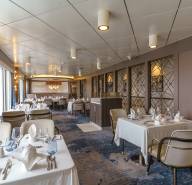


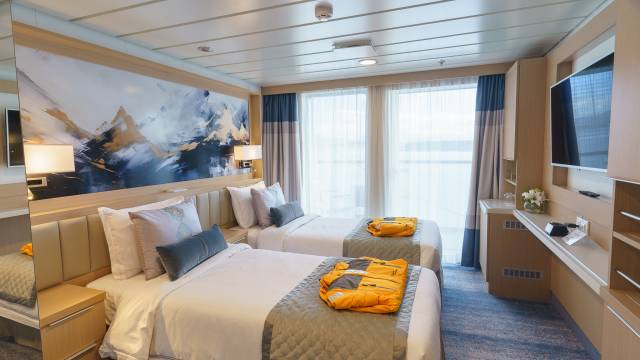

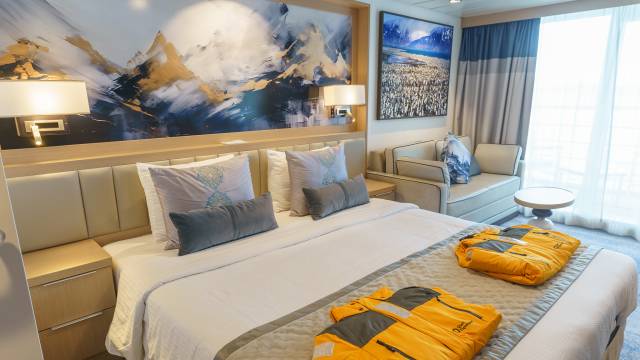


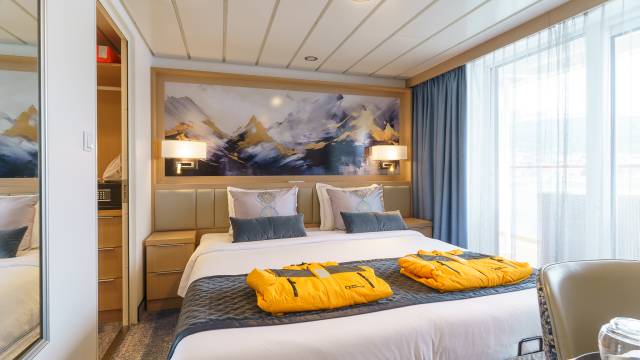


Possible Excursions
When traveling in extremely remote regions, your Expedition Team must consider the sea, ice and weather to guide the route and itinerary details. The following sites are a sample of what you may experience on your expedition, whether by ship, Zodiac cruise, helicopter, or shore landing.

West Greenland

Greenland
West Greenland

-
Eqip Sermia
With an ice front of just under 2.5 miles (4 km), Eqip Sermia is a truly massive glacier, with huge chunks of ice seen— and heard—calving into the water below. Navigating the narrow sound on the way to the glacier requires traversing ice-clogged water, which produces an ethereal feeling as bergs grind against the ship’s hull.
-
Ilulissat
Ilulissat (formerly Jakobshaven) lies approximately 350 km north of the Arctic Circle. With a population of over 4500, it is the third-largest city in Greenland, after Nuuk and Sisimiut. The city is home to more sledge-dogs than residents! Founded by Danish trader Jacob Saverin as a trading post in 1741, Ilulissat today is a center for shrimp-fishing in the region. Directly translated, “Ilulissat” is the Kalaallisut word for “icebergs.” The town is situated 2 km north of the legendary Ice Fjord, through which colossal icebergs travel out to sea. Ilulissat is also the birthplace of noted polar explorer and anthropologist Knud Rasmussen, Greenland’s revered native son. You’ll be able to enter the house where he was born in 1879 as it’s now a small museum dedicated to his achievements. From 1906 until the early 1930s, Kununnguaq, or “Little Knud,” devoted his life to Arctic studies. His greatest achievements included the Danish Ethnographical Expedition to Arctic North America, also known as the Fifth Thule Expedition, which enabled Rasmussen and his team to take archaeological, geographical and natural history data from Greenland right across the North American Arctic.
-
Itilleq
Itilleq in Greenlandic means “a hollow,” which is where this village is situated, on an island without any freshwater. The village has approximately 130 inhabitants and offers picturesque views of colorful Greenlandic houses dotted along the rocky landscape. It’s also known as a welcoming community, where you might experience “kaffemik,” a Greenlandic tradition of inviting visitors in for coffee, cakes and conversation.
-
Kap Alexander And Smith Sound
The northernmost point of our journey, this region is famous in Arctic exploration circles. Kap Alexander lies at the southern entrance to Smith Sound, and marks the northwestern tip of Greenland, directly across from Cape Isabella on Ellesmere Island, Canada—just 55 kilometers (35 miles) to the west. For generations, families have lived and traveled on both sides of the modern border—often without recognizing the boundary —viewing the region as a single, intimately connected environment. The near-constant inflow of Arctic Basin Sea ice means we may encounter bears on the ice. Arctic foxes, muskoxen, belugas, and migratory birds are also sometimes seen, particularly between summer and early fall.
-
Qaanaaq
Qaanaaq is one of the world’s most northern settlements. Traditional means of living are strong here, and the local museum helps shed some light on what it takes to live this close to the top of the world.
-
Qeqertarsuaq
One of the oldest settlements in Greenland, Qeqertarsuaq was settled by whalers in 1773, but archeological evidence suggests that people lived here at least 6,000 years earlier. The town and surrounding area stand apart as the island’s only volcanic region. The area offers unusual geology and colorful landscapes, with particularly lush vegetation. More than half of Greenland’s plant species are found here, tucked between columns of basalt rock and black sand beaches littered with ice fragments. In town, you don’t want to miss Qeqertarsuaq’s Vorherres Bleaekhus, which hosts musical performances by resident artists. Local guides will also lead walking tours to visit the church, Qeqertarsuaq’s shopping area and businesses, and the local museum. If time and weather permit, there’s the chance of an extended hike to the incredible basalt columns 10 km down the coast. This hike isn’t for the faint of heart.
-
Sisimiut
The second-largest town in Greenland, Sisimiut is a place to stretch your legs. Inhabited for more than 4,000 years, Sisimiut has a history that is a mix of Saqqaq, Dorset and Thule cultures. The colorful wooden houses here are typical of Greenlandic communities today. Nasaasaaq, an impressive mountain, provides a scenic backdrop for this settlement.
-
Uummannaq
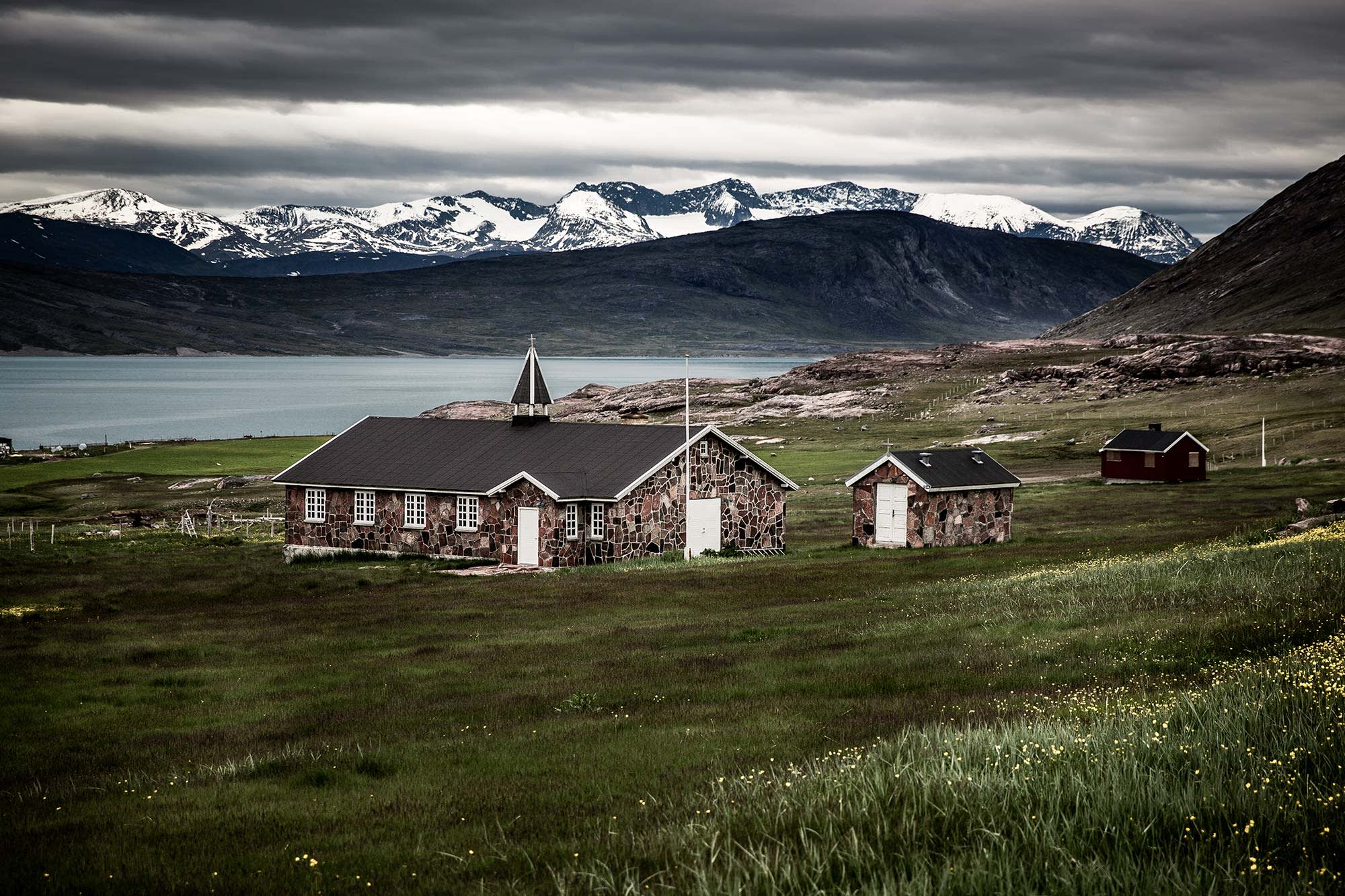
Uummannaq was founded as a Danish colony in 1758 on the Nuussuaq mainland, but in 1763 it was moved to the nearby island, as seal hunting was more plentiful there. A heart shaped mountain forms a striking backdrop to Greenland’s second- largest town.
Greenland
-
Upernavik
The second northernmost community in Greenland, Upernavik is seldom visited by expedition vessels. Like many Greenlandic communities, it is warm and welcoming, with brightly colored homes nestled in a rocky coastal landscape, often surrounded by drifting icebergs. Its location—between the open waters of Baffin Bay to the west and more sheltered areas to the east—has long made it ideal for hunters, fishermen and explorers. Upernavik was frequently used as a port by Arctic explorers venturing deep into the Canadian Arctic. The community also has a complex history, including the story of Navarana, the Inuit wife of explorer Peter Freuchen, who is buried here.
Your Life Onboard
This is polar exploration at its finest. Our ships are intimate, luxurious floating hotels, packed with exciting experiences.


Enjoy panoramic views while you mingle in our comfy lounges, or head outside and chat with fellow adventurers on the wraparound deck. Our social spaces foster connections & shared experiences.

Engage with world-class experts in our auditorium. Presentations cover wildlife, history, marine biology, ecology, & geology, to enhance your polar knowledge & excitement for exploration.

Enjoy onboard amenities, attend lectures, or watch for wildlife from our observation decks. Sea days offer a perfect blend of education, relaxation, and anticipation.

Find tranquility in our well-stocked library, perfect for reading or quiet contemplation. The glass-domed Observation Lounge offers a peaceful retreat to reflect & enjoy awe-inspiring polar views.

Prepare for off-ship excursions in our spacious mudroom. Kayak, paddleboard, or take a plunge in polar waters. Stay active onboard with our gym, outdoor track, and pool facilities.


Know Before You Go
For your personal safety—and to ensure you get the most enjoyment out of your polar adventure—please assess your mobility and medical requirements before booking. It is essential that guests have a high level of mobility to get in and out of Zodiac boats, and for off-ship activities such as hiking on uneven terrain. Our destinations are remote. Apart from our basic ship infirmary, it could take up to 72 hours to reach adequate medical facilities. For more details to help you assess your mobility and medical requirements before booking your voyage, please review Health & Safety.
Some of our expeditions have included transfers and these will be detailed in your Invoice and Trip Brochure.
Please note that if you have an airport transfer included in your trip, it is only available if you arrive on Day 1 of the itinerary. Please ensure your flight information on your Passenger Forms is up to date so our ground crew know when to expect you. There will be someone with a sign in Arrivals waiting for you. Please look for them and they will direct you to our group shuttle.
If you do not have included transfers, or you are arriving before Day 1, you will need to make your own way to the hotel. Most airports we travel in and out of have good taxi ranks in the Arrivals area, or you can often prebook a transfer online.
Packing is an exciting part of the trip for many of us. You will find a handy packing list towards the end of your Trip Brochure. You will have received a copy of this when you first booked. We also have two excellent videos, which you can check out here: What to Pack
Our Protection Promise allows you to make a purchase decision that will leave you worry-free in the event your plans change down the road. Please review details for each term in our Quark Expeditions Protection Promise.
Whether you are thinking of an expedition, or you’ve booked the trip of a lifetime with Quark Expeditions, review all our FAQs for comprehensive tips to help you prepare for the Polar Regions and how to make the most out of your voyage with the most experienced expedition team in the industry. If your specific question isn’t covered below, please reach out to your Polar Travel Advisor or helpful Client Experience Team at guest@quarkexpeditions.com.