



Arctic · From 17 Days
Northwest Passage
The Legendary Arctic Sea Route
Starts from $24,990 USD
$21,541 USD
-

-

-

Guests exploring Itilleq, Greenland
-
-

Polar bear photographs are taken from a distance with a telephoto lens
-
- Starting from
- Reykjavík, Iceland
- Ships
- Ultramarine
- Departures
- 2 Departures between August 2027 to September 2027
From $24,990 USD
$ 21,541 USD
Guests exploring Itilleq, Greenland
Polar bear photographs are taken from a distance with a telephoto lens


Kangerlussuatsiaq, Greenland


Radstock Bay, Nunavut

Glacial fjord at Cape Mercy, Cumberland Sound, Baffin Island, Nunavut, Canada

Expedition Overview
Winding your way through the icy channels of the legendary Northwest Passage is history brought to life during this expedition in the Canadian High Arctic and Greenland. On this compelling 17-day journey, passengers retrace the steps of the intrepid Franklin Expedition, which left the shores of England in 1845 in search of the last unexplored section of the Northwest Passage—only to become permanently icebound. Its discovery more than a century and a half later by Norwegian Roald Amundsen was a much-celebrated moment in polar history.
Explore colorful Inuit villages, and shop for traditional Inuit handicrafts. Hike the endless Arctic backdrop and marvel at the vast, colorful tundra. Keep your eyes peeled for the elusive and majestic creatures that make their home in this wilderness, such as whales, walrus, muskoxen and polar bears. Come aboard for this immersive journey along the legendary Arctic sea route, and return home with memories permanently etched in your heart.
Highlights
Experience highlights of Greenland and the Canadian Arctic
Explore colorful Greenlandic villages and shop for traditional Inuit handicrafts
View iconic Arctic wildlife, such as whales, walrus and muskoxen
Hike the colorful tundra
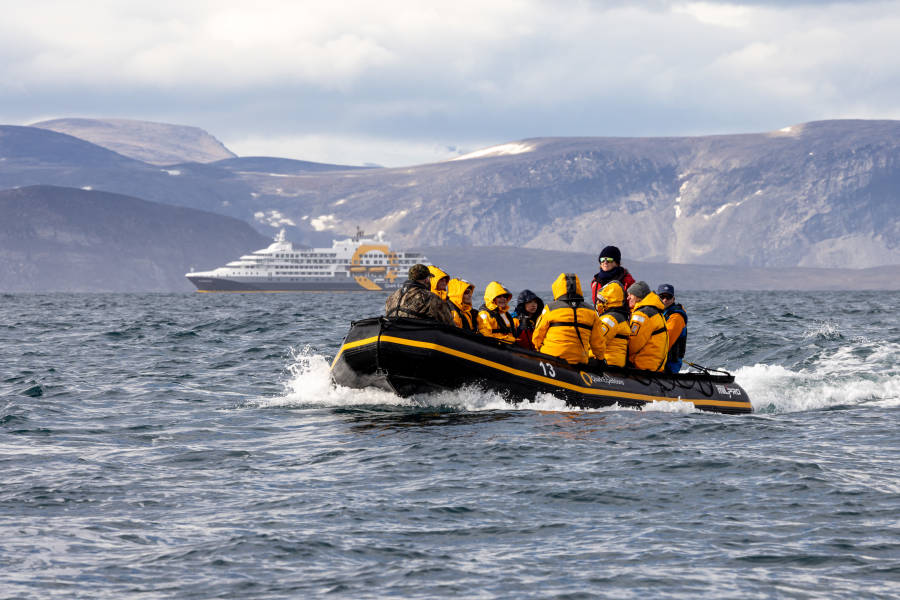
Cruise in a Zodiac to get up close to glaciers, fjords, icebergs and more
Select Your Season & Itinerary
Select Season
Reykjavík, Iceland
17 Days · Ultramarine
Starts from $23,071 USD
Reykjavík, Iceland
17 Days · Ultramarine
Starts from $23,071 USD
Select Itinerary
Reykjavík, Iceland
17 Days · Ultramarine
Starts from $23,071 USD
Reykjavík, Iceland
17 Days · Ultramarine
Starts from $23,071 USD
17 Days – From Reykjavík, Iceland on Ultramarine (Season 2027)
Day By Day & Map
-
Day 1
Arrive in Reykjavik, Iceland
Arrive in the Icelandic capital and make your way to your designated hotel, which is included in your Charter Flight & Hotel Package. You will have the day to explore this fascinating city known for its stunning modern architecture, contemporary music and Viking history.
-
Day 2
Flight to Nuuk and Embarkation
In the morning after breakfast, guests and their luggage will be transferred to the airport for their charter flight to the Greenlandic capital of Nuuk. This picturesque city of 17,000 is situated on a fjord with the Sermitsiaq mountain in the background. Depending on the final timing of our charter flights, we may have an opportunity to explore Nuuk upon arrival in Greenland, or may transfer directly to your ship.
-
Day 3
Crossing the Davis Strait
Upon leaving Nuuk, we set sail across the Davis Strait to the east coast of Baffin Island. Join us on the outer deck as we cast off, keeping an eye out for seabirds and marine life gliding alongside the ship. Have your binoculars at hand to scan for seabirds, including great black-backed gulls and black guillemots. There are many ways to spend your time aboard Ultramarine. Visit Tundra Spa and other onboard amenities, or attend educational presentations led by our polar experts—glaciologists, historians and other specialists. You’ll learn about northern communities and ways of life in preparation for our first community visit. There will also be mandatory briefings with our expedition team on how we’ll safely explore this remote and compelling Arctic region. You will also have time to relax in the Observation Lounge while spotting drifting ice, seabirds and other wildlife. From the outer decks, take in the wideopen panoramas of western Greenland while we cross the Arctic Circle at 66°33′ North.
-
Day 4 & 5
Exploring the East Shore of Baffin Island
We’re excited to be heading to Qikiqtarjuaq, fondly called Qik, a small Inuit hamlet located north of the Arctic Circle on Broughton Island, off the east coast of Baffin Island. Known as the iceberg capital of Nunavut, Qikiqtarjuaq sits at the northern entrance to the mountainous Auyuittuq National Park, which is home to narwhals, bowhead and orca whales, polar bears, seals and migratory birds. Community visits, arranged in collaboration with our local partners, enable guests to learn about on-the-ground culture, and purchase art and traditional handicrafts, such as parkas, boots and local art when available. As icebergs travel down the Davis Strait, many are naturally trapped at Qikiqtarjuaq. The surrounding waters are also home to ringed and harp seals, often surfacing between floes. A hike up to the hilltop offers sweeping views of the community and its coastal setting. You’ll also see inukshuks—carefully placed stone figures or cairns that have served as navigational guides and markers of important places, but also as expressions of spirit, memory, and connection to the land. Cruising further north along the mountainous east shore of Baffin Island, we’ll approach Isabella Bay, an important summer and fall feeding area for the largest concentration of bowhead whales in Canada. Bowheads are a truly remarkable Arctic leviathan, with research suggesting they can live more than 200 years—making them the longest-lived mammal on Earth. Isabella Bay is a marvel, its dramatic landscapes and wideopen horizons best experienced from the outer decks of Ultramarine. We’ll aim to launch the Zodiacs and explore the bay, binoculars at the ready. For our intrepid paddlers, our sea kayak and paddling programs may also be available here.
-
Day 6
Baffin Island and Heli Flightseeing
This is an especially exciting day as you become one of the very few travelers to explore the majestic Icy Arm Fjord, which cuts almost 80 kilometers deep into northern Bafffin Island. Accessible only by water in summer months when the sea ice recedes, this rarely-visited fjord is known for its unrivalled landscape of towering cliffs and stunning glaciers, and is valued as much for its sheer remoteness as it is for its singularly pristine environment. Icy Arm Fjord epitomizes the raw beauty of unspoiled Arctic wilderness. We may observe polar bears, Arctic foxes, seals, walruses, as well as guillemots, kittiwakes and other Arctic-dwelling birds. Excitement grows on Day 6 as Ultramarine’s two twin-engine helicopters are made ready for flightseeing excursions. Prepare to view the remote Arctic terrain from the seat of a helicopter—camera at the ready. It’s also an excellent day for Zodiac cruises, which offer guests a sea-level intimacy with the surrounding lands and waters. If weather conditions prevent heli-flightseeing on this day, we will aim for another potential flight seeing opportunity at a different location.
-
Day 7 to 9
The Northwest Passage
At the top of Baffin Island sits TallurutiupImanga (also known as Lancaster Sound), a true Arctic oasis. Known by the Inuit and their predecessors for thousands of years, this channel and the surrounding lands are extremely rich in wildlife and history, both indigenous and European. The surrounding area affords several hiking opportunities. At Dundas Harbour, on Devon Island, you’ll visit an abandoned beachside outpost of the Royal Canadian Mounted Police. At Croker Bay, we’ll plan to cruise close enough to appreciate the splendor of glacial textures and calving ice, while always keeping a safe distance. Walrus frequent the waters here, so be sure to have your camera handy. Next we’ll head to the western end of Devon Island, on the north side of Tallurutiup-Imanga, and go ashore at windswept Beechey Island, which is home to Beechey Island National Historic Sites. Maintained by Parks Canada, these sites tell the story—or at least the part that’s still not shrouded in mystery—of Sir John Franklin’s much chronicled 1845- 46 expedition to explore the Northwest Passage. The island is small, only 2.5 kilometers (1.5 miles) at its widest point, but its shores are steep, and rise to a flat plateau 244 meters (800 feet) high. That’s where Franklin and his crew of 128 men spent the winter after embarking from England on two ships, HMS Erebus and HMS Terror. The ill-fated 1845-46 expedition—to navigate and chart the Northwest Passage—ended in tragedy for all 129 men and their two vessels. What happened to Franklin and his crew is the stuff of legend, and the focus for several search expeditions over the years, which discovered bodies, personal belongings of crew members, and handwritten notes that suggested starvation, deaths from hypothermia, scurvy, and lead poisoning from the tinned food supplies. Accounts by Inuit suggest the crew split up into small groups and subsequently perished. What is known for certain is that no one survived. The graves of three officers from HMS Erebus— John Hartnell, William Braine, and John Torrington— were discovered in 1851. You will have an opportunity to visit their graves, and honor the memory of the entire Franklin crew who braved daunting challenges to explore the Northwest Passage. Franklin’s story is an integral part of the history of Arctic exploration. The wrecks of Erebus and Terror were discovered in 2014 and 2016, respectively. We also hope to explore the shores of the uninhabited Prince Leopold Island, known primarily as a significant Migratory Bird Sanctuary and an Important Bird Area, where we aim to launch the Zodiacs for an immersive cruise at the foot of the bird cliffs. The island is renowned for its steep cliffs that host hundreds of thousands of nesting seabirds, including thick-billed murres, northern fulmars, and black guillemots during the summer months. Port Leopold, an abandoned Hudson’s Bay Company trading post dating back to 1937, sits on the northeast tip of nearby Somerset Island. It’s the closest landmark to Prince Leopold Island, situated about 13 kilometers (8.1 miles) to the southwest. This site is closely tied to the history of Arctic exploration, including the search for the Franklin Expedition. Visitors can still see the remains of the original trading post, including the old store and the manager’s home.
-
Day 10
Cruising the East Coast of Baffin Island
As we position from Lancaster Sound down along the east coast of Baffin Island, spend time out on deck to soak in the scenery: expansive landscapes, jagged spires, and bird life. Today is also ideal to enjoy the onboard amenities—such as Tundra Spa—and deepening your knowledge through presentations by our polar experts.
-
Day 11
Sam Ford Fjord
Well inside the Arctic Circle, Sam Ford Fjord is a standout Arctic adventure destination on Baffin Island’s northeast coast, and one of the world’s most spectacular big-wall playgrounds. A traditional Inuit hunting area, the fjord is a study in contrasts: sheer granite cliffs seem to rise straight up from the ocean below, reaching up to 457 meters (1,500 feet) above sea level. If weather conditions permit, this region offers fabulous Zodiac cruising, sea kayaking and paddling as well as opportunities to go ashore. With a bit of luck, we may see Arctic fox onshore, and we’ll keep our eyes peeled for polar bears during our off-shore excursions. Cruising the fjord in a Zodiac is a striking reminder of just how small we are. Winding along a 110- kilometer (68-mile) path, Sam Ford Fjord narrows to less than 3 kilometers (2 miles) wide as it meanders farther inland.
-
Day 12
At Sea: Crossing the Davis Strait
As Ultramarine continues eastward across the Davis Strait, you’ll have a choice of presentations by our polar experts, who will share insights that bring greater meaning to the experiences so far and set the stage for our time in West Greenland.
-
Day 13 to 15
Exploring West Greenland
Prepare yourself for an awe-inspiring experience. Ilulissat, located in Disko Bay, is home to the UNESCO World Heritage Site of Ilulissat Icefjord, which is the thoroughfare for countless icebergs calved from one of the world’s fastest-moving glaciers, Sermeq Kujalleq. Locals have constructed a boardwalk leading to an elevated overlook, where you can view bergs of all sizes spread out before you. From this vantage point, it feels as though you’re standing where the town ends and the wilderness begins. Visitors say they’ve felt humbled by the sweeping vista of ice. You will also notice the Arctic cotton grass and summer wildflowers thriving in the long daylight hours. The inner harbor is a rare sight: icebergs drifting among fishing boats and skiffs. The town itself is well worth exploring, and has become one of Greenland’s top destinations. Recent years have brought growth— colorful homes now sit beside new restaurants, boutique hotels and small businesses. History buffs will be excited to know Ilulissat is the birthplace of Arctic explorer Knud Rasmussen, who traveled by dog sled from Greenland to Alaska (and briefly Siberia) during the Fifth Thule Expedition (1921–1924). Fluent in Kalaallisut, he learned from and documented the Circumpolar Inuit he met—making it one of the Arctic’s greatest expeditions. It was in these dramatic landscapes around Ilulissat that Rasmussen’s passion for exploration took root. As we approach town, watch out for whales, which frequent the iceberg-laden waters. Pride of place for our seasoned expedition team is Eternity Fjord, which is home to the tallest mountains in all of West Greenland. This a favorite spot for us to launch the Zodiacs to explore in-depth— where larger vessels can’t navigate. There are few settlements along this lengthy fjord, but you will quickly appreciate nature in its rawest form as you hike among the towering mountains, and photograph the colorful tundra and other dramatic landscapes. Another fascinating highlight is Maniitsoq, often called the “Venice of Greenland,” as it’s situated in an archipelago intersected by natural canals. Soaring, snow-capped mountains surround this small, rocky town, whose name means “the uneven place.” Playful humpback whales spend the summer in the surrounding waters, so we’ll keep our eyes peeled as we transit ashore by Zodiac.
-
Day 16
Kangerlussuaq and disembarkation
Today we’ll explore 50 kilometers (31 miles) above the Arctic Circle. Our destination is Kangerlussuaq, which is Greenlandic for “the long fjord.” At the end of this 180-kilometer (112 mile) fjord is a settlement bearing the same name. Fishing boats based in the town of Kangerlussuaq sail the full length of the fjord to access the ocean. The town is known for its natural beauty—and for previously being the home of the largest airport in Greenland. You will be ferried from ship to shore on one last Zodiac ride, then transferred to the airport where you will board your charter flight to Iceland’s Keflavik International Airport, approximately 45 minutes from Reykjavik. Upon arrival at the airport, you will be transferred to your included hotel for the night, which is part of the Charter Flight & Hotel package.
-
Day 17
Departing Iceland and onward flight
After breakfast in your included hotel in Reykjavik, you can transfer independently to the Keflavik International Airport for your onward journey or explore Iceland as prearranged.

What’s Included & Excluded
- An official Quark Expeditions® parka to keep
- Leadership throughout your voyage by our experienced Expedition Leaders, including shore landings and other activities
- All Zodiac transfers and cruising as per the daily program • All shore landings as per the daily program
- Shipboard accommodation with daily housekeeping • All meals, snacks, soft drinks and juices on board throughout your voyage (Please inform us of any dietary requirements as far in advance as possible.)
- Complimentary select beer, wines and cocktails during bar service hours and dinner
- A photographic journal documenting the expedition
- A pair of waterproof expedition boots on loan for landings and Zodiac cruising excursions
- Hair dryer and bathrobes in every cabin
- Complimentary Wi-Fi service on one device permitting basic Internet browsing, email, posting on social media and voice applications. (Premium packages are available for more data-intensive applications.) Note: Internet access in the polar regions is subject to geography, climate, and other factors beyond our control.
- All miscellaneous service taxes and port charges throughout the program
- All luggage handling aboard the ship • Greenland voyages cruise passenger tax
- Charter Flight & Hotel Package*
- International airfare
- Arrival transfers in Reykjavik
- Passport and visa expenses
- Government arrival and departure taxes not mentioned above
- Baggage, cancellation, interruption and medical travel insurance—strongly recommended
- Excess-baggage fees on international and domestic flights
- Mandatory waterproof pants for Zodiac cruising, or any other gear not mentioned
- Laundry, bar, spa and other personal charges unless specified
- Phone charges may vary by location
- Voluntary gratuity at the end of the voyage for shipboard staff and crew
- Additional overnight accommodation
- Adventure Options not listed in Included Activities
Charter Flight and Hotel Package
Package valued at $1,995 USD is included in the expedition
- One night’s pre-expedition hotel accommodation in Reykjavik (breakfast included)
- Charter flight from Reykjavik to Nuuk
- Group transfer from the Nuuk airport to the ship on embarkation day
- Group transfer from the ship to the Kangerlussuaq airport on disembarkation day
- Charter flight from Kangerlussuaq to Reykjavik
- One night’s post-expedition airport hotel accommodation near Keflavik airport (breakfast included)
17 Days – From Reykjavík, Iceland on Ultramarine (Season 2027)
17 Days – From Reykjavík, Iceland on Ultramarine (Season 2027)
-
Day 1
Arrive in Reykjavik, Iceland
Arrive in the Icelandic capital and make your way to your designated hotel, which is included in your Charter Flight & Hotel Package. You will have the day to explore this fascinating city known for its stunning modern architecture, contemporary music and Viking history.
-
Day 2
Flight to Nuuk and Embarkation
In the morning after breakfast, guests and their luggage will be transferred to the airport for their charter flight to the Greenlandic capital of Nuuk. This picturesque city of 17,000 is situated on a fjord with the Sermitsiaq mountain in the background. Depending on the final timing of our charter flights, we may have an opportunity to explore Nuuk upon arrival in Greenland, or may transfer directly to your ship.
-
Day 3
Crossing the Davis Strait
Upon leaving Nuuk, we set sail across the Davis Strait to the east coast of Baffin Island. Join us on the outer deck as we cast off, keeping an eye out for seabirds and marine life gliding alongside the ship. Have your binoculars at hand to scan for seabirds, including great black-backed gulls and black guillemots. There are many ways to spend your time aboard Ultramarine. Visit Tundra Spa and other onboard amenities, or attend educational presentations led by our polar experts—glaciologists, historians and other specialists. You’ll learn about northern communities and ways of life in preparation for our first community visit. There will also be mandatory briefings with our expedition team on how we’ll safely explore this remote and compelling Arctic region. You will also have time to relax in the Observation Lounge while spotting drifting ice, seabirds and other wildlife. From the outer decks, take in the wideopen panoramas of western Greenland while we cross the Arctic Circle at 66°33′ North.
-
Day 4 & 5
Exploring the East Shore of Baffin Island
We’re excited to be heading to Qikiqtarjuaq, fondly called Qik, a small Inuit hamlet located north of the Arctic Circle on Broughton Island, off the east coast of Baffin Island. Known as the iceberg capital of Nunavut, Qikiqtarjuaq sits at the northern entrance to the mountainous Auyuittuq National Park, which is home to narwhals, bowhead and orca whales, polar bears, seals and migratory birds. Community visits, arranged in collaboration with our local partners, enable guests to learn about on-the-ground culture, and purchase art and traditional handicrafts, such as parkas, boots and local art when available. As icebergs travel down the Davis Strait, many are naturally trapped at Qikiqtarjuaq. The surrounding waters are also home to ringed and harp seals, often surfacing between floes. A hike up to the hilltop offers sweeping views of the community and its coastal setting. You’ll also see inukshuks—carefully placed stone figures or cairns that have served as navigational guides and markers of important places, but also as expressions of spirit, memory, and connection to the land. Cruising further north along the mountainous east shore of Baffin Island, we’ll approach Isabella Bay, an important summer and fall feeding area for the largest concentration of bowhead whales in Canada. Bowheads are a truly remarkable Arctic leviathan, with research suggesting they can live more than 200 years—making them the longest-lived mammal on Earth. Isabella Bay is a marvel, its dramatic landscapes and wideopen horizons best experienced from the outer decks of Ultramarine. We’ll aim to launch the Zodiacs and explore the bay, binoculars at the ready. For our intrepid paddlers, our sea kayak and paddling programs may also be available here.
-
Day 6
Baffin Island and Heli Flightseeing
This is an especially exciting day as you become one of the very few travelers to explore the majestic Icy Arm Fjord, which cuts almost 80 kilometers deep into northern Bafffin Island. Accessible only by water in summer months when the sea ice recedes, this rarely-visited fjord is known for its unrivalled landscape of towering cliffs and stunning glaciers, and is valued as much for its sheer remoteness as it is for its singularly pristine environment. Icy Arm Fjord epitomizes the raw beauty of unspoiled Arctic wilderness. We may observe polar bears, Arctic foxes, seals, walruses, as well as guillemots, kittiwakes and other Arctic-dwelling birds. Excitement grows on Day 6 as Ultramarine’s two twin-engine helicopters are made ready for flightseeing excursions. Prepare to view the remote Arctic terrain from the seat of a helicopter—camera at the ready. It’s also an excellent day for Zodiac cruises, which offer guests a sea-level intimacy with the surrounding lands and waters. If weather conditions prevent heli-flightseeing on this day, we will aim for another potential flight seeing opportunity at a different location.
-
Day 7 to 9
The Northwest Passage
At the top of Baffin Island sits TallurutiupImanga (also known as Lancaster Sound), a true Arctic oasis. Known by the Inuit and their predecessors for thousands of years, this channel and the surrounding lands are extremely rich in wildlife and history, both indigenous and European. The surrounding area affords several hiking opportunities. At Dundas Harbour, on Devon Island, you’ll visit an abandoned beachside outpost of the Royal Canadian Mounted Police. At Croker Bay, we’ll plan to cruise close enough to appreciate the splendor of glacial textures and calving ice, while always keeping a safe distance. Walrus frequent the waters here, so be sure to have your camera handy. Next we’ll head to the western end of Devon Island, on the north side of Tallurutiup-Imanga, and go ashore at windswept Beechey Island, which is home to Beechey Island National Historic Sites. Maintained by Parks Canada, these sites tell the story—or at least the part that’s still not shrouded in mystery—of Sir John Franklin’s much chronicled 1845- 46 expedition to explore the Northwest Passage. The island is small, only 2.5 kilometers (1.5 miles) at its widest point, but its shores are steep, and rise to a flat plateau 244 meters (800 feet) high. That’s where Franklin and his crew of 128 men spent the winter after embarking from England on two ships, HMS Erebus and HMS Terror. The ill-fated 1845-46 expedition—to navigate and chart the Northwest Passage—ended in tragedy for all 129 men and their two vessels. What happened to Franklin and his crew is the stuff of legend, and the focus for several search expeditions over the years, which discovered bodies, personal belongings of crew members, and handwritten notes that suggested starvation, deaths from hypothermia, scurvy, and lead poisoning from the tinned food supplies. Accounts by Inuit suggest the crew split up into small groups and subsequently perished. What is known for certain is that no one survived. The graves of three officers from HMS Erebus— John Hartnell, William Braine, and John Torrington— were discovered in 1851. You will have an opportunity to visit their graves, and honor the memory of the entire Franklin crew who braved daunting challenges to explore the Northwest Passage. Franklin’s story is an integral part of the history of Arctic exploration. The wrecks of Erebus and Terror were discovered in 2014 and 2016, respectively. We also hope to explore the shores of the uninhabited Prince Leopold Island, known primarily as a significant Migratory Bird Sanctuary and an Important Bird Area, where we aim to launch the Zodiacs for an immersive cruise at the foot of the bird cliffs. The island is renowned for its steep cliffs that host hundreds of thousands of nesting seabirds, including thick-billed murres, northern fulmars, and black guillemots during the summer months. Port Leopold, an abandoned Hudson’s Bay Company trading post dating back to 1937, sits on the northeast tip of nearby Somerset Island. It’s the closest landmark to Prince Leopold Island, situated about 13 kilometers (8.1 miles) to the southwest. This site is closely tied to the history of Arctic exploration, including the search for the Franklin Expedition. Visitors can still see the remains of the original trading post, including the old store and the manager’s home.
-
Day 10
Cruising the East Coast of Baffin Island
As we position from Lancaster Sound down along the east coast of Baffin Island, spend time out on deck to soak in the scenery: expansive landscapes, jagged spires, and bird life. Today is also ideal to enjoy the onboard amenities—such as Tundra Spa—and deepening your knowledge through presentations by our polar experts.
-
Day 11
Sam Ford Fjord
Well inside the Arctic Circle, Sam Ford Fjord is a standout Arctic adventure destination on Baffin Island’s northeast coast, and one of the world’s most spectacular big-wall playgrounds. A traditional Inuit hunting area, the fjord is a study in contrasts: sheer granite cliffs seem to rise straight up from the ocean below, reaching up to 457 meters (1,500 feet) above sea level. If weather conditions permit, this region offers fabulous Zodiac cruising, sea kayaking and paddling as well as opportunities to go ashore. With a bit of luck, we may see Arctic fox onshore, and we’ll keep our eyes peeled for polar bears during our off-shore excursions. Cruising the fjord in a Zodiac is a striking reminder of just how small we are. Winding along a 110- kilometer (68-mile) path, Sam Ford Fjord narrows to less than 3 kilometers (2 miles) wide as it meanders farther inland.
-
Day 12
At Sea: Crossing the Davis Strait
As Ultramarine continues eastward across the Davis Strait, you’ll have a choice of presentations by our polar experts, who will share insights that bring greater meaning to the experiences so far and set the stage for our time in West Greenland.
-
Day 13 to 15
Exploring West Greenland
Prepare yourself for an awe-inspiring experience. Ilulissat, located in Disko Bay, is home to the UNESCO World Heritage Site of Ilulissat Icefjord, which is the thoroughfare for countless icebergs calved from one of the world’s fastest-moving glaciers, Sermeq Kujalleq. Locals have constructed a boardwalk leading to an elevated overlook, where you can view bergs of all sizes spread out before you. From this vantage point, it feels as though you’re standing where the town ends and the wilderness begins. Visitors say they’ve felt humbled by the sweeping vista of ice. You will also notice the Arctic cotton grass and summer wildflowers thriving in the long daylight hours. The inner harbor is a rare sight: icebergs drifting among fishing boats and skiffs. The town itself is well worth exploring, and has become one of Greenland’s top destinations. Recent years have brought growth— colorful homes now sit beside new restaurants, boutique hotels and small businesses. History buffs will be excited to know Ilulissat is the birthplace of Arctic explorer Knud Rasmussen, who traveled by dog sled from Greenland to Alaska (and briefly Siberia) during the Fifth Thule Expedition (1921–1924). Fluent in Kalaallisut, he learned from and documented the Circumpolar Inuit he met—making it one of the Arctic’s greatest expeditions. It was in these dramatic landscapes around Ilulissat that Rasmussen’s passion for exploration took root. As we approach town, watch out for whales, which frequent the iceberg-laden waters. Pride of place for our seasoned expedition team is Eternity Fjord, which is home to the tallest mountains in all of West Greenland. This a favorite spot for us to launch the Zodiacs to explore in-depth— where larger vessels can’t navigate. There are few settlements along this lengthy fjord, but you will quickly appreciate nature in its rawest form as you hike among the towering mountains, and photograph the colorful tundra and other dramatic landscapes. Another fascinating highlight is Maniitsoq, often called the “Venice of Greenland,” as it’s situated in an archipelago intersected by natural canals. Soaring, snow-capped mountains surround this small, rocky town, whose name means “the uneven place.” Playful humpback whales spend the summer in the surrounding waters, so we’ll keep our eyes peeled as we transit ashore by Zodiac.
-
Day 16
Kangerlussuaq and disembarkation
Today we’ll explore 50 kilometers (31 miles) above the Arctic Circle. Our destination is Kangerlussuaq, which is Greenlandic for “the long fjord.” At the end of this 180-kilometer (112 mile) fjord is a settlement bearing the same name. Fishing boats based in the town of Kangerlussuaq sail the full length of the fjord to access the ocean. The town is known for its natural beauty—and for previously being the home of the largest airport in Greenland. You will be ferried from ship to shore on one last Zodiac ride, then transferred to the airport where you will board your charter flight to Iceland’s Keflavik International Airport, approximately 45 minutes from Reykjavik. Upon arrival at the airport, you will be transferred to your included hotel for the night, which is part of the Charter Flight & Hotel package.
-
Day 17
Departing Iceland and onward flight
After breakfast in your included hotel in Reykjavik, you can transfer independently to the Keflavik International Airport for your onward journey or explore Iceland as prearranged.
17 Days – From Reykjavík, Iceland on Ultramarine (Season 2027)
Day By Day & Map
-
Day 1
Arrive in Reykjavik, Iceland
Arrive in the Icelandic capital and make your way to your designated hotel, which is included in your Charter Flight & Hotel Package. You will have the day to explore this fascinating city known for its stunning modern architecture, contemporary music and Viking history.
-
Day 2
Flight to Kangerlussuaq and embarkation
After an early breakfast at the hotel, guests will transfer together to the airport and board our private charter f light to Kangerlussuaq, Greenland. This is a very small town that for decades served as Greenland’s primary airport. Upon arrival, you will be transferred to a very small harbor, where your Expedition Team will provide Zodiac shuttles to your awaiting ship. After a late-afternoon embarkation, we will set sail for the stunning Arctic wilderness.
-
Day 3
Crossing the Davis Strait
Upon leaving Kangerlussuaq, we set sail across the Davis Strait to the east coast of Baffin Island. Join us on the outer deck as we cast off, keeping an eye out for seabirds and marine life gliding alongside the ship. Have your binoculars at hand to scan for seabirds, including great black-backed gulls and black guillemots. There are many ways to spend your time aboard Ultramarine. Visit Tundra Spa and other onboard amenities, or attend educational presentations led by our polar experts—glaciologists, historians and other specialists. You’ll learn about northern communities and ways of life in preparation for our first community visit. There will also be mandatory briefings with our expedition team on how we’ll safely explore this remote and compelling Arctic region. You will also have time to relax in the Observation Lounge while spotting drifting ice, seabirds and other wildlife. From the outer decks, take in the wideopen panoramas of western Greenland while we cross the Arctic Circle at 66°33′ North.
-
Day 4 & 5
Exploring the East Shore of Baffin Island
We’re excited to be heading to Qikiqtarjuaq, fondly called Qik, a small Inuit hamlet located north of the Arctic Circle on Broughton Island, off the east coast of Baffin Island. Known as the iceberg capital of Nunavut, Qikiqtarjuaq sits at the northern entrance to the mountainous Auyuittuq National Park, which is home to narwhals, bowhead and orca whales, polar bears, seals and migratory birds. Community visits, arranged in collaboration with our local partners, enable guests to learn about on-the-ground culture, and purchase art and traditional handicrafts, such as parkas, boots and local art when available. As icebergs travel down the Davis Strait, many are naturally trapped at Qikiqtarjuaq. The surrounding waters are also home to ringed and harp seals, often surfacing between floes. A hike up to the hilltop offers sweeping views of the community and its coastal setting. You’ll also see inukshuks—carefully placed stone figures or cairns that have served as navigational guides and markers of important places, but also as expressions of spirit, memory, and connection to the land. Cruising further north along the mountainous east shore of Baffin Island, we’ll approach Isabella Bay, an important summer and fall feeding area for the largest concentration of bowhead whales in Canada. Bowheads are a truly remarkable Arctic leviathan, with research suggesting they can live more than 200 years—making them the longest-lived mammal on Earth. Isabella Bay is a marvel, its dramatic landscapes and wideopen horizons best experienced from the outer decks of Ultramarine. We’ll aim to launch the Zodiacs and explore the bay, binoculars at the ready. For our intrepid paddlers, our sea kayak and paddling programs may also be available here.
-
Day 6
Baffin Island and Heli Flightseeing
This is an especially exciting day as you become one of the very few travelers to explore the majestic Icy Arm Fjord, which cuts almost 80 kilometers deep into northern Bafffin Island. Accessible only by water in summer months when the sea ice recedes, this rarely-visited fjord is known for its unrivalled landscape of towering cliffs and stunning glaciers, and is valued as much for its sheer remoteness as it is for its singularly pristine environment. Icy Arm Fjord epitomizes the raw beauty of unspoiled Arctic wilderness. We may observe polar bears, Arctic foxes, seals, walruses, as well as guillemots, kittiwakes and other Arctic-dwelling birds. Excitement grows on Day 6 as Ultramarine’s two twin-engine helicopters are made ready for flightseeing excursions. Prepare to view the remote Arctic terrain from the seat of a helicopter—camera at the ready. It’s also an excellent day for Zodiac cruises, which offer guests a sea-level intimacy with the the surrounding lands and waters. If weather conditions prevent heli flightseeing on this day, we will aim for another potential flight seeing opportunity at a different location.
-
Day 7 to 9
The Northwest Passage
At the top of Baffin Island sits TallurutiupImanga (also known as Lancaster Sound), a true Arctic oasis. Known by the Inuit and their predecessors for thousands of years, this channel and the surrounding lands are extremely rich in wildlife and history, both indigenous and European. The surrounding area affords several hiking opportunities. At Dundas Harbour, on Devon Island, you’ll visit an abandoned beachside outpost of the Royal Canadian Mounted Police. At Croker Bay, we’ll plan to cruise close enough to appreciate the splendor of glacial textures and calving ice, while always keeping a safe distance. Walrus frequent the waters here, so be sure to have your camera handy. Next we’ll head to the western end of Devon Island, on the north side of Tallurutiup-Imanga, and go ashore at windswept Beechey Island, which is home to Beechey Island National Historic Sites. Maintained by Parks Canada, these sites tell the story—or at least the part that’s still not shrouded in mystery—of Sir John Franklin’s much chronicled 1845- 46 expedition to explore the Northwest Passage. The island is small, only 2.5 kilometers (1.5 miles) at its widest point, but its shores are steep, and rise to a flat plateau 244 meters (800 feet) high. That’s where Franklin and his crew of 128 men spent the winter after embarking from England on two ships, HMS Erebus and HMS Terror. The ill-fated 1845-46 expedition—to navigate and chart the Northwest Passage—ended in tragedy for all 129 men and their two vessels. What happened to Franklin and his crew is the stuff of legend, and the focus for several search expeditions over the years, which discovered bodies, personal belongings of crew members, and handwritten notes that suggested starvation, deaths from hypothermia, scurvy, and lead poisoning from the tinned food supplies. Accounts by Inuit suggest the crew split up into small groups and subsequently perished. What is known for certain is that no one survived. The graves of three officers from HMS Erebus— John Hartnell, William Braine, and John Torrington— were discovered in 1851. You will have an opportunity to visit their graves, and honor the memory of the entire Franklin crew who braved daunting challenges to explore the Northwest Passage. Franklin’s story is an integral part of the history of Arctic exploration. The wrecks of Erebus and Terror were discovered in 2014 and 2016, respectively. We also hope to explore the shores of the uninhabited Prince Leopold Island, known primarily as a significant Migratory Bird Sanctuary and an Important Bird Area, where we aim to launch the Zodiacs for an immersive cruise at the foot of the bird cliffs. The island is renowned for its steep cliffs that host hundreds of thousands of nesting seabirds, including thick-billed murres, northern fulmars, and black guillemots during the summer months. Port Leopold, an abandoned Hudson’s Bay Company trading post dating back to 1937, sits on the northeast tip of nearby Somerset Island. It’s the closest landmark to Prince Leopold Island, situated about 13 kilometers (8.1 miles) to the southwest. This site is closely tied to the history of Arctic exploration, including the search for the Franklin Expedition. Visitors can still see the remains of the original trading post, including the old store and the manager’s home.
-
Day 10
Cruising the East Coast of Baffin Island
As we position from Lancaster Sound down along the east coast of Baffin Island, spend time out on deck to soak in the scenery: expansive landscapes, jagged spires, and bird life. Today is also ideal to enjoy the onboard amenities—such as Tundra Spa—and deepening your knowledge through presentations by our polar experts.
-
Day 11
Sam Ford Fjord
Well inside the Arctic Circle, Sam Ford Fjord is a standout Arctic adventure destination on Baffin Island’s northeast coast, and one of the world’s most spectacular big-wall playgrounds. A traditional Inuit hunting area, the fjord is a study in contrasts: sheer granite cliffs seem to rise straight up from the ocean below, reaching up to 457 meters (1,500 feet) above sea level. If weather conditions permit, this region offers fabulous Zodiac cruising, sea kayaking and paddling as well as opportunities to go ashore. With a bit of luck, we may see Arctic fox onshore, and we’ll keep our eyes peeled for polar bears during our off-shore excursions. Cruising the fjord in a Zodiac is a striking reminder of just how small we are. Winding along a 110- kilometer (68-mile) path, Sam Ford Fjord narrows to less than 3 kilometers (2 miles) wide as it meanders farther inland.
-
Day 12
At Sea: Crossing the Davis Strait
As Ultramarine continues eastward across the Davis Strait, you’ll have a choice of presentations by our polar experts, who will share insights that bring greater meaning to the experiences so far and set the stage for our time in West Greenland.
-
Day 13 to 15
Exploring West Greenland
Prepare yourself for an awe-inspiring experience. Ilulissat, located in Disko Bay, is home to the UNESCO World Heritage Site of Ilulissat Icefjord, which is the thoroughfare for countless icebergs calved from one of the world’s fastest-moving glaciers, Sermeq Kujalleq. Locals have constructed a boardwalk leading to an elevated overlook, where you can view bergs of all sizes spread out before you. From this vantage point, it feels as though you’re standing where the town ends and the wilderness begins. Visitors say they’ve felt humbled by the sweeping vista of ice. You will also notice the Arctic cotton grass and summer wildflowers thriving in the long daylight hours. The inner harbor is a rare sight: icebergs drifting among fishing boats and skiffs. The town itself is well worth exploring, and has become one of Greenland’s top destinations. Recent years have brought growth— colorful homes now sit beside new restaurants, boutique hotels and small businesses. History buffs will be excited to know Ilulissat is the birthplace of Arctic explorer Knud Rasmussen, who traveled by dog sled from Greenland to Alaska (and briefly Siberia) during the Fifth Thule Expedition (1921–1924). Fluent in Kalaallisut, he learned from and documented the Circumpolar Inuit he met—making it one of the Arctic’s greatest expeditions. It was in these dramatic landscapes around Ilulissat that Rasmussen’s passion for exploration took root. As we approach town, watch out for whales, which frequent the iceberg-laden waters. Pride of place for our seasoned expedition team is Eternity Fjord, which is home to the tallest mountains in all of West Greenland. This a favorite spot for us to launch the Zodiacs to explore in-depth— where larger vessels can’t navigate. There are few settlements along this lengthy fjord, but you will quickly appreciate nature in its rawest form as you hike among the towering mountains, and photograph the colorful tundra and other dramatic landscapes. Another fascinating highlight is Maniitsoq, often called the “Venice of Greenland,” as it’s situated in an archipelago intersected by natural canals. Soaring, snow-capped mountains surround this small, rocky town, whose name means “the uneven place.” Playful humpback whales spend the summer in the surrounding waters, so we’ll keep our eyes peeled as we transit ashore by Zodiac.
-
Day 16
Kangerlussuaq and disembarkation
Today we’ll explore 50 kilometers (31 miles) above the Arctic Circle. Our destination is Kangerlussuaq, which is Greenlandic for “the long fjord.” At the end of this 180-kilometer (112 mile) fjord is a settlement bearing the same name. Fishing boats based in the town of Kangerlussuaq sail the full length of the fjord to access the ocean. The town is known for its natural beauty—and for previously being the home of the largest airport in Greenland. You will be ferried from ship to shore on one last Zodiac ride, then transferred to the airport where you will board your charter flight to Iceland’s Keflavik International Airport, approximately 45 minutes from Reykjavik. Upon arrival at the airport, you will be transferred to your included hotel for the night, which is part of the Charter Flight & Hotel package.
-
Day 17
Departing Iceland and onward flight
After breakfast in your included hotel in Reykjavik, you can transfer independently to the Keflavik International Airport for your onward journey or explore Iceland as prearranged.

What’s Included & Excluded
- An official Quark Expeditions® parka to keep
- Leadership throughout your voyage by our experienced Expedition Leaders, including shore landings and other activities
- All Zodiac transfers and cruising as per the daily program • All shore landings as per the daily program
- Shipboard accommodation with daily housekeeping
- All meals, snacks, soft drinks and juices on board throughout your voyage (Please inform us of any dietary requirements as far in advance as possible.)
- Complimentary select beer, wines and cocktails during bar service hours and dinner
- Complimentary coffee, tea and cocoa available around the clock
- Formal and informal presentations by our Expedition Team and guest speakers as scheduled
- A photographic journal documenting the expedition
- A pair of waterproof expedition boots on loan for landings and Zodiac cruising excursions
- Hair dryer and bathrobes in every cabin
- Complimentary Wi-Fi service on one device permitting basic Internet browsing, email, posting on social media and voice applications. (Premium packages are available for more data-intensive applications.) Note: Internet access in the polar regions is subject to geography, climate, and other factors beyond our control.
- All miscellaneous service taxes and port charges throughout the program •
- All luggage handling aboard the ship • Greenland voyages cruise passenger tax
- Charter Flight & Hotel Package*
- International airfare
- Arrival transfers in Reykjavik
- Passport and visa expenses
- Government arrival and departure taxes not mentioned above
- Baggage, cancellation, interruption and medical travel insurance—strongly recommended
- Excess-baggage fees on international and domestic flights
- Mandatory waterproof pants for Zodiac cruising, or any other gear not mentioned
- Laundry, bar, spa and other personal charges unless specified
- Phone charges may vary by location
- Voluntary gratuity at the end of the voyage for shipboard staff and crew
- Additional overnight accommodation
- Adventure Options not listed in Included Activities
Charter Flight and Hotel Package
Package valued at $1,995 USD is included in the expedition
- One night’s pre-expedition hotel accommodation in Reykjavik (breakfast included)
- Charter flight from Reykjavik to Kangerlussuaq
- Group transfers between Kangerlussuaq airport and the ship
- Charter flight from Kangerlussuaq to Reykjavik
- One night’s post-expedition airport hotel accommodation near Keflavik airport (breakfast included)
17 Days – From Reykjavík, Iceland on Ultramarine (Season 2027)
17 Days – From Reykjavík, Iceland on Ultramarine (Season 2027)
-
Day 1
Arrive in Reykjavik, Iceland
Arrive in the Icelandic capital and make your way to your designated hotel, which is included in your Charter Flight & Hotel Package. You will have the day to explore this fascinating city known for its stunning modern architecture, contemporary music and Viking history.
-
Day 2
Flight to Kangerlussuaq and embarkation
After an early breakfast at the hotel, guests will transfer together to the airport and board our private charter f light to Kangerlussuaq, Greenland. This is a very small town that for decades served as Greenland’s primary airport. Upon arrival, you will be transferred to a very small harbor, where your Expedition Team will provide Zodiac shuttles to your awaiting ship. After a late-afternoon embarkation, we will set sail for the stunning Arctic wilderness.
-
Day 3
Crossing the Davis Strait
Upon leaving Kangerlussuaq, we set sail across the Davis Strait to the east coast of Baffin Island. Join us on the outer deck as we cast off, keeping an eye out for seabirds and marine life gliding alongside the ship. Have your binoculars at hand to scan for seabirds, including great black-backed gulls and black guillemots. There are many ways to spend your time aboard Ultramarine. Visit Tundra Spa and other onboard amenities, or attend educational presentations led by our polar experts—glaciologists, historians and other specialists. You’ll learn about northern communities and ways of life in preparation for our first community visit. There will also be mandatory briefings with our expedition team on how we’ll safely explore this remote and compelling Arctic region. You will also have time to relax in the Observation Lounge while spotting drifting ice, seabirds and other wildlife. From the outer decks, take in the wideopen panoramas of western Greenland while we cross the Arctic Circle at 66°33′ North.
-
Day 4 & 5
Exploring the East Shore of Baffin Island
We’re excited to be heading to Qikiqtarjuaq, fondly called Qik, a small Inuit hamlet located north of the Arctic Circle on Broughton Island, off the east coast of Baffin Island. Known as the iceberg capital of Nunavut, Qikiqtarjuaq sits at the northern entrance to the mountainous Auyuittuq National Park, which is home to narwhals, bowhead and orca whales, polar bears, seals and migratory birds. Community visits, arranged in collaboration with our local partners, enable guests to learn about on-the-ground culture, and purchase art and traditional handicrafts, such as parkas, boots and local art when available. As icebergs travel down the Davis Strait, many are naturally trapped at Qikiqtarjuaq. The surrounding waters are also home to ringed and harp seals, often surfacing between floes. A hike up to the hilltop offers sweeping views of the community and its coastal setting. You’ll also see inukshuks—carefully placed stone figures or cairns that have served as navigational guides and markers of important places, but also as expressions of spirit, memory, and connection to the land. Cruising further north along the mountainous east shore of Baffin Island, we’ll approach Isabella Bay, an important summer and fall feeding area for the largest concentration of bowhead whales in Canada. Bowheads are a truly remarkable Arctic leviathan, with research suggesting they can live more than 200 years—making them the longest-lived mammal on Earth. Isabella Bay is a marvel, its dramatic landscapes and wideopen horizons best experienced from the outer decks of Ultramarine. We’ll aim to launch the Zodiacs and explore the bay, binoculars at the ready. For our intrepid paddlers, our sea kayak and paddling programs may also be available here.
-
Day 6
Baffin Island and Heli Flightseeing
This is an especially exciting day as you become one of the very few travelers to explore the majestic Icy Arm Fjord, which cuts almost 80 kilometers deep into northern Bafffin Island. Accessible only by water in summer months when the sea ice recedes, this rarely-visited fjord is known for its unrivalled landscape of towering cliffs and stunning glaciers, and is valued as much for its sheer remoteness as it is for its singularly pristine environment. Icy Arm Fjord epitomizes the raw beauty of unspoiled Arctic wilderness. We may observe polar bears, Arctic foxes, seals, walruses, as well as guillemots, kittiwakes and other Arctic-dwelling birds. Excitement grows on Day 6 as Ultramarine’s two twin-engine helicopters are made ready for flightseeing excursions. Prepare to view the remote Arctic terrain from the seat of a helicopter—camera at the ready. It’s also an excellent day for Zodiac cruises, which offer guests a sea-level intimacy with the the surrounding lands and waters. If weather conditions prevent heli flightseeing on this day, we will aim for another potential flight seeing opportunity at a different location.
-
Day 7 to 9
The Northwest Passage
At the top of Baffin Island sits TallurutiupImanga (also known as Lancaster Sound), a true Arctic oasis. Known by the Inuit and their predecessors for thousands of years, this channel and the surrounding lands are extremely rich in wildlife and history, both indigenous and European. The surrounding area affords several hiking opportunities. At Dundas Harbour, on Devon Island, you’ll visit an abandoned beachside outpost of the Royal Canadian Mounted Police. At Croker Bay, we’ll plan to cruise close enough to appreciate the splendor of glacial textures and calving ice, while always keeping a safe distance. Walrus frequent the waters here, so be sure to have your camera handy. Next we’ll head to the western end of Devon Island, on the north side of Tallurutiup-Imanga, and go ashore at windswept Beechey Island, which is home to Beechey Island National Historic Sites. Maintained by Parks Canada, these sites tell the story—or at least the part that’s still not shrouded in mystery—of Sir John Franklin’s much chronicled 1845- 46 expedition to explore the Northwest Passage. The island is small, only 2.5 kilometers (1.5 miles) at its widest point, but its shores are steep, and rise to a flat plateau 244 meters (800 feet) high. That’s where Franklin and his crew of 128 men spent the winter after embarking from England on two ships, HMS Erebus and HMS Terror. The ill-fated 1845-46 expedition—to navigate and chart the Northwest Passage—ended in tragedy for all 129 men and their two vessels. What happened to Franklin and his crew is the stuff of legend, and the focus for several search expeditions over the years, which discovered bodies, personal belongings of crew members, and handwritten notes that suggested starvation, deaths from hypothermia, scurvy, and lead poisoning from the tinned food supplies. Accounts by Inuit suggest the crew split up into small groups and subsequently perished. What is known for certain is that no one survived. The graves of three officers from HMS Erebus— John Hartnell, William Braine, and John Torrington— were discovered in 1851. You will have an opportunity to visit their graves, and honor the memory of the entire Franklin crew who braved daunting challenges to explore the Northwest Passage. Franklin’s story is an integral part of the history of Arctic exploration. The wrecks of Erebus and Terror were discovered in 2014 and 2016, respectively. We also hope to explore the shores of the uninhabited Prince Leopold Island, known primarily as a significant Migratory Bird Sanctuary and an Important Bird Area, where we aim to launch the Zodiacs for an immersive cruise at the foot of the bird cliffs. The island is renowned for its steep cliffs that host hundreds of thousands of nesting seabirds, including thick-billed murres, northern fulmars, and black guillemots during the summer months. Port Leopold, an abandoned Hudson’s Bay Company trading post dating back to 1937, sits on the northeast tip of nearby Somerset Island. It’s the closest landmark to Prince Leopold Island, situated about 13 kilometers (8.1 miles) to the southwest. This site is closely tied to the history of Arctic exploration, including the search for the Franklin Expedition. Visitors can still see the remains of the original trading post, including the old store and the manager’s home.
-
Day 10
Cruising the East Coast of Baffin Island
As we position from Lancaster Sound down along the east coast of Baffin Island, spend time out on deck to soak in the scenery: expansive landscapes, jagged spires, and bird life. Today is also ideal to enjoy the onboard amenities—such as Tundra Spa—and deepening your knowledge through presentations by our polar experts.
-
Day 11
Sam Ford Fjord
Well inside the Arctic Circle, Sam Ford Fjord is a standout Arctic adventure destination on Baffin Island’s northeast coast, and one of the world’s most spectacular big-wall playgrounds. A traditional Inuit hunting area, the fjord is a study in contrasts: sheer granite cliffs seem to rise straight up from the ocean below, reaching up to 457 meters (1,500 feet) above sea level. If weather conditions permit, this region offers fabulous Zodiac cruising, sea kayaking and paddling as well as opportunities to go ashore. With a bit of luck, we may see Arctic fox onshore, and we’ll keep our eyes peeled for polar bears during our off-shore excursions. Cruising the fjord in a Zodiac is a striking reminder of just how small we are. Winding along a 110- kilometer (68-mile) path, Sam Ford Fjord narrows to less than 3 kilometers (2 miles) wide as it meanders farther inland.
-
Day 12
At Sea: Crossing the Davis Strait
As Ultramarine continues eastward across the Davis Strait, you’ll have a choice of presentations by our polar experts, who will share insights that bring greater meaning to the experiences so far and set the stage for our time in West Greenland.
-
Day 13 to 15
Exploring West Greenland
Prepare yourself for an awe-inspiring experience. Ilulissat, located in Disko Bay, is home to the UNESCO World Heritage Site of Ilulissat Icefjord, which is the thoroughfare for countless icebergs calved from one of the world’s fastest-moving glaciers, Sermeq Kujalleq. Locals have constructed a boardwalk leading to an elevated overlook, where you can view bergs of all sizes spread out before you. From this vantage point, it feels as though you’re standing where the town ends and the wilderness begins. Visitors say they’ve felt humbled by the sweeping vista of ice. You will also notice the Arctic cotton grass and summer wildflowers thriving in the long daylight hours. The inner harbor is a rare sight: icebergs drifting among fishing boats and skiffs. The town itself is well worth exploring, and has become one of Greenland’s top destinations. Recent years have brought growth— colorful homes now sit beside new restaurants, boutique hotels and small businesses. History buffs will be excited to know Ilulissat is the birthplace of Arctic explorer Knud Rasmussen, who traveled by dog sled from Greenland to Alaska (and briefly Siberia) during the Fifth Thule Expedition (1921–1924). Fluent in Kalaallisut, he learned from and documented the Circumpolar Inuit he met—making it one of the Arctic’s greatest expeditions. It was in these dramatic landscapes around Ilulissat that Rasmussen’s passion for exploration took root. As we approach town, watch out for whales, which frequent the iceberg-laden waters. Pride of place for our seasoned expedition team is Eternity Fjord, which is home to the tallest mountains in all of West Greenland. This a favorite spot for us to launch the Zodiacs to explore in-depth— where larger vessels can’t navigate. There are few settlements along this lengthy fjord, but you will quickly appreciate nature in its rawest form as you hike among the towering mountains, and photograph the colorful tundra and other dramatic landscapes. Another fascinating highlight is Maniitsoq, often called the “Venice of Greenland,” as it’s situated in an archipelago intersected by natural canals. Soaring, snow-capped mountains surround this small, rocky town, whose name means “the uneven place.” Playful humpback whales spend the summer in the surrounding waters, so we’ll keep our eyes peeled as we transit ashore by Zodiac.
-
Day 16
Kangerlussuaq and disembarkation
Today we’ll explore 50 kilometers (31 miles) above the Arctic Circle. Our destination is Kangerlussuaq, which is Greenlandic for “the long fjord.” At the end of this 180-kilometer (112 mile) fjord is a settlement bearing the same name. Fishing boats based in the town of Kangerlussuaq sail the full length of the fjord to access the ocean. The town is known for its natural beauty—and for previously being the home of the largest airport in Greenland. You will be ferried from ship to shore on one last Zodiac ride, then transferred to the airport where you will board your charter flight to Iceland’s Keflavik International Airport, approximately 45 minutes from Reykjavik. Upon arrival at the airport, you will be transferred to your included hotel for the night, which is part of the Charter Flight & Hotel package.
-
Day 17
Departing Iceland and onward flight
After breakfast in your included hotel in Reykjavik, you can transfer independently to the Keflavik International Airport for your onward journey or explore Iceland as prearranged.
Explore Activities
Activities vary by itinerary, ship, destination and are subject to weather conditions. Checkout our Itineraries to explore what’s included in each voyage.
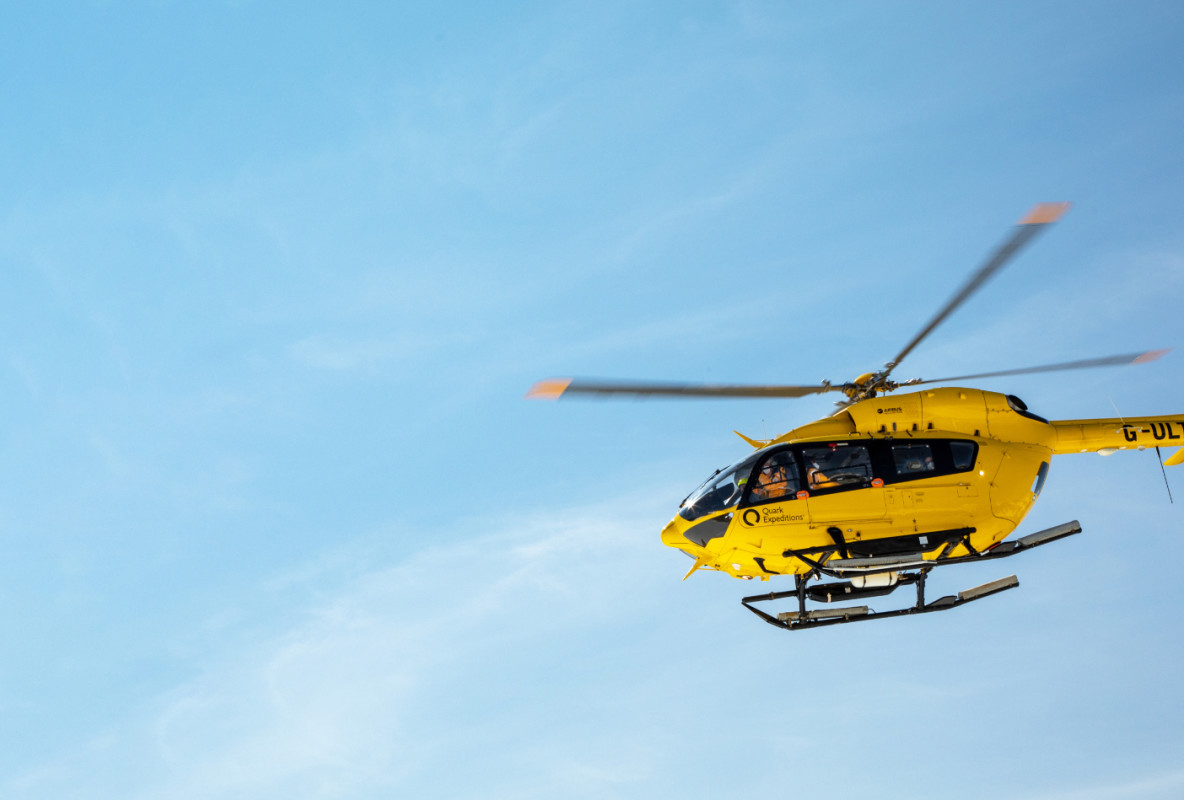


Expedition Ships


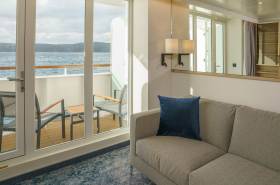






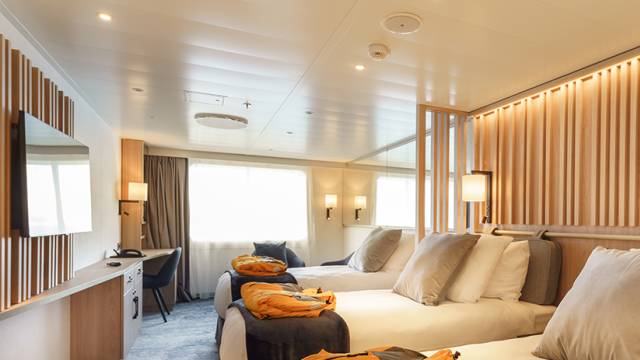


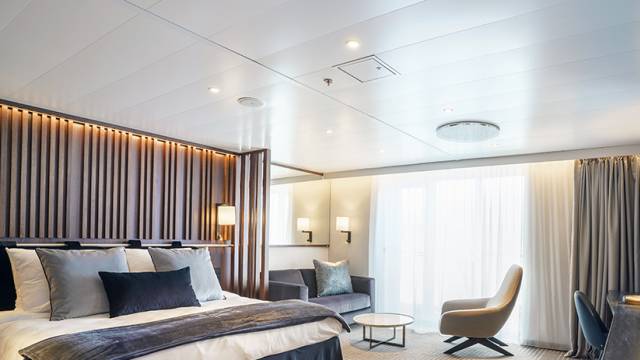








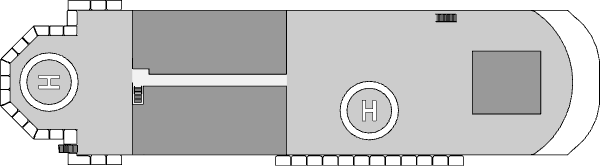
Possible Excursions
When traveling in extremely remote regions, your Expedition Team must consider the sea, ice and weather to guide the route and itinerary details. The following sites are a sample of what you may experience on your expedition, whether by ship, Zodiac cruise, or shore landing.

West Greenland

Canada
West Greenland

-
Nuuk
Nuuk is the epicenter of Greenland’s fascinating emerging culture. At population 15,000, the world’s smallest capital city is a wonderful and curious mix of the traditional and the new. A particular highlight is the Greenland National Museum, which offers an insight into social change affecting the country from the 1950s onwards. Other exhibits include some of the the world’s oldest rocks (approx. 3.8 billion years found close to Nuuk), and the Qilakitsoq exhibit displaying the mummified remains of 15th century Inuit women and a six-month old child. The Katuaq Culture Centre and Nuuk Art Museum are also worth exploring.
Canada
-
Croker Bay
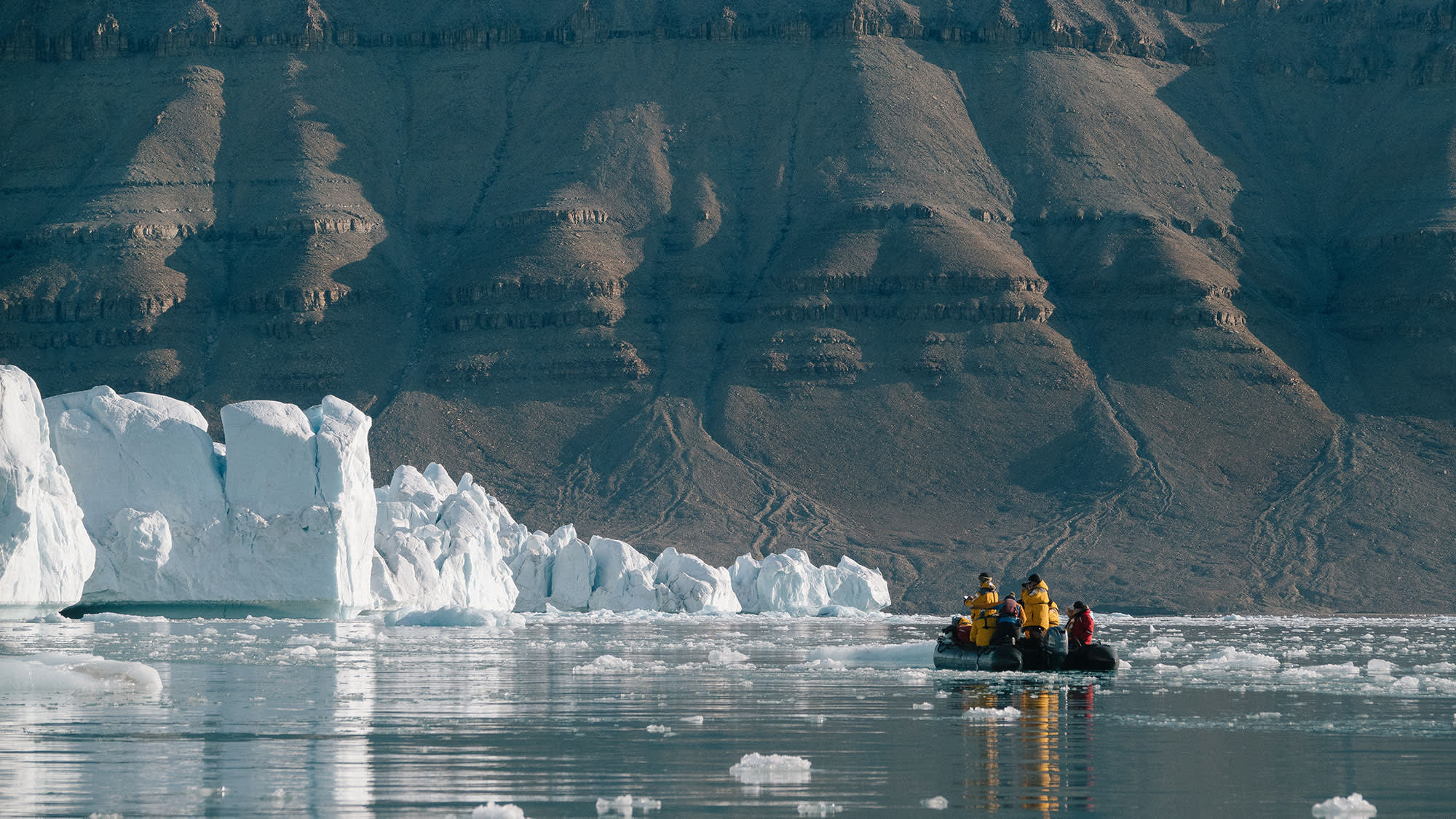
On the south coast of Devon Island is Croker Bay. A glacier here actively calves off chunks of ice, creating a birthplace for icebergs. The bay was a popular stop during the 1800s, when a path to the Pacific (the Northwest Passage) was at the forefront of Arctic exploration.
-
Arctic Bay
This picturesque and remote community maintains strong ties to the land and sea, as its Inuit inhabitants have lived as nomadic hunters in this region for almost 5,000 years. The protective high hills and sheltered shores of this hamlet make for an ideal nesting habitat for various Arctic birds, including thick-billed murres, kittiwakes, ivory gulls and Ross’s gulls. Seals, narwhals and bowhead whales call the waters here home.
-
Beechey Island
Named after Frederick William Beechey, an explorer with the Royal Navy, this is one of Canada’s most important Arctic sites and has been deemed a Canadian National Historic Site. During the Franklin expedition of 1845–46, two of Franklin’s ships, HMS Erebus and HMS Terror, anchored here with perilous results. Three of Franklin’s crew died here and are buried at marked gravesites.
-
Bellot Strait
The 1.2 mile (2 km) wide Bellot Strait separates Somerset Island from the Boothia Peninsula. During the transit, you’ll sail past the northernmost point of mainland North America, Zenith Point.
-
Cape Mercy
In June 1585, British explorer John Davis (he of the Davis Strait) embarked on the first of three voyages to search for the legendary Northwest Passage. In August 1585, he reached this area at the northern entrance to the Cumberland Sound and named it Cape of God’s Mercy. Now known as Cape Mercy, it’s the site of a dramatic glacial fjord.
-
Fort Ross
In 1937, the Hudson’s Bay Company established a trading post, named Fort Ross, on the coast of Somerset Island. Due to the harsh conditions and isolation of the post, it was closed in 1948. The store and manager’s house still stand.
-
Pangnirtung
When the Hudson’s Bay Company built a trading post in Pangnirtung in 1926, local Inuit families moved to the tiny settlement. A Royal Canadian Mounted Police detachment was established two years later. A hospital opened in 1929, but it wasn’t until 1962 that most of the Inuit who lived on Cumberland Sound relocated to Pang. The community has become internationally renowned for the tapestries and prints by local artists.
-
Pond Inlet
Europeans have been visiting the area that came to be known as Pond Inlet since the 1600s. The first visitors arrived seeking the Northwest Passage. In the 1800s, whalers brought wood and barter goods to the community. These visitors were latecomers, as the indigenous peoples had been living in the region for thousands of years.
-
Prince Leopold Island
Impressive, vertical cliffs surround part of this small island. This creates an ideal environment for nesting seabirds, and they nest here in vast numbers—more than 300,000 strong! Thick-billed murres, black guillemots and northern fulmars are most commonly seen here.
-
Qikiqtarjuaq
Known until 1998 as Broughton Island, Qikiqtarjuaq boasts some of the highest mountains in North America east of the Rocky Mountains. From the cape, multitudes of icebergs can be seen coming down Davis Strait, and the rich arctic waters are home to numbers of seals and whales.
-
Resolute
One of Canada’s most northern settlements, Resolute was formed by forceful relocation of Inuit from northern Quebec by the Canadian government in 1953, during the Cold War. Today, it’s also a jumping off point for much high Arctic research. It has everything from a grocery store and cable TV to a school and a couple of hotels. About 200 people live in Resolute throughout the year, where hunting and logistical support to research, mining and tourism contribute to the community’s economy.
Your Life Onboard
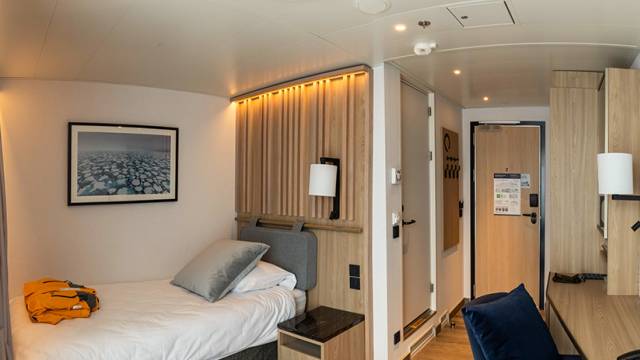
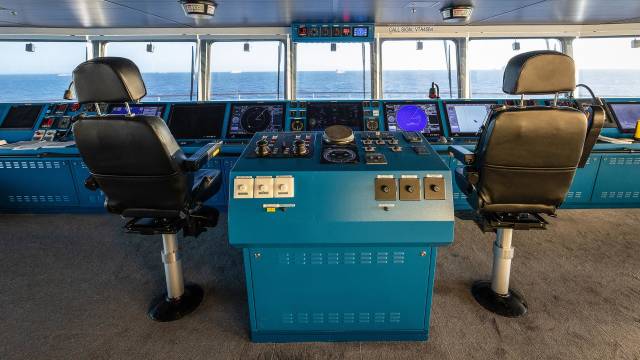
This is polar exploration at its finest. Our ships are intimate, luxurious floating hotels, packed with exciting experiences.


Enjoy panoramic views while you mingle in our comfy lounges, or head outside and chat with fellow adventurers on the wraparound deck. Our social spaces foster connections & shared experiences.

Engage with world-class experts in our auditorium. Presentations cover wildlife, history, marine biology, ecology, & geology, to enhance your polar knowledge & excitement for exploration.

Enjoy onboard amenities, attend lectures, or watch for wildlife from our observation decks. Sea days offer a perfect blend of education, relaxation, and anticipation.

Find tranquility in our well-stocked library, perfect for reading or quiet contemplation. The glass-domed Observation Lounge offers a peaceful retreat to reflect & enjoy awe-inspiring polar views.

Prepare for off-ship excursions in our spacious mudroom. Kayak, paddleboard, or take a plunge in polar waters. Stay active onboard with our gym, outdoor track, and pool facilities.


Know Before You Go
For your personal safety—and to ensure you get the most enjoyment out of your polar adventure—please assess your mobility and medical requirements before booking. It is essential that guests have a high level of mobility to get in and out of Zodiac boats, and for off-ship activities such as hiking on uneven terrain. Our destinations are remote. Apart from our basic ship infirmary, it could take up to 72 hours to reach adequate medical facilities. For more details to help you assess your mobility and medical requirements before booking your voyage, please review Health & Safety.
Some of our expeditions have included transfers and these will be detailed in your Invoice and Trip Brochure.
Please note that if you have an airport transfer included in your trip, it is only available if you arrive on Day 1 of the itinerary. Please ensure your flight information on your Passenger Forms is up to date so our ground crew know when to expect you. There will be someone with a sign in Arrivals waiting for you. Please look for them and they will direct you to our group shuttle.
If you do not have included transfers, or you are arriving before Day 1, you will need to make your own way to the hotel. Most airports we travel in and out of have good taxi ranks in the Arrivals area, or you can often prebook a transfer online.
Packing is an exciting part of the trip for many of us. You will find a handy packing list towards the end of your Trip Brochure. You will have received a copy of this when you first booked. We also have two excellent videos, which you can check out here: What to Pack
Our Protection Promise allows you to make a purchase decision that will leave you worry-free in the event your plans change down the road. Please review details for each term in our Quark Expeditions Protection Promise.
Whether you are thinking of an expedition, or you’ve booked the trip of a lifetime with Quark Expeditions, review all our FAQs for comprehensive tips to help you prepare for the Polar Regions and how to make the most out of your voyage with the most experienced expedition team in the industry. If your specific question isn’t covered below, please reach out to your Polar Travel Advisor or helpful Client Experience Team at guest@quarkexpeditions.com.