


Across the North Atlantic, Iceland is experiencing one of its most compelling travel moments in decades. Longer daylight hours, more navigable coastal waters, and growing scientific interest in glacial systems are aligning to make exploration by sea especially rewarding. For travelers seeking depth rather than speed, journeys curated by Quark Expeditions and shaped as an Arctic expedition offer a front-row view of Iceland’s national parks—seen not from crowded roads, but from the water that carved them.
Sailing Iceland’s coastline reveals something most visitors never see: how glaciers, volcanoes, and oceans interact as a single system. From the vast ice fields of Vatnajökull to the myth-laden Snæfellsnes Peninsula, this route connects landscapes that feel both ancient and alive.

Why this moment is ideal for travelers
Glaciologists have documented measurable changes in Iceland’s ice caps, including seasonal melt patterns and shifting outlet glaciers. While this underscores the urgency of conservation, it also means access windows are clearer and more predictable for carefully managed voyages. Traveling by ship allows flexible routing around weather and ice conditions—something land-based itineraries can’t match.
An expedition-style approach also reduces pressure on fragile areas. Instead of funneling thousands of visitors into a single viewpoint, travelers experience multiple regions gradually, guided by experts who explain what they’re seeing and why it matters.
Seeing Iceland’s national parks from the sea
Vatnajökull National Park: Ice at continental scale
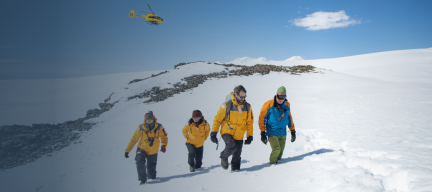
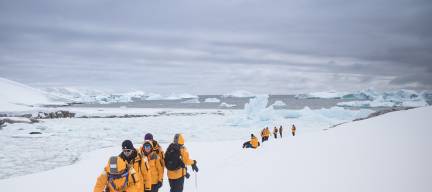
Covering nearly 14 percent of Iceland, Vatnajökull National Park protects Europe’s largest glacier and the volcanic landscapes beneath it. From offshore, the scale becomes clear: outlet glaciers spill toward the coast, carrying ice shaped by centuries of snowfall and compression. Zodiac landings and guided excursions often allow travelers to approach glacial tongues safely, where a carefully planned glacier walk reveals crevasses, meltwater channels, and layered ice.
This perspective helps visitors understand Vatnajökull not as a static landmark, but as a dynamic force influencing rivers, ecosystems, and even seismic activity.

Snæfellsjökull and the west coast
Farther west, the Snæfellsnes Peninsula compresses Iceland’s geological diversity into a single dramatic stretch of coast. Black-sand beaches, basalt cliffs, and the iconic ice-capped volcano Snæfellsjökull rise directly from the sea. Approaching by ship highlights how glaciers and lava flows coexist, creating a landscape that has inspired folklore, literature, and science alike.
Together, these protected areas form a living classroom within Iceland National Park systems—best understood when connected by water rather than highways.

Why a polar cruise works best here
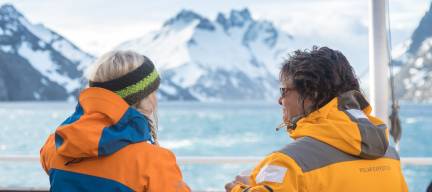
Iceland’s coast is rugged and often inaccessible from land. A polar cruise offers mobility, remote access, and comfort without sacrificing depth. Expedition ships carry Zodiacs for close-up exploration, while onboard experts—glaciologists, volcanologists, and naturalists—provide context through briefings and guided walks.
Travelers considering routes that focus on Iceland’s full coastal story often explore voyages such as Iceland Circumnavigation: Helicopters, Glaciers and Volcanoes:
👉 https://www.quarkexpeditions.com/expeditions/iceland-circumnavigation-helicopters-glaciers-and-volcanoes
Seasonal planning insights and Arctic travel windows can be found here:
👉 https://www.quarkexpeditions.com/arctic/new-season
What travelers can expect along the way
Experiencing Iceland by sea blends iconic scenery with quieter, less-visited moments.
Highlights often include:
- Zodiac cruises along glacier-fed coastlines
- Guided glacier walks when conditions allow
- Black-sand beaches shaped by volcanic erosion
- Seabird colonies nesting on sheer cliffs
- Crossing the Arctic Circle at sea, marked by extended daylight
These moments unfold gradually, reinforcing why an Arctic expedition favors patience and adaptability over rigid schedules.
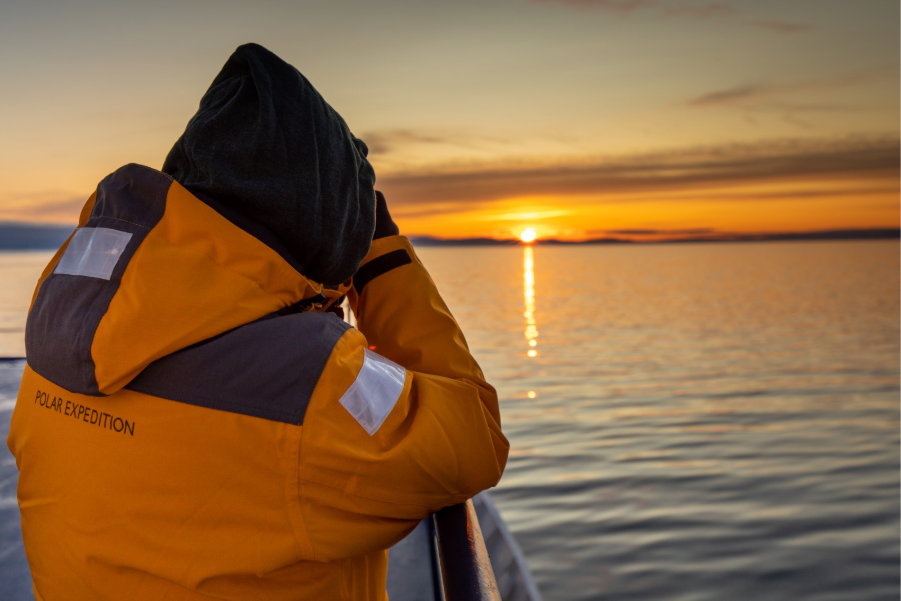
Landscapes shaped by ice, fire, and folklore
Iceland’s parks aren’t just geological features; they’re cultural touchstones. Local stories link glaciers and volcanoes to spirits, heroes, and hidden worlds. Seeing these places in sequence—from Vatnajökull’s immense ice fields to the storied cliffs of the Snefellsnes Peninsula—adds narrative continuity that day trips rarely achieve.
Travelers often remark that the journey reshapes their sense of scale. Ice becomes more than scenery; it’s a process. Coastlines become more than borders; they’re meeting points between land and sea.
Beyond Iceland: a wider Arctic perspective
For some, exploring Iceland’s national parks sparks interest in the broader North Atlantic and Arctic regions. Ice, currents, and ecosystems don’t stop at national boundaries—they connect Greenland, Iceland, and beyond.
Those looking to extend their understanding of polar environments sometimes compare experiences with voyages like West Greenland: Discovering Massive Icebergs and Inuit Communities (Southbound):
👉 https://www.quarkexpeditions.com/expeditions/west-greenland-discovering-massive-icebergs-and-inuit-communities-southbound
A broader overview of Arctic destinations and expedition styles is available here:
👉 https://www.quarkexpeditions.com/arctic
It’s often in the latter part of a voyage that travelers reconnect with the opening landscapes, now seen through a deeper lens—linking Iceland’s glaciers to the wider Arctic system.
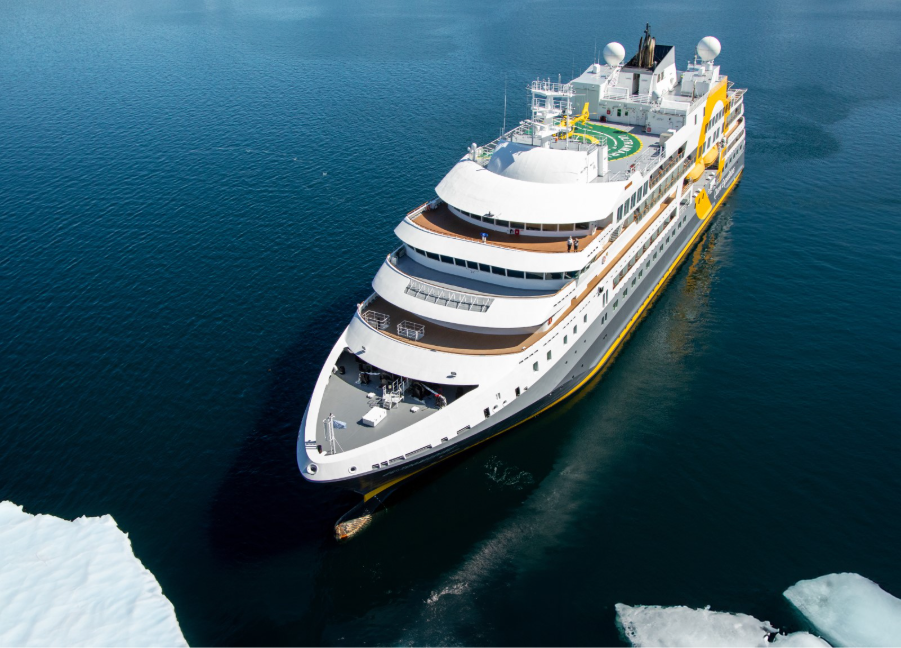
A thoughtful way to explore a changing world
Visiting Iceland’s national parks by sea isn’t about exclusivity; it’s about perspective. Access is shaped by weather, ice, and environmental guidelines, reminding travelers that nature sets the terms. That restraint is part of the experience.
Supported by experienced teams from Quark Expeditions, and guided through a carefully designed Arctic expedition, travelers don’t just see Vatnajökull or Snæfellsnes—they begin to understand how these places fit into a rapidly changing planet.
For many, that understanding becomes the most lasting takeaway of all.