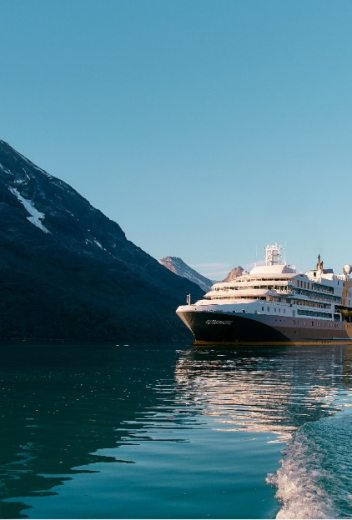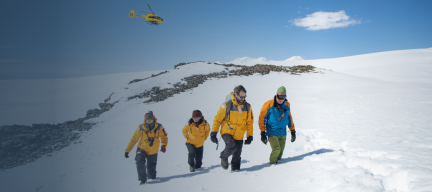


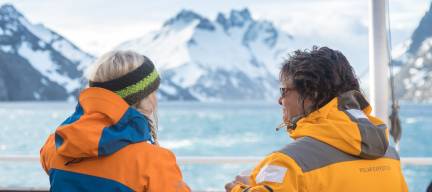

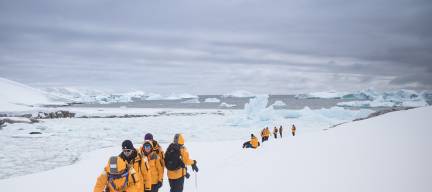
When most travelers dream of an Arctic cruise, they picture towering glaciers, dazzling icebergs, and the chance to photograph rarely-seen wildlife—such as Polar Bears—in their natural habitat. Just as extraordinary is the opportunity to experience the rich cultures of the Arctic and connect with Inuit who have called these regions home for centuries.
A visit to an Inuit community, for instance, offers a window into the lives of Inuit people, their deep respect for nature, and their enduring traditions. Whether it’s listening to stories passed down through generations or witnessing daily practices shaped by centuries of adaptation, these cultural experiences bring to life the human story behind the landscape.
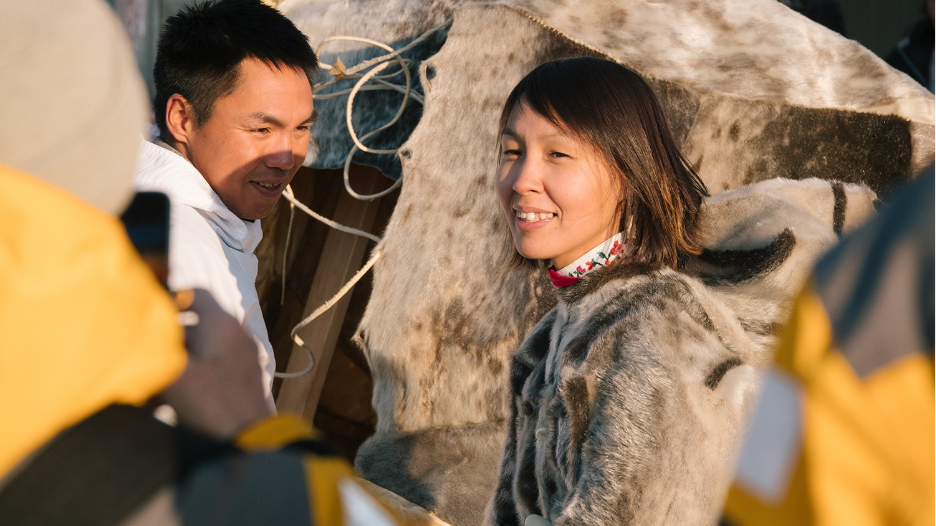
Upernavik: A Rare Glimpse of Greenland’s Far North
West Greenland: Exploring the Far North is currently the only Quark Expeditions itinerary that visits the remote community of Upernavik, offering guests a rare opportunity to experience life in one of Greenland’s northernmost towns with deep connections to Inuit culture through sustainable hunting, ice fishing, and dog sledding.
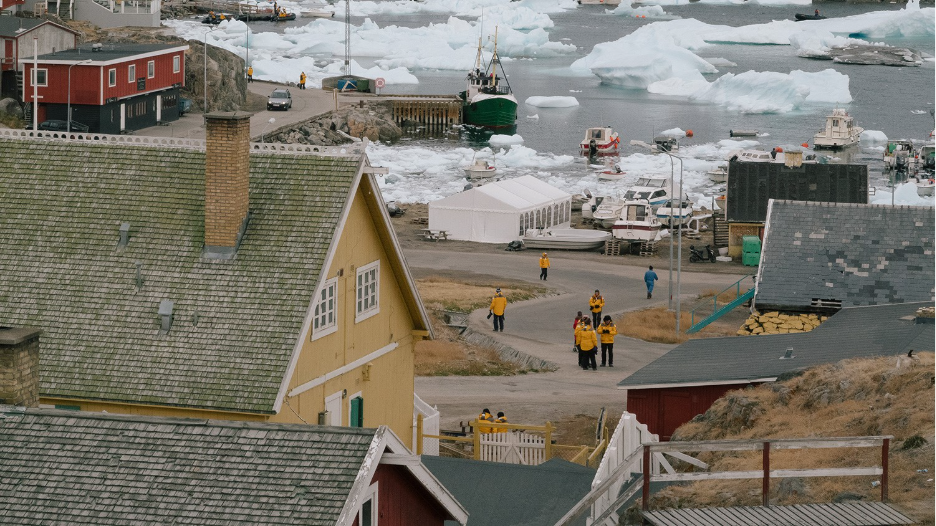
Set amid an archipelago in northwest Greenland, Upernavik is a colorful community where brightly painted homes climb rocky hillsides above the sea. Home to just over 1,000 people, the town feels both vibrant and peaceful, with daily life shaped by a connection to the ocean. In the harbor, fishing boats come and go while sled dogs, seabirds, and the gentle sounds of the shoreline provide the soundtrack to life in the High Arctic.
Despite its remote location, Upernavik has long served as a gateway to the Arctic. Positioned between Baffin Bay and Greenland’s sheltered coastal waters, it has welcomed generations of hunters, fishermen and explorers. Guests may also learn about the story of Navarana, the Inuit wife of famed explorer Peter Freuchen, whose expertise in Arctic travel, sea ice and local cultures contributed to several historic expeditions. Today, residents remain proud of their heritage and warmly welcome visitors to their community. Upernavik Museum preserves the region’s history with artifacts and traditional tools detailing thousands of years of Inuit settlement.
Qaanaaq: Life at the Edge of the High Arctic
Located in Northwest Greenland near the entrance to Smith Sound, Qaanaaq, also featured on the West Greenland: Exploring the Far North itinerary, is Greenland’s northernmost community and one of the northernmost towns in the world. It’s home to fewer than 700 people. Generations of Inuit families have adapted to life in this extreme environment, developing skills and traditions shaped by the sea, the ice and the rhythms of the Arctic seasons. While modern technologies have found their way north, many aspects of daily life remain closely tied to practices that have sustained communities here for centuries, including hunting, fishing, dogsledding, and kayak building.

Visitors can gain a deeper understanding of this heritage at Qaanaaq Museum, where exhibits showcase the ingenuity of Inuit hunters and the tools they crafted from materials such as ivory, bone and animal hide. Throughout Qaanaaq, the connection between culture and landscape remains unmistakable. Working sled dogs wait along the shoreline, traditional knowledge continues to be passed between generations, and life on the sea ice remains an important part of the community’s identity. More than a remote destination, Qaanaaq offers a rare glimpse into a living Inuit culture that continues to evolve while maintaining deep ties to its past.
This same itinerary also visits Uummannaq, a remote Inuit community known for its warm Greenlandic welcome.
Uummannaq: Beneath Greenland’s Heart-Shaped Mountain

Uummannaq is a remarkable island community of about 1,500 people, set beneath the dramatic heart-shaped mountain that gives the town its name. Surrounded by enormous glaciers and drifting icebergs, some rising like cathedrals from the sea, and framed by fjords and ancient rock formations, the settlement is one of North Greenland’s most spectacular destinations.
Uummannaq’s appeal, however, goes far beyond its scenery. It’s a community where Inuit heritage remains an important part of daily life, with local hunters continuing traditions guided by generations of knowledge of the sea, ice, wildlife, and changing Arctic seasons. Colorful homes line the winding roads, while historic turf houses, the stone church, museums and artisan markets reveal different chapters of life in northern Greenland. Meeting local residents and learning about contemporary Inuit culture offers visitors a personal connection to a community where ancient traditions and modern life coexist side by side. In Uummannaq, the vast Arctic landscape is not simply something to admire—it is the homeland that has shaped Inuit life, identity, and traditions for generations.
Sisimiut: Greenland’s Living History
Travelers can also visit Uummannaq on the West Greenland: Discovering Massive Icebergs and Inuit Communities, Northbound itinerary, which also includes Sisimiut, one of Greenland’s oldest continuously inhabited communities. Home primarily to Kalaallit, the Inuit people of Greenland, Sisimiut has been inhabited for roughly 4,500 years. The area was first settled by the Saqqaq and later Dorset cultures before becoming home to the Thule people, the ancestors of today’s Inuit. Sisimiut Museum is the town’s primary cultural and historical museum, featuring extensive exhibits on early Inuit and Paleo-Inuit cultures.

Traditions such as kayak building, storytelling, hunting, fishing, and artistic craftsmanship continue alongside modern Greenlandic life in Sisimiut, while Kalaallit culture remains deeply woven into everyday experiences, from language and food traditions to community gatherings and life on the sea.
The Remote Beauty of Ittoqqortoormiit

Located where the vast Scoresby Sound meets the Greenland Sea, Ittoqqortoormiit is considered one of the most isolated towns in Greenland. Reaching this community is only possible by water or by air. An Arctic cruise is your gateway to exploring this hidden corner of the world. Not only do travelers witness magnificent landscapes, but they also gain a firsthand perspective of Inuit resilience and heritage.
One standout journey that enables guests to explore Ittoqqortoormiit is the Greenland to Newfoundland: Mountains, Wildlife and Viking History expedition.
Unlike larger towns, Ittoqqortoormiit maintains a strong connection to Inuit traditions. Families rely on fishing, hunting, and a profound knowledge of the natural world to sustain themselves in the Arctic’s challenging environment.

Inuit Traditions Passed Down Through Generations
During community visits, Quark Expeditions’ guests are welcomed into the heart of Inuit life. You might sit with a local elder who shares ancient legends—tales of spirits, animals and the forces of nature that shape everyday existence. These stories, told in rhythmic voices, capture the spiritual connection between the Inuit and their environment.
Travelers also have opportunities to appreciate traditional craftsmanship. From fur clothing designed for Arctic survival to intricate carvings made of bone and driftwood, these practices highlight resourcefulness and artistry born from necessity.

South Greenland: Where Inuit and Viking Cultures Meet
On the 15-day South Greenland: Alpine Exploration by Helicopter, we explore the fjords of Greenland’s east coast, including Lindenow Fjord, also known by its Greenlandic name, Kangerlussuatsiaq. Thousands of years ago, Paleo-Inuit hunters and fishermen lived in these isolated landscapes, sustained by the sea long before European explorers and mass settlements. Traces of their presence remain today, set against cascading glaciers and steep mountains.

The communities in this southern region remain closely tied to hunting and fishing traditions. Specifically, we hope to visit Aappilattoq (population: 85), a close-knit Greenlandic Inuit settlement on the shores of Prins Christian Sund. During a prearranged community visit, guests can meet local partners and residents, and may have the opportunity to hear stories and music, sample traditional foods, learn about hunting practices, and perhaps even join a friendly game of soccer.

The name Aappilattoq comes from Kalaallisut, the Greenlandic Inuit language, and is commonly translated as “the red one” or “the red mountain.” It refers to the towering red granite peaks that rise above the settlement, a defining feature of the surrounding landscape in South Greenland.
Inuit History, Waterfalls, Cliffs and Fjords
At Skjoldungen Fjord (Saqqisikuik), one of the anticipated stops on Southeast to West Greenland: Glaciers, Fjords and Viking History, framed by towering cliffs, cascading waterfalls, and views of Thryms Glacier at its head. You’ll be greeted by a landscape of striking contrasts, where bright turquoise waters meet brilliant white ice.
Beyond its dramatic scenery, the fjord holds an important place in Greenland’s Inuit history. A small Inuit settlement once stood here before its residents were relocated by the government in 1961. By the way, this voyage also visits Sisimiut which is featured in other Greenland itineraries.
Tundra to Table: Where Every Dish Tells a Story
Guests who book their Greenland voyage aboard the technologically advanced Ultramarine have the added opportunity to experience Greenlandic culture through food.
Tundra to Table: Inuit Culinary Experience is far more than a meal. Developed in partnership with Igapall, Greenland’s culinary collective, this onboard event (advance booking required) invites guests to explore Inuit culture through one of its most powerful expressions: food. Rooted in generations of Arctic knowledge, the experience brings Greenlandic chefs and travelers together for a curated meal that pairs each course with storytelling, cultural exchange and conversation. On select Arctic voyages.

The menu celebrates ingredients gathered from Greenland’s sea and tundra. Depending on the voyage, guests may savor beer-braised muskox, South Greenlandic lamb, or pickled halibut served with lumpfish dip and bread while learning about Inuit harvesting practices, culinary traditions, and the deep connection between Arctic communities and their environment.
At the heart of the evening are the devoted chefs of Igapall, who work with local hunters and producers to showcase Indigenous cuisine through contemporary interpretations of Greenlandic food traditions.

As chef Miki says, “We warmly invite guests to experience the essence of Inuit culture. Through Greenlandic cuisine, the warmth of shared stories, and traditions passed down through generations, we hope to give you a taste of our heritage.”
Responsible Tourism and Mutual Respect
Travelers often wonder: how can cultural visits avoid feeling intrusive? The answer lies in responsible tourism practices that respect Indigenous traditions while allowing for meaningful exchange. Small-group visits, guided by community input, ensure that interactions are authentic rather than performative.
Quark Expeditions has long championed this approach, making sure that visits are beneficial for both guests and hosts. This balance allows visitors to immerse themselves in Inuit culture while ensuring communities retain control over how their stories are shared. This approach reflects one of Quark Expeditions’ core guiding principles: Our Commitment to Conservation & Community.
Why Cultural Visits Matter in the Arctic
A polar expedition is about more than ticking off wildlife sightings or photographing ice formations. It’s about deepening our understanding of the people who live in one of the planet’s most extreme environments. Cultural visits to places like Ittoqqortoormiit, Qaanaaq and Uummannaq give travelers a chance to connect on a human level, sharing stories, laughter, and perspectives that leave a lasting impression.
These interactions remind us that the Arctic isn’t a frozen wilderness devoid of life. It is a homeland, filled with traditions, resilience, and vibrant communities that continue to thrive.

Planning Your Cultural Adventure
For most travelers, Greenland might seem like a world away—but the experience is worth the journey. Visiting an Inuit community on an Arctic voyage creates the kind of memory that stays with you long after you return home. It’s a chance to learn, to connect, and to gain new respect for cultures that flourish under the Northern Lights.
To explore the full range of journeys that balance cultural immersion with the awe of polar landscapes, visit Quark Expeditions’ Arctic collection. From Greenland’s remote villages to the pristine fjords, your adventure promises more than scenery—it promises stories that last a lifetime.